On my way back from Ban Gioc Waterfall, I spotted a figure in the distance. Silhouetted between the karst formations on the road below, he looked like some kind of mythical character, with a staff, long peasant jacket and maybe some kind of pack. I stopped to say hi.

The mystery man was Spanish, with a thick beard and long hair, making his way to the waterfalls on foot. It was getting late. ‘Where are you going to sleep?’ I asked, a little surprised.
‘I’ll find somewhere’ he said confidently, ‘I’ve been doing this a while’.
It turned out that was an understatement. As we shared a few biscuits he told me he’d actually been walking for FIVE YEARS, sleeping in the woods or wherever he could, cooking a small pot of rice each day, and inching on a little further. Not so much inching really – it turned out he’d walked to Vietnam from Spain.
I wanted to know everything. His demands were more precise: was there a way of sneaking in to the waterfall without paying the fee, he wondered. I told him what I could of the layout, then asked about Ha Giang, the region he’d just walked through and the province I’d be entering in a few days.
“Well, if you do one thing”, he said, “try and time it so you arrive in Dong Van for the Sunday market. I’ve never seen anything like it.”
Having walked through Iran, central Asia and China, I guessed he’d seen a few markets in his time. So I took him at his word, making sure I arrived for Sunday and setting an early alarm.
The mythical wanderer was not wrong.
Sunday in Dong Van felt more like an annual festival than a weekly market with villagers from across the nearby countryside descending on the town en masse to buy, sell, eat and generally catch up.

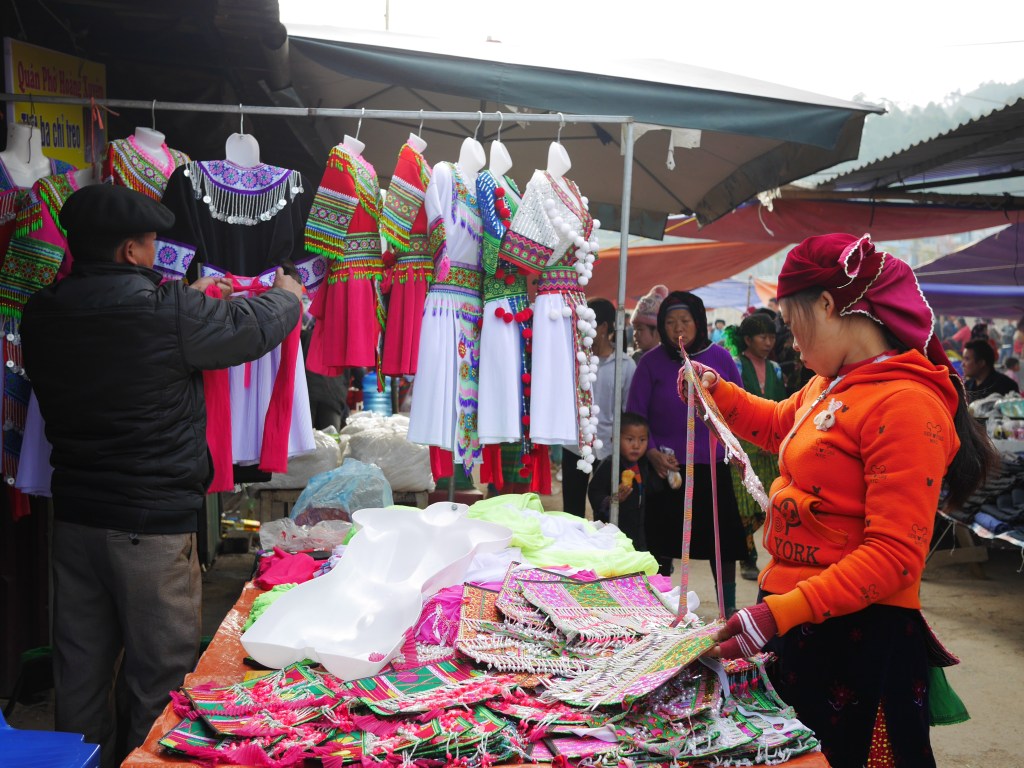
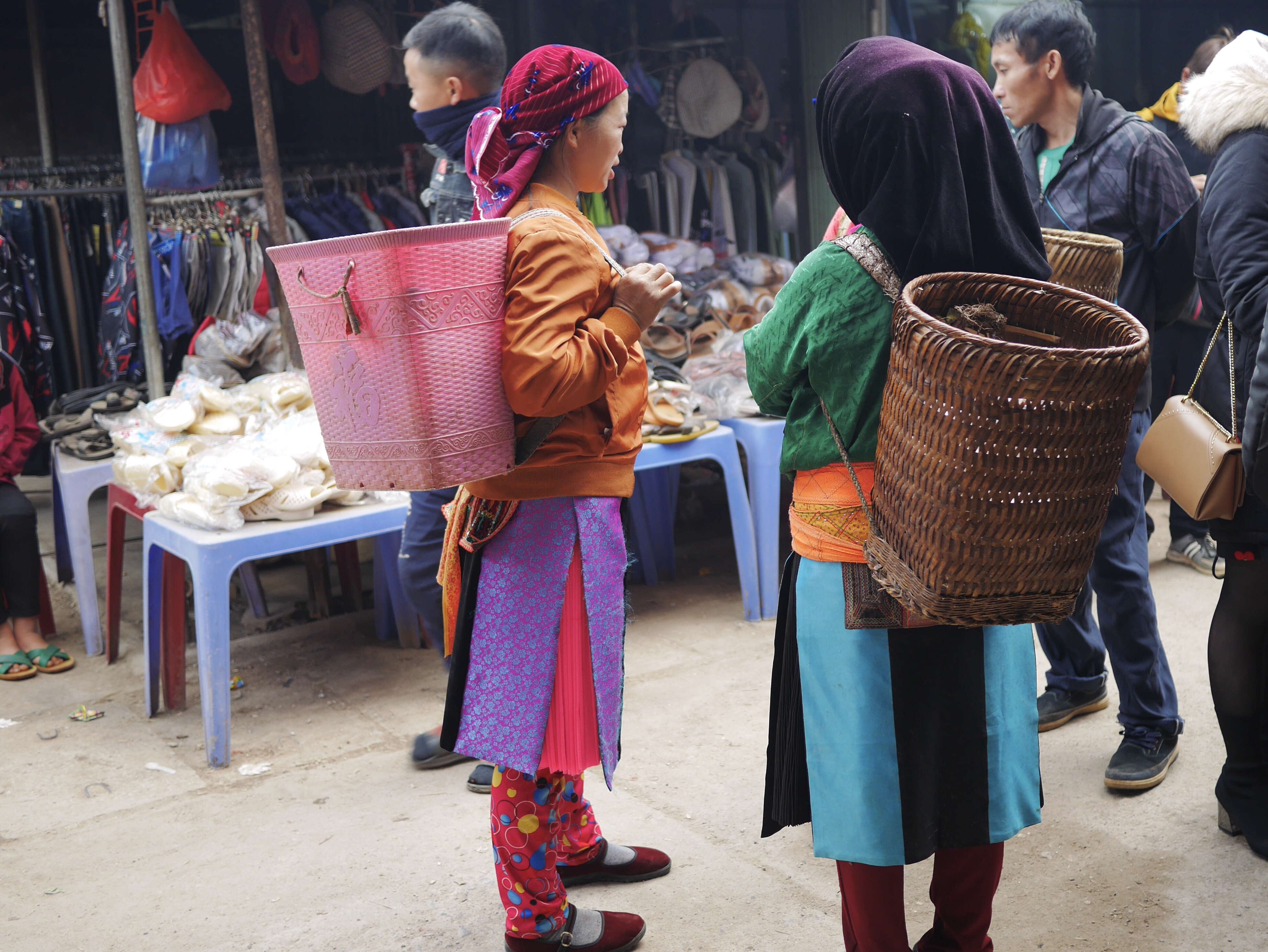
Traditional dress is common across the border region but the market is unique in bringing so many different groups together. The clothing of Ha Giang is usually handmade, an expression of pride and heritage but often symbolic too – the headscarf in some groups, for instance, differs depending on whether or not a woman is married.

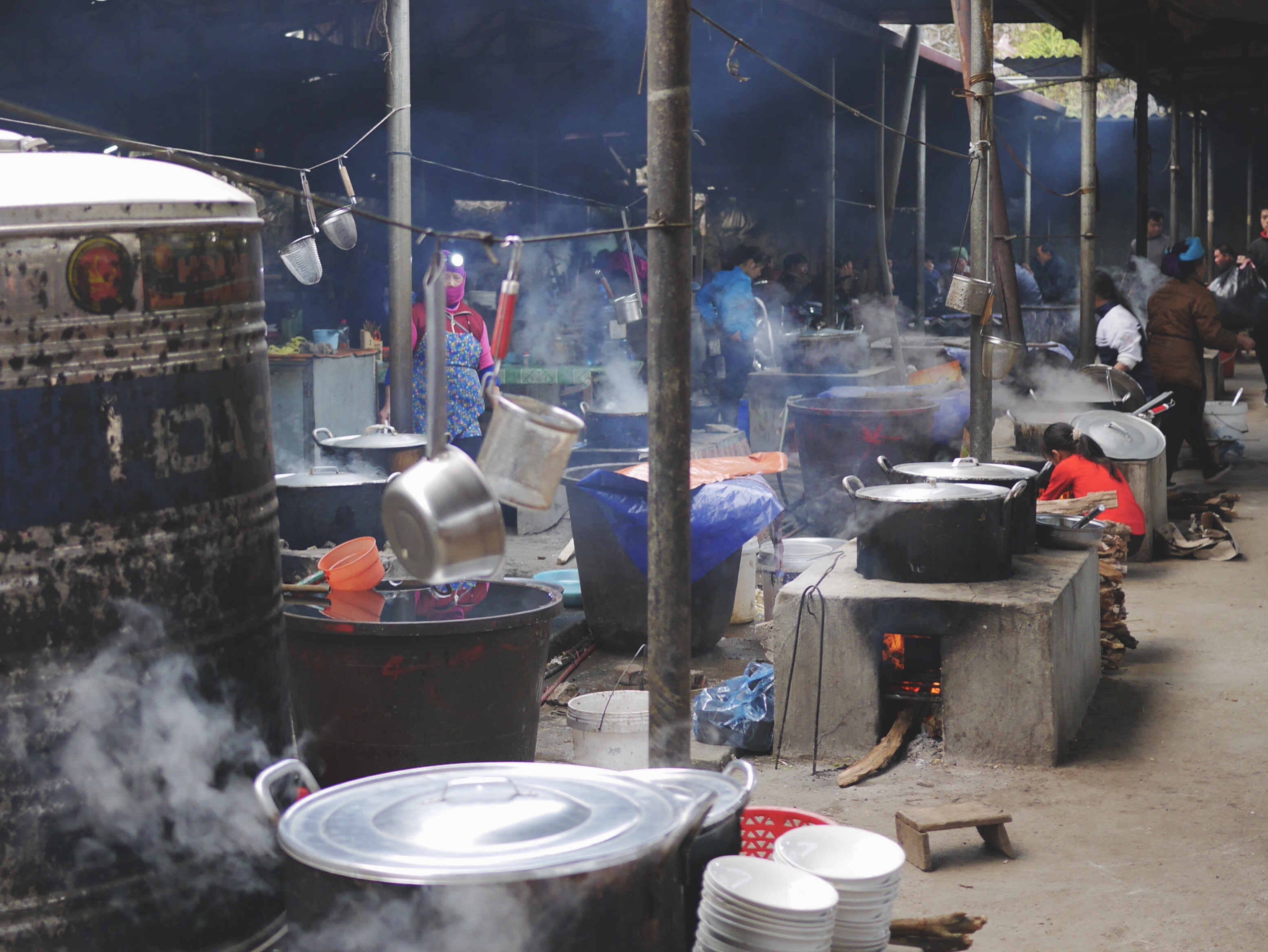
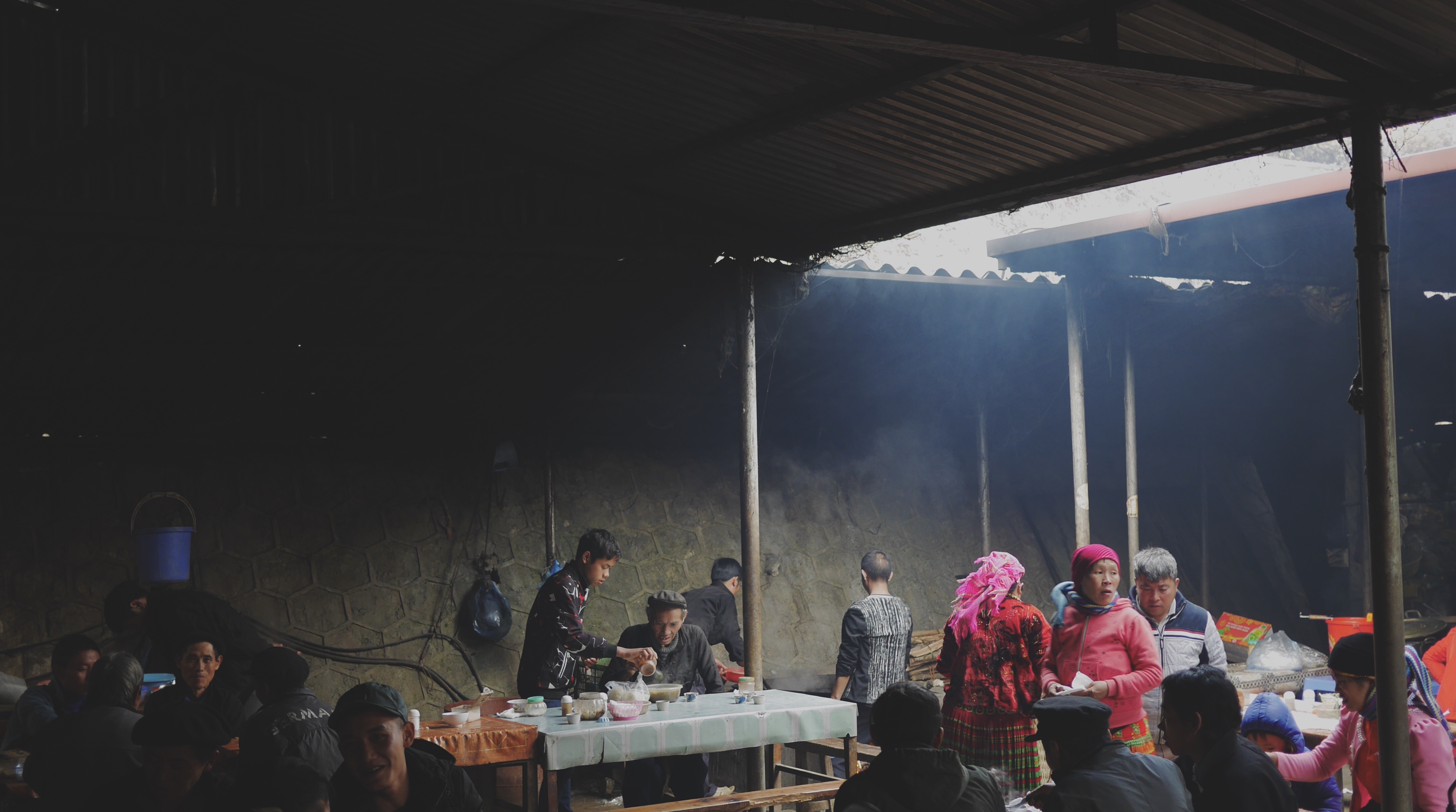
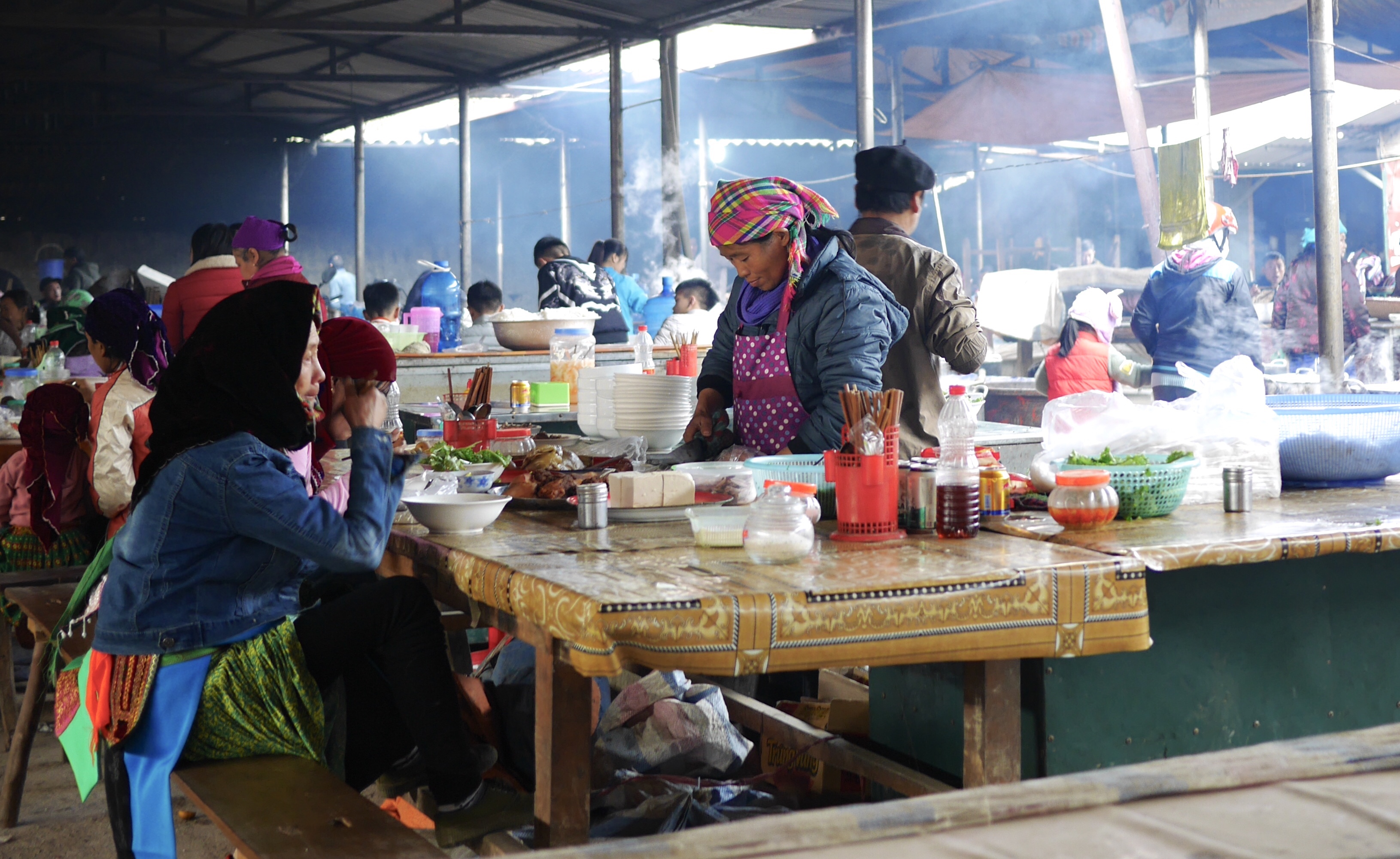
It was still early when I arrived, so before committing myself to the fray, I followed my nose to the kitchen. It was easy to find with steam billowing in the cool morning air and shoppers huddled together on benches, most – like me – for a warming bowl of pho (noodle soup).



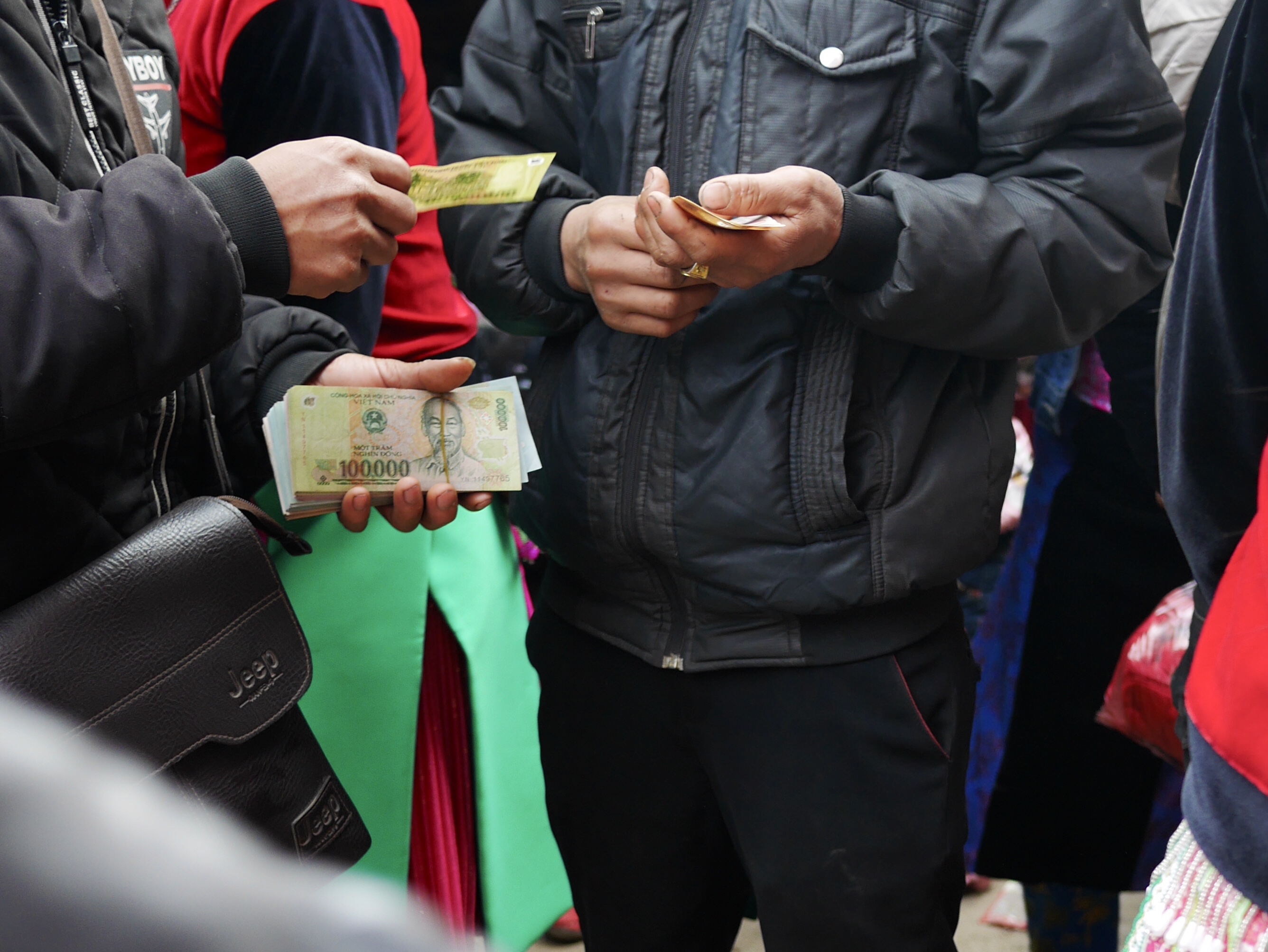
Most of the ethnic groups in Ha Giang have counterparts directly over the border in southern China. Sharing the same language and culture, these groups have more in common with each other than they do with their official countrymen. With these close links (and a relatively porous border), money changers were conveniently on hand with wodges of Viet Dong and Chinese Yuan to swap at the right price.
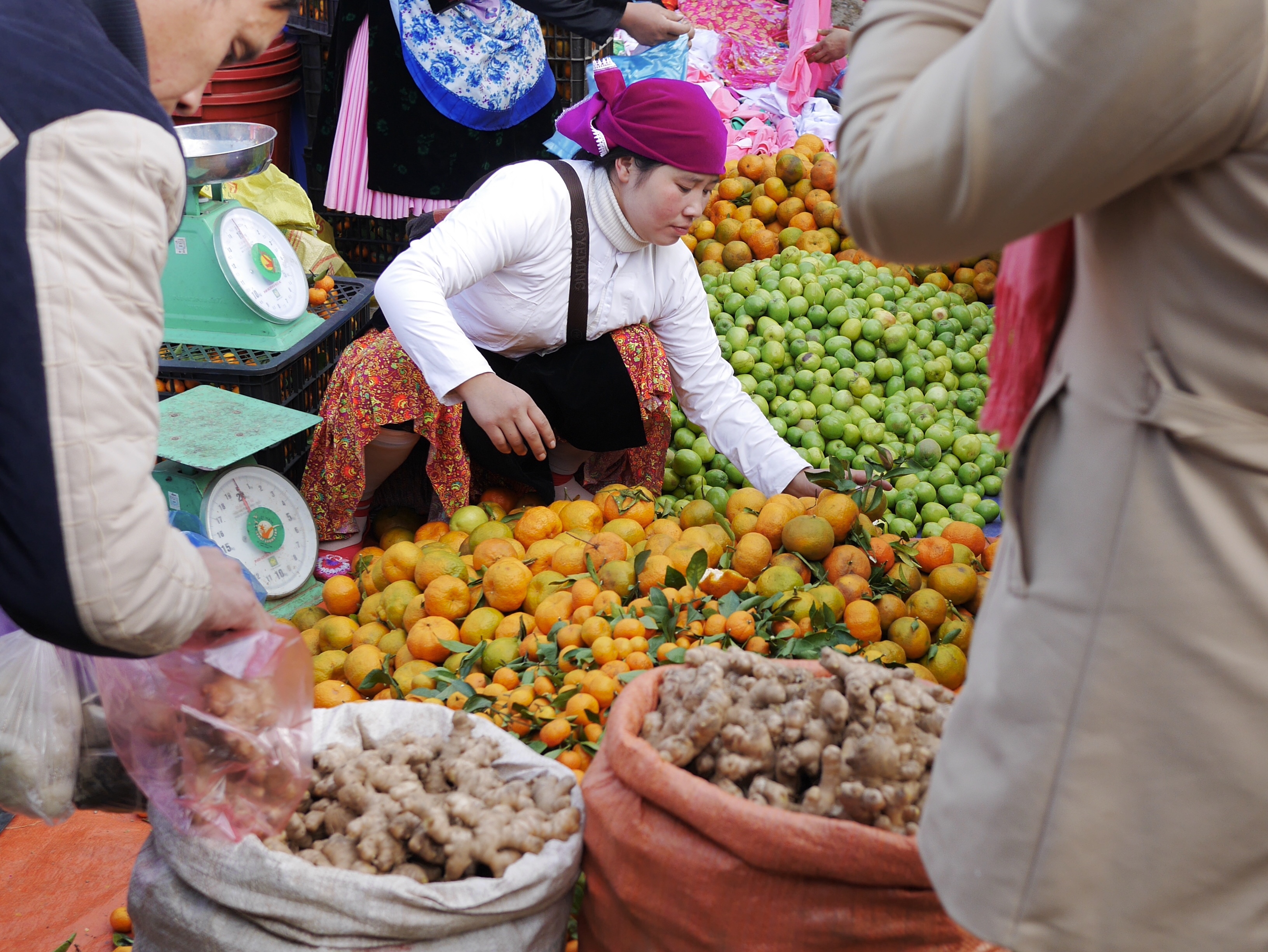
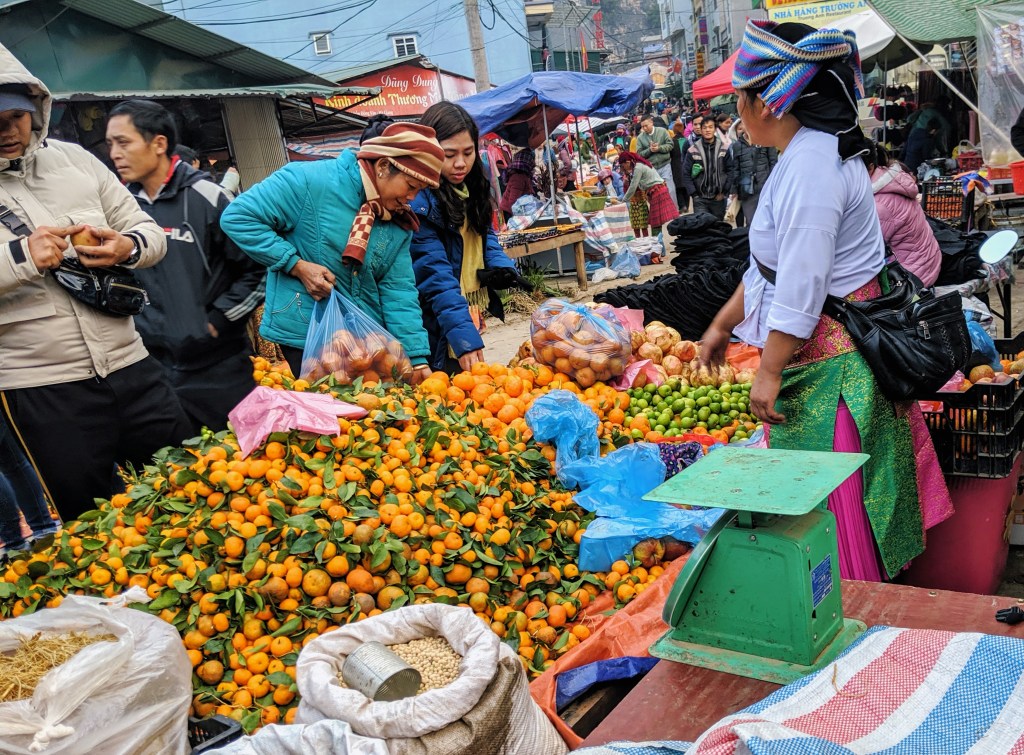
Part of the market is fresh produce. The local oranges were great for me on the bike and the mutant sacks of ginger, a sight to behold!
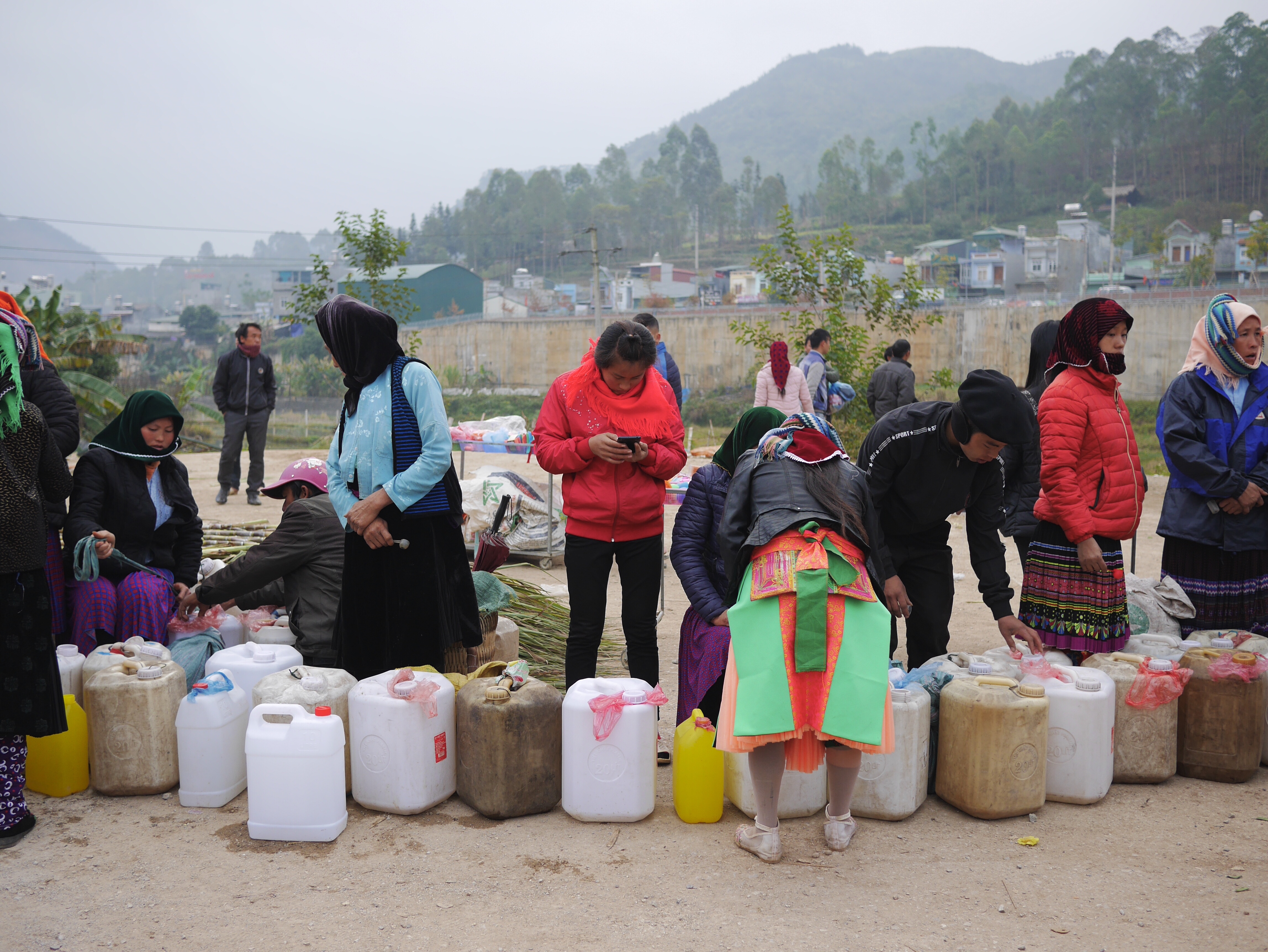
Rice wine was also popular, all of it homemade (at God knows what strength!). These ladies each had their own potent distillations with customers encouraged to sample liberally before having their purchase funnelled from one of barrels into a spare plastic bottle.
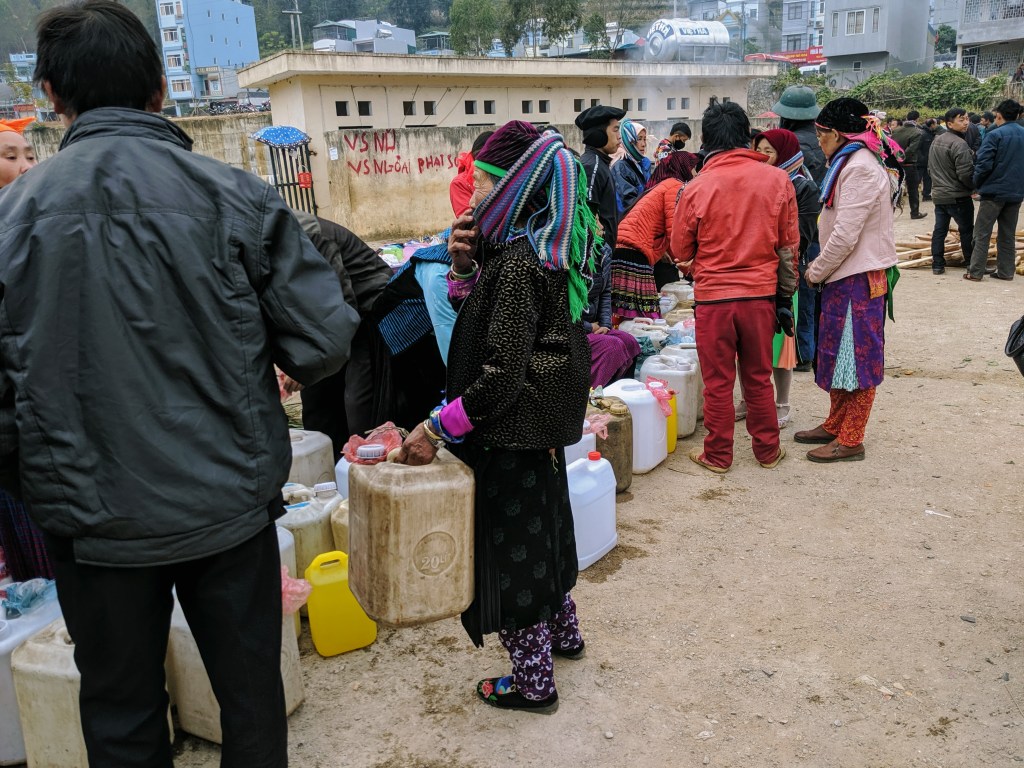
Right behind the wine section was a large area for livestock. This ranged from buffalo (behind the sugar cane below), to pigs, chickens and even dogs (fate unknown).


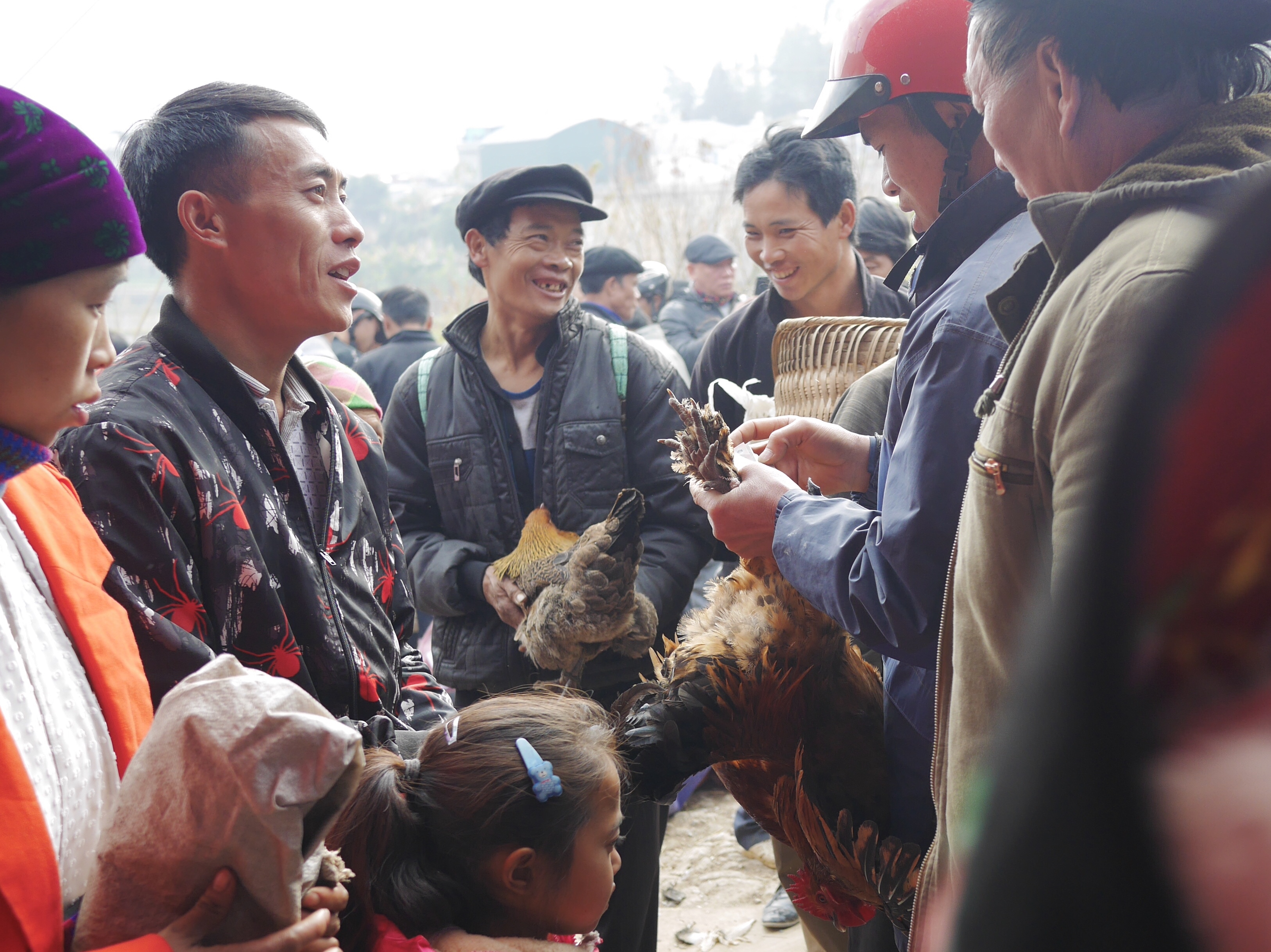

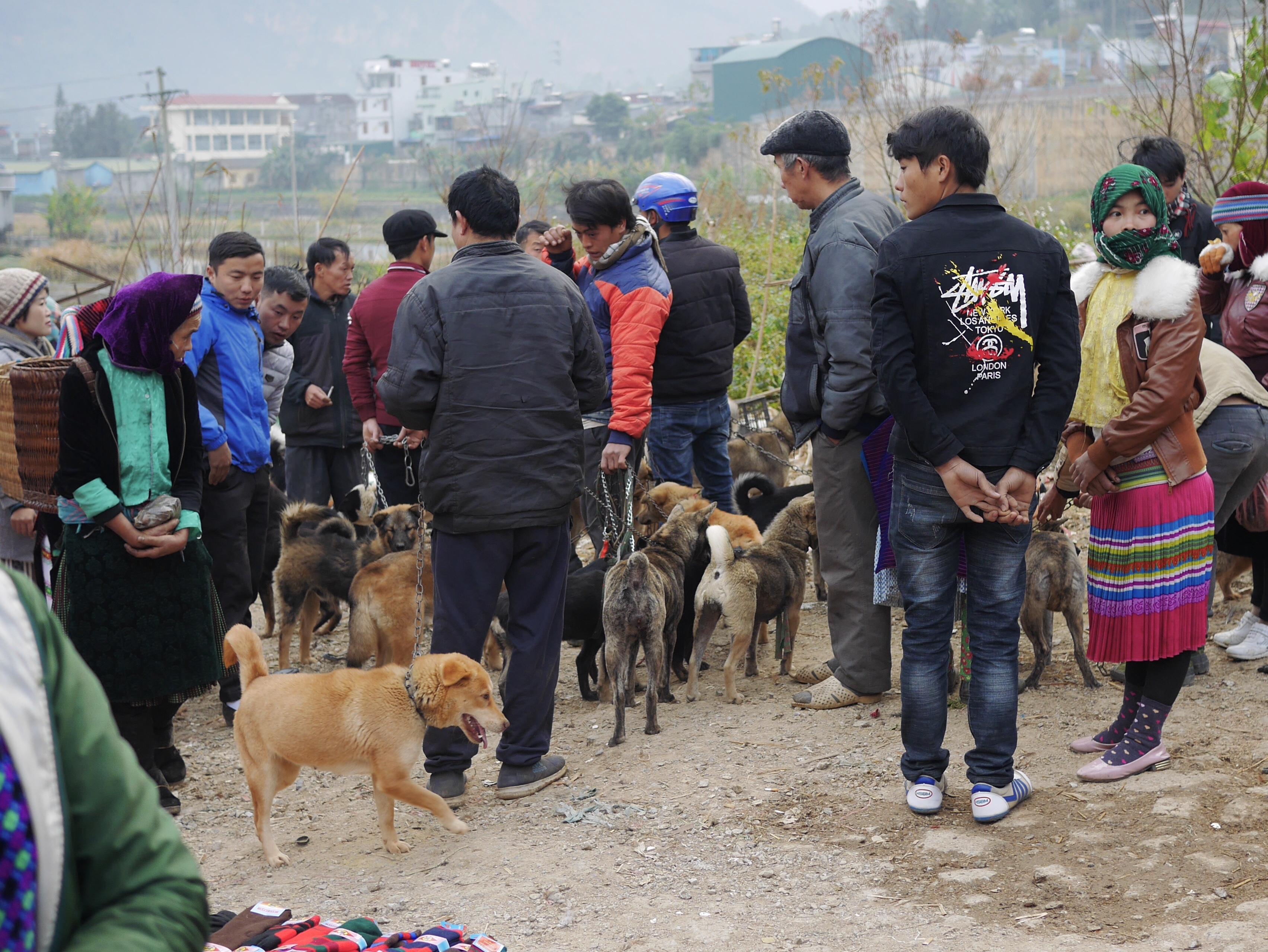
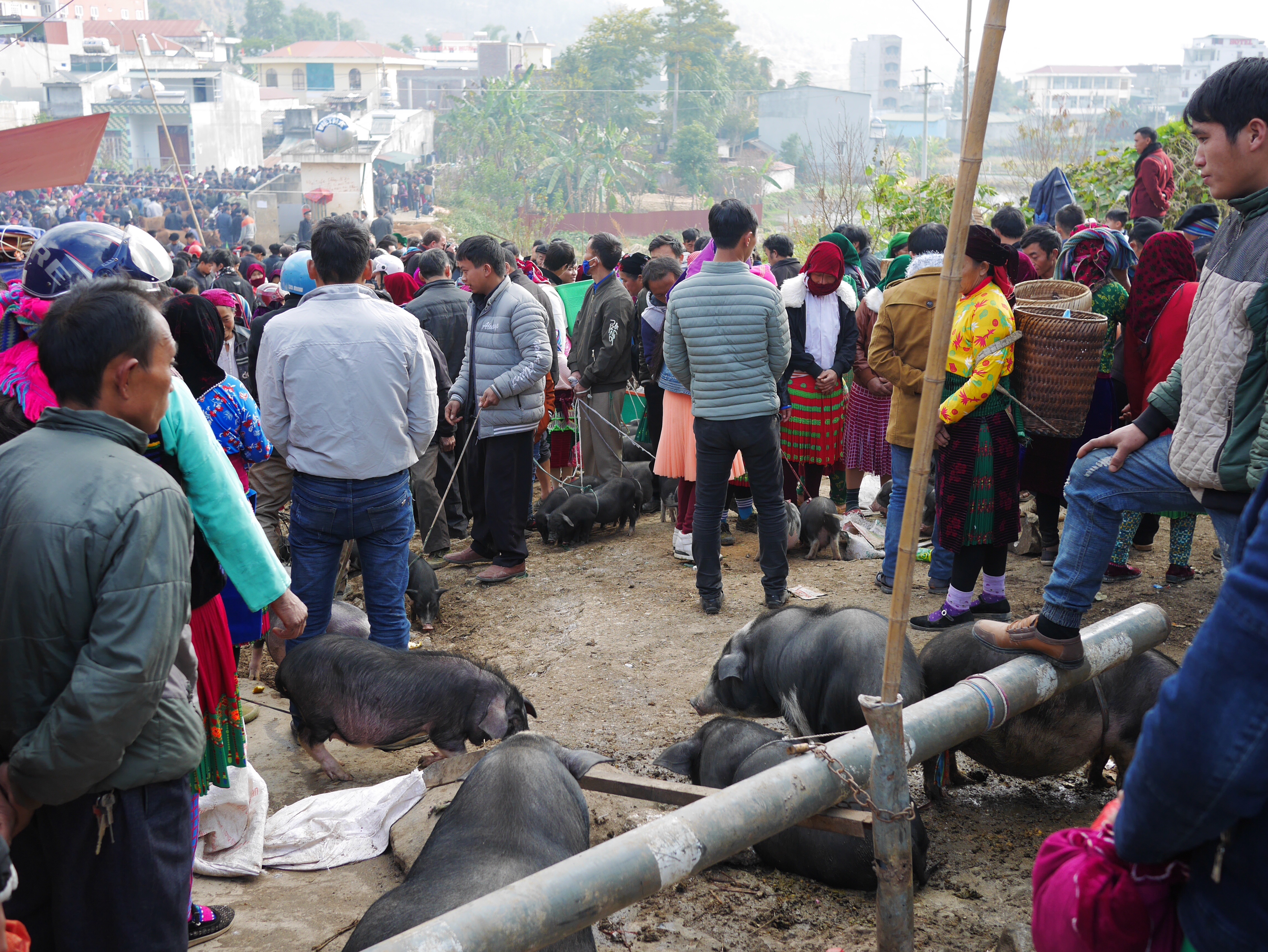
The buffalo no doubt made their own way to market, but for the other animals, the journey was likely more traumatic. Chickens over handlebars was a common one, but pigs in sacks (if you choose to look carefully at the second pic) was a new low on the Vietnam animal welfare scale.


For the most part though, this was a normal market serving the everyday needs of a highland people living largely off-grid in the hills: big motorbike mittens for cold morning descents, powerful LED torches from China, mobile phone repair wizards, dry foods and cosy blankets for winter.


By 9:00am or so I drifted away in search of coffee and the market too was beginning to disperse. Many would return home by motorbike but a surprising number left on foot, using local wicker packs (like the ones below) to carry produce (bought or unsold) miles back to hillside villages. I know this partly as I saw so many people out on the road, many miles from the market, once I got going on the bike.
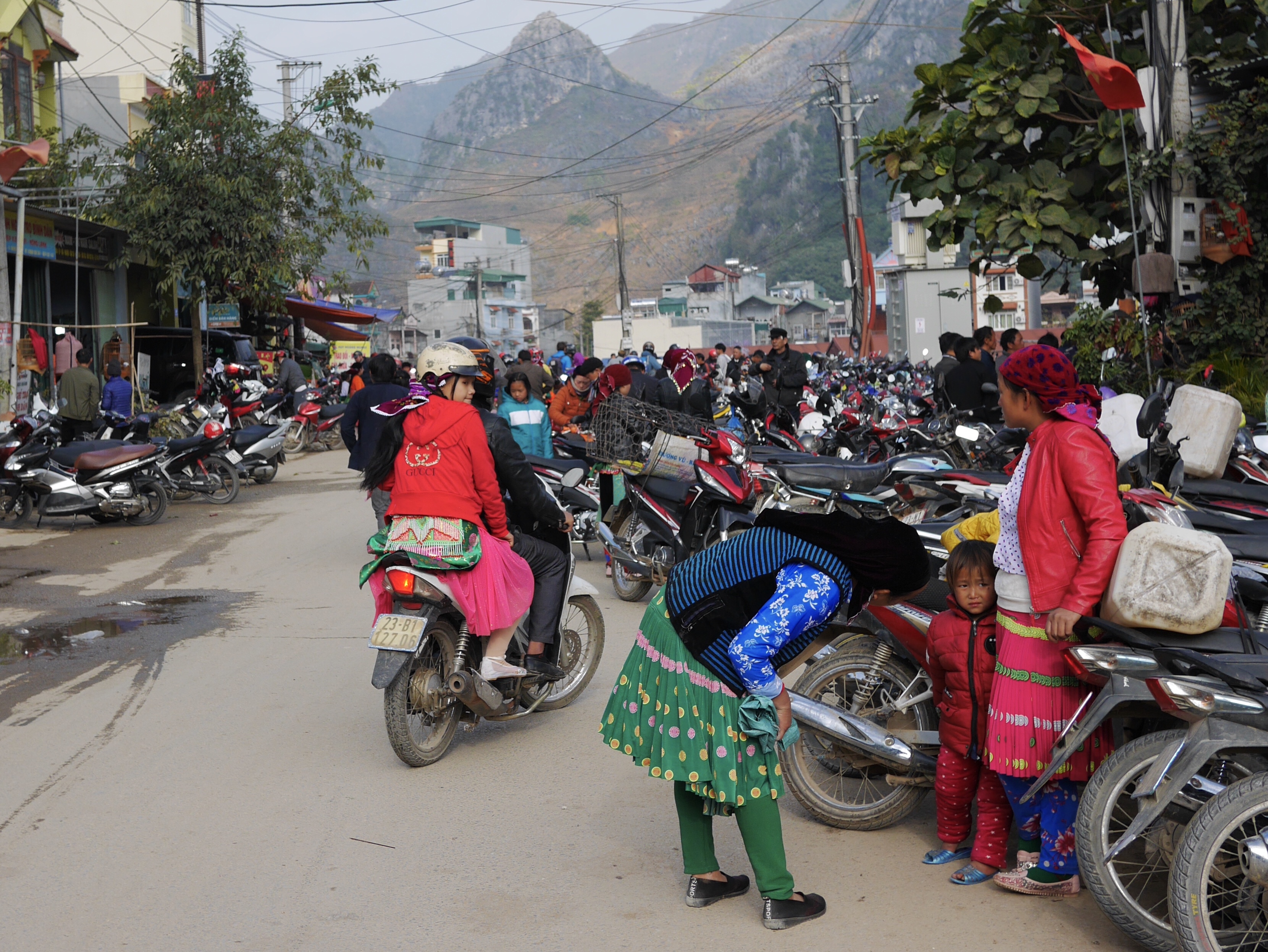
I think the excitement myself and the Spanish wanderer shared for this place is simply that it was real – too far for the tour buses that trip out from Sapa and too early for the motorbike tour groups that ply the hairpin bends of the Ha Giang Loop.
Trying to keep it that way, I was discreet with my photographs – all taken from a distance and ‘from the hip’, and I did my best to support the traders where I could – sinking three separate breakfasts (!) and amassing a giant haul of road snacks to bungee to my rack.
With hills to climb, they wouldn’t be there long! 🙂


 Rolling Project