Bao Lac to Ha Giang: 178 miles
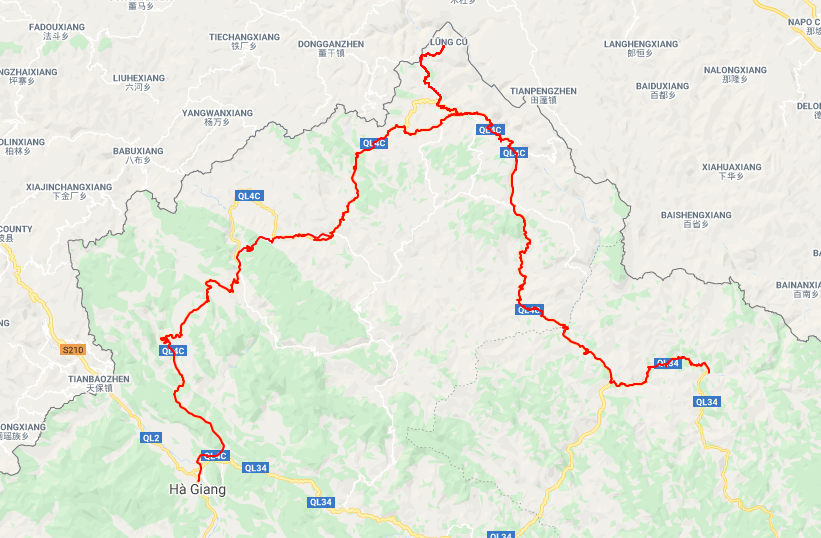
After a week out in the boonies, I hit the small town of Bao Lac and abruptly entered the parallel universe of the Ha Giang Loop. This quiet corner of the world was almost totally cut off from the rest of Vietnam until the 1960s but has grown in popularity over recent years as a prime motorbiking destination and adventurous detour for backpackers out of Hanoi.
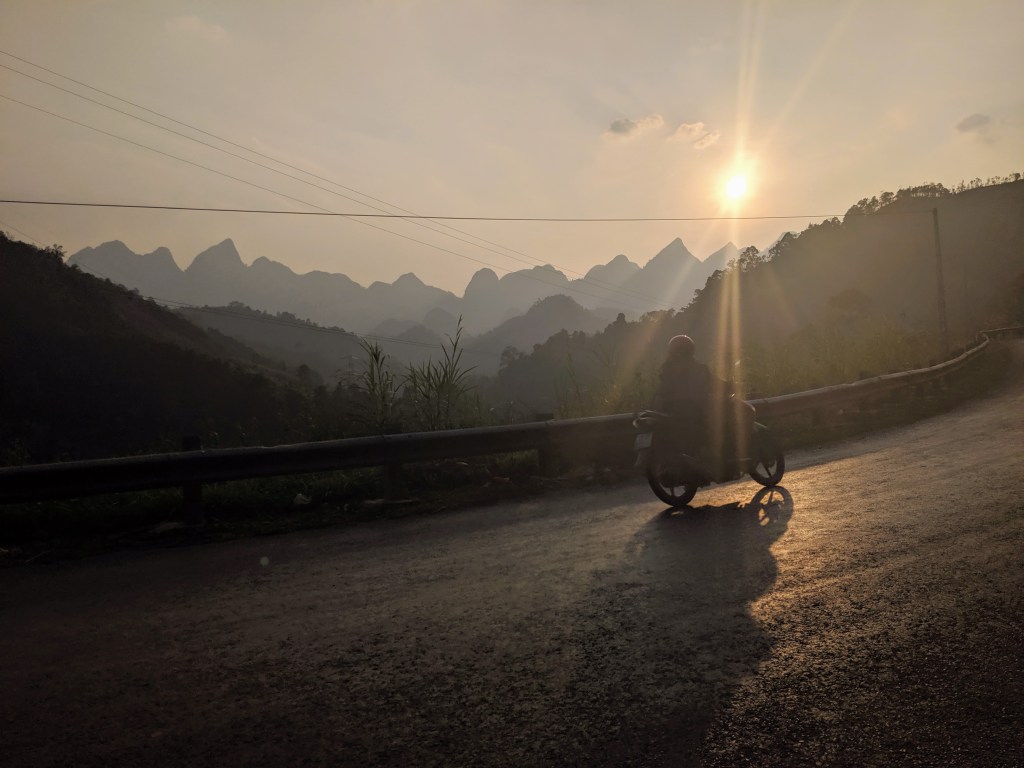
The views are stunning and local culture is strong but I wasn’t sure if the experience might be watered down by the extra company. Funny I worried about that rather than the terrain itself! As the ride was undoubtedly the steepest I’ve experienced.
The bikers usually stay in one of the many excellent homestays dotted along the route. This seems to have set in motion a kind of culinary arms race for the place with the most generous ‘family dinner’ (a never ending buffet of hearty local fare, eaten with the other guests and included in the price). The gang I met at my first dinner in Bao Lac became a revolving cast, appearing and disappearing along the road for the next week.
There was Phil – an Israeli-Russian with an old Suzuki and heavy disdain for anyone riding anything else.
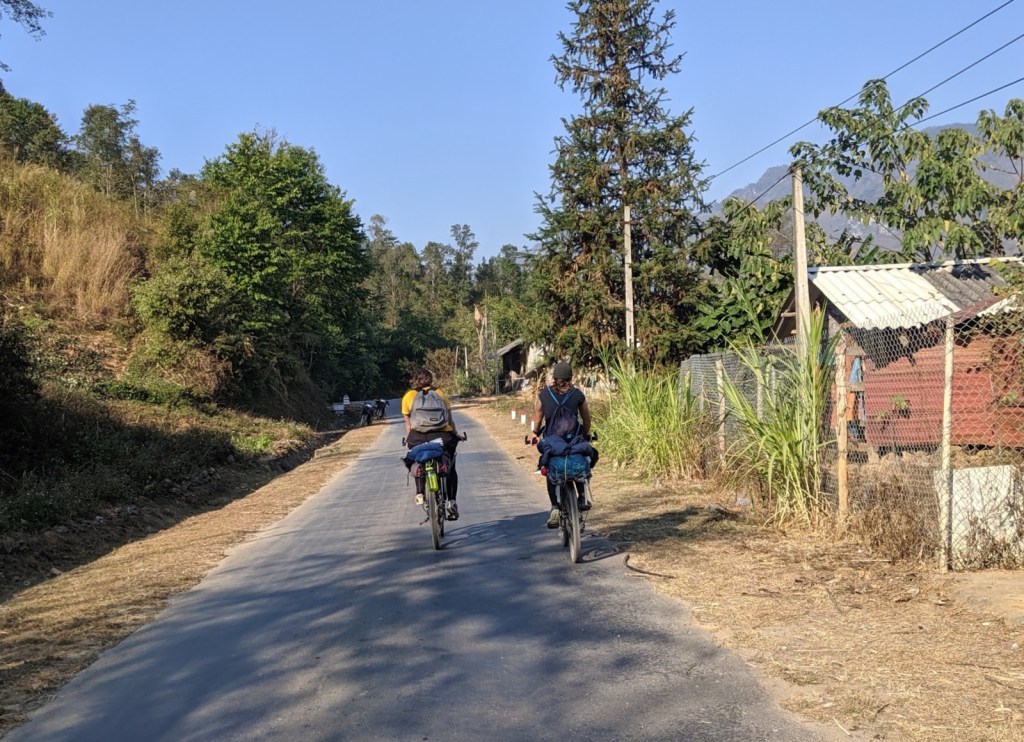
Two Swiss girls, both medical students, who’d strapped their packs to a set of cheap mountain bikes picked up in Hanoi.
And finally Luca – another Swiss guy – whose trip was inspired by a French documentary about a local H’mong village he’d come to track down.
I swapped notes with the Swiss girls before setting off on day one – it was a novelty having cyclists as company! The gradient profile was pretty terrifying with a straight 15km at 10%, probably the most sustained climb I’d faced. I felt I could manage it, just about. But I was a bit concerned for the girls as this was just their second day on the road. I waved them bye with a mix of caution and encouragement.
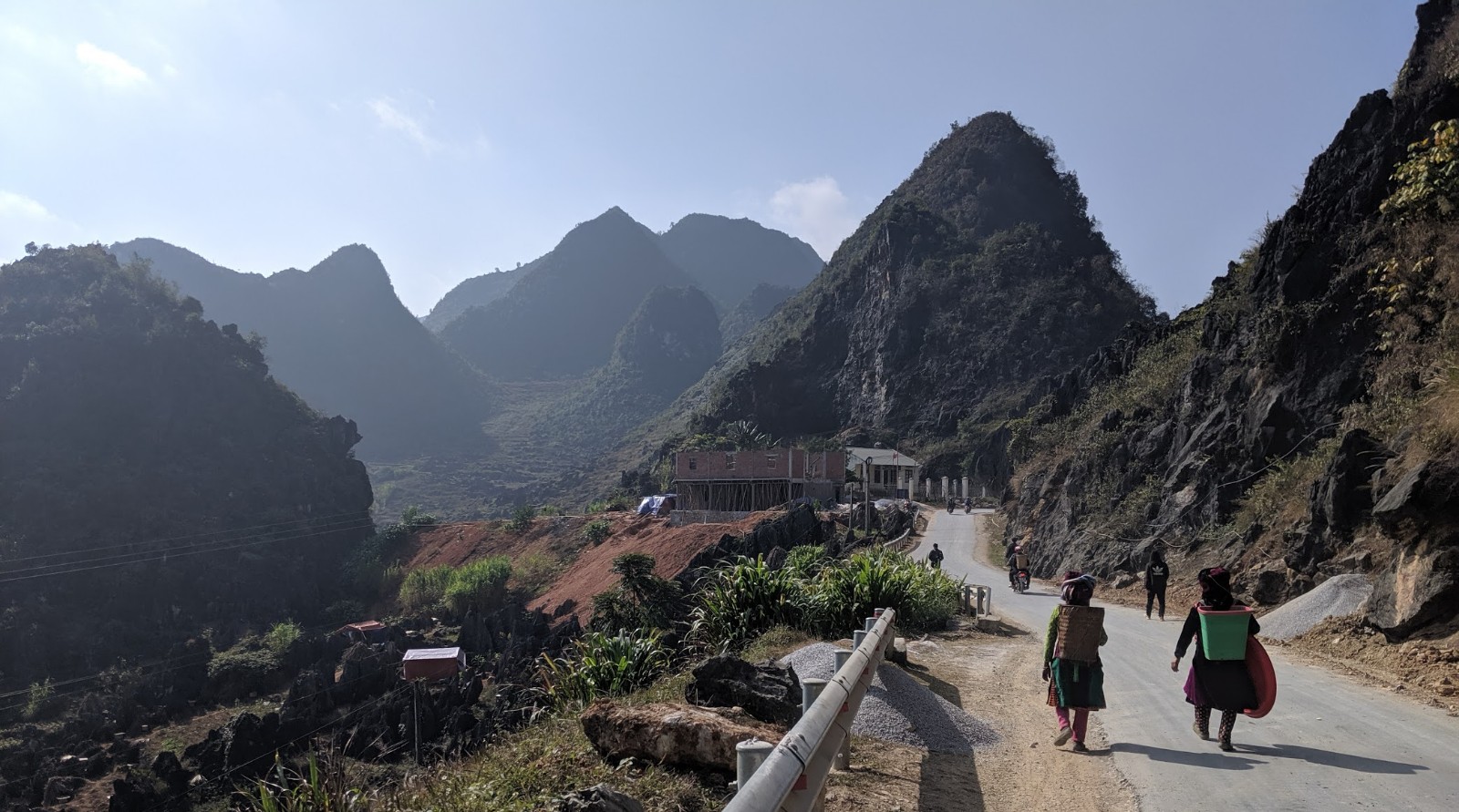
Culture is strong in Ha Giang Province with over 20 different ethnic groups. Up to now I had pretty dismissively assumed that the hill tribes of SE Asia wore traditional dress only occasionally, either for ceremonies or as a kind of cash exercise to encourage tourism. This couldn’t have been further from the truth in far north Vietnam where the bright colours of the H’mong, Flower H’mong, Tay and Lolo people were worn with pride down the remotest of roads and off-beat tracks, whether for collecting firewood, tending to animals or just waiting for the bus.
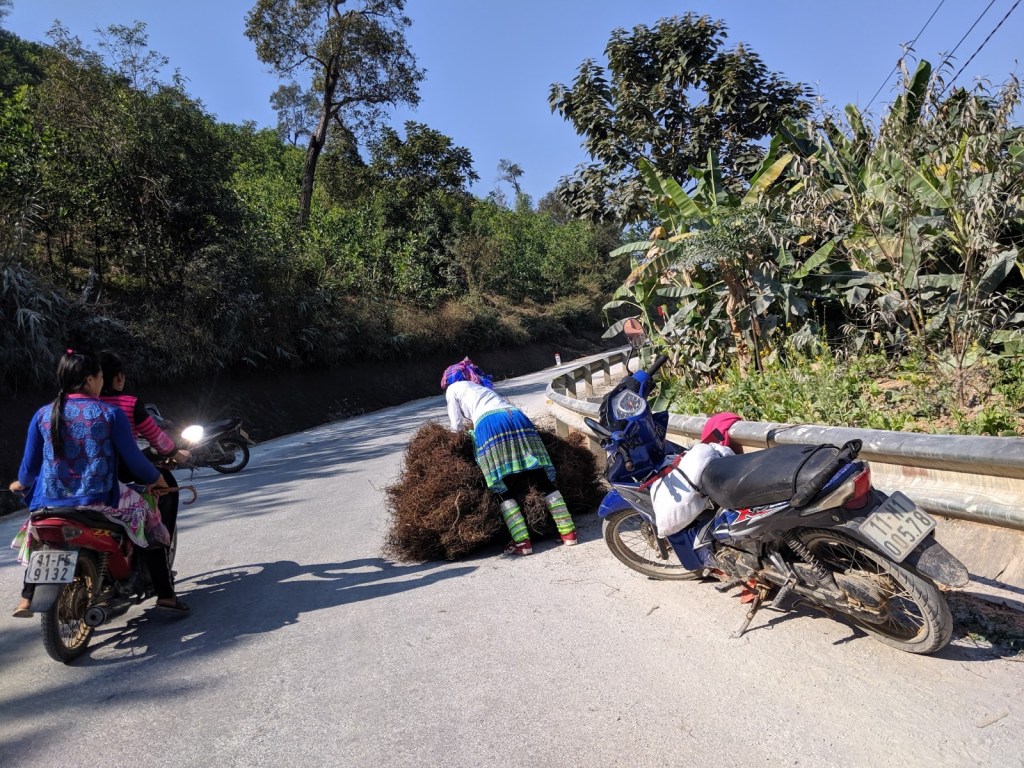
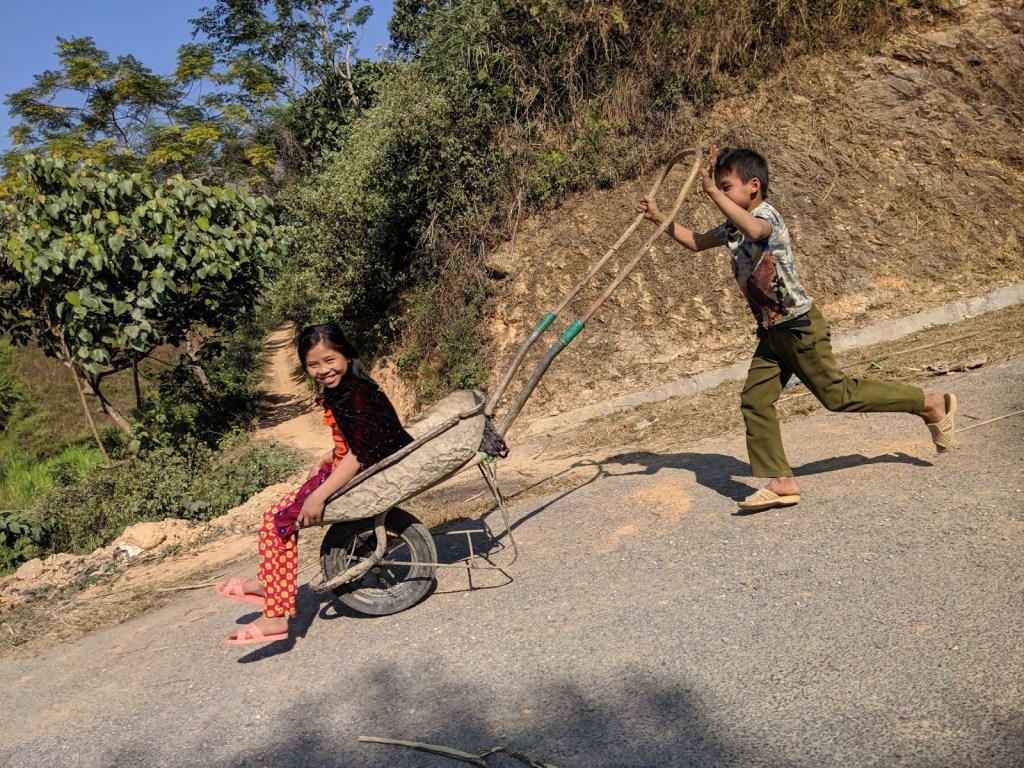
Taking in the first gentle hills and waving to the enthusiastic kids in these minority villages, I was lulled into a false sense of security with a relatively easy start.
I even stopped for a coffee not noticing the Swiss girls overtake. Then I hit the climb. It was endless! I caught up with the girls soon enough and we exchanged smiles through gritted teeth. With ill fitting bikes and a narrow range of gears, they were struggling and effectively doing double as they weaved their way up. We stopped to share some oranges but eventually drifted apart.
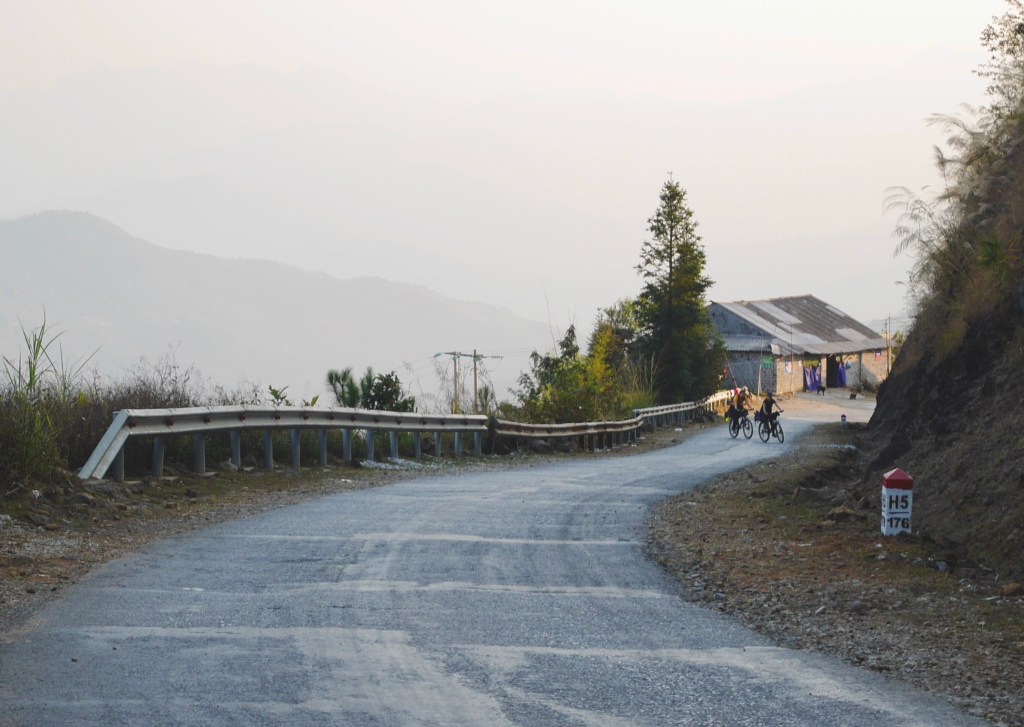
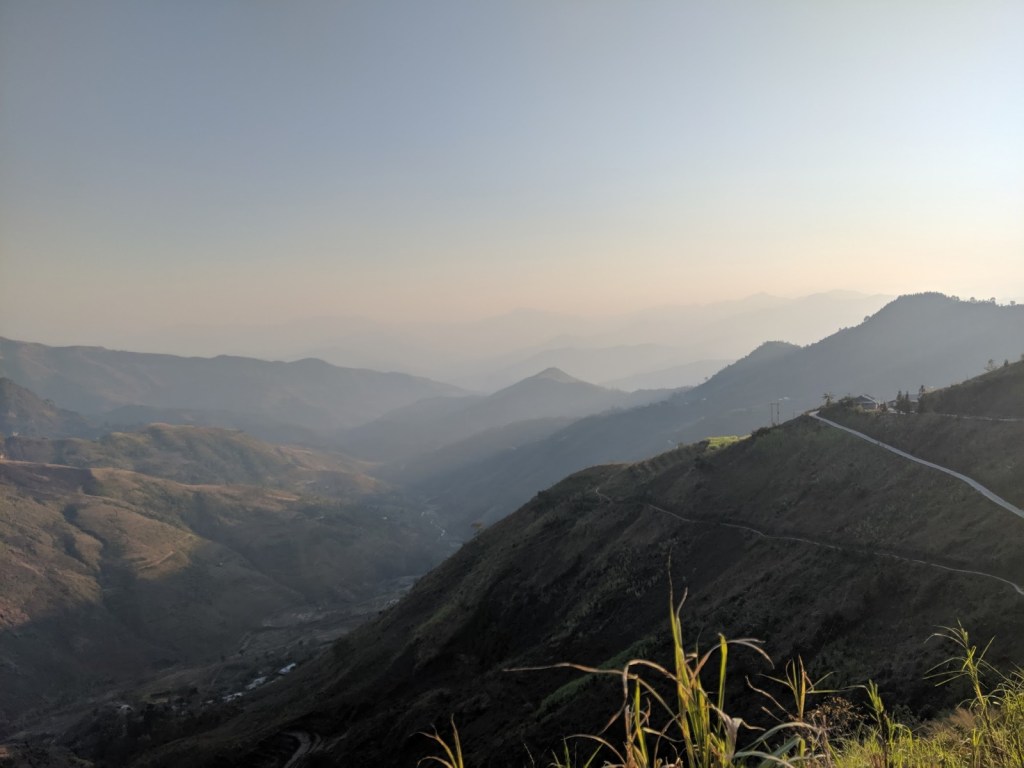
Each rotation was a conscious effort for the next three hours until I finally reached the short descent (by now in the cold and dark) to a H’mong homestay in Meo Vac. Whilst I tucked into another epic family dinner, the staff got a message out to the Swiss girls’ accommodation. They made it we later found out, exhausted, some time after 8:00pm.
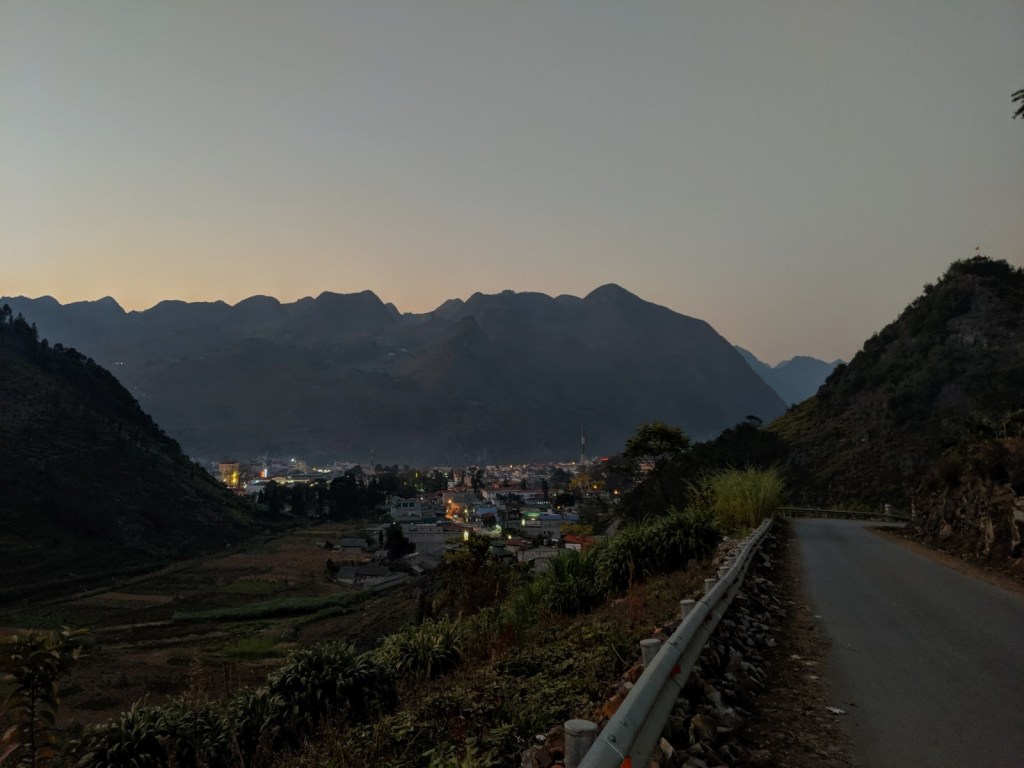
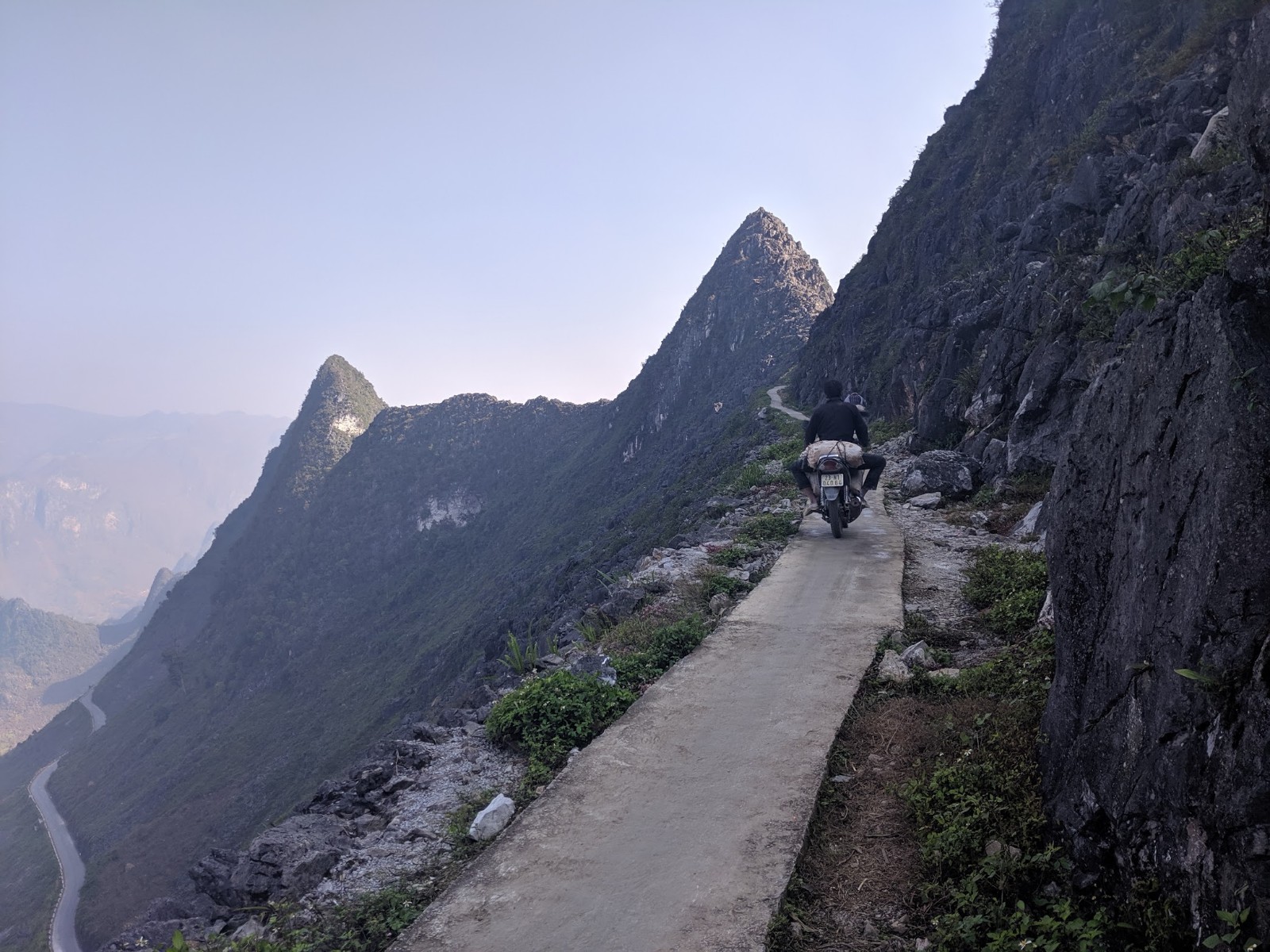
The next day I struck out toward Dong Van on the most popular section of the Ha Giang Loop.
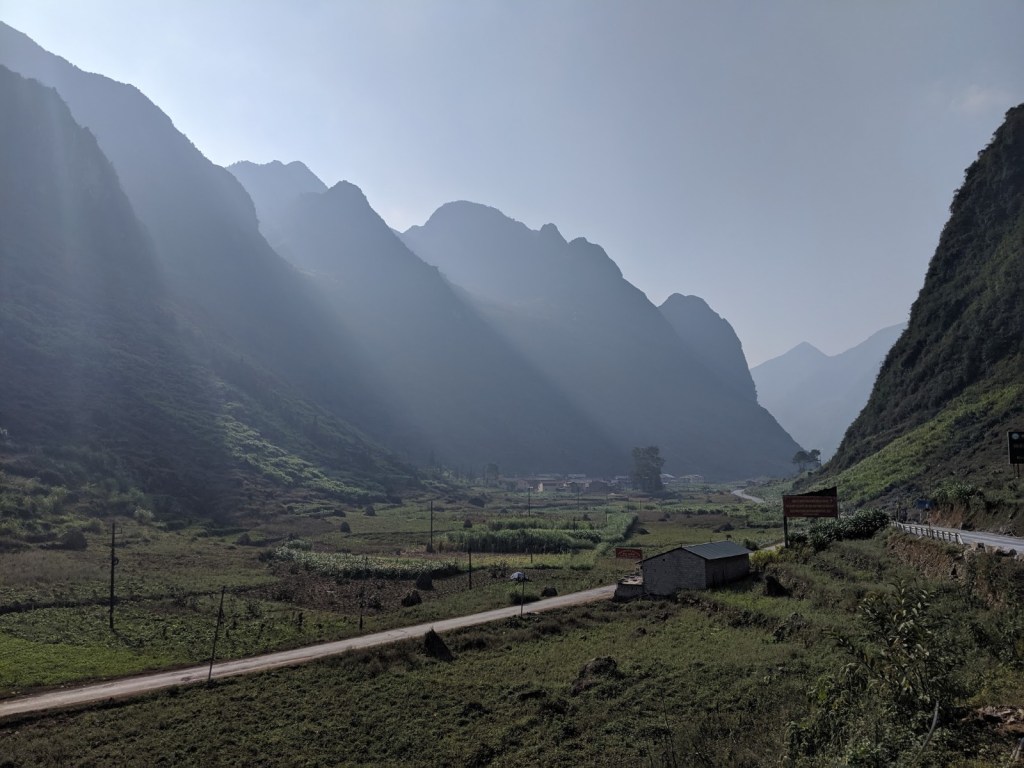
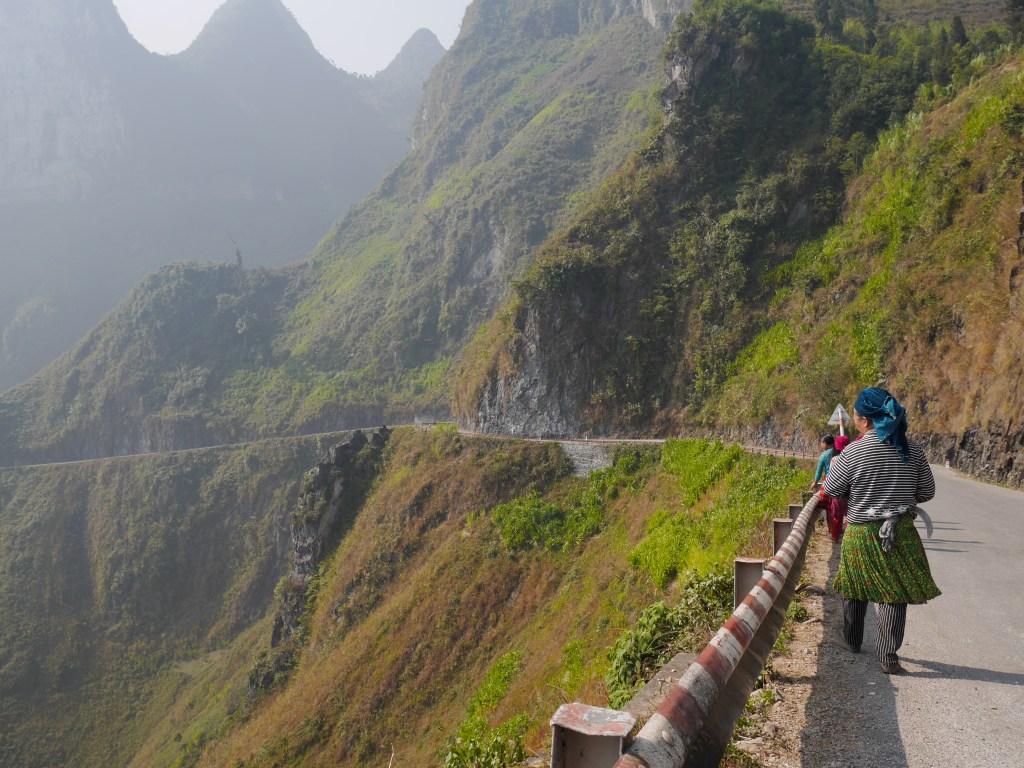
It’s a ridiculous stretch of road!
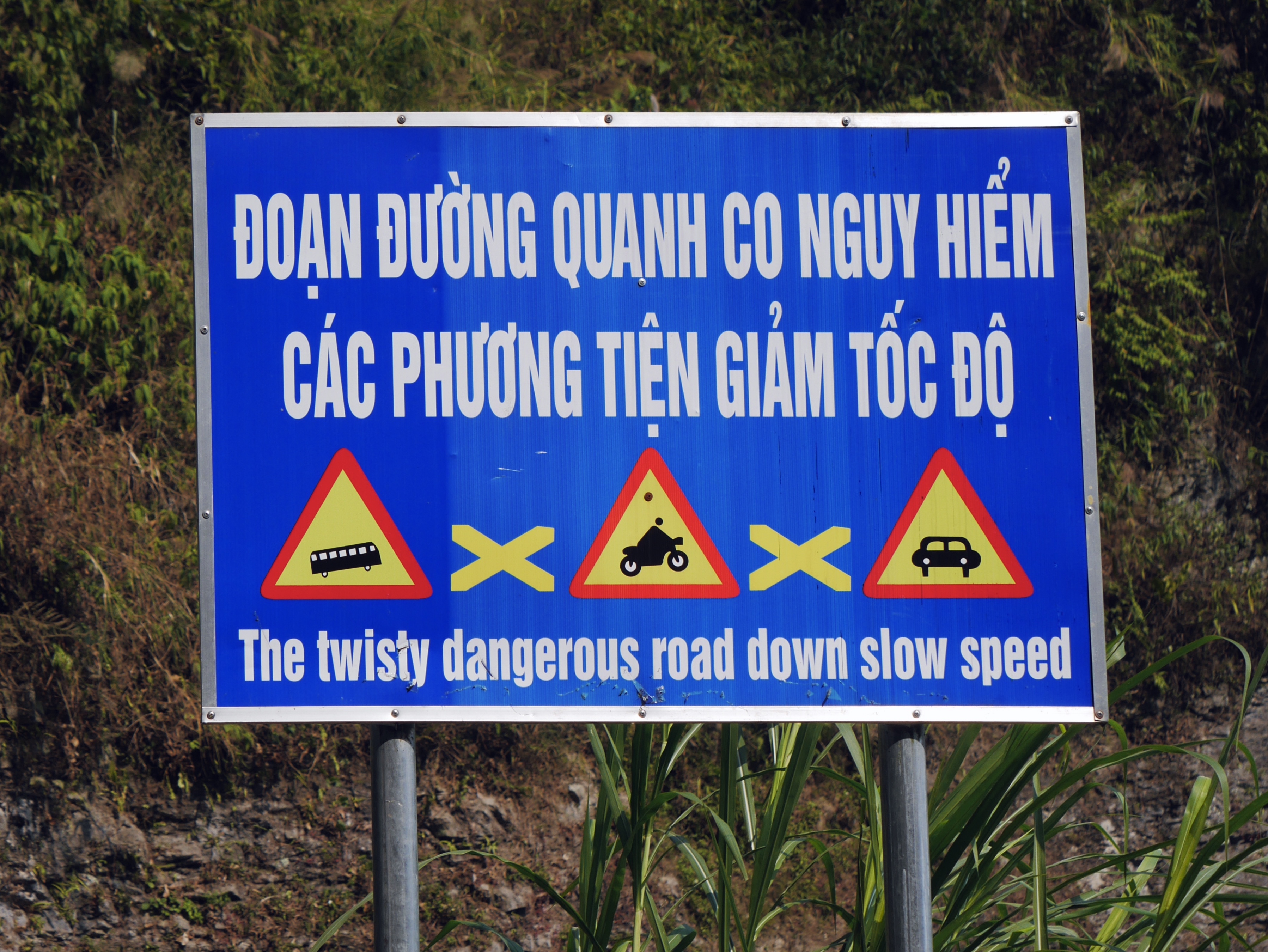
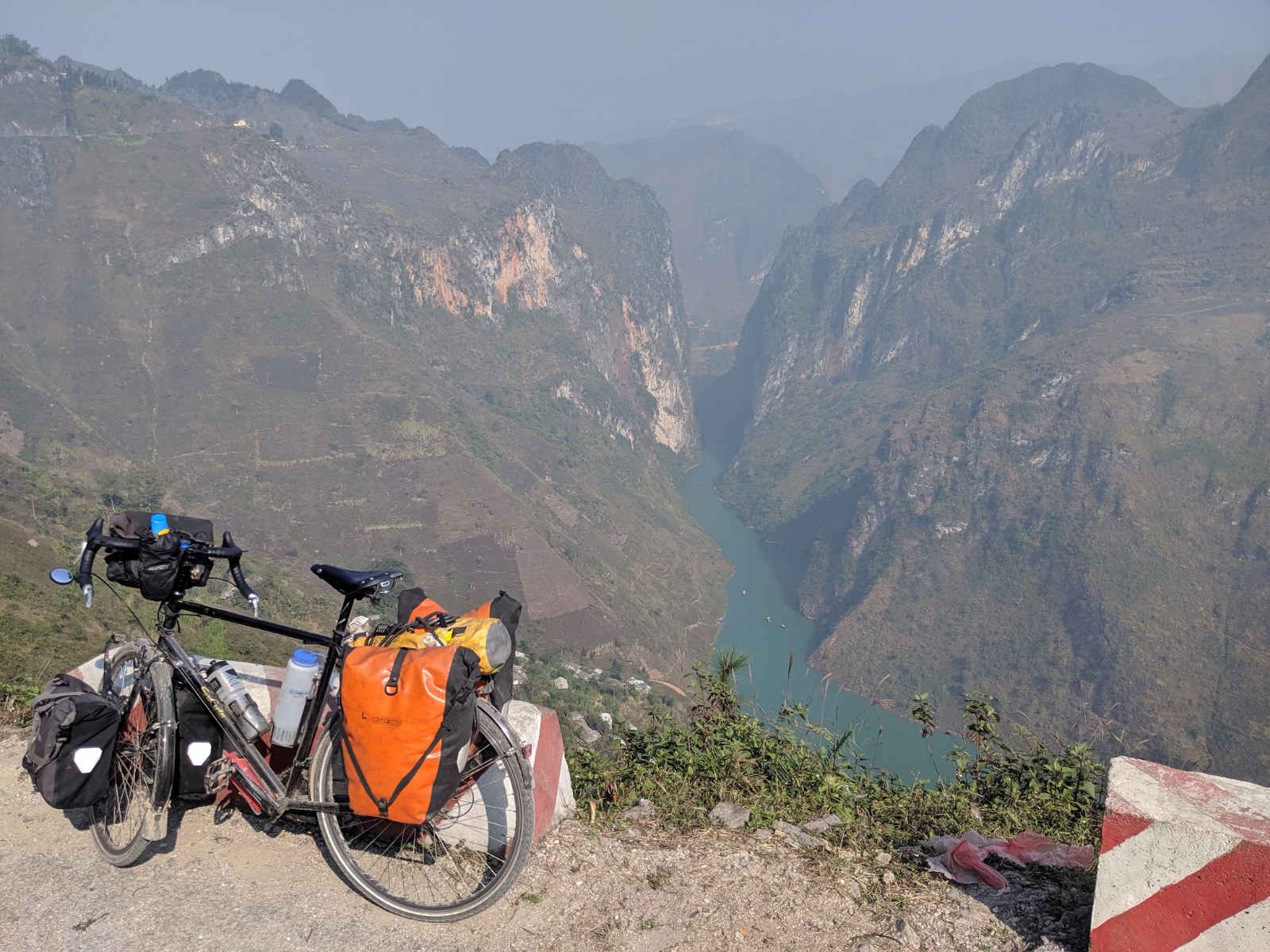
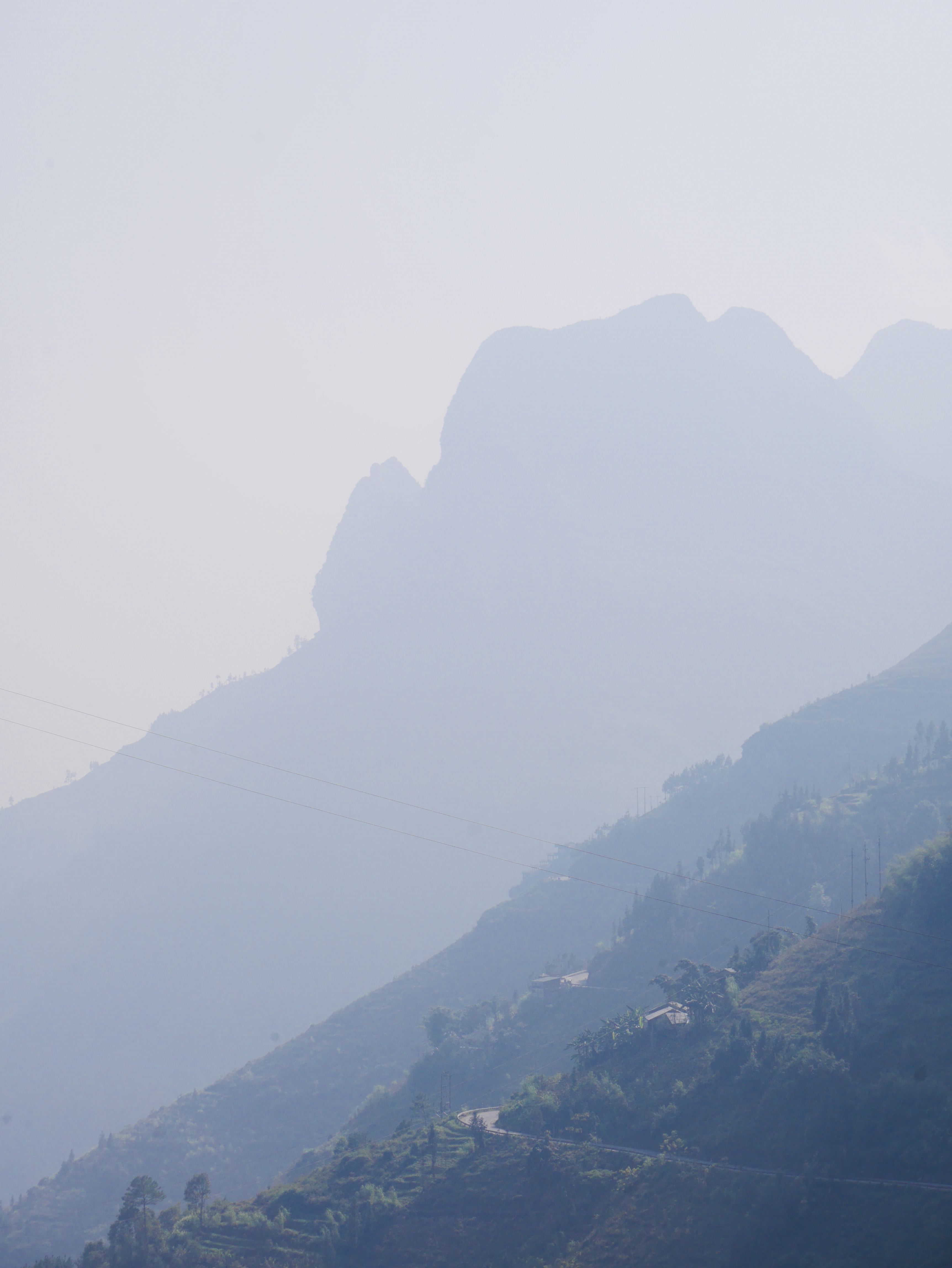
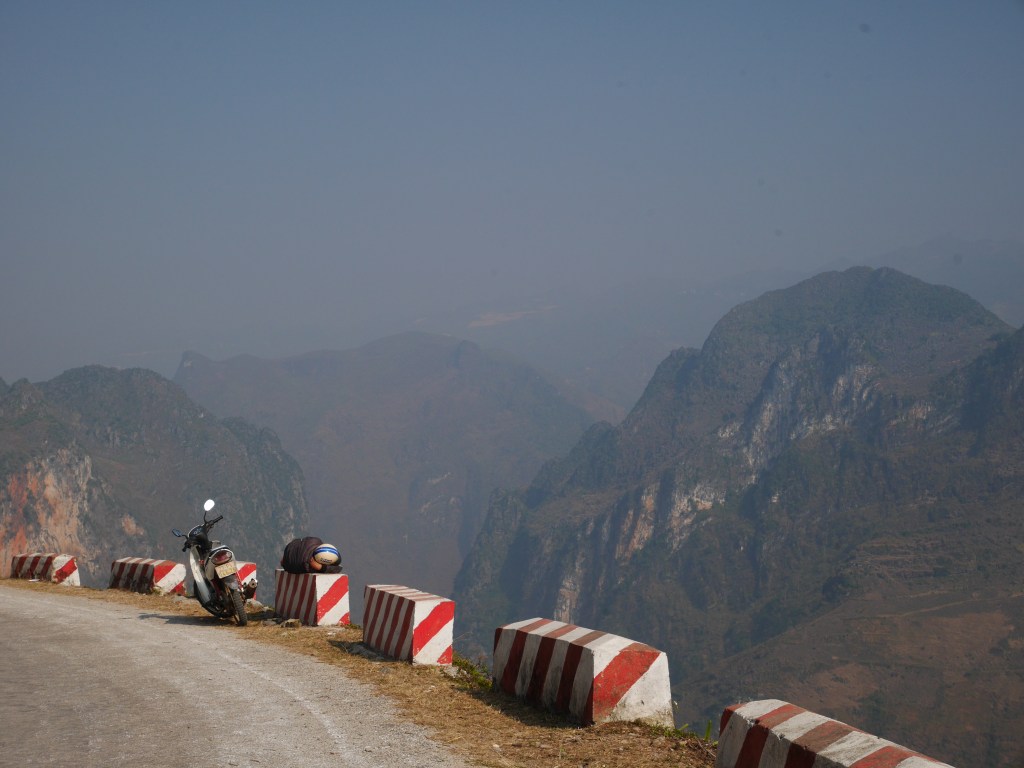
A small museum tells the story of those that carved it out in the ’60s “with only hoes, shovel and crowbaw”, at times under attack from bandits and the remnants of the old Viet National Party. The short 21km section I had in mind for the day, across the famous Ma Pi Leng Pass, took more than two years to build. The most intense work was carried out by a so-called ‘suicide squad’ of 17 men who were suspended each day by ropes over the cliff literally hacking the road into the hillside by hand with hammers and pick axes for a period of 11 months.
14 died on what the government later dubbed the ‘Road of Happiness’. This monument stands in tribute.
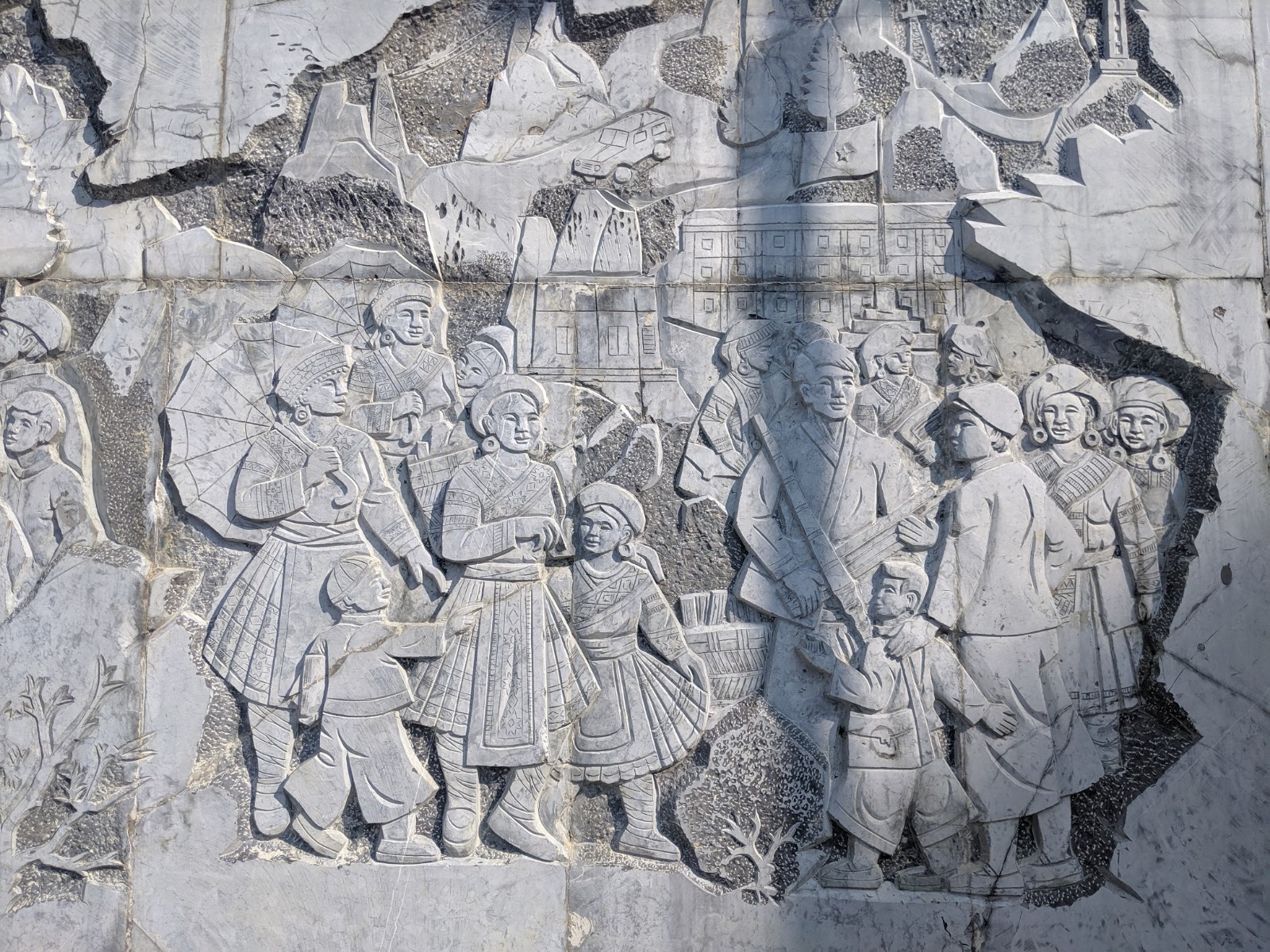
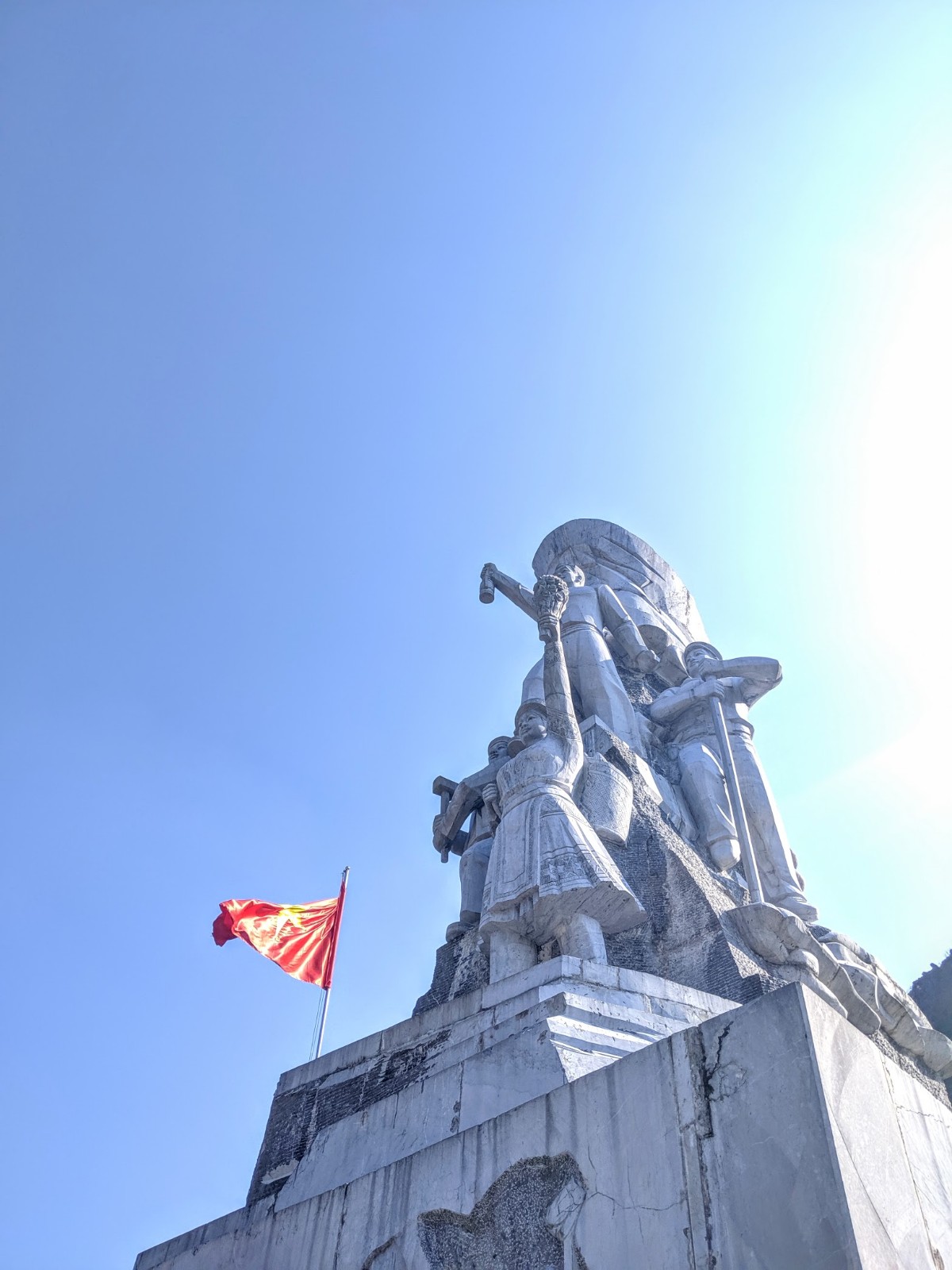
The idea of of the road was to bring the ethnic minorities of the north into the modern age, allowing remote villages to access healthcare and get goods to market. Though given the political backdrop of the 1960s, perhaps there was strategic interest too.
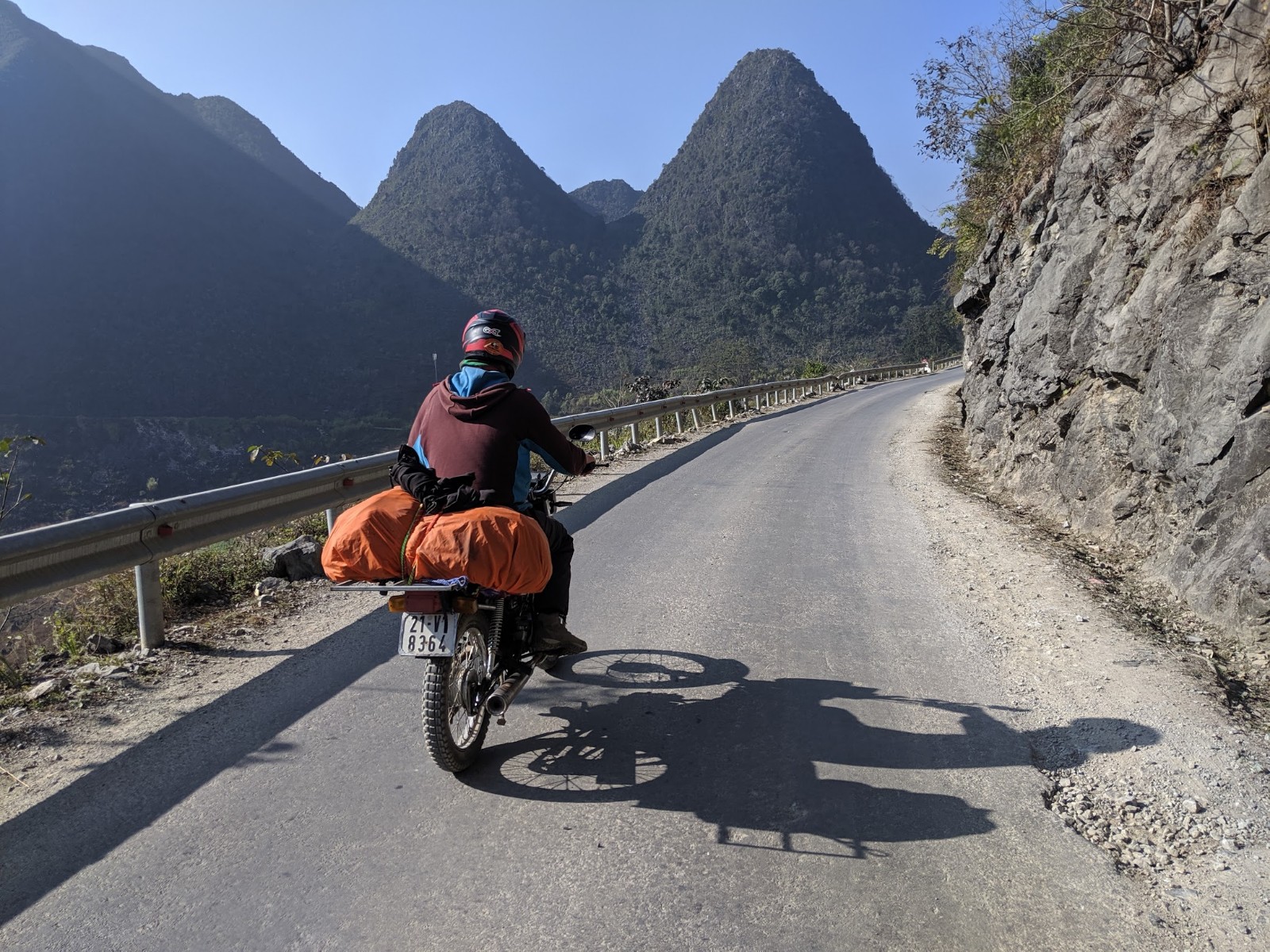
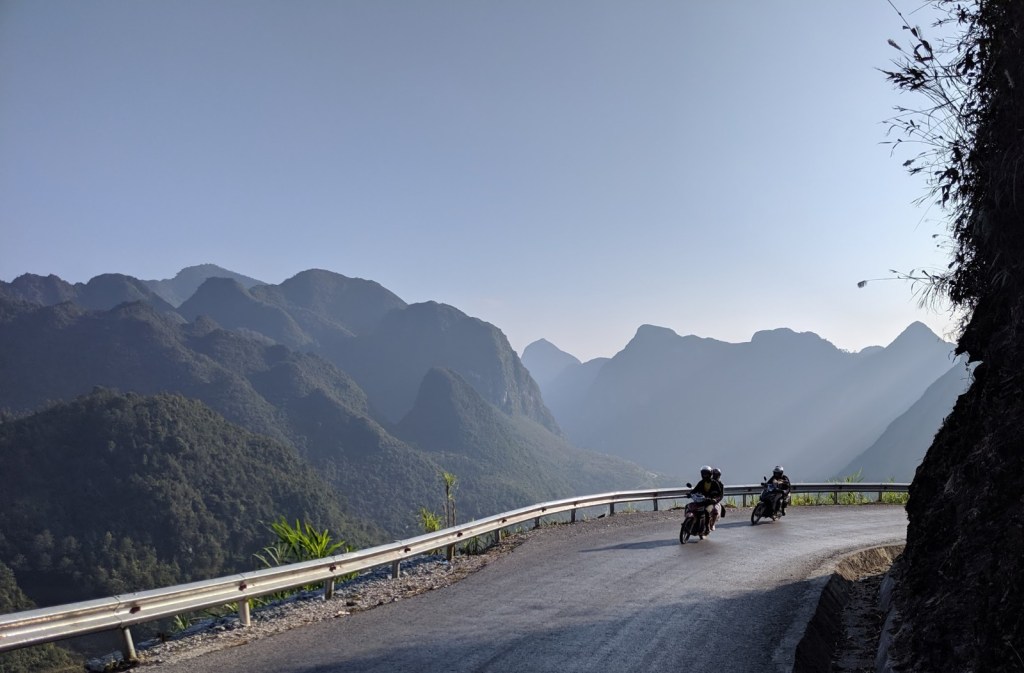
Today it’s as much a conduit for groups of backpackers who fly by occasionally in big groups by motorbike – friendly for the most part, but some I spoke to seemed to have little idea of where they were or what was going on (their money, I’m sure, going to tour operators in Hanoi, rather than local villages).
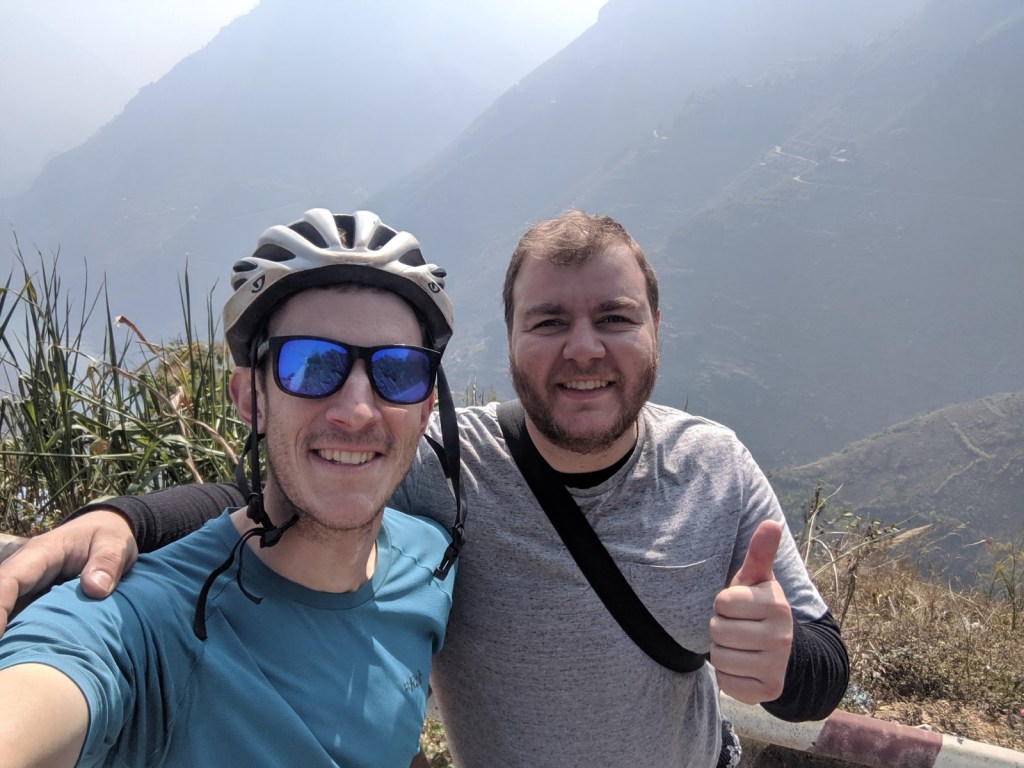
I bumped into Phil at a viewpoint and he snapped the picture below.
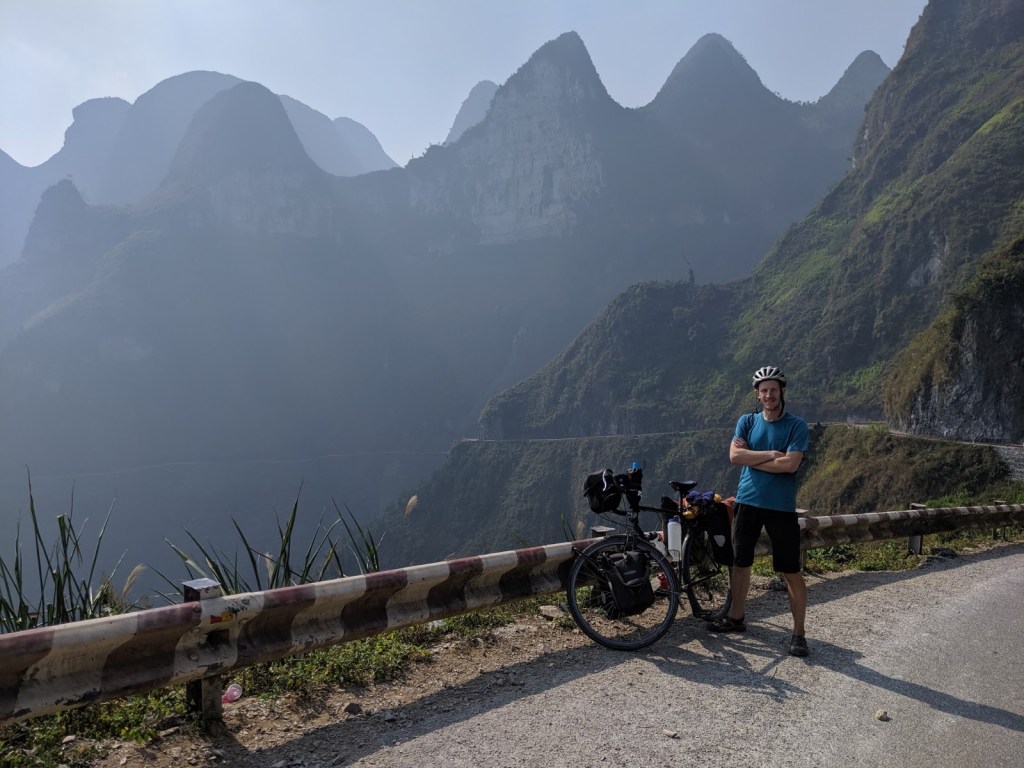
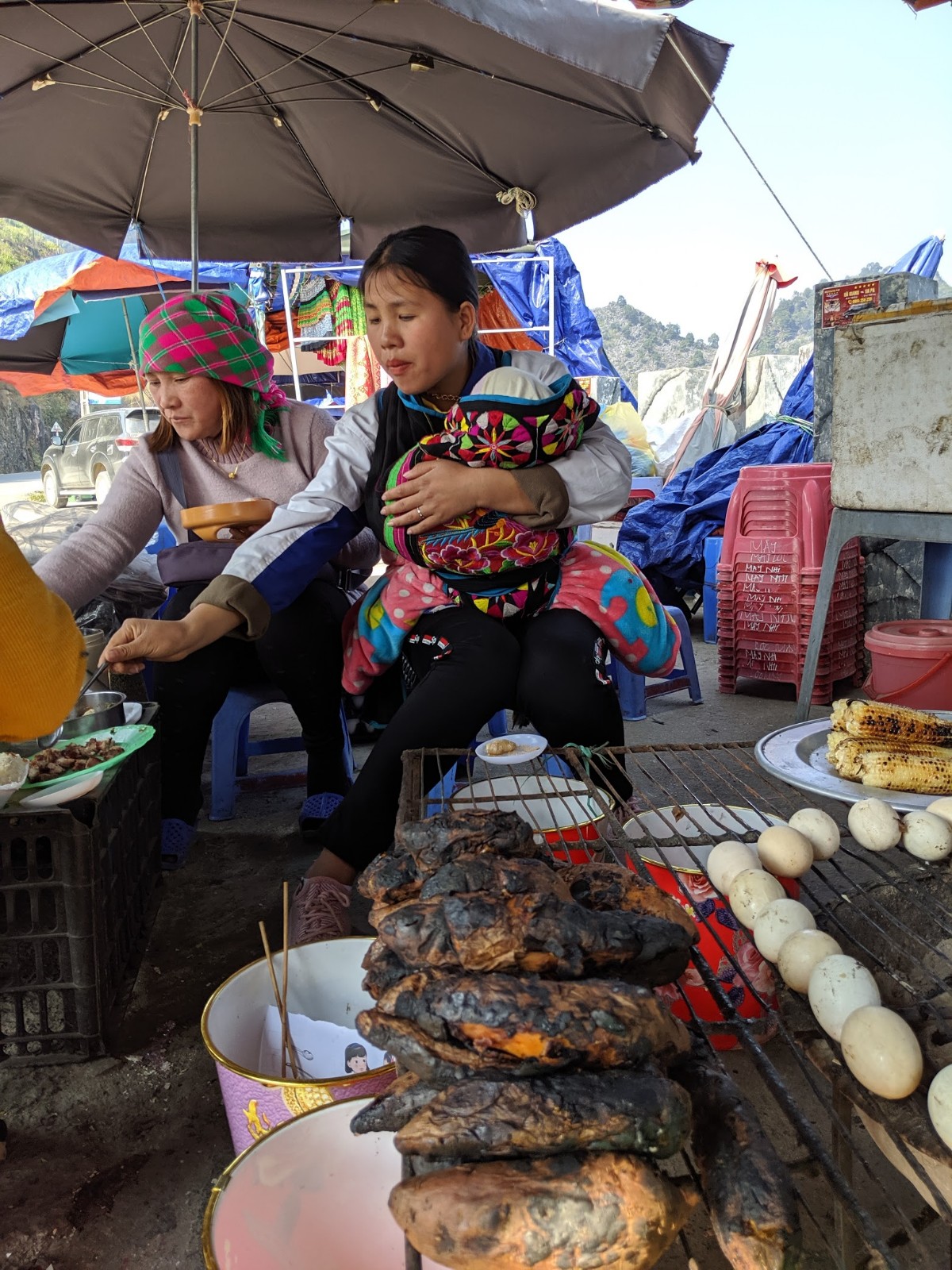
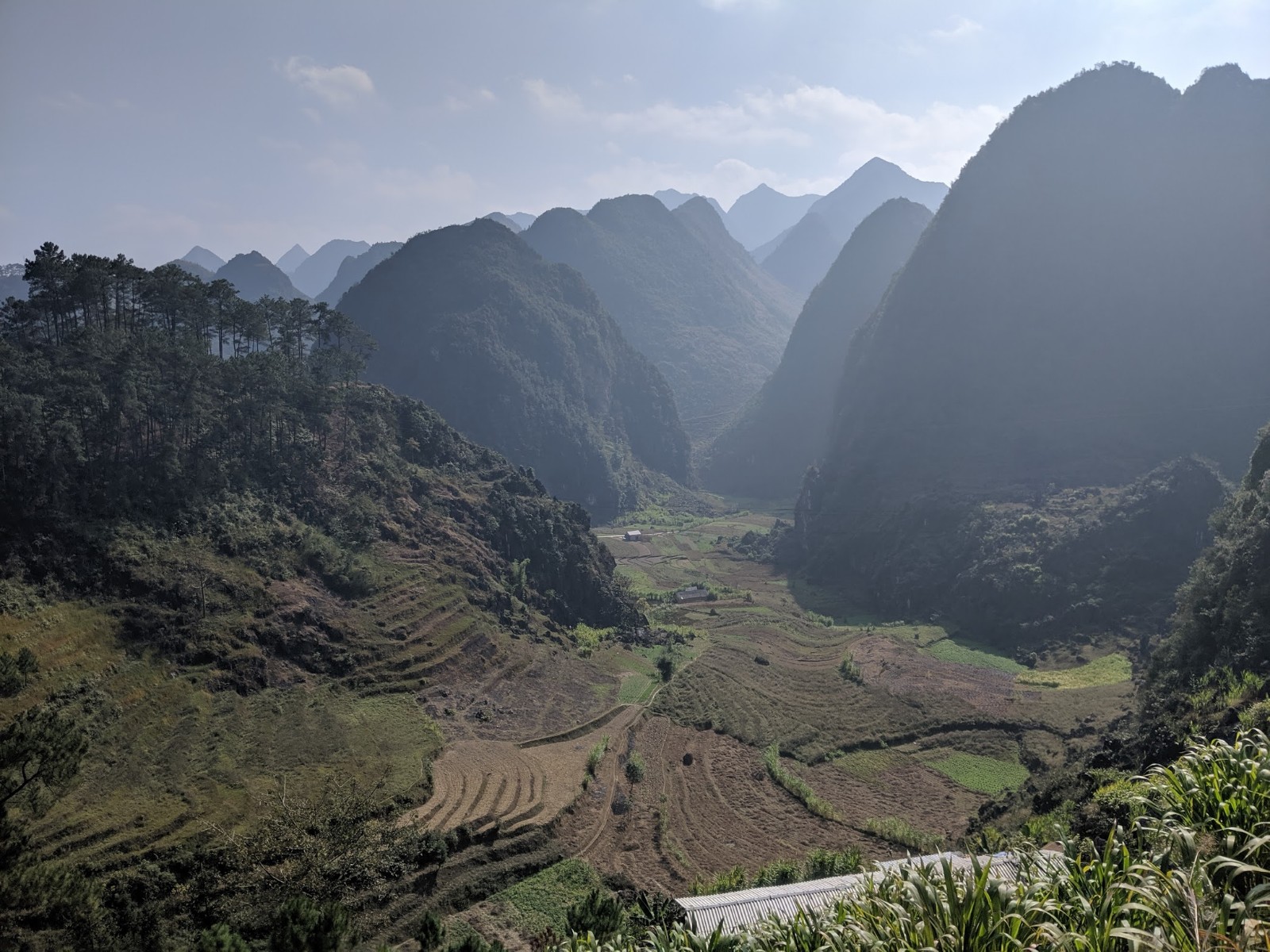
With a short day ahead, I took a seat and enjoyed some local snacks whilst trying to process the deep down to the gorge.
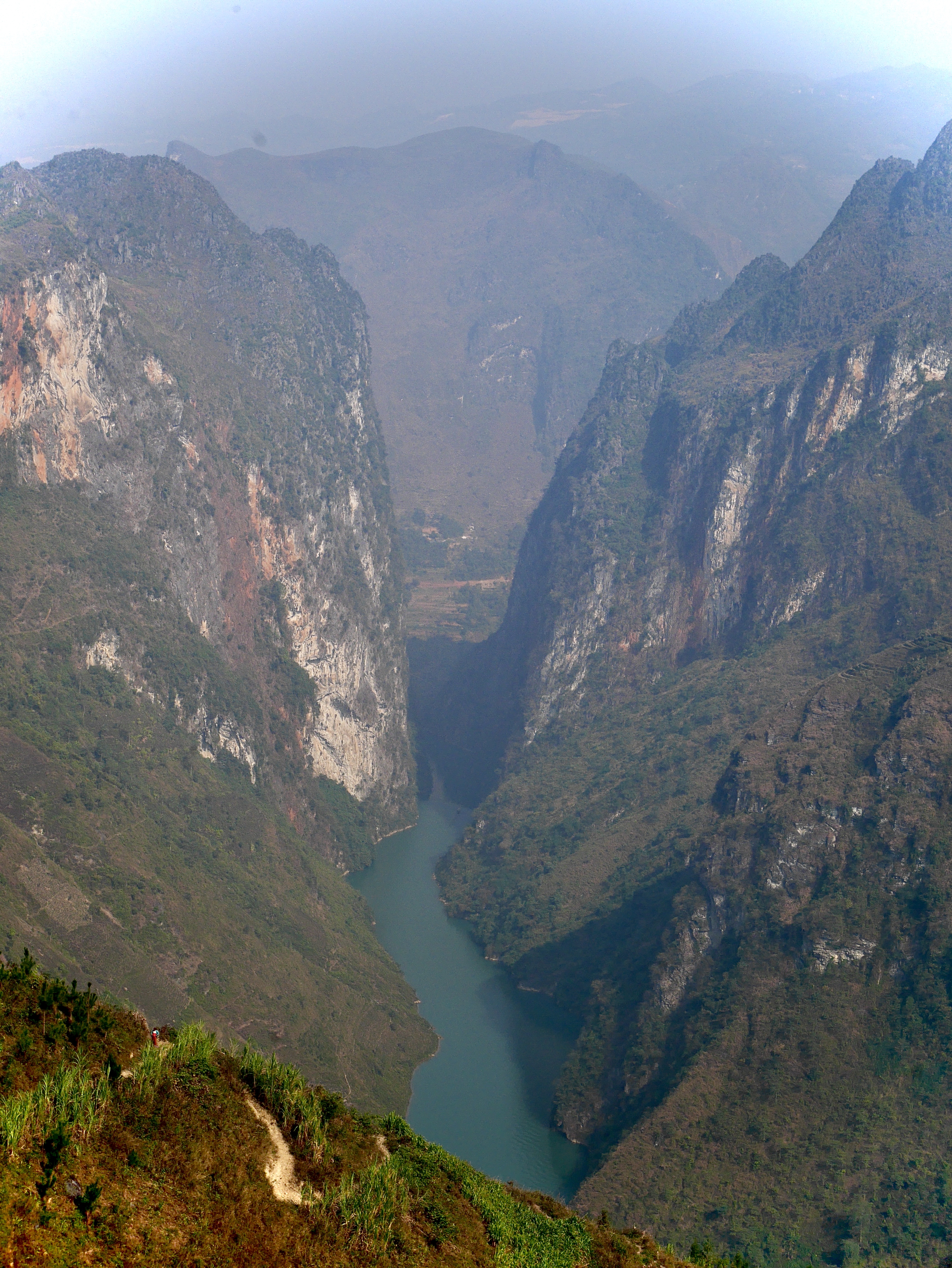
The ‘Happiness Road’ has no doubt made things easier, but many villages are still situated miles off the road, accessible only on foot. Collecting firewood seemed a time consuming activity, taking place, along with some cultivation, on even the steepest of slopes.
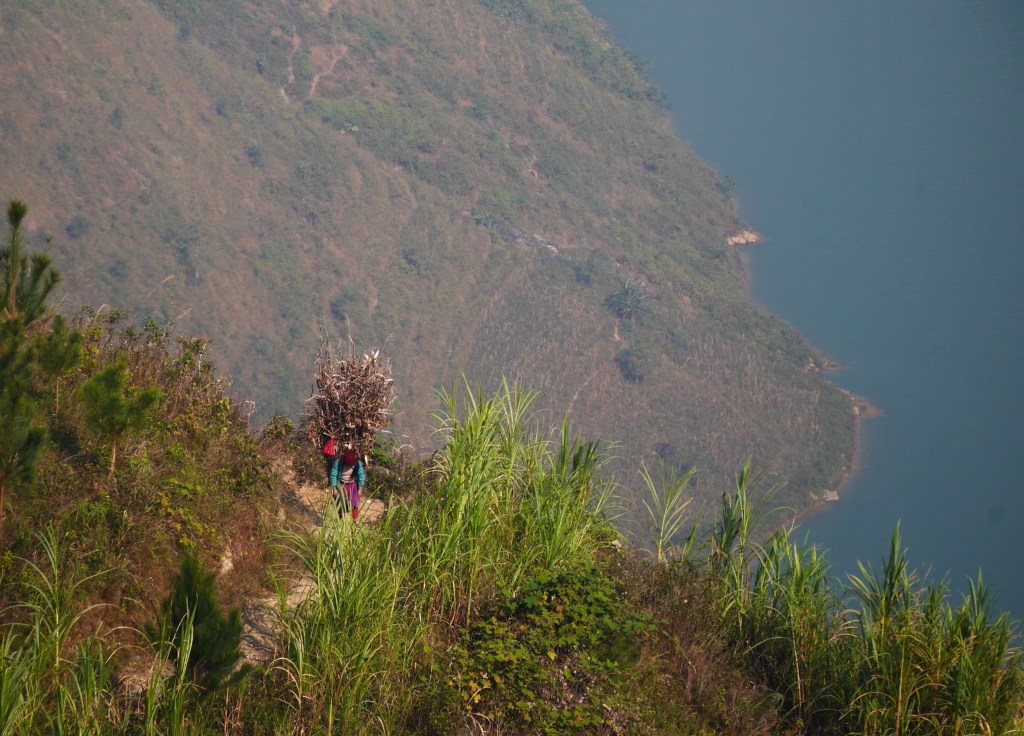
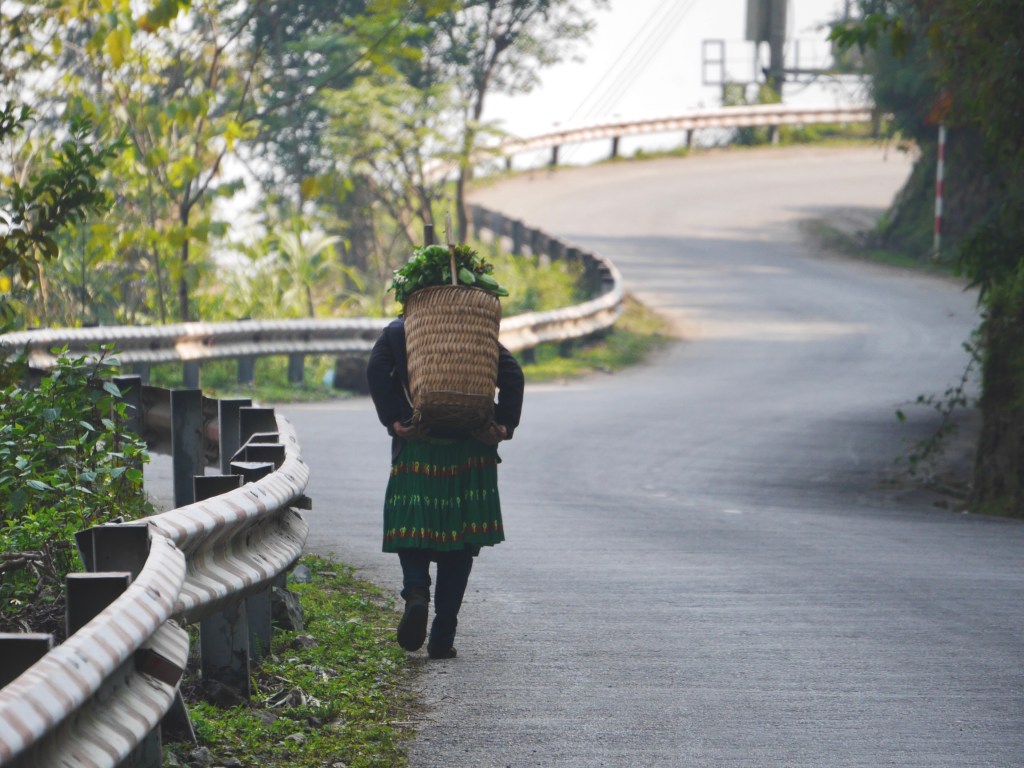
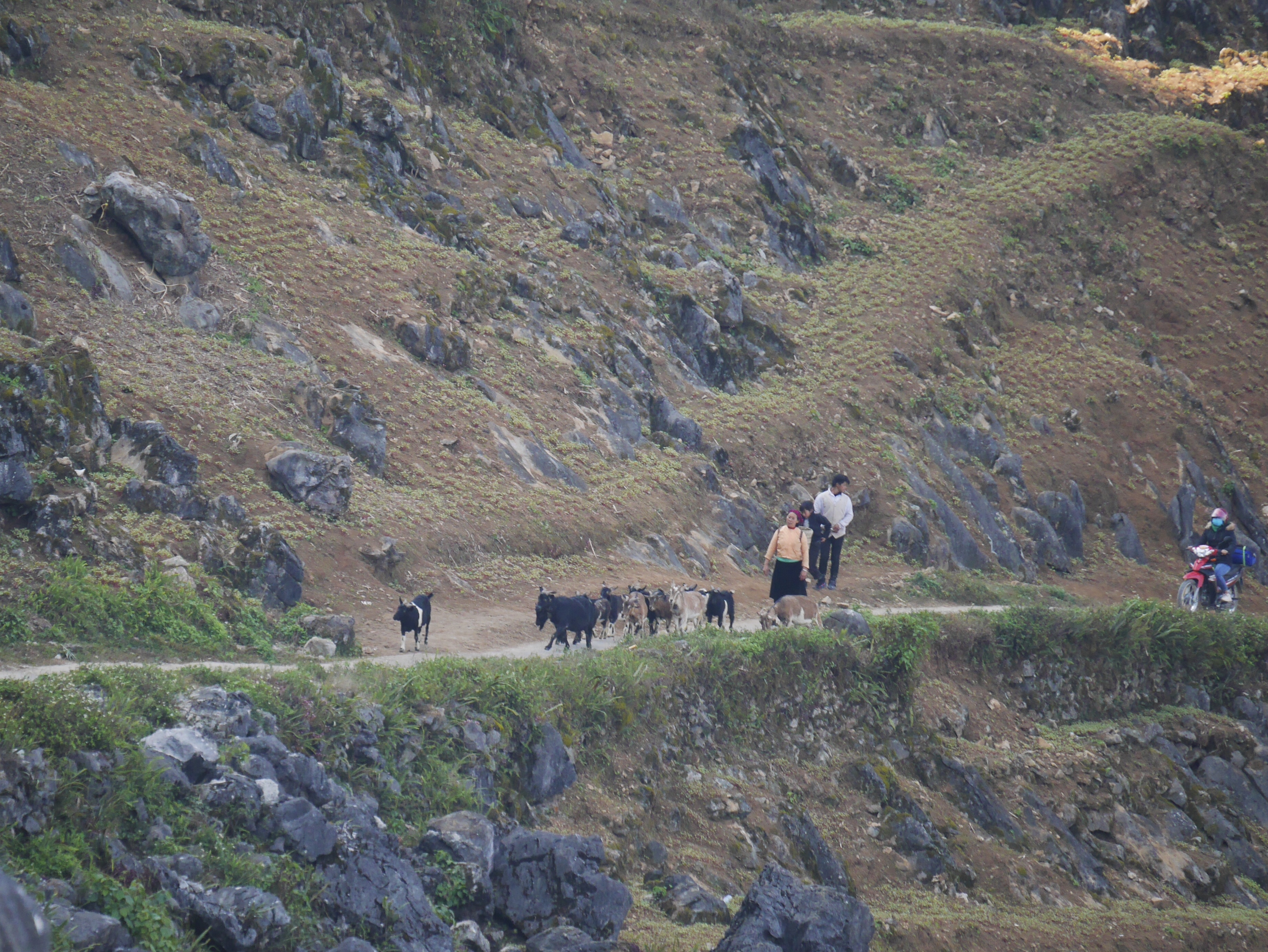
I soon reached Dong Van (the local market town) after a short but steep day in the saddle. With plans to stick around for the market, I had the luxury of a day in hand.
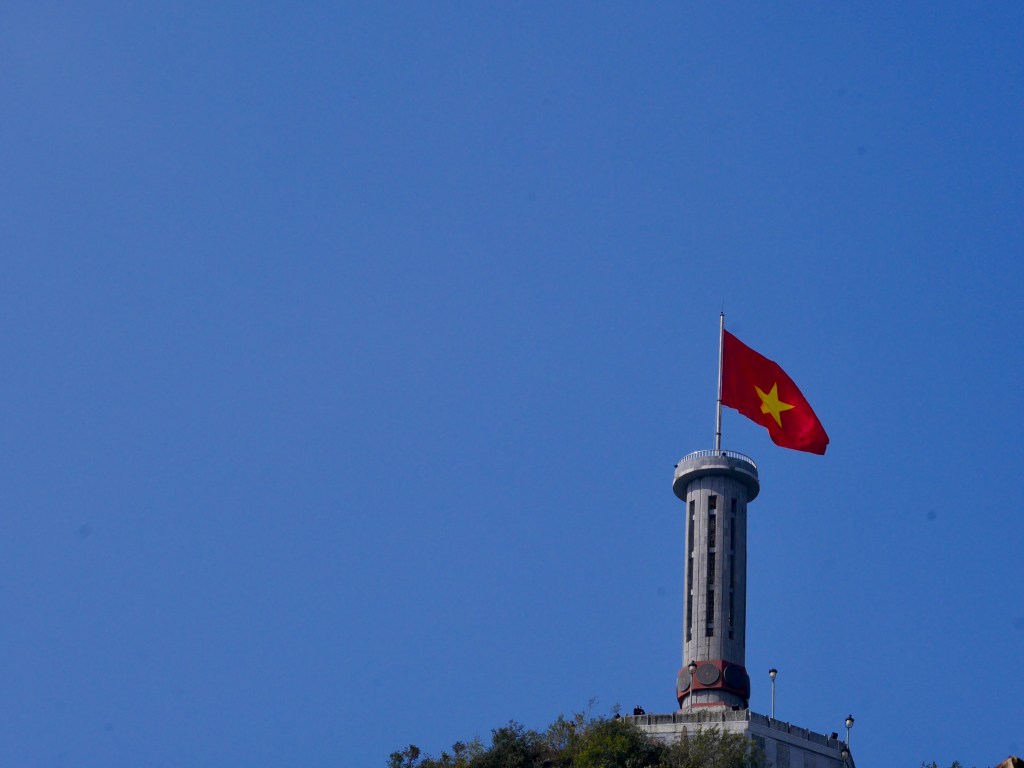
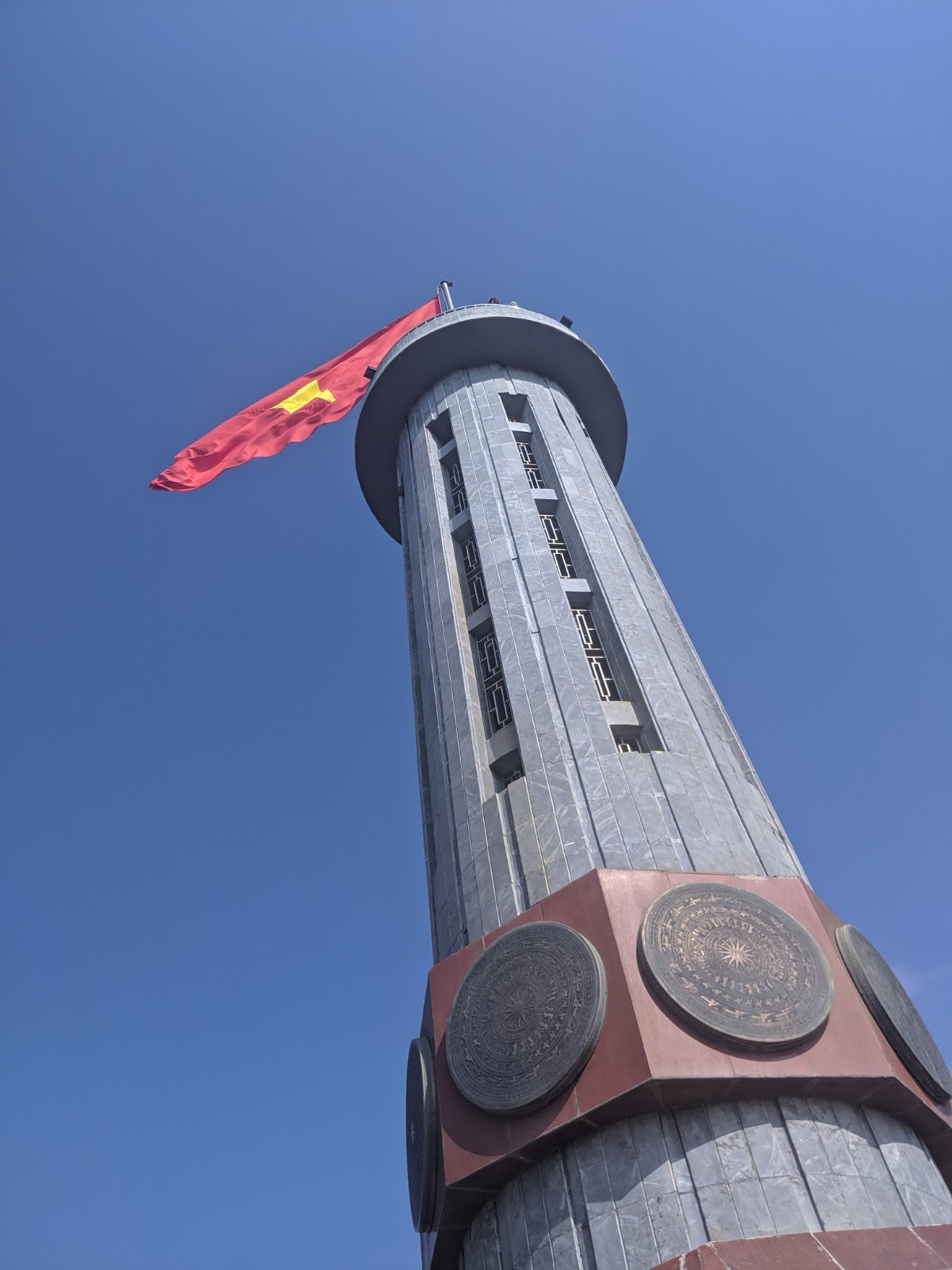
Rather than rest I decided to take a ride (minus luggage) out to Lung Cu – site of the biggest flag (and biggest flagpole) in Vietnam. Despite its isolation, the flag draws a good handful of local tourists at weekends who show up (often in flag t-shirts) to be photographed (you guessed it – in front of the big flag!). It was the perfect cherry to top to my unwittingly patriotic ride which to now had already taken in the Cu Chi Tunnels, HCM mausoleum and Ho’s hideout at Pac Bo Cave.
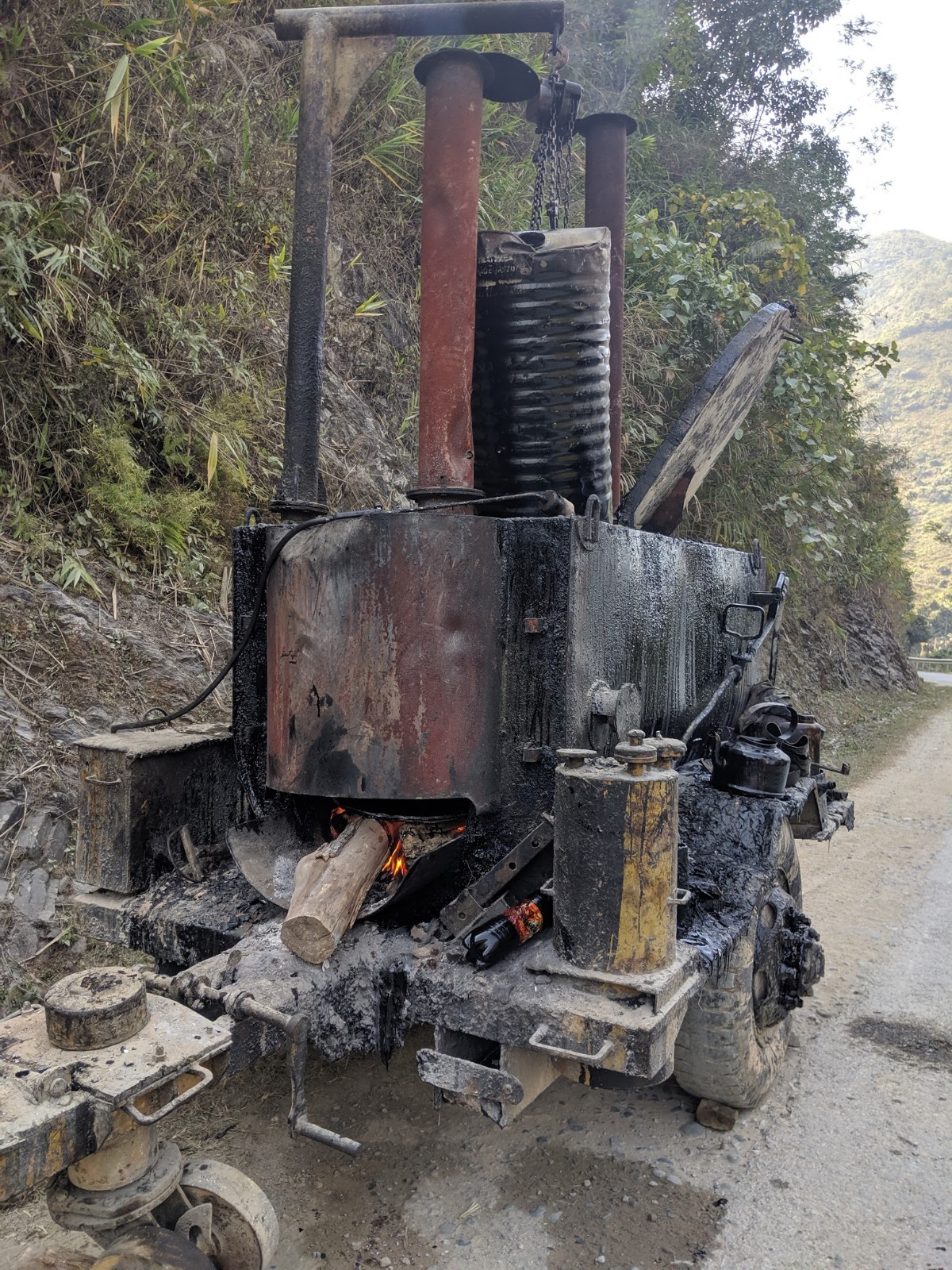
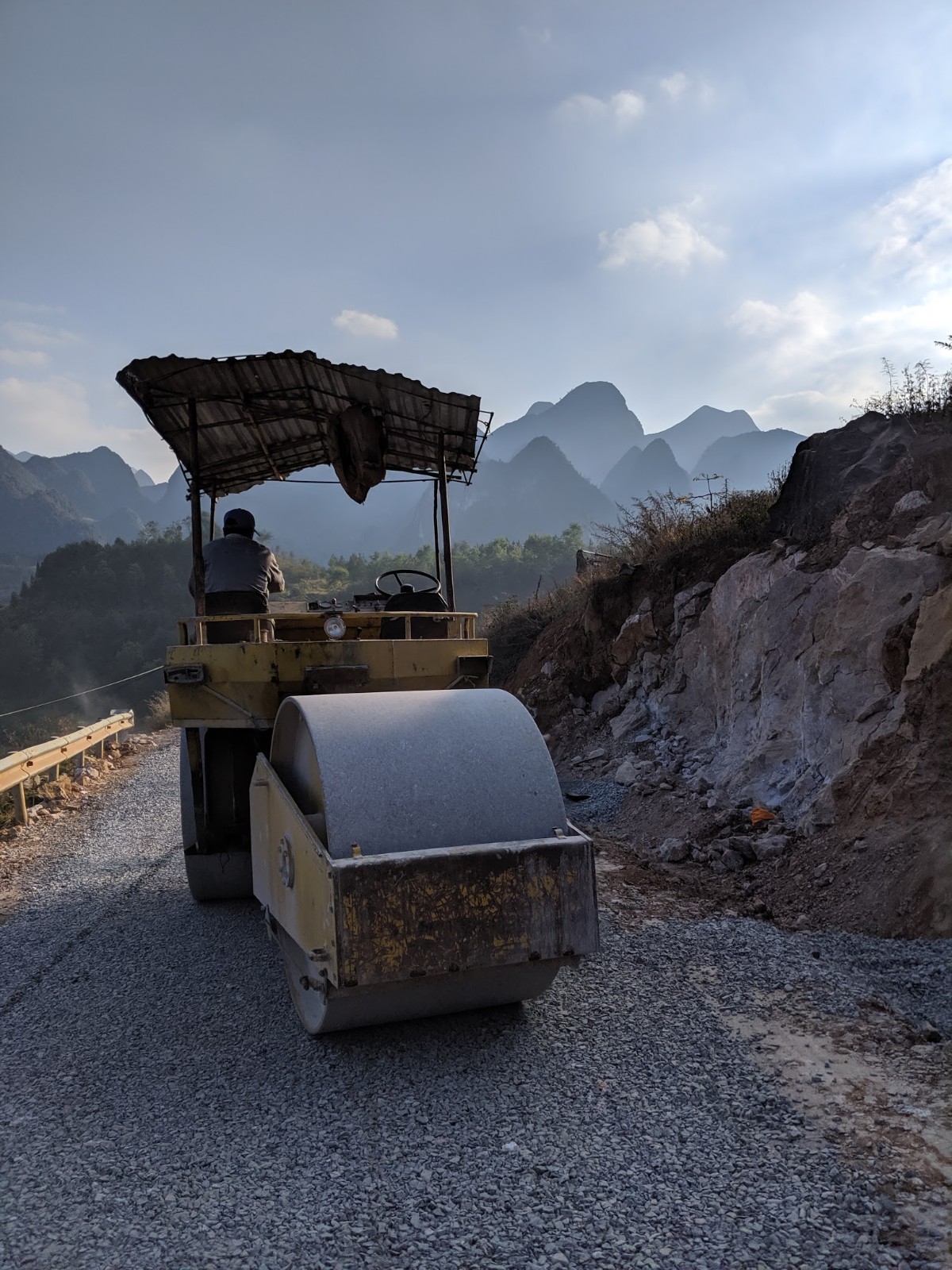
The road to Lung Cu is a dead end – yet seemed to be the focus of plenty of road works. The conditions for these road crews were always grim: tar is melted in a wood-fired furnace whilst men and women, mostly in flip-flops, break rocks with hammers and pick axes, ready for a guy in a steamroller ploughing back and forth. As a cyclist or motorbike you cross your fingers and do your best to squeeze through.
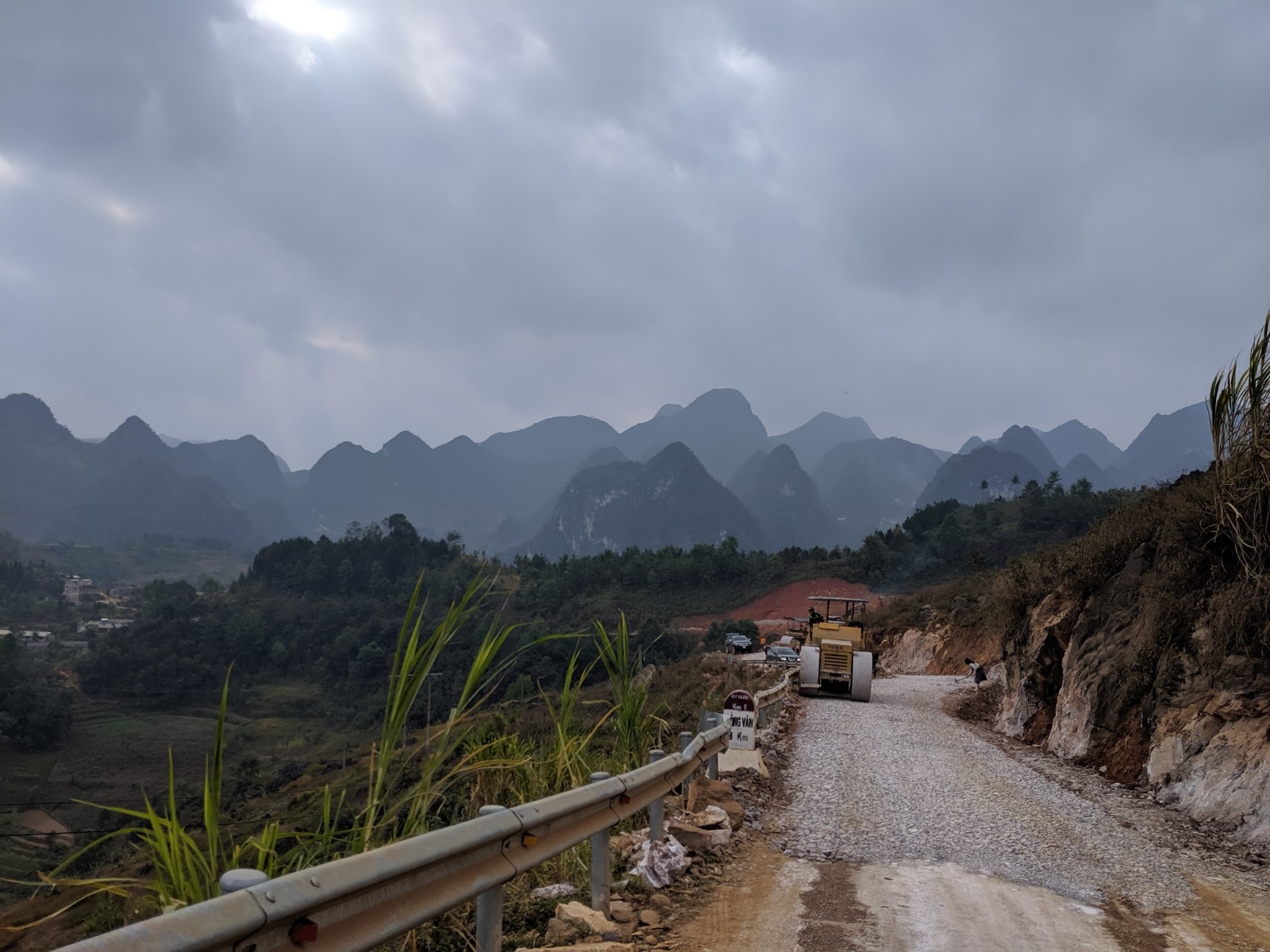
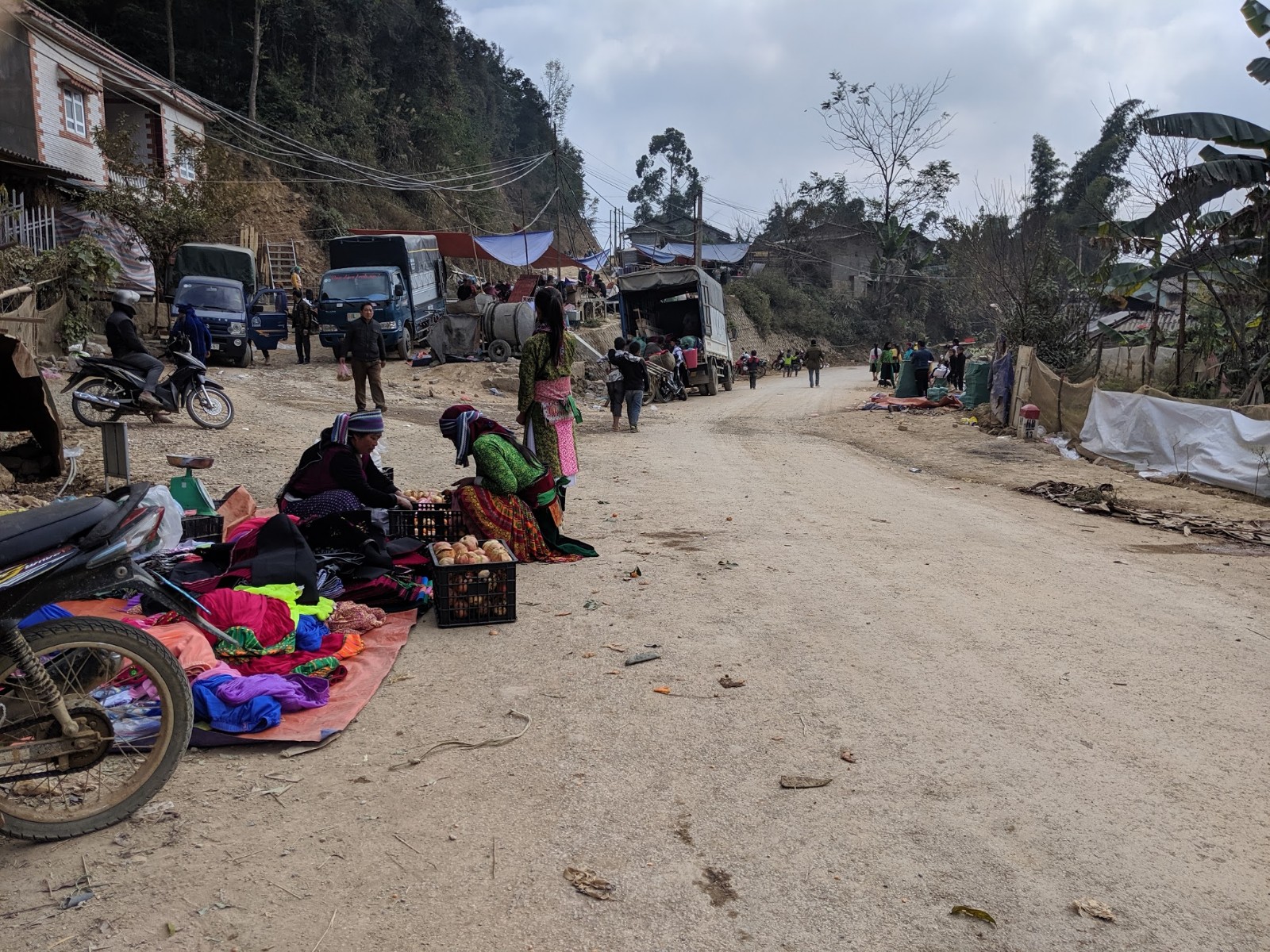
Clear of the works, the road continued to climb, past a small market (more oranges for me!), before scuffing the border, on and off for a few more km’s.
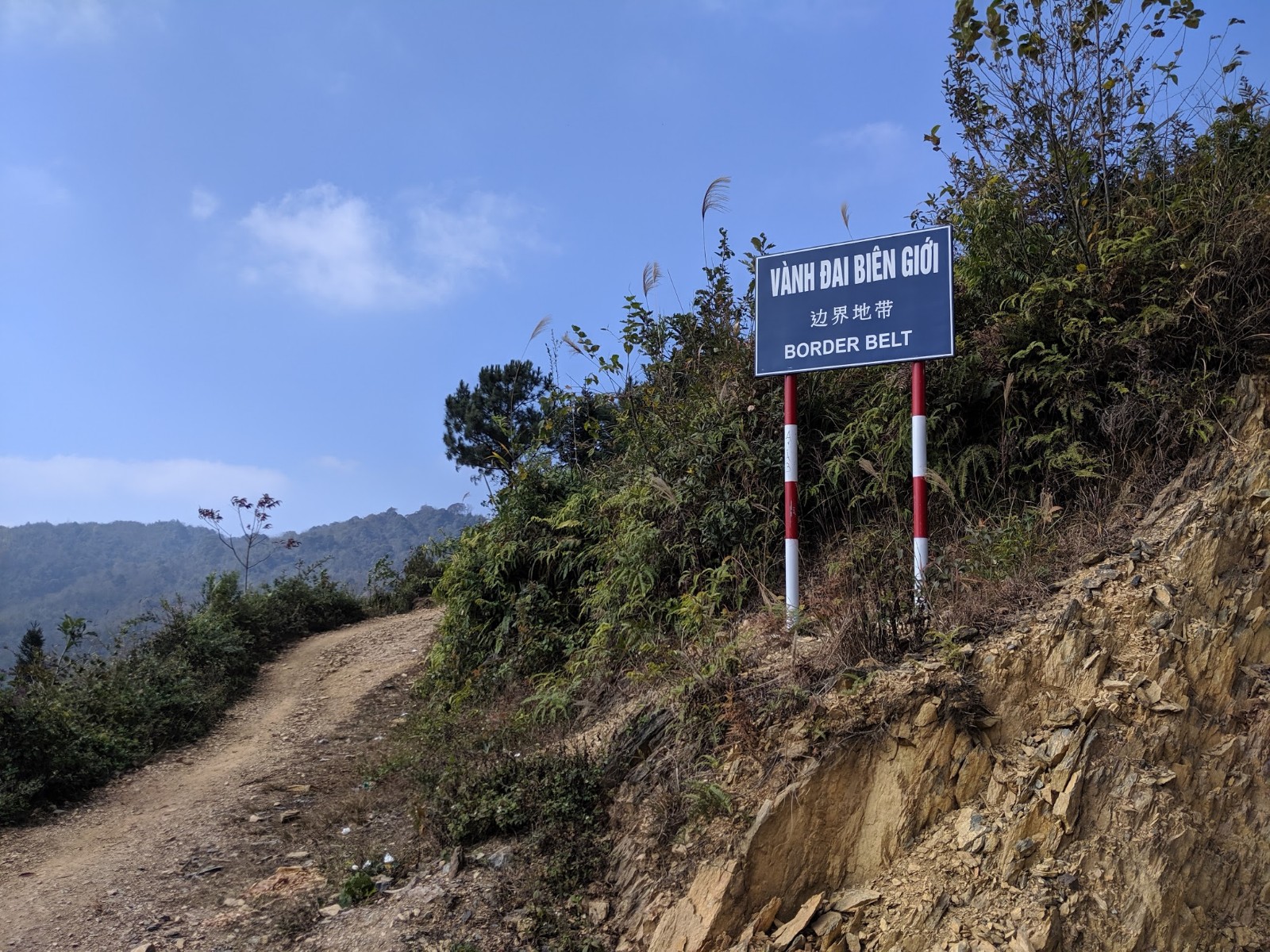
The path below in fact leads directly into China! If you choose to keep going.
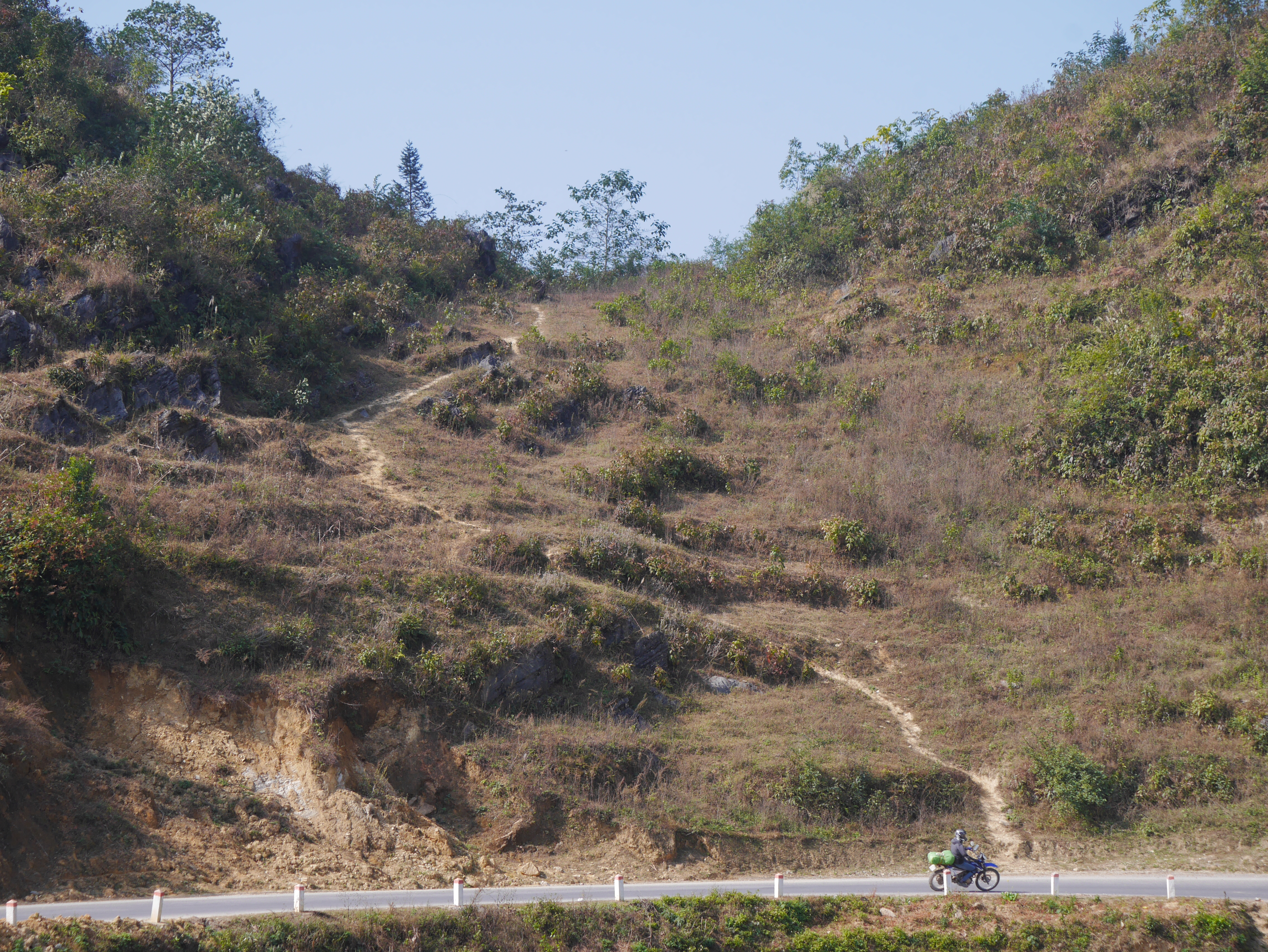
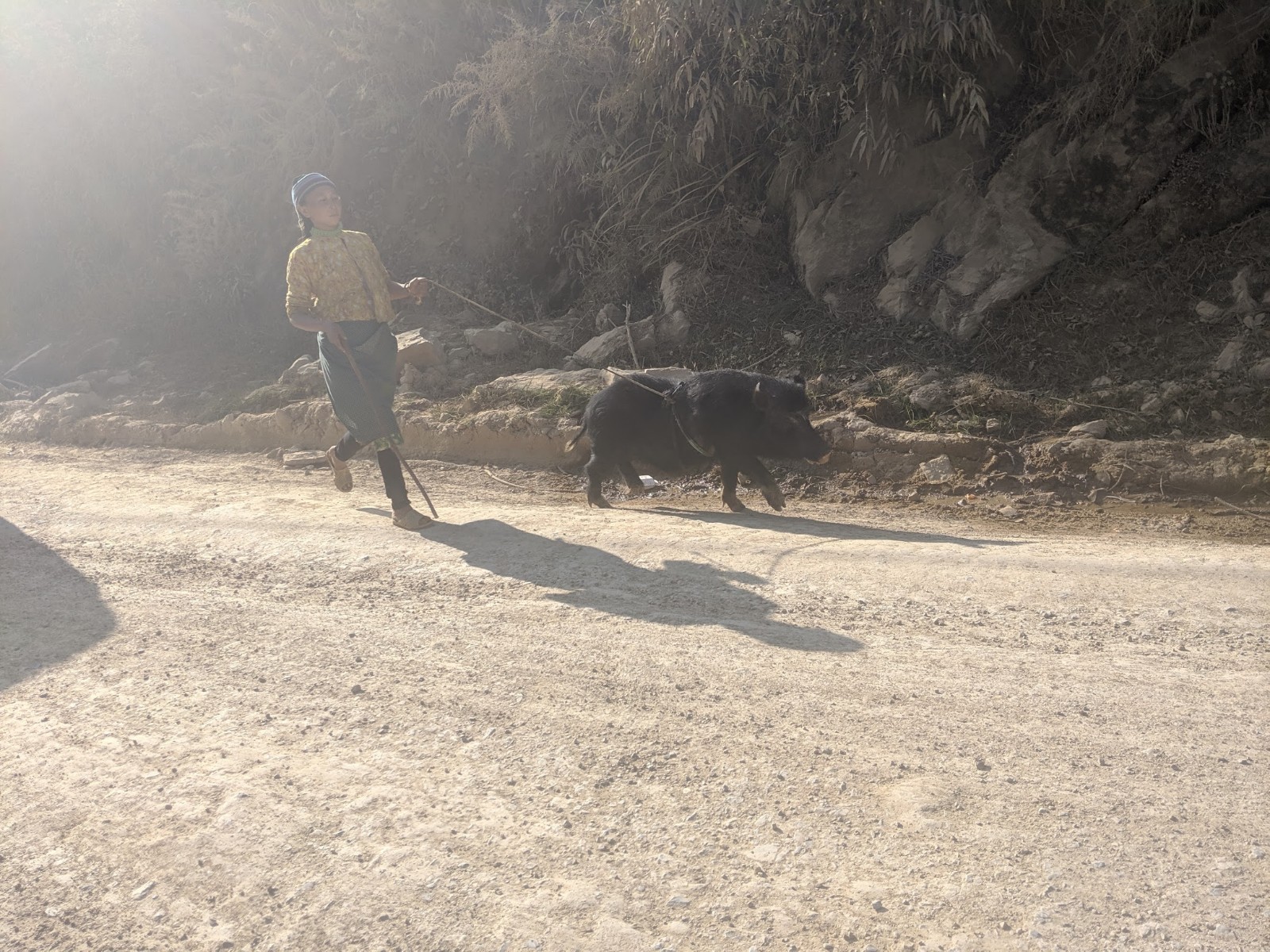
There were great views out over the hilltop villages and the usual (and not so usual) rural scenes – like the lady walking her pig in the bottom pic!
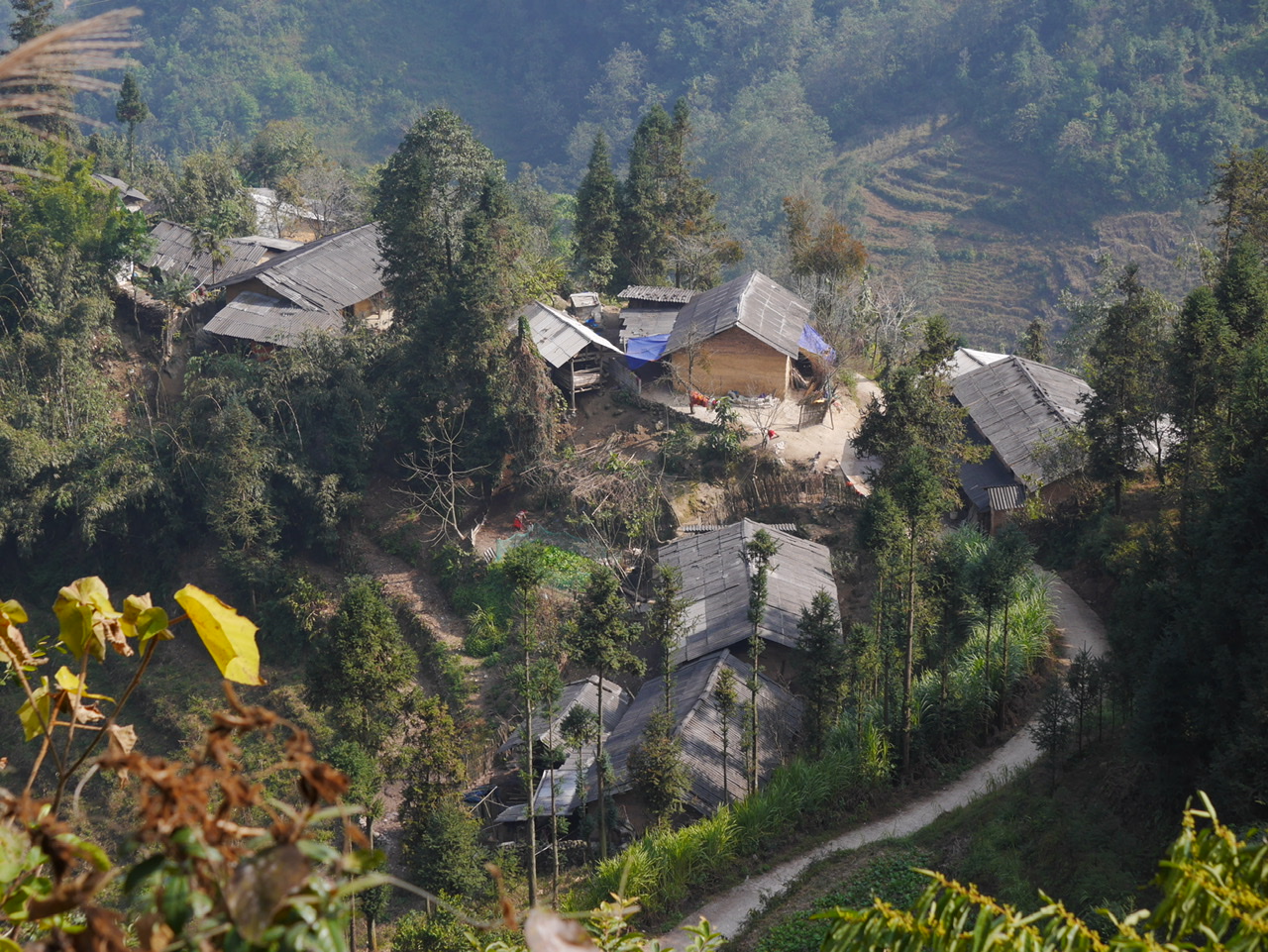
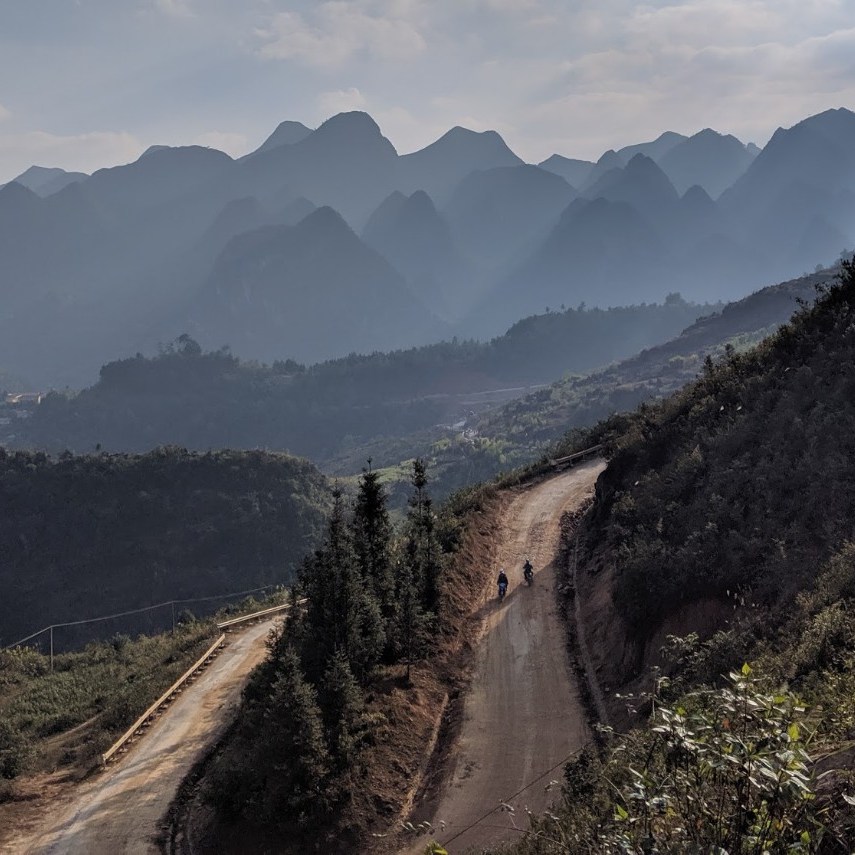
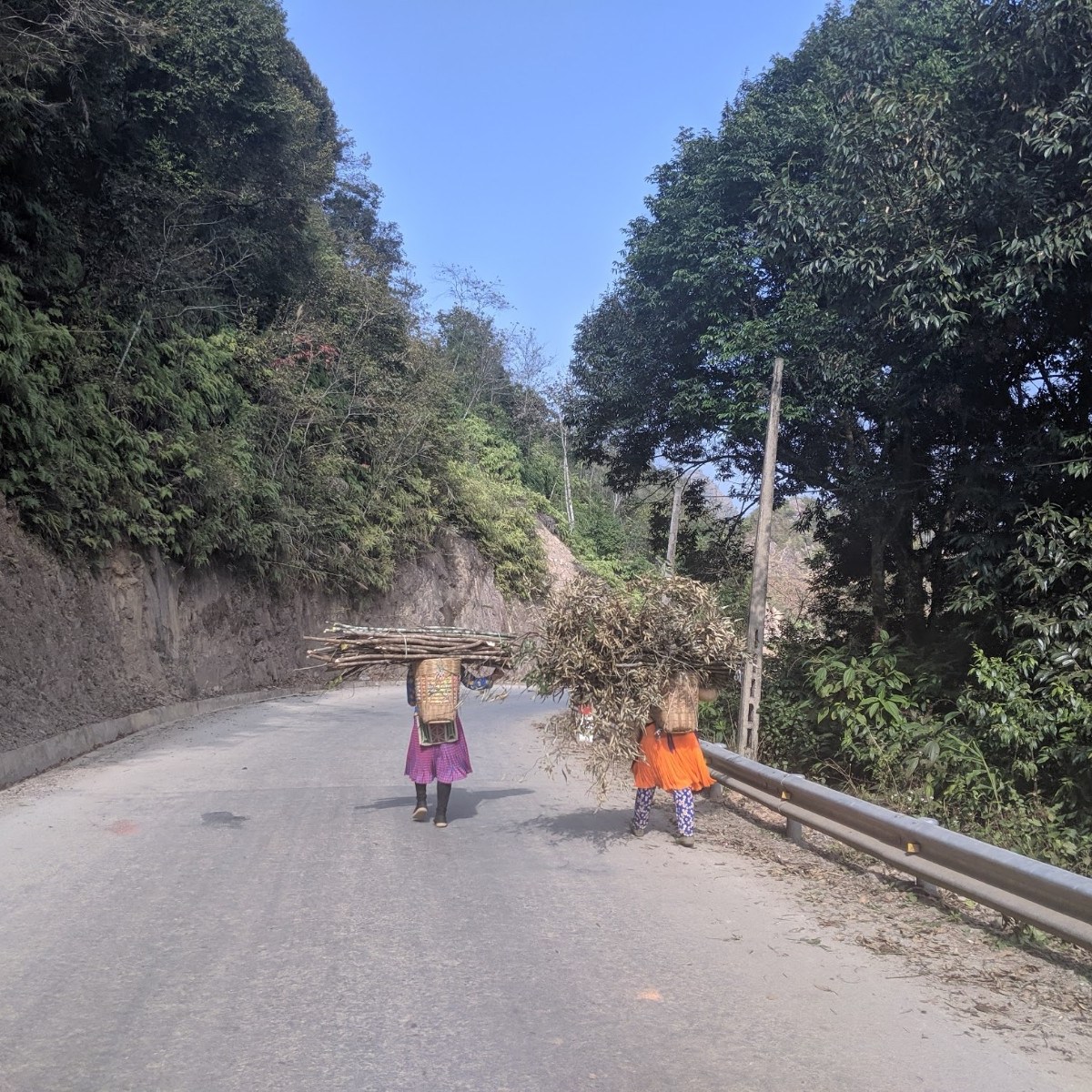
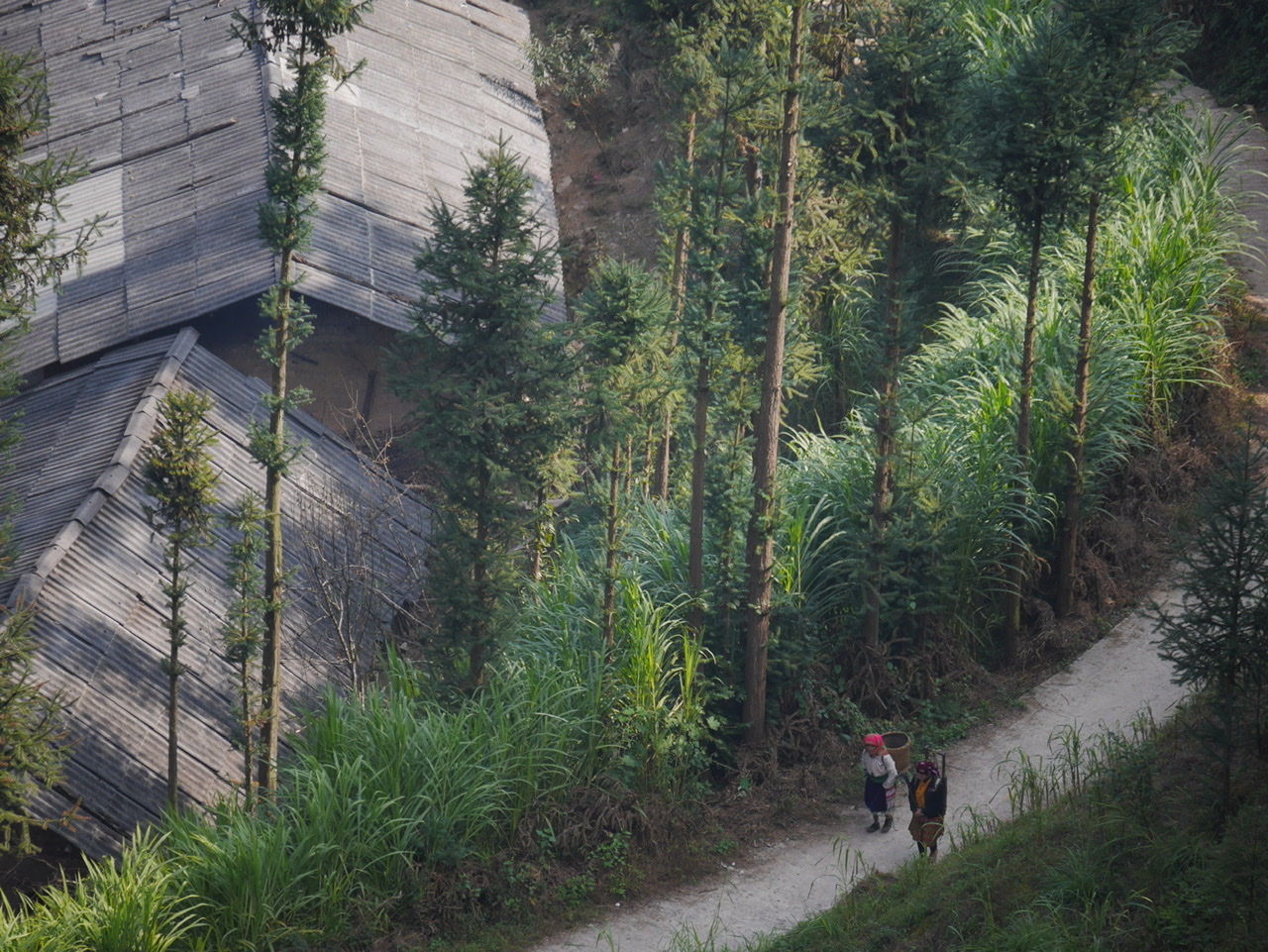
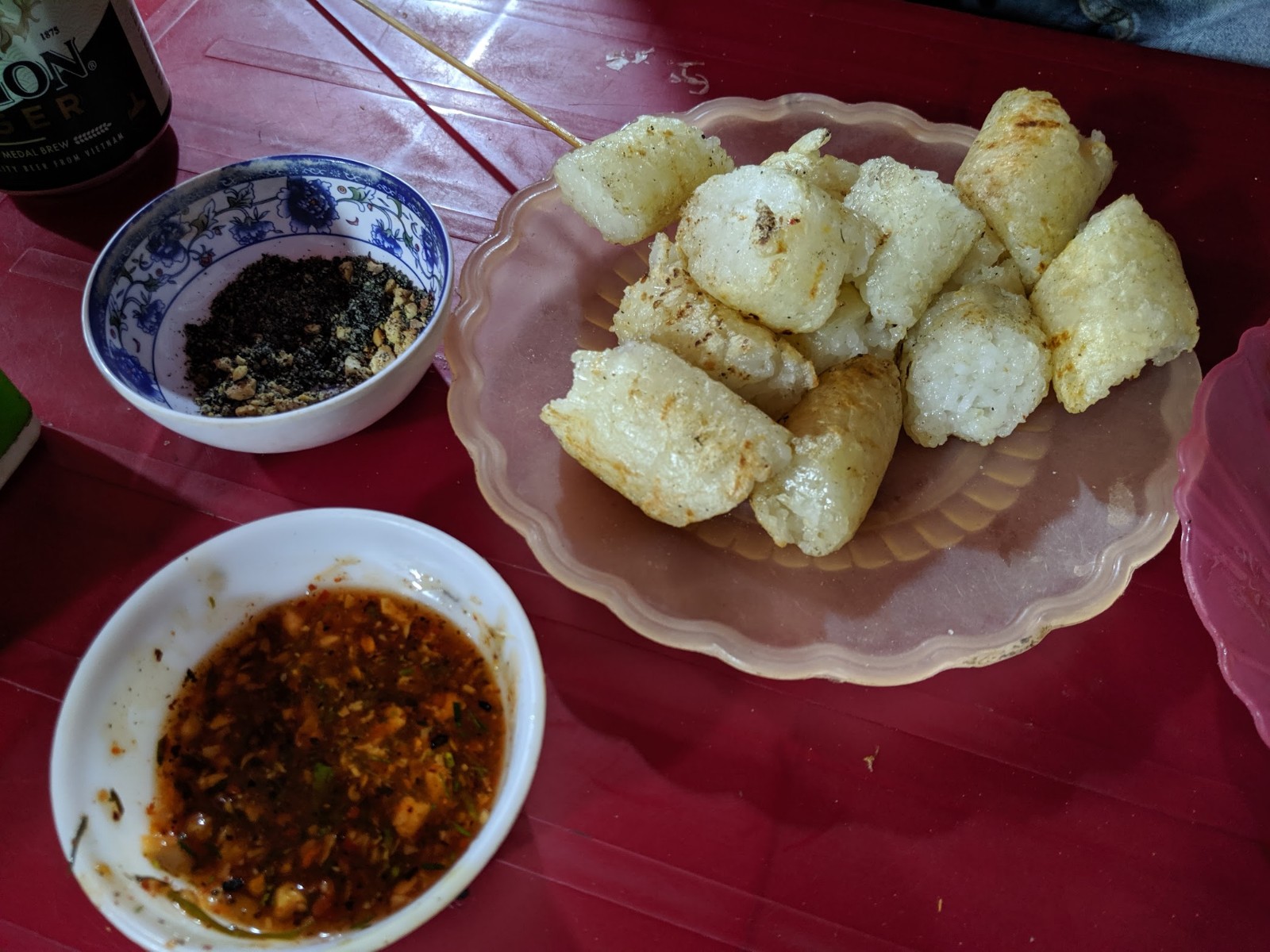
Once at the Lung Cu there were a few vendors selling flag t-shirts and BBQ snacks. I bumped into Phil (the Suzuki guy) and we climbed the tower then sat down to share a big plate of bamboo sticky rice, whilst I downed a whole pot of tea.
Thankfully the way back to Dong Van was mostly downhill and I was back in plenty of time to rest up for the market the next day. This was such an event, I’ve saved it for a dedicated post.
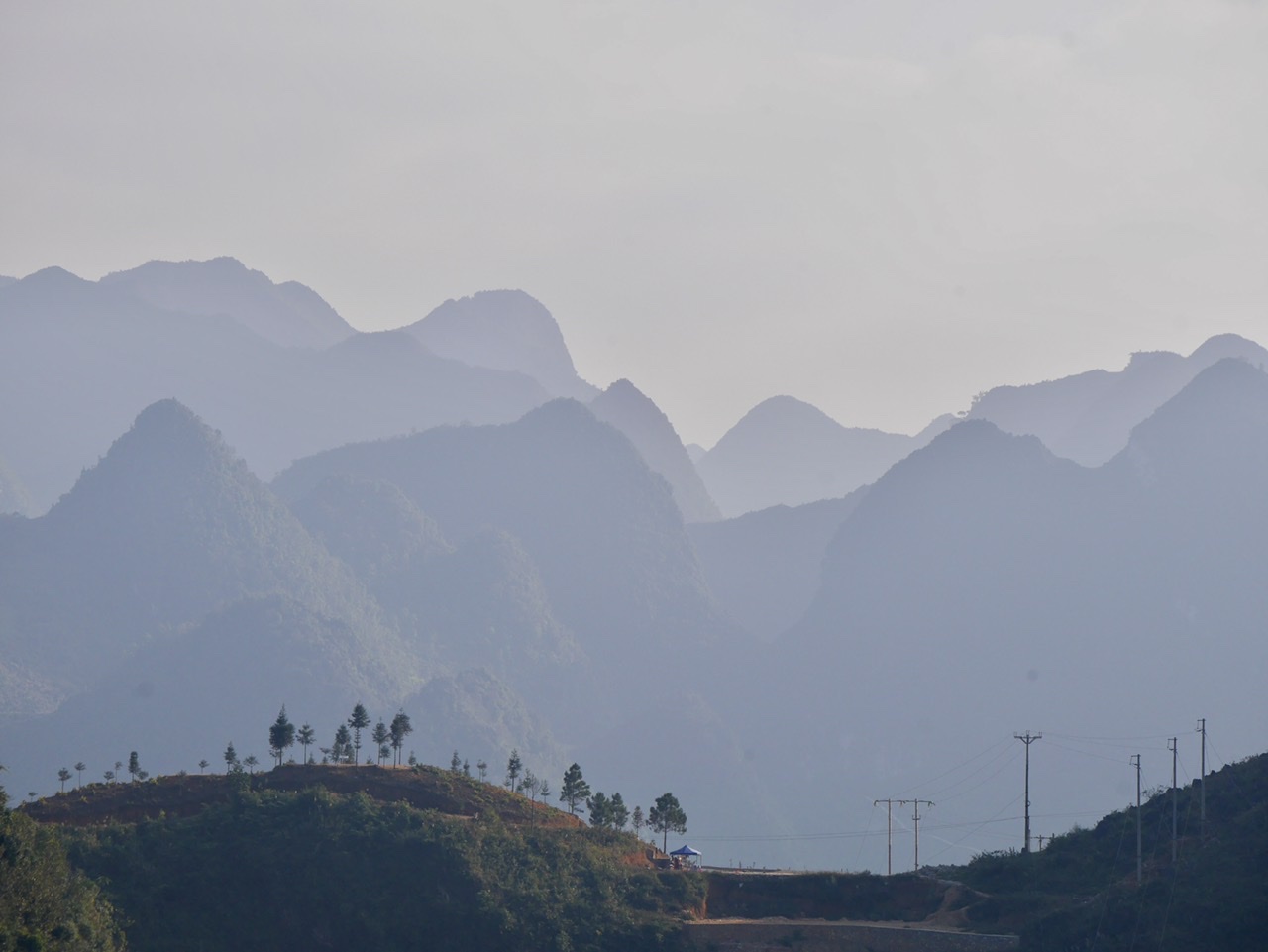
From Dong Van, there were just a couple of days to my end point in Ha Giang town. This would involve a fair bit of climbing, but a lot more down than up overall, leaving me free to enjoy the scenery (which was beginning to dull my senses).
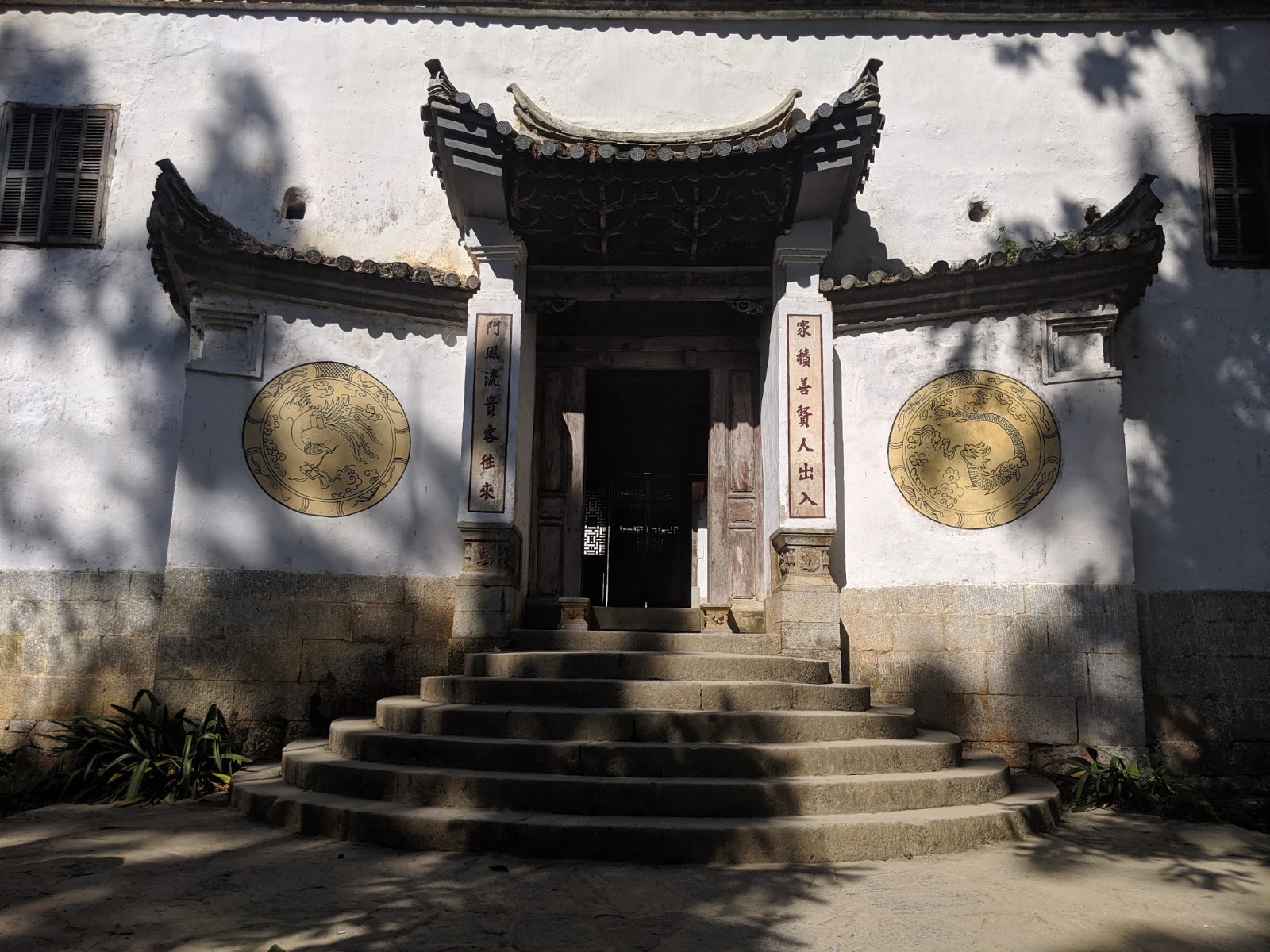
I took a welcome break at the H’mong King’s Palace – an early 20th C, Chinese style mansion, home to a once powerful local ruler. The H’mong king made his money through the opium and teak trade (you can make out some poppies in the carvings below), but he was very much in league with French, with some records suggesting they financed the mansion themselves.
Whoever paid for it, the building is incredible – a real life set for any of the ubiquitous period dramas popular across Vietnam and China.
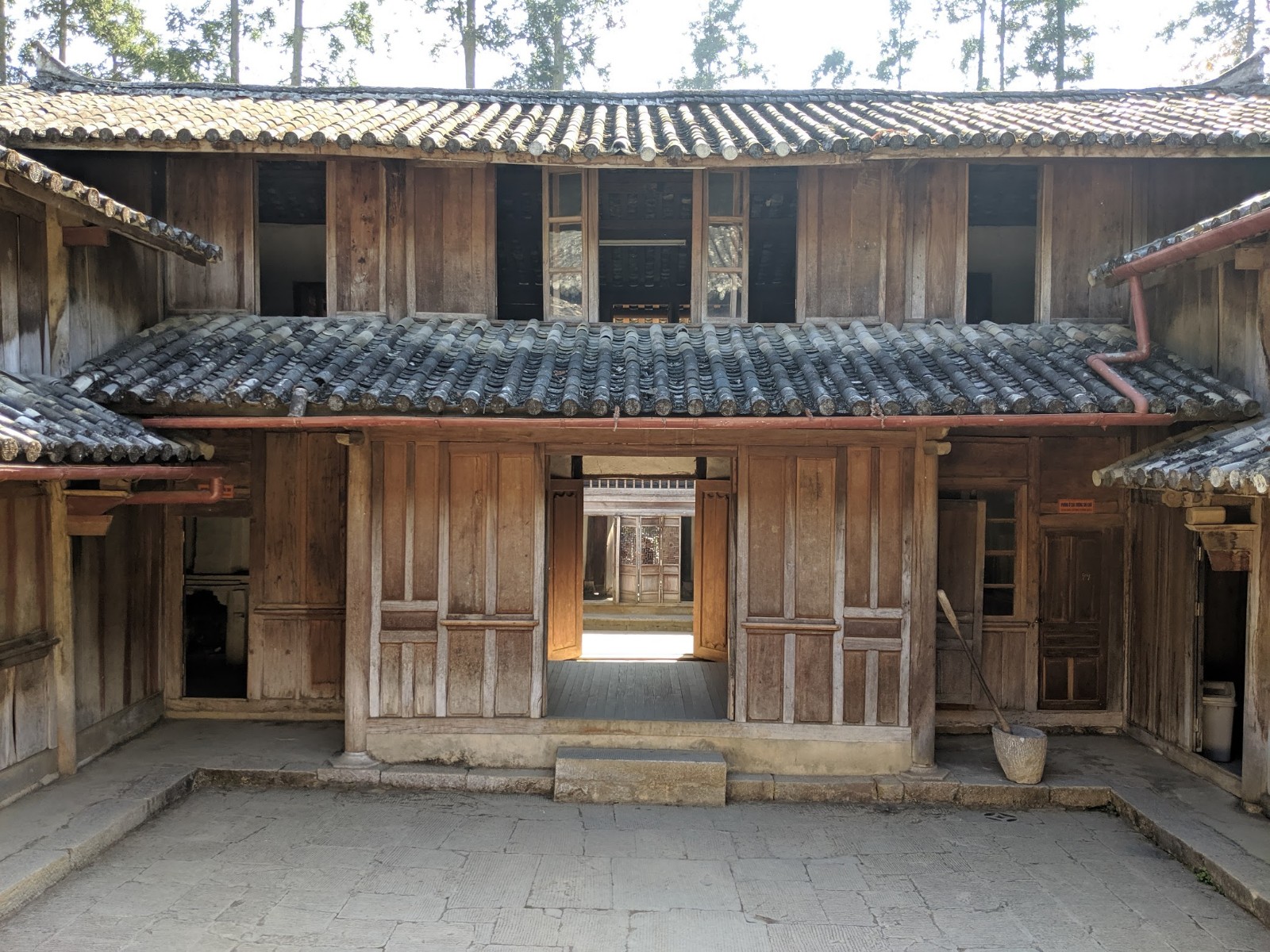
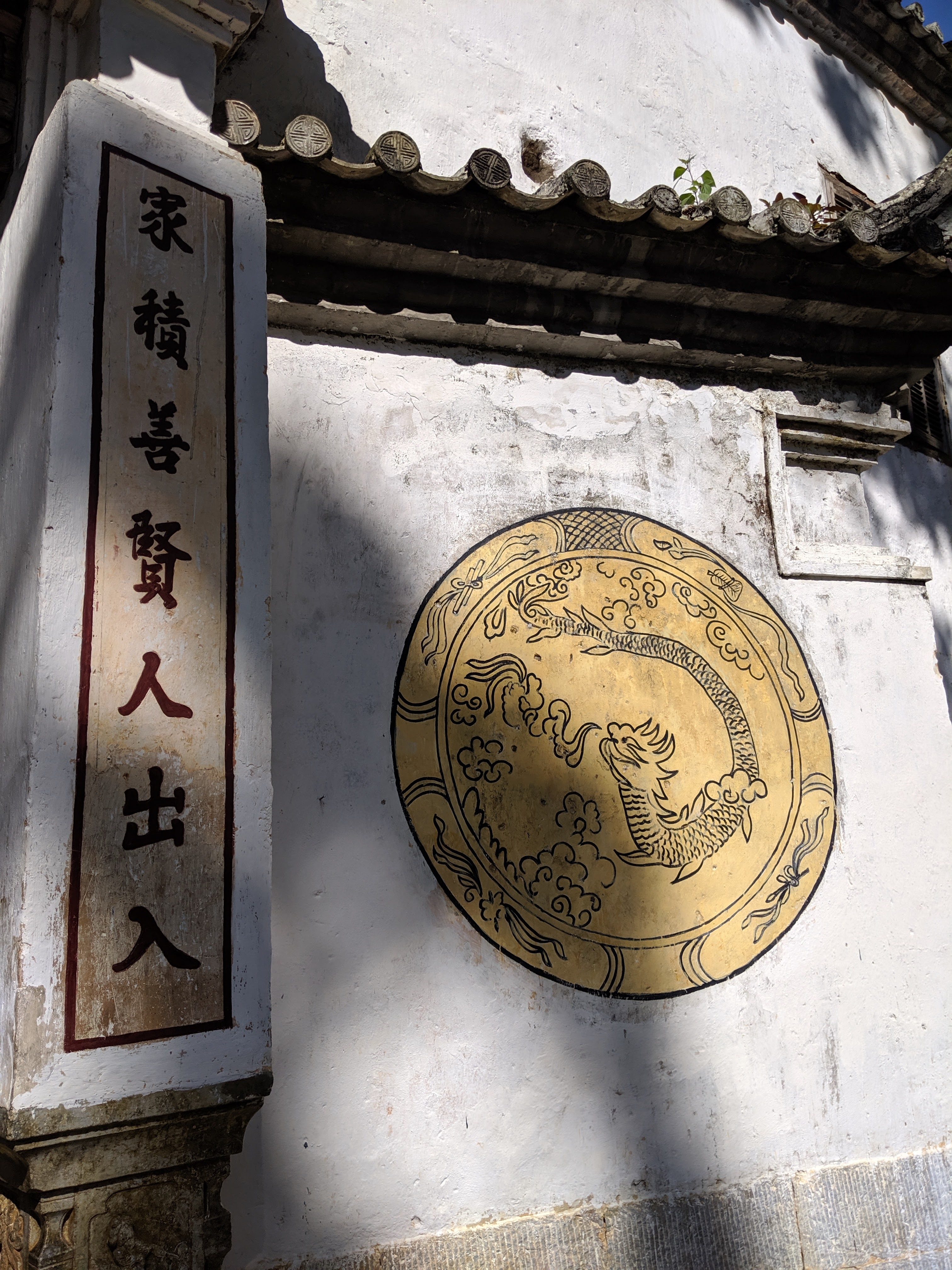
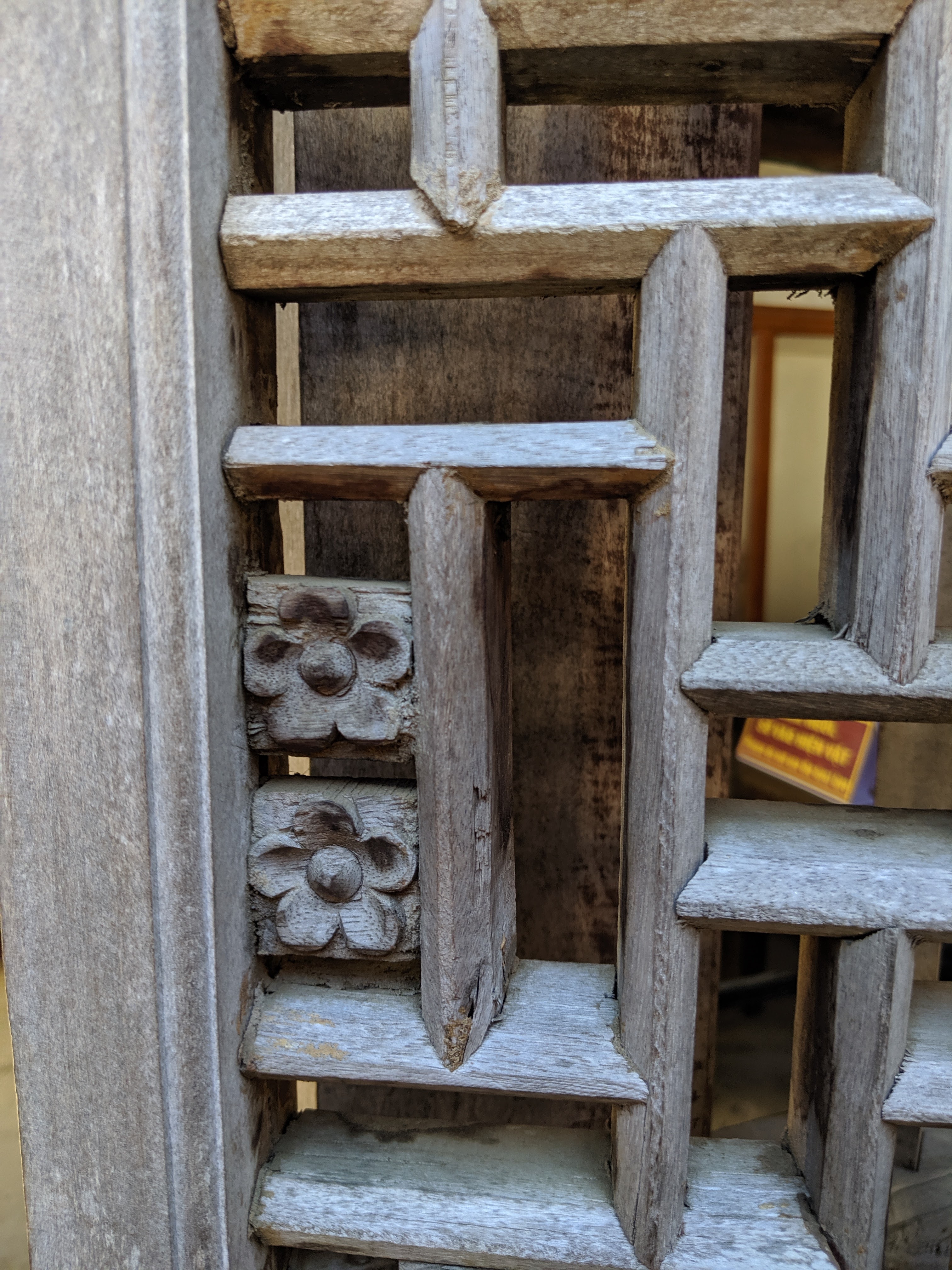
There is a small info board, but it’s notably silent about what happened to the H’mong king and his family during the collectivisation of the 1950s. Tricky times, I’m sure, for anyone collaborating with the French.
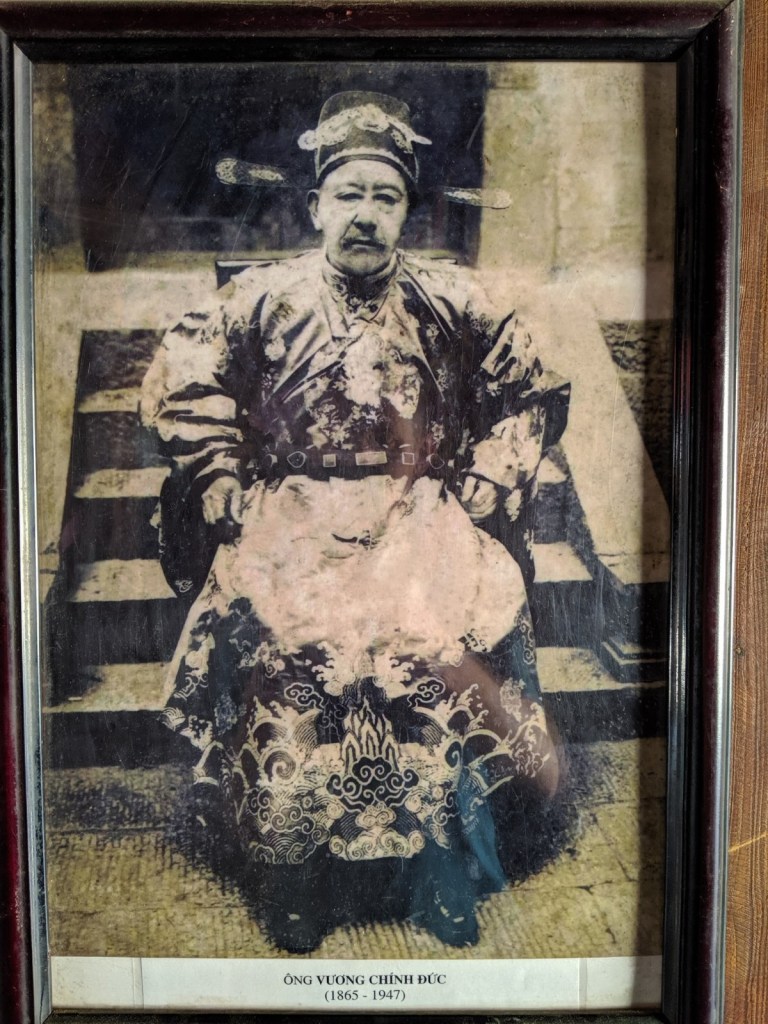
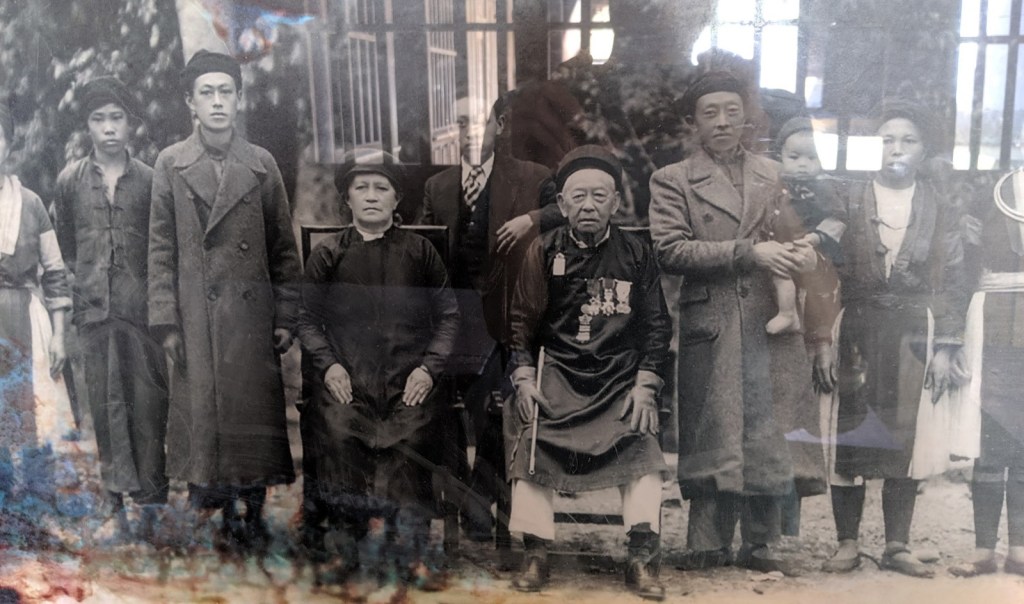
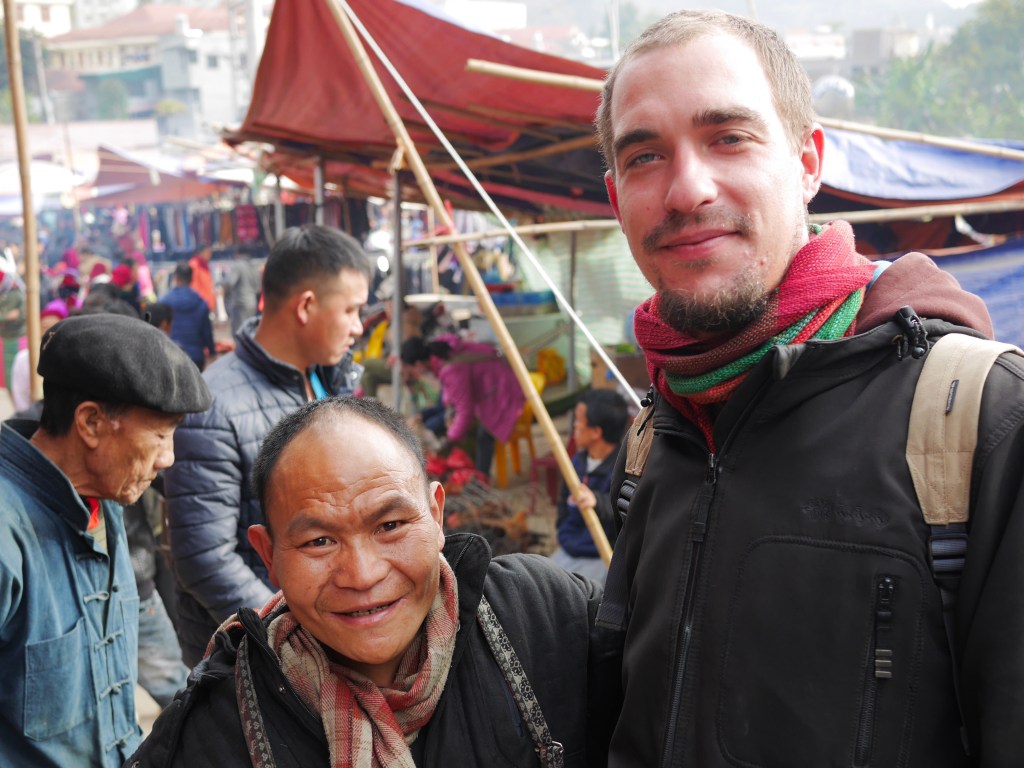
As I was leaving I met Luca (below), the Swiss guy from my first ‘family dinner’. We shared some strangely dense savoury cake and BBQ’d eggs – more H’mong food! Before he zoomed off with a wave. I saw him a couple more times before reaching Ha Giang town which made me feel I was doing a fair pace.
After a good stretch of climbing, the road began to weave its way downhill toward the town of Yen Minh. A bunch of local kids were having trouble with a broken bike chain. Having fixed my own three times already, I pulled over to see if I could help. Misplaced confidence on my part as the chain was ten times thicker, requiring some proper tools and the stripping of the chain guard. Sorry guys!
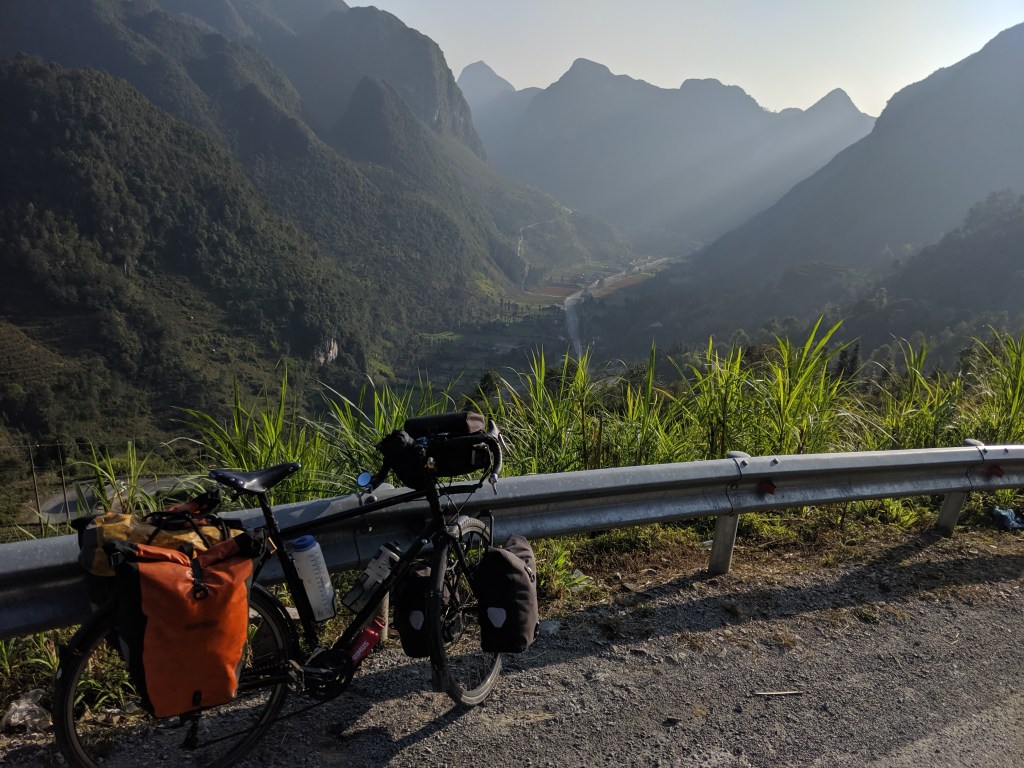
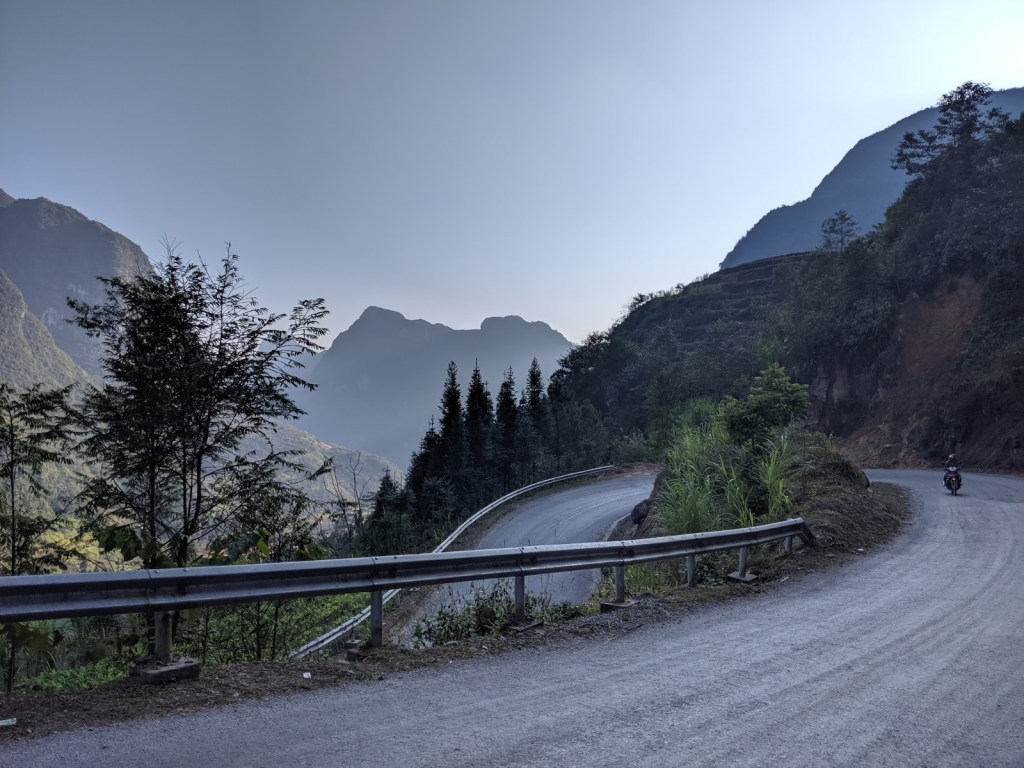
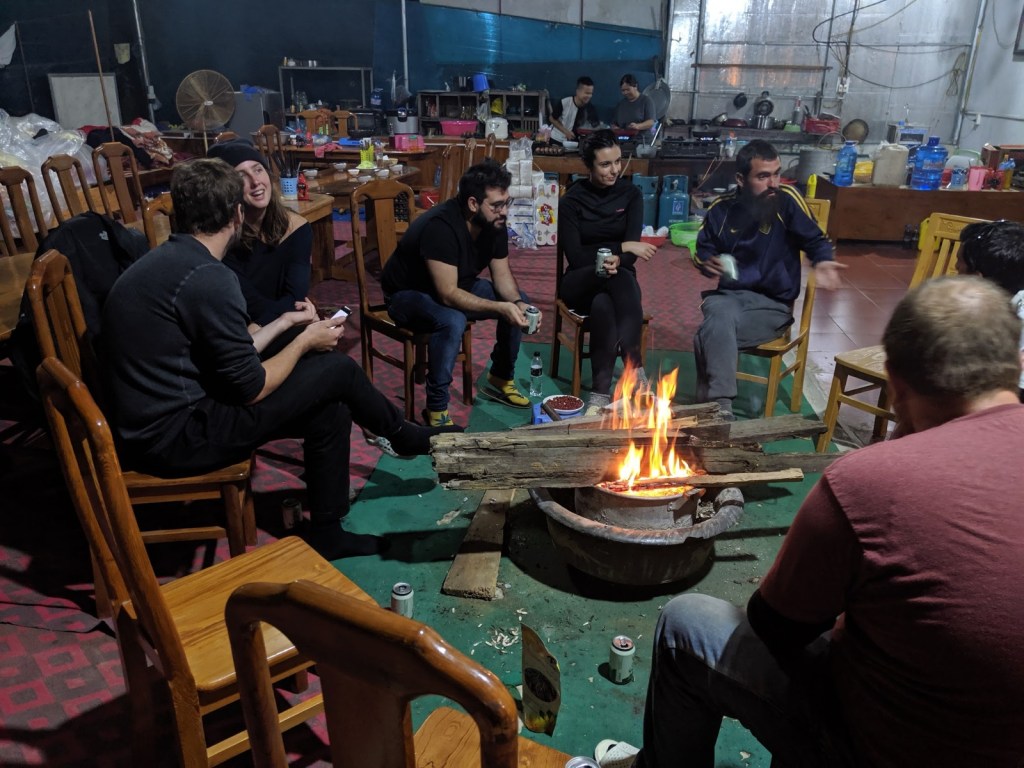
After a final ‘family dinner’ with some more backpacker motorbike folks and their guide, it was up early for one last day on the roads of Ha Giang and my last proper day of riding in Vietnam.
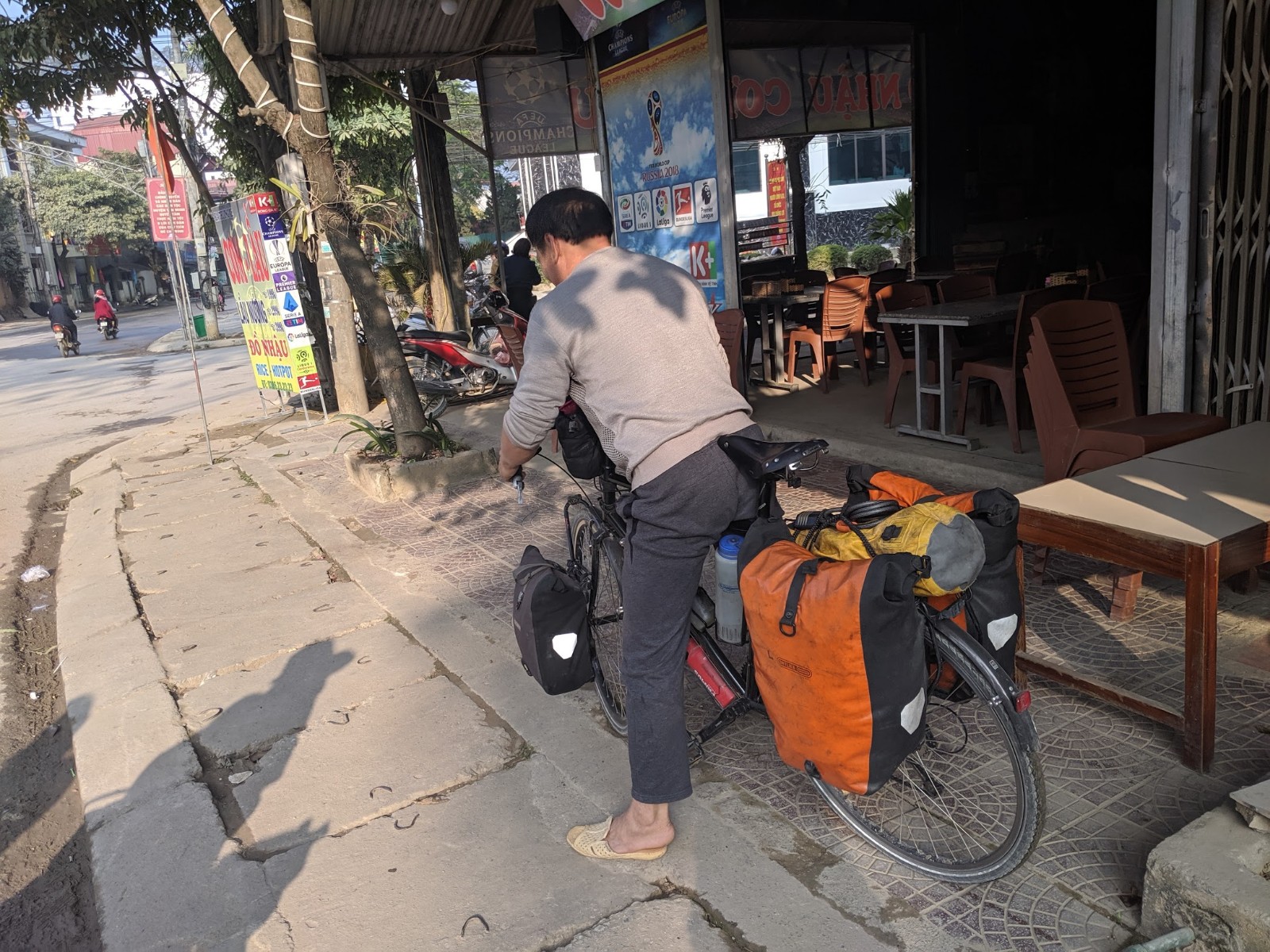
The guy at the breakfast place I stopped in was astonished that I planned to ride all the way to the next town (never mind China), and sorted me out with a generous portion.
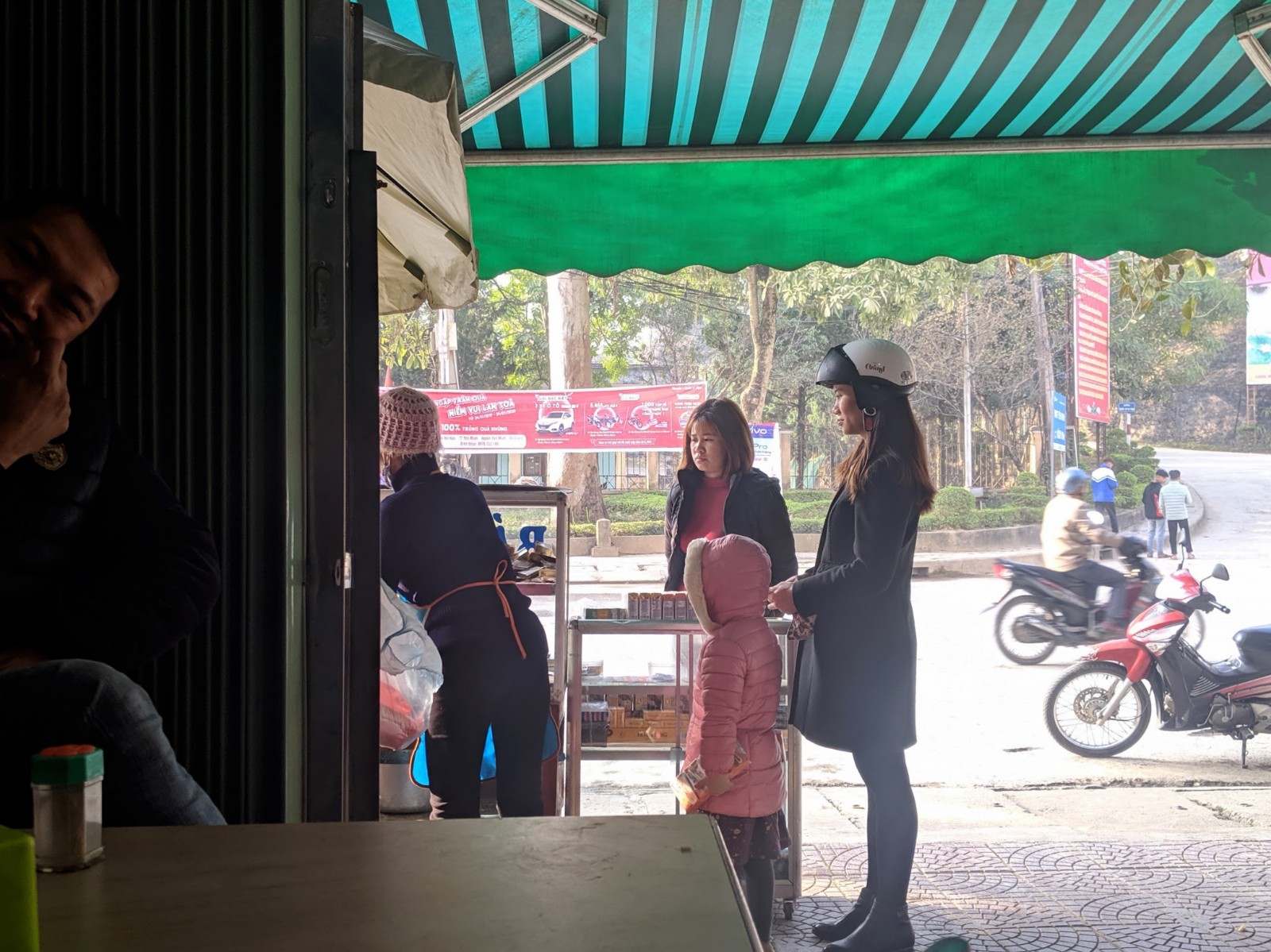
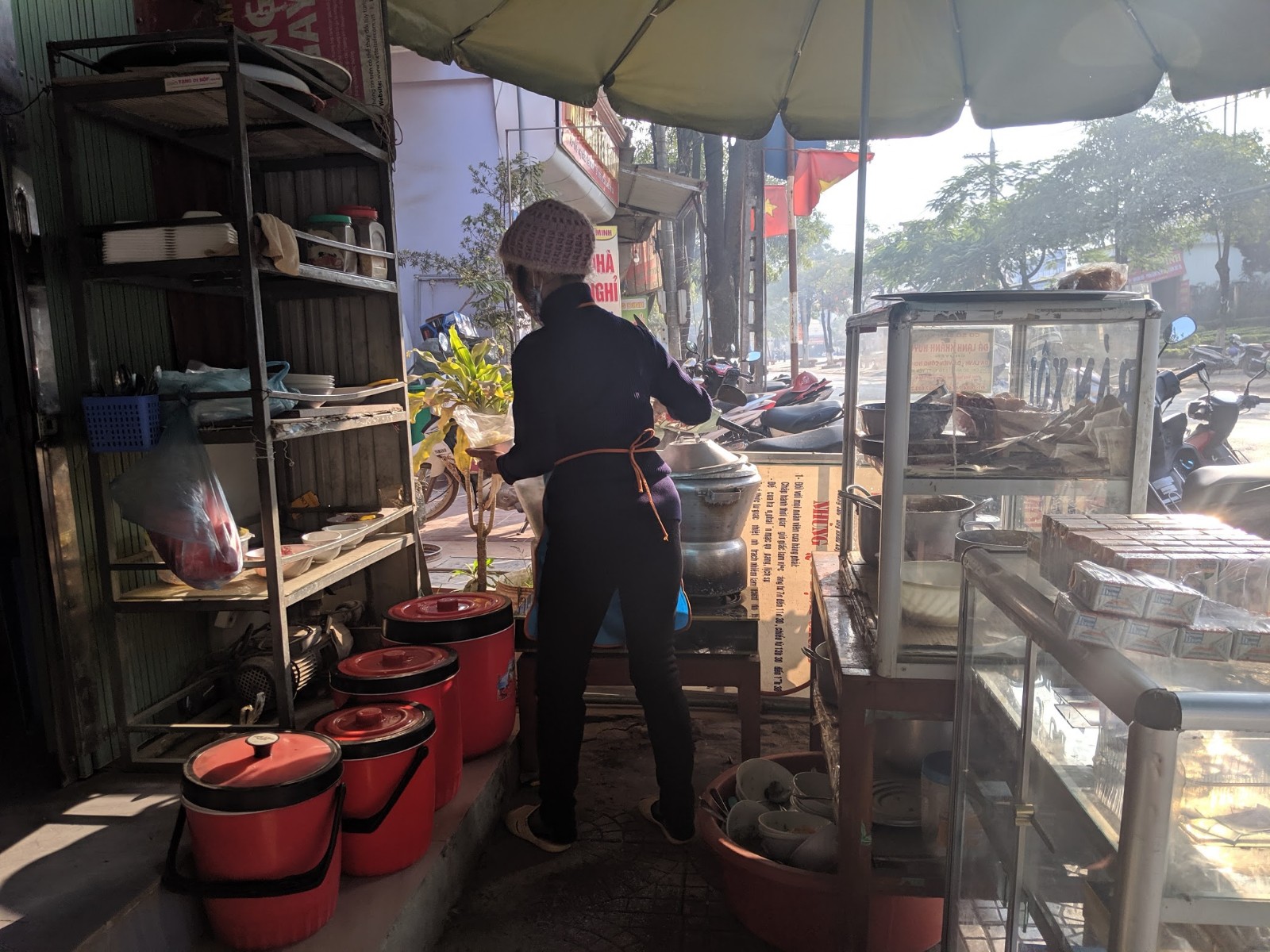
This was helpful as the day – again – started with a hefty climb. Though I shared some refreshingly bitter green tea with an orange seller at top, which took the edge off.
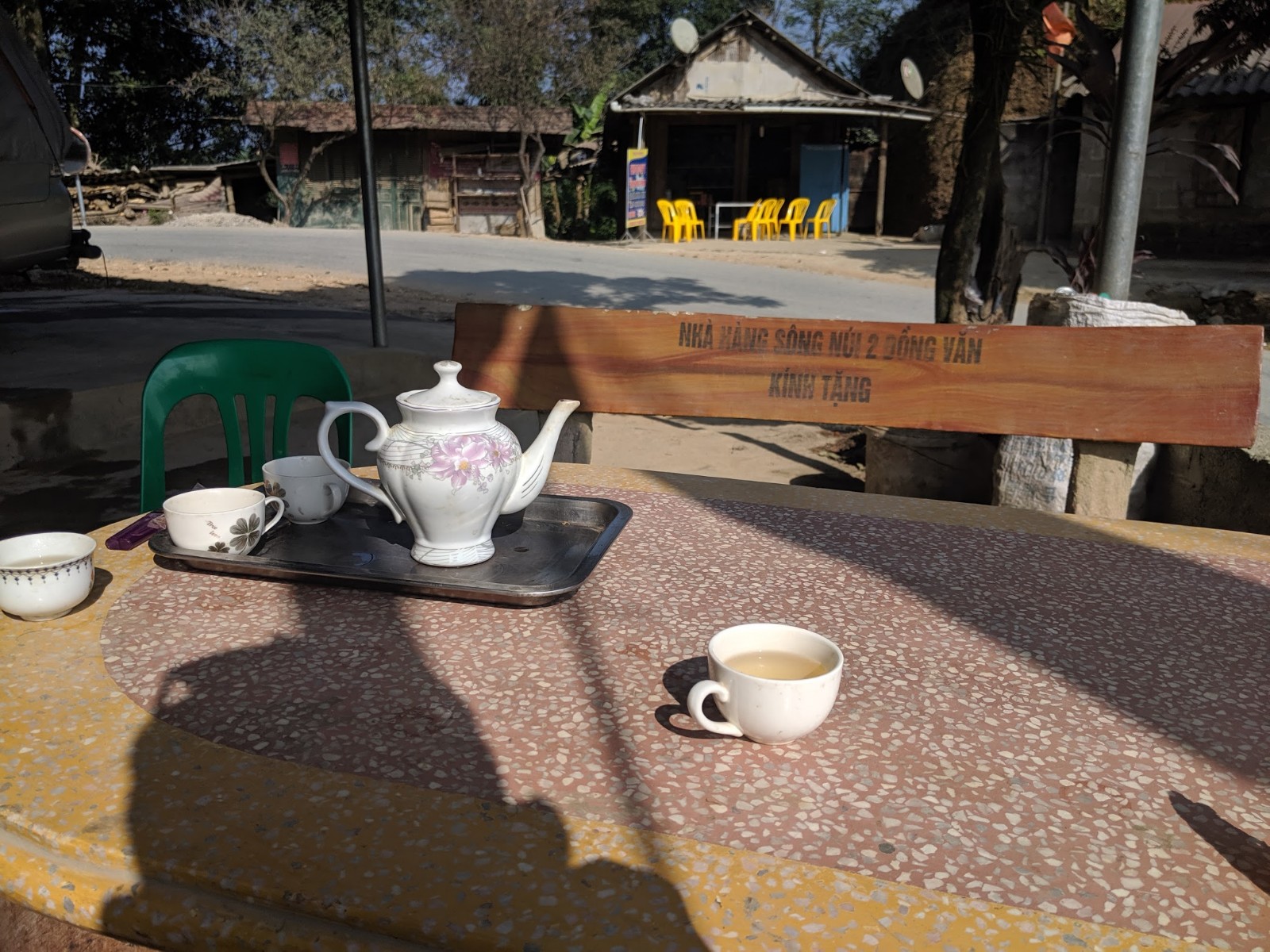
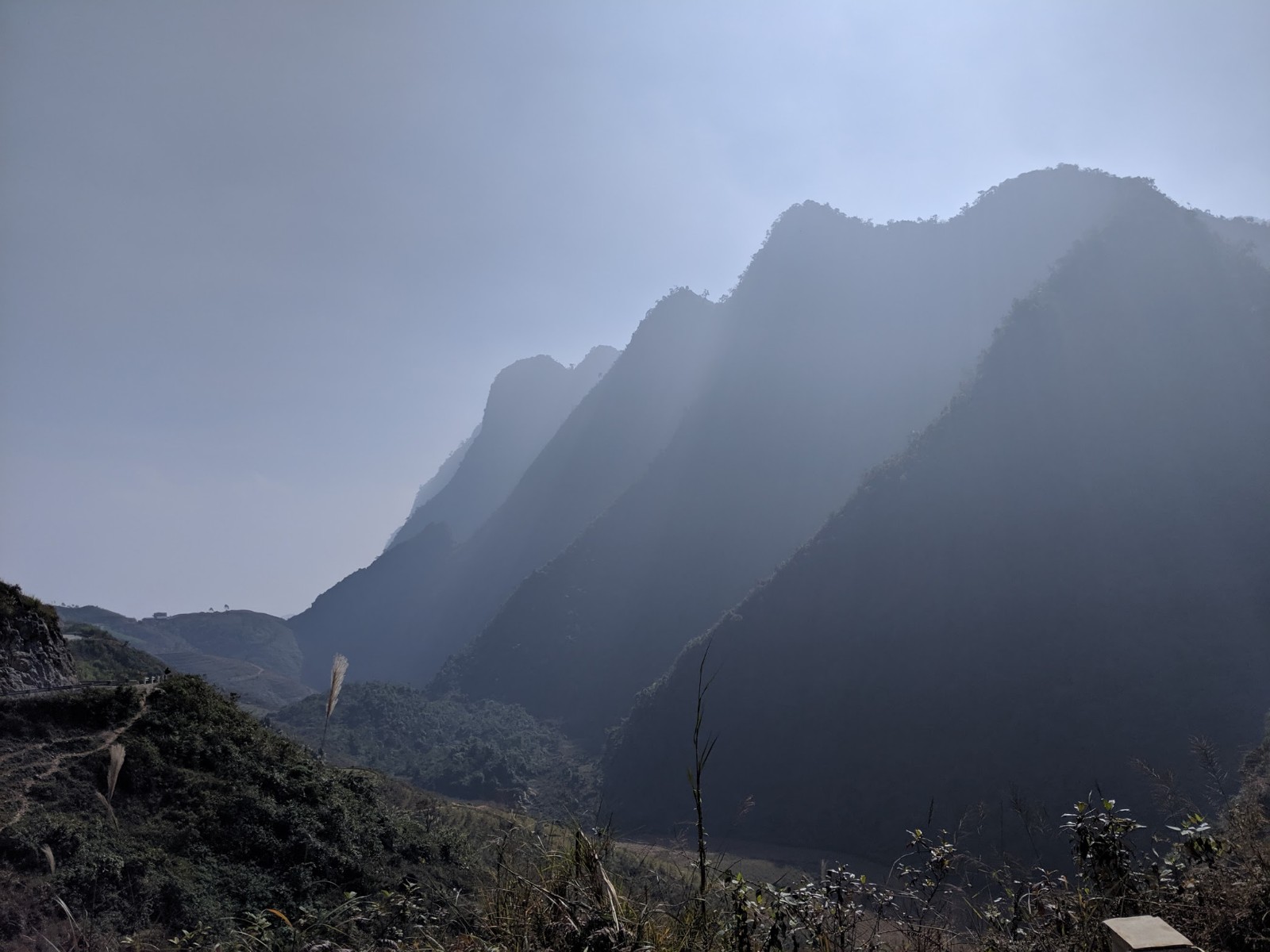
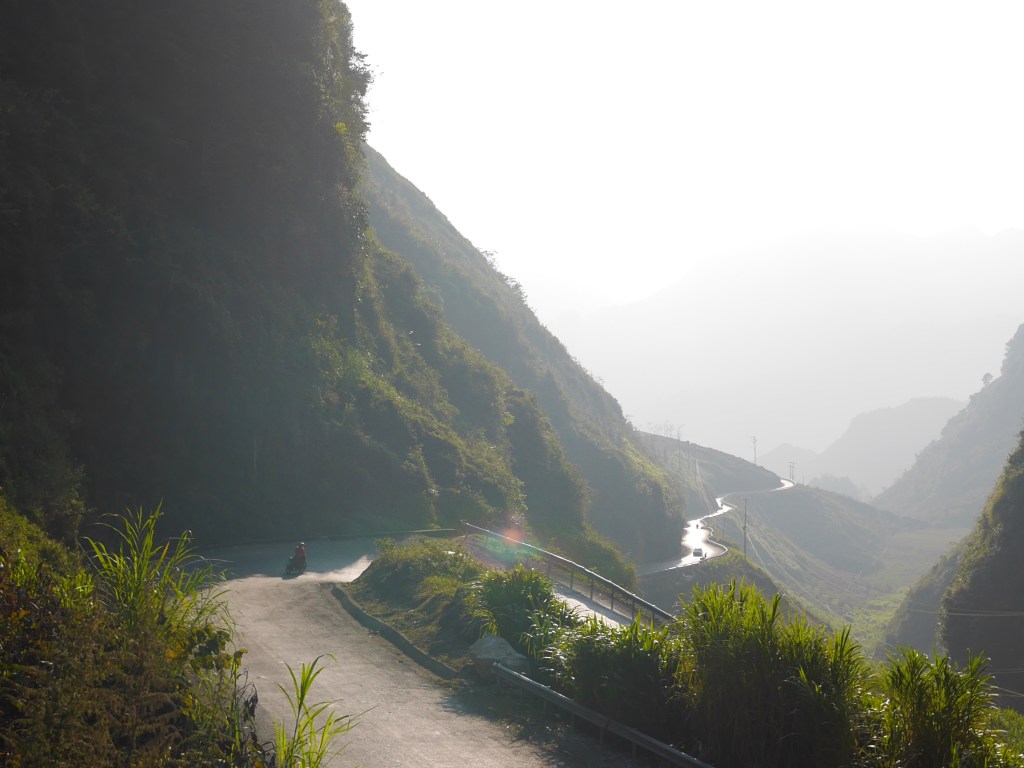
On the whole, this last day was more about the downhill – a victory lap for all the slow grinding ascents conquered through the course of the week.
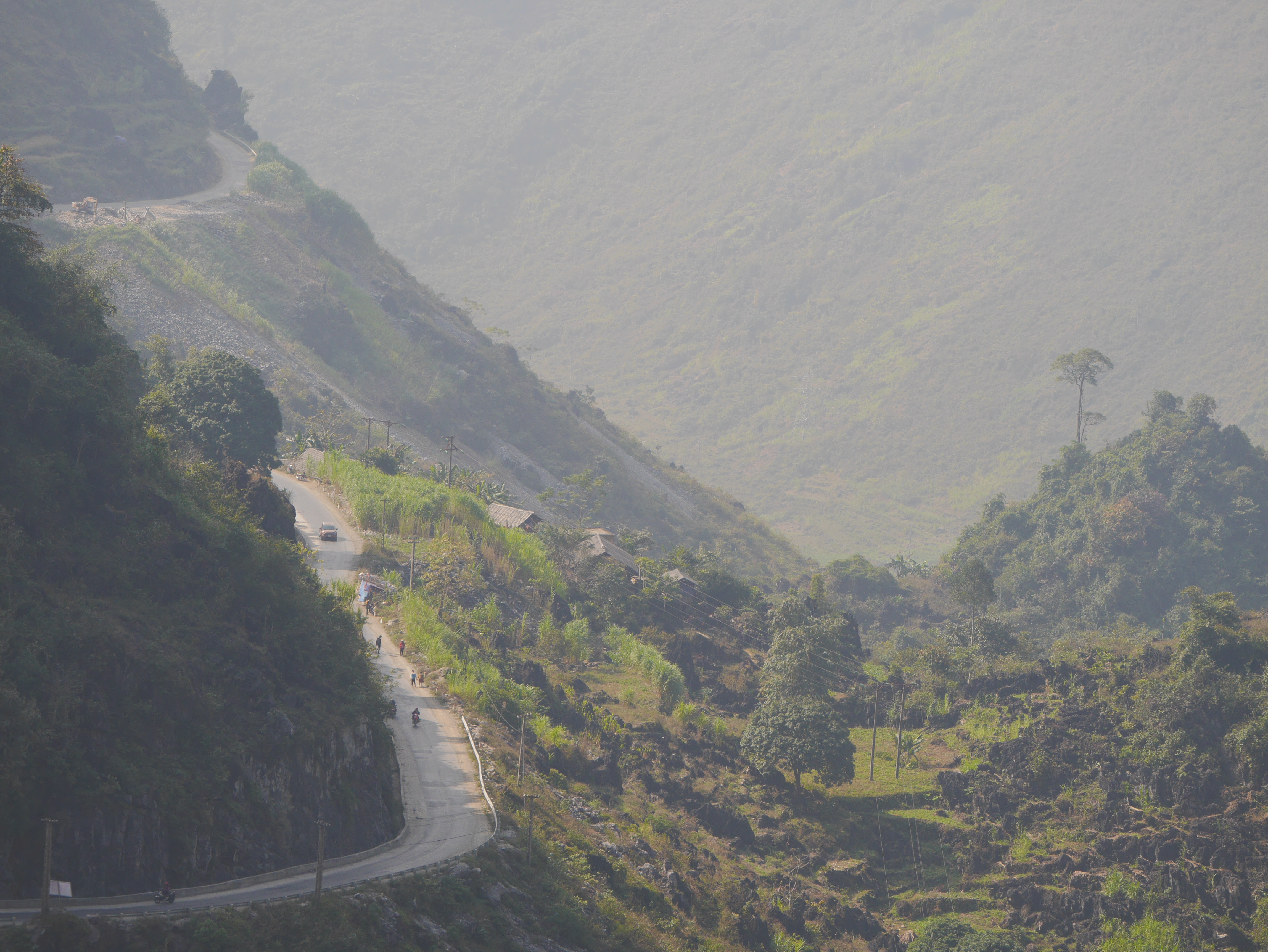
After hours of freewheeling I finally hit the flat which was suddenly warm and humid. I laughed at how surprised I was to see banana plants again after my time in the hills!
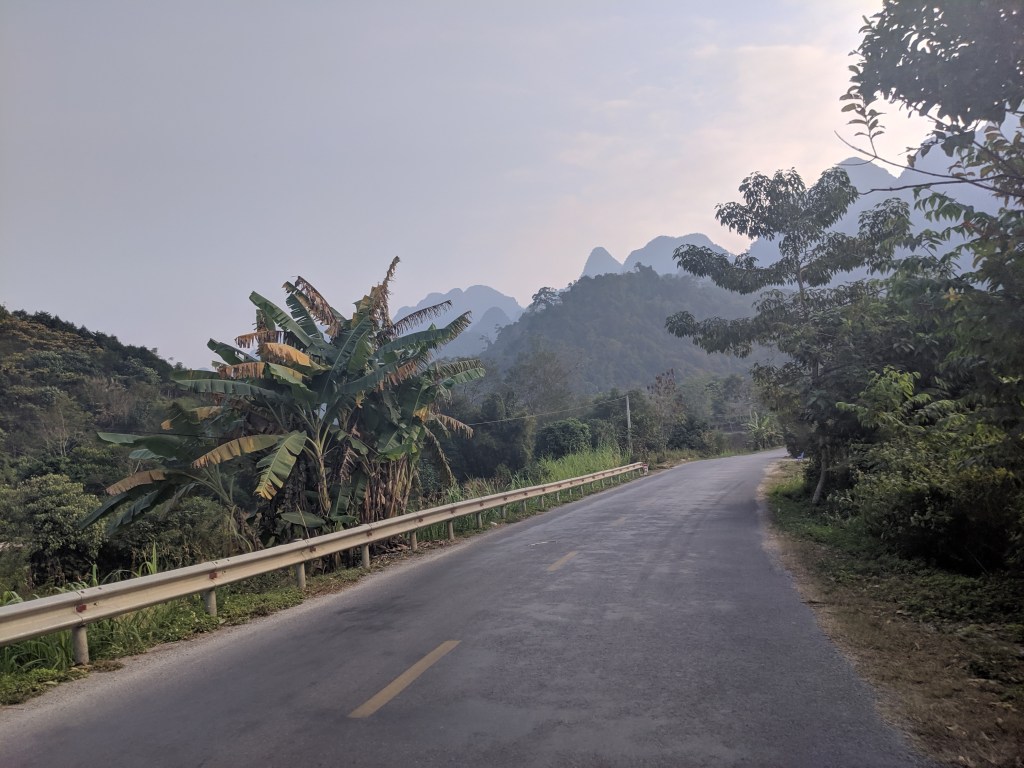
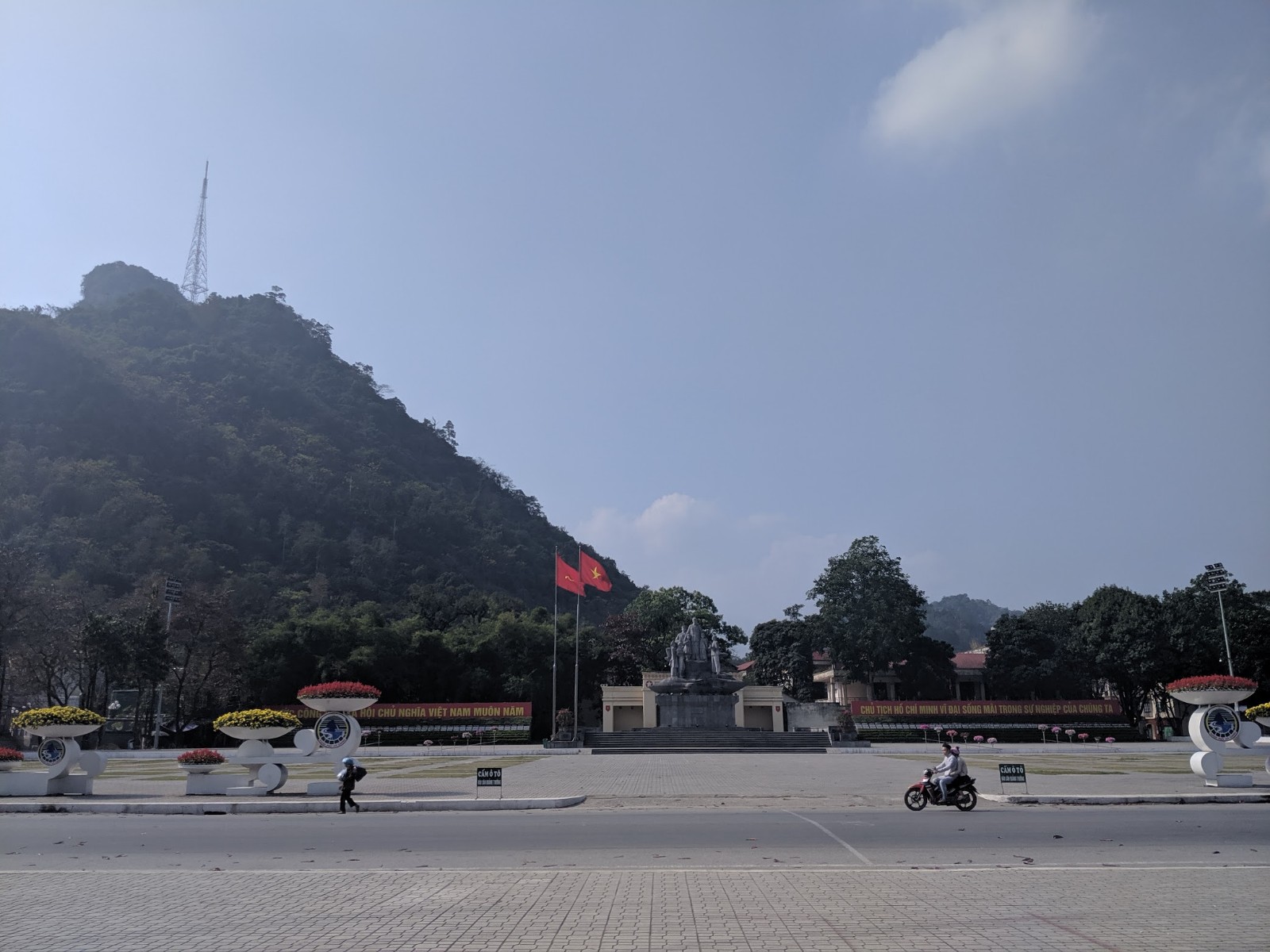
Eventually I rolled in to Ha Giang town. I changed some currency for Chinese Yuan at an unassuming jewellery shop, then settled down in the cafe below to write some Christmas cards.
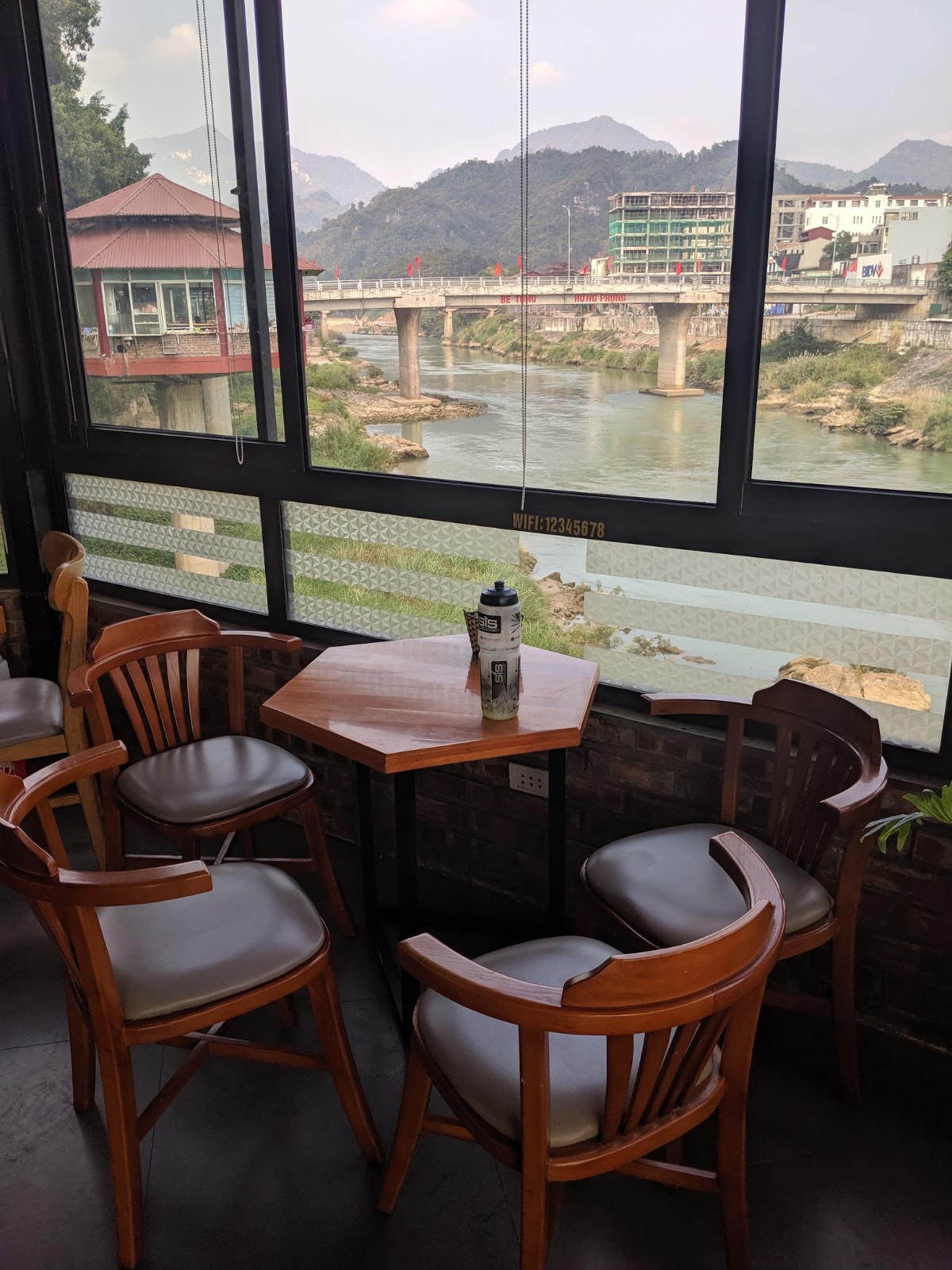
On cue, the Swiss biker girls walked in (surprised to see me!) and we had a good catch up. The mega hill from day one had destroyed them, they said, so they’d continued their journey by bus (bikes on top).
Bus or bike, Ha Giang is an incredible ride and for me a surprisingly social one!
Perhaps a good thing as I was about to enter China and would end up seeing no foreign tourists for more than a month.

