Hanoi to Bao Lac: 350 miles

Visa in hand, I set off north toward China. Easily reachable in a week, it would take me more than two as I set off not only in the wrong direction, but via the back roads. The main inspiration for this detour was the Ban Gioc Waterfall, a far flung two-tiered spectacle that stretches right across the border to Guanxi.
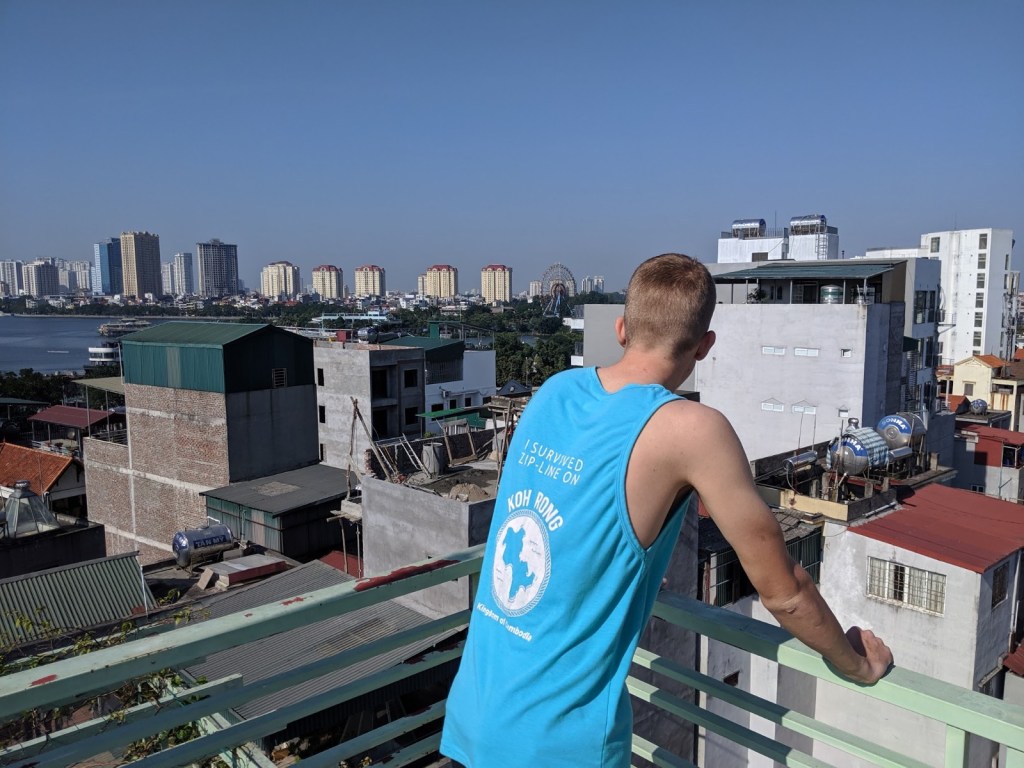
I picked up my bike from Jake, a WarmShowers host who’d looked after it for me (below) and began making tracks.
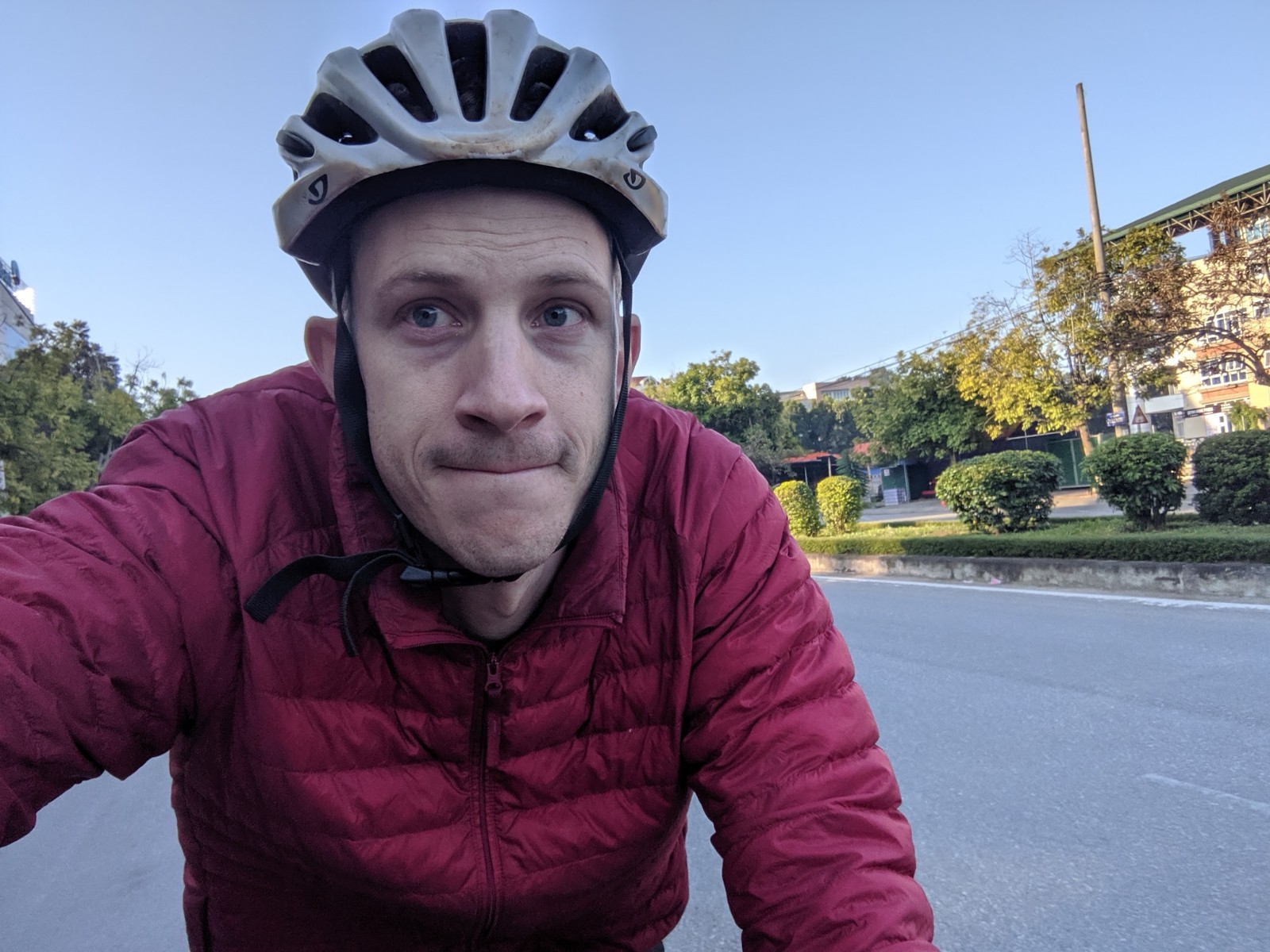
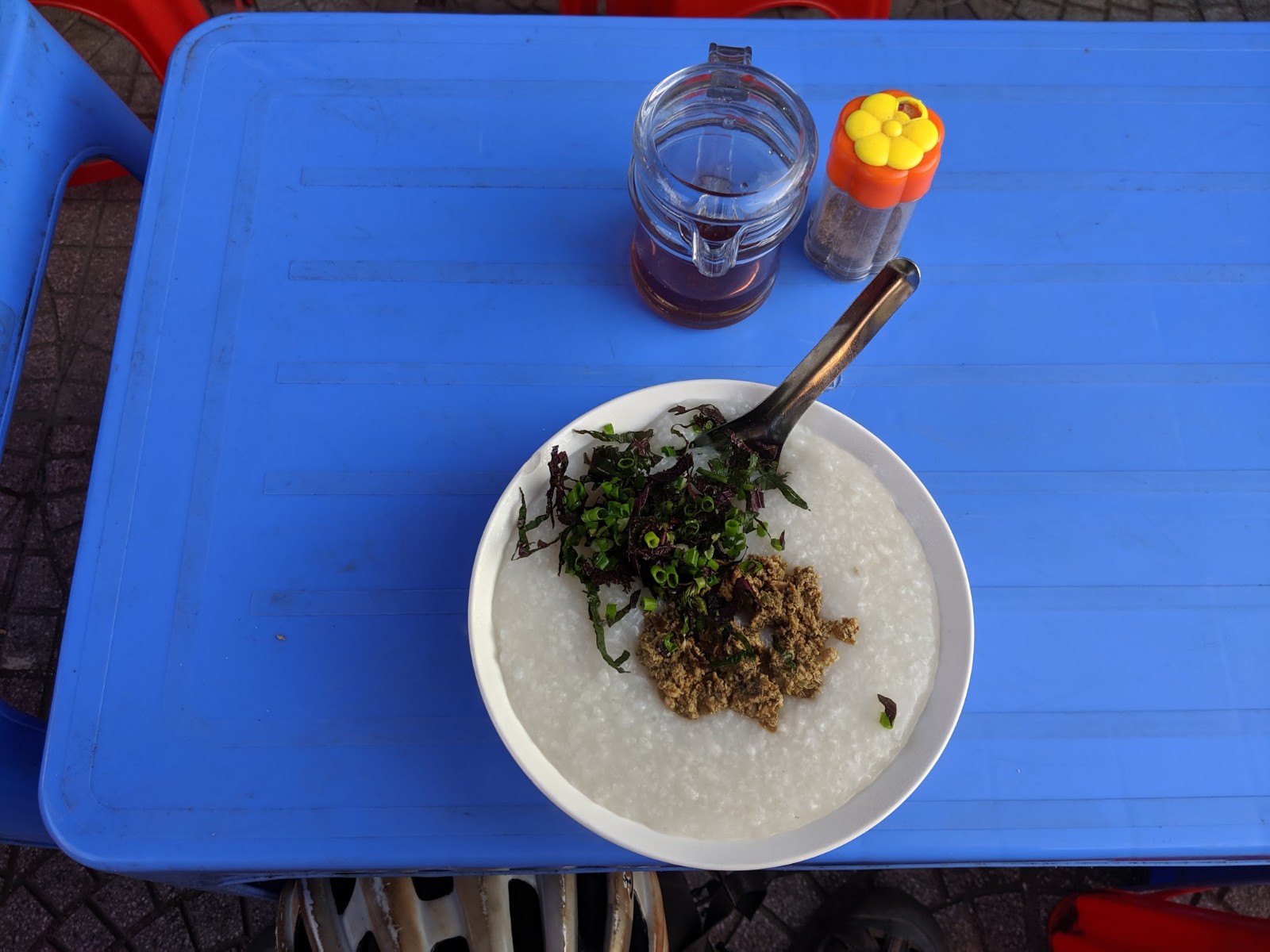
The first few days were a bit strange after so long off the bike, and the December mornings, surprisingly cold. Luckily the food changed allowing me to enjoy a warming bowl of rice porridge under the sceptical gaze of these toddlers.

Local tastes changed too. A motel owner one night saw I was tired and offered me a lift into town on his motorbike to get some food. “Dog meat noodles?”, he suggested, quite routinely as we passed a likely looking place. I politely declined then quickly doubled checked the sign on my phone. THIT CHO: dog meat. He meant what he said!
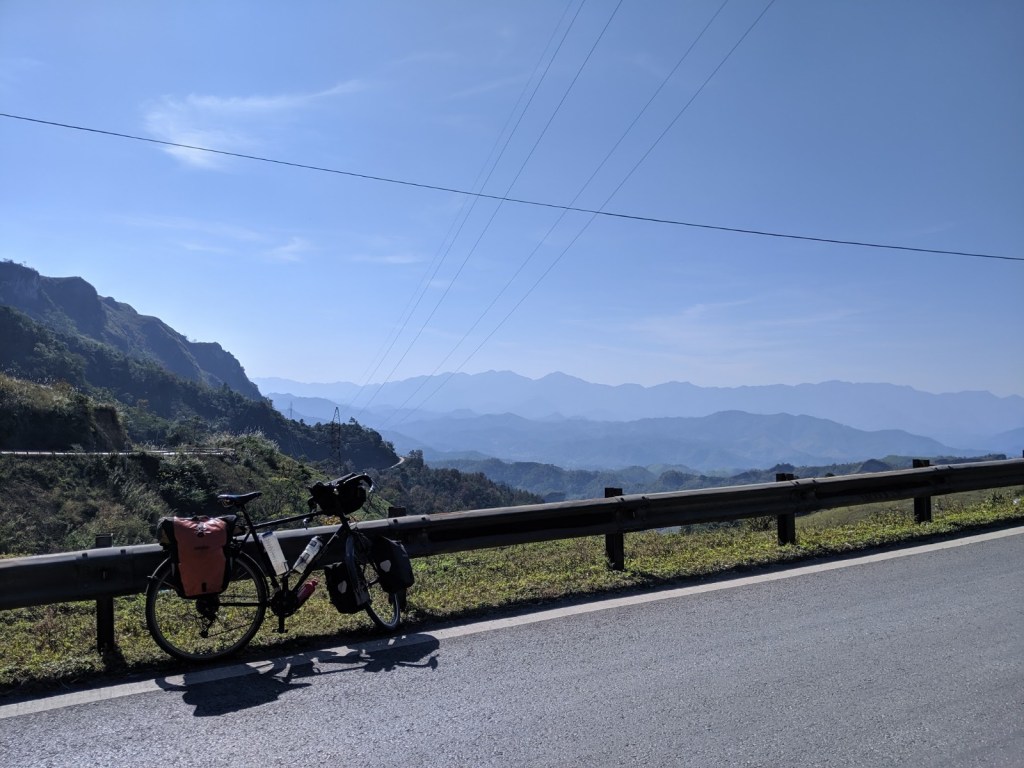
I climbed higher into the hills.
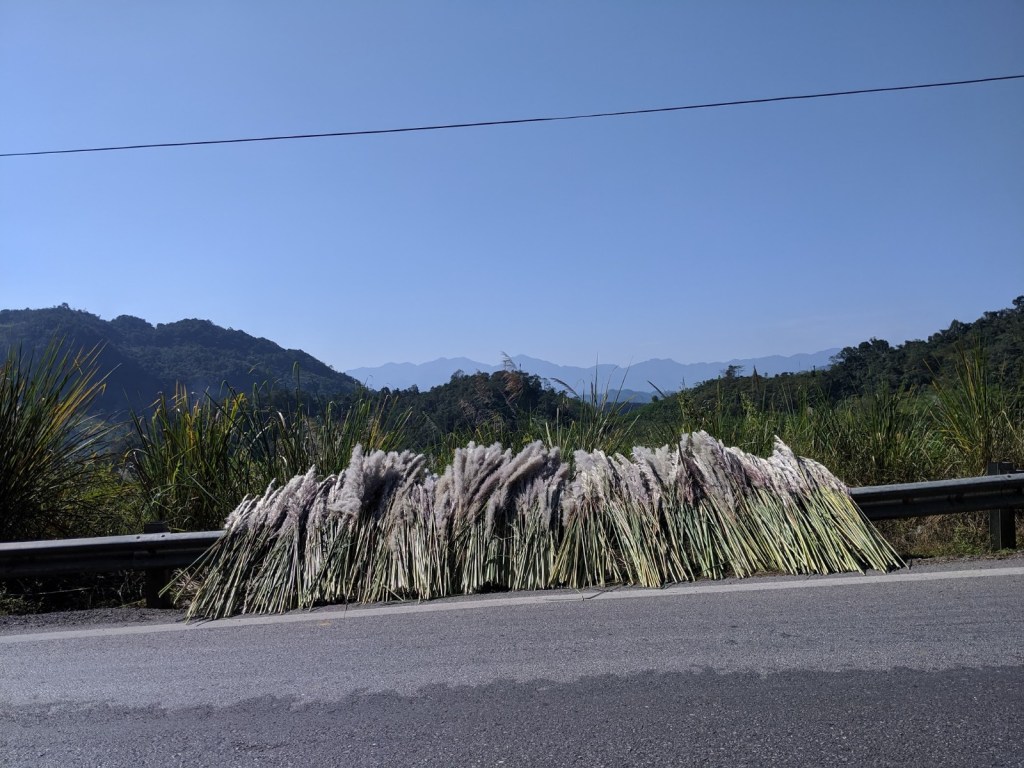
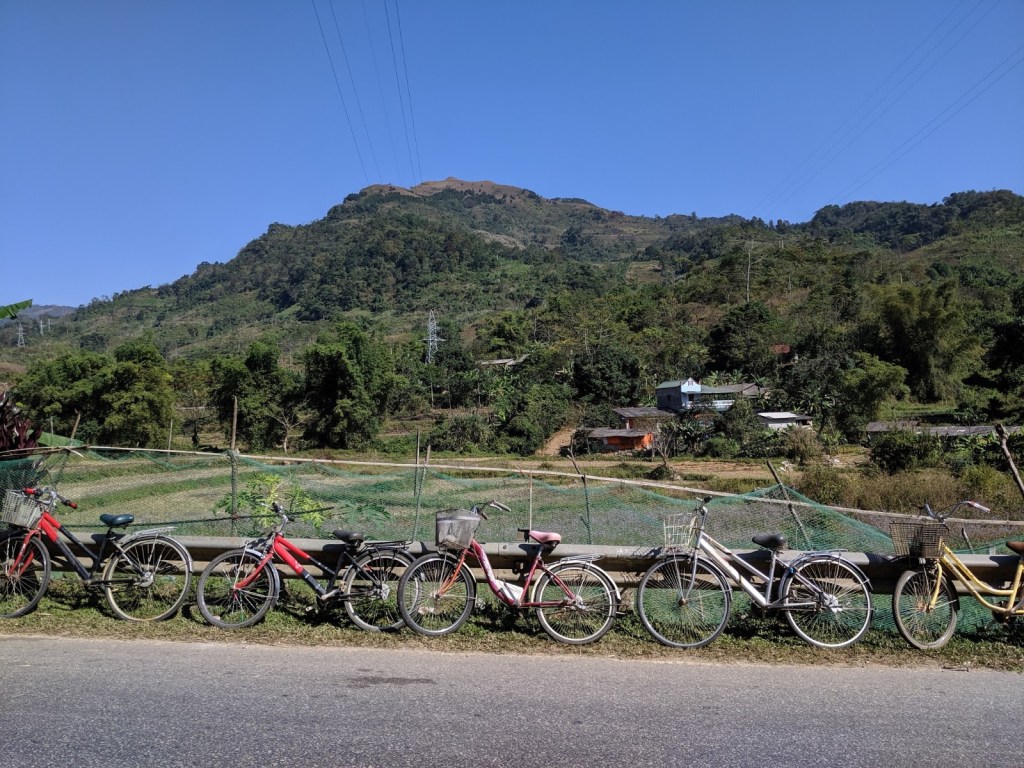
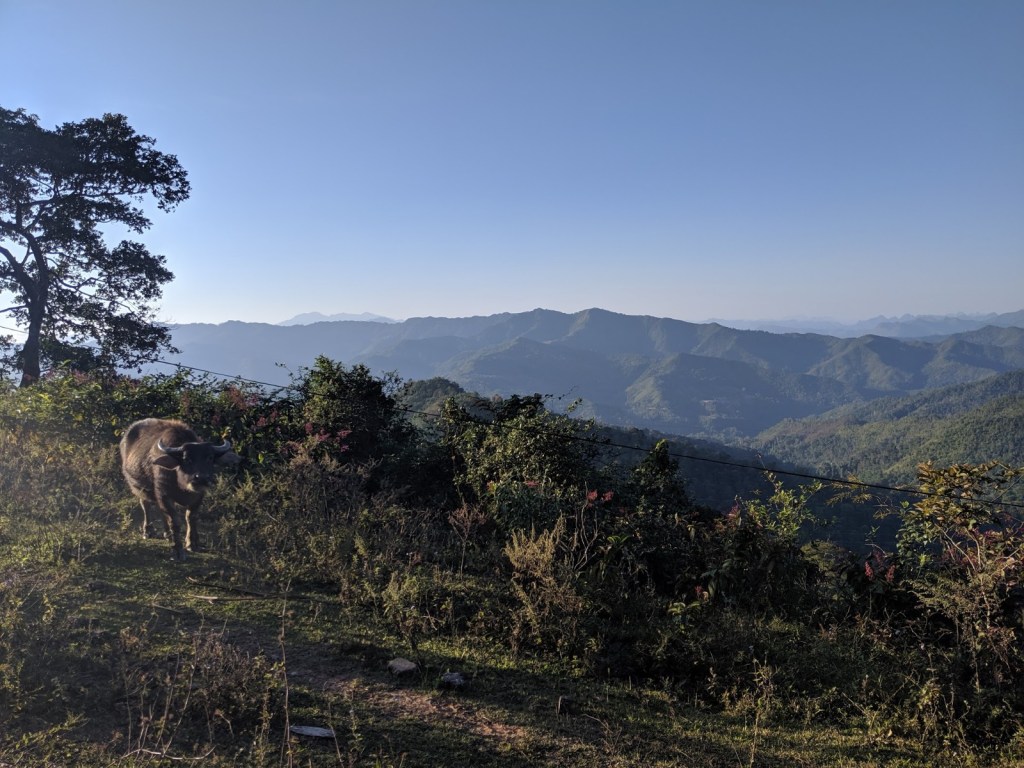
Long bunches of fountain grass stood drying in the sun. While the distant voices of children singing or reciting in class drifted down to the roadside where their bikes waited patiently for the journey home. Soon both disappeared and it was just me and the odd buffalo.

Given the relative solitude, I was surprised to come across a bustling canteen, at the top of the hill.
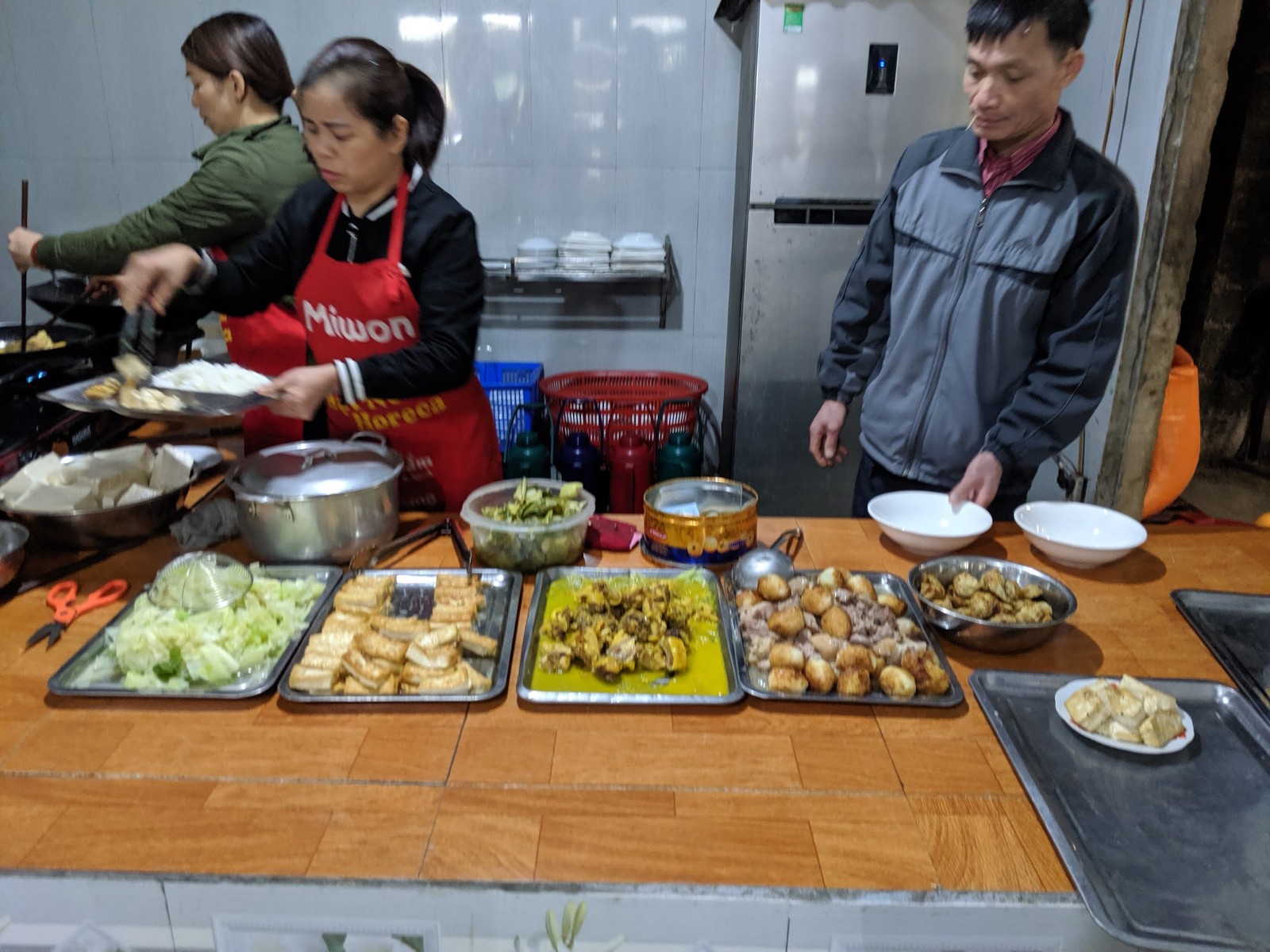
It turned out the canteen was a rest point for the cross-country buses that clatter their way from Hanoi over to Cao Bang (a winding 7 hour ride).
The food was wholesome and unpretentious. The chairs were too small and a medieval era soap opera (dubbed from Chinese) played to nobody in particular. Buses pulled up, food was slurped down, the horn was sounded and calm restored. Magic! These spots are always more special than the postcard attractions.


I bought a bag of local oranges and wound my way to the top of the climb, a trail of pips marking my slow progress.
I’d lingered a little too long in the canteen and had to ride a couple of chilly hours in the dark to make it to Cao Bang – gateway to the far north and an important trade centre for local hill tribes.
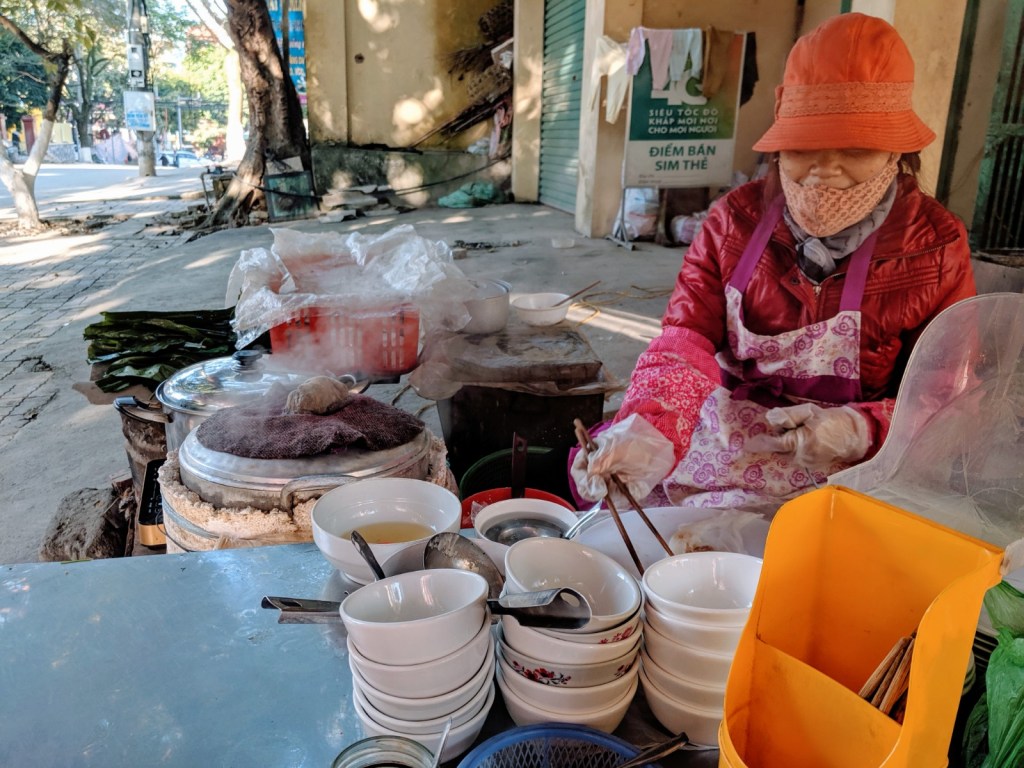
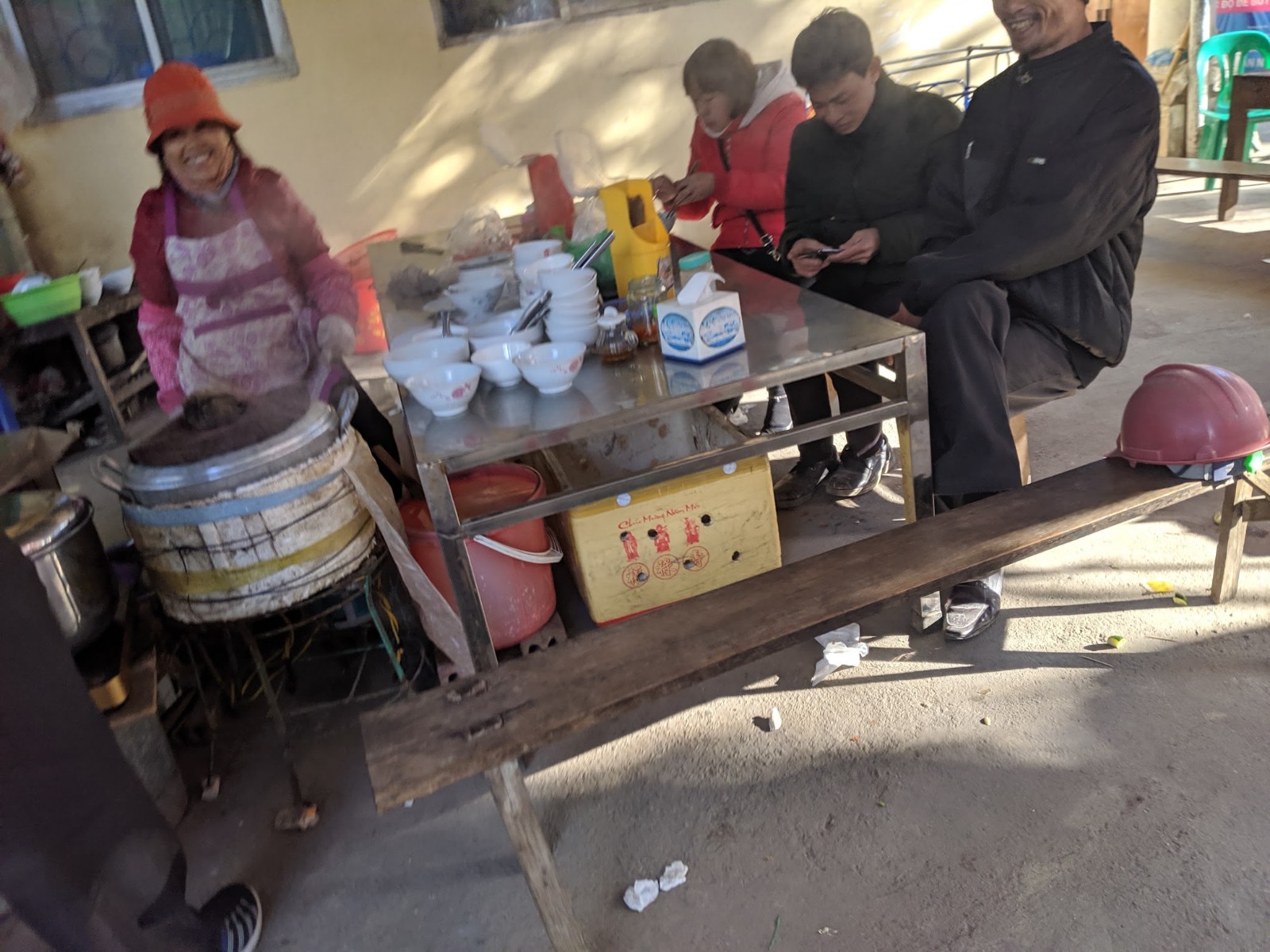
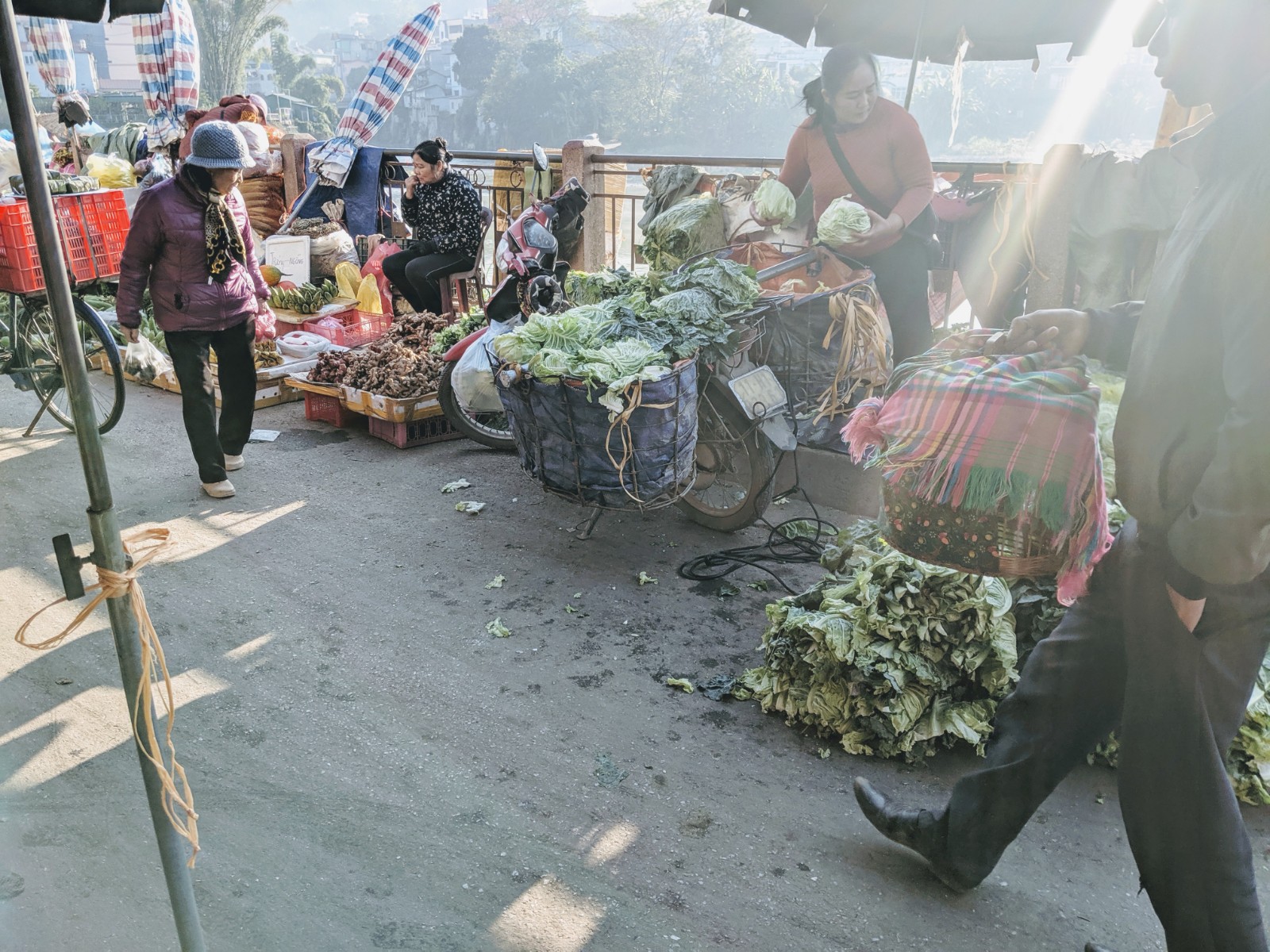
The next morning was even colder and I was forced to launch the fleece-lined gloves I’d bought for China. Once again though, a new (and warming) breakfast discovery put me right. This time in the form of Banh Cuon – a made-on-the-spot flat noodle/dumpling rollover, served straight from the hotplate in a bowl of steaming broth. I crowded onto a bench with everyone else and had more top ups than might have been polite – I had a long way to go!



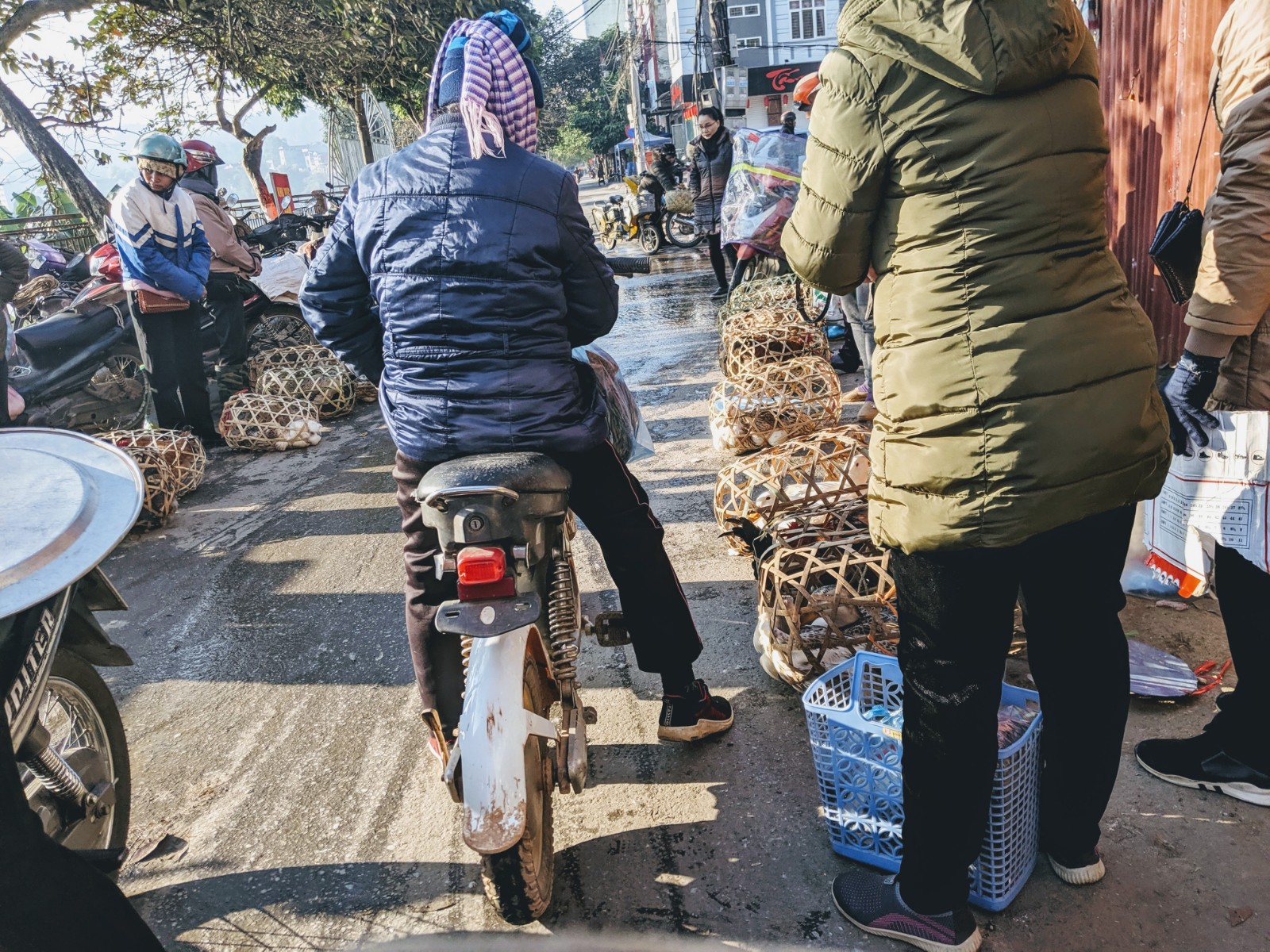

Eventually the sun cancelled the cold, the gloves came off and a series of dramatic karst formations began to tower above – the beginnings of the age-old natural border with China.
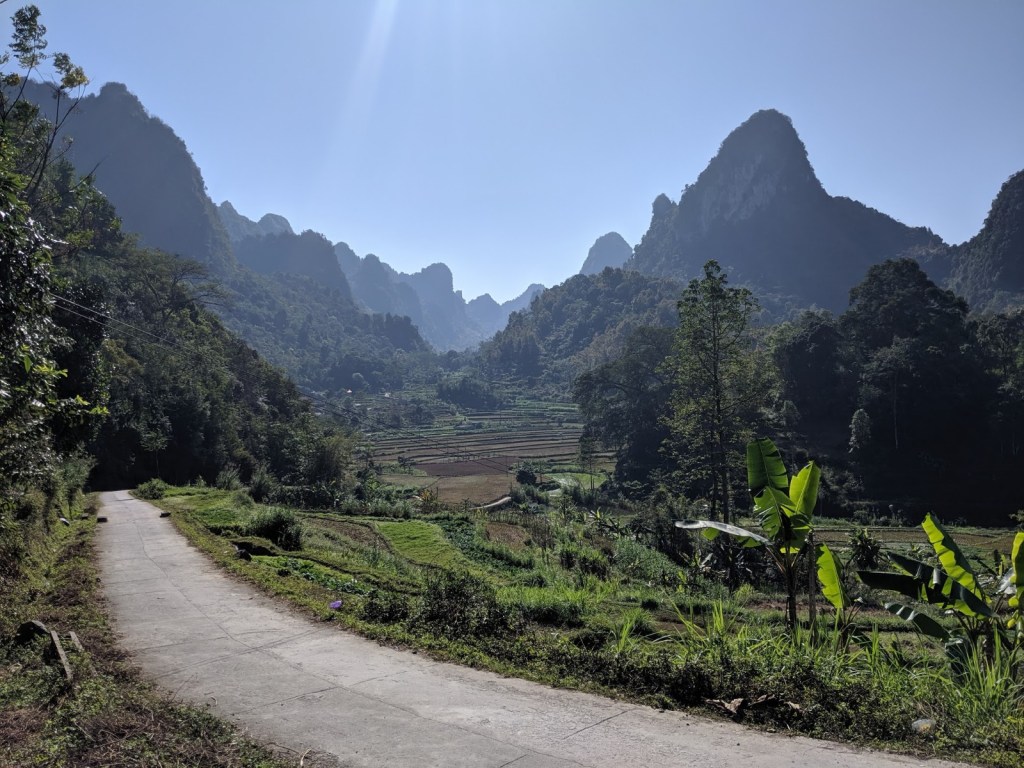

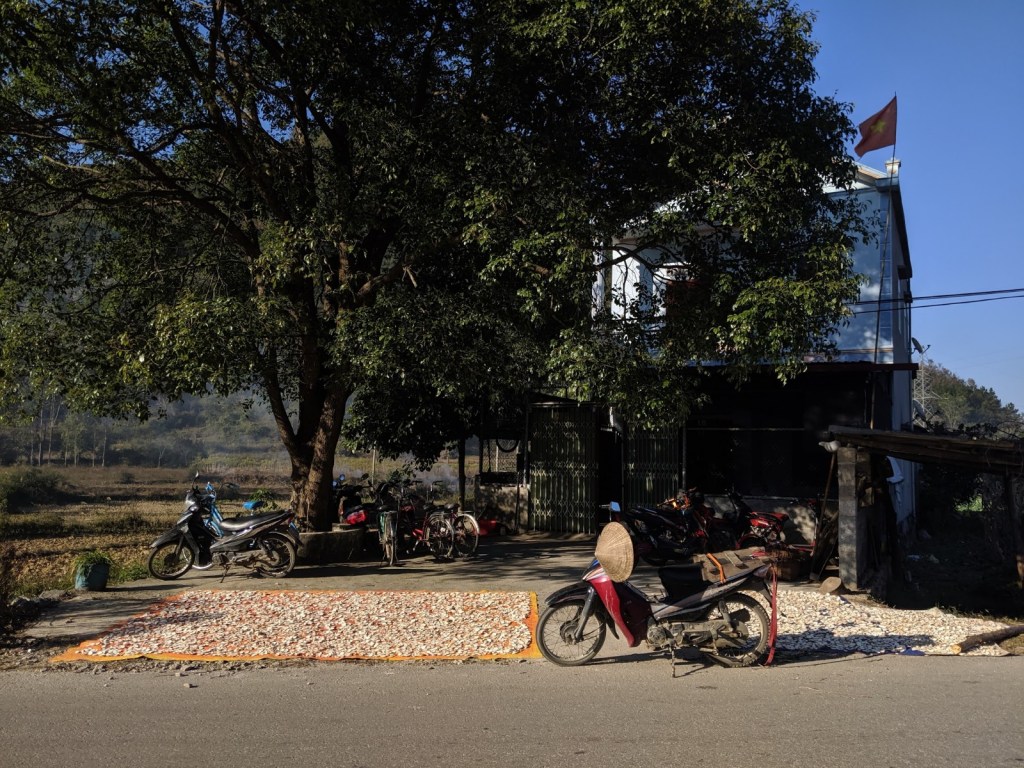
The rice paddies are empty this time of year and corn and taro lay drying in the sun.

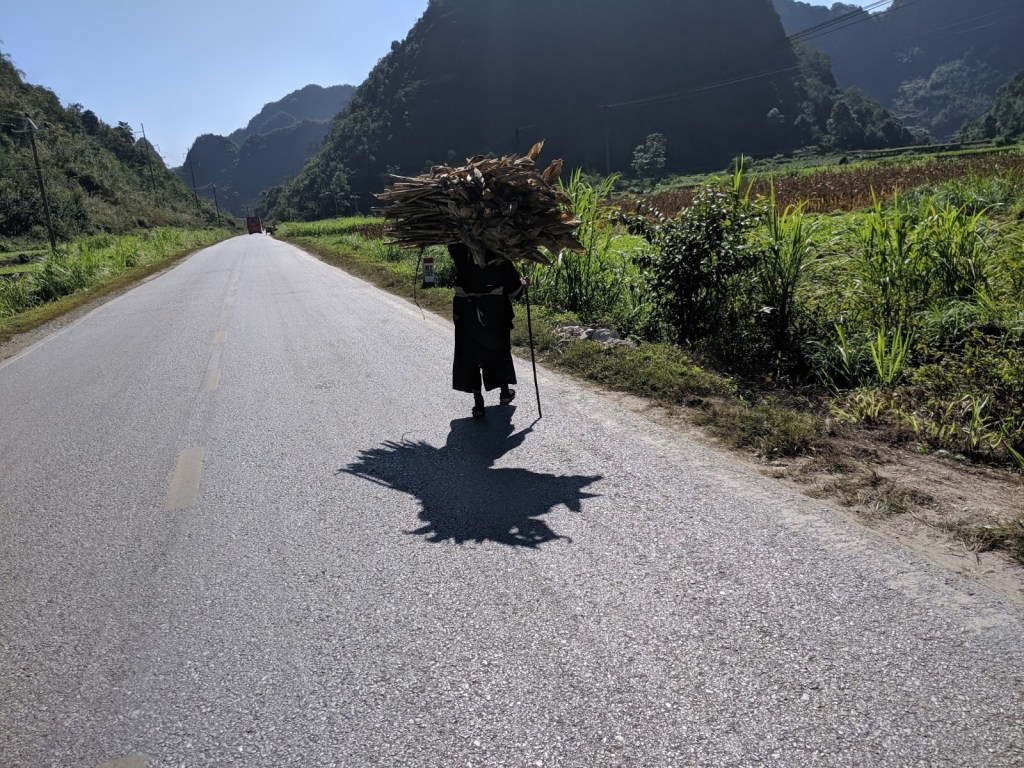
Despite this, the ethnic minority villagers of the north were hard at work. I was struck in particular by the age of some of the older men and women out driving buffalo or collecting firewood, bent double under a lifetime of heavy loads.
In all there are 54 minorities in Vietnam. Some, like the Hmong, were anti-communist, collaborating with the CIA during the war. At the time, reprisals were vicious with northern forces known to bury suspects alive in some cases. This is not forgotten and today minority groups continue to suffer, surviving on marginal land, excluded from the boom in the cities and receiving as little as a quarter of the going salary, according to one recent study.
In the face of this grinding poverty, a growth in tourism in the far north has provided new opportunities for work, but also for proud expression of minority culture through the explosion of ‘homestays’ across the border belt.
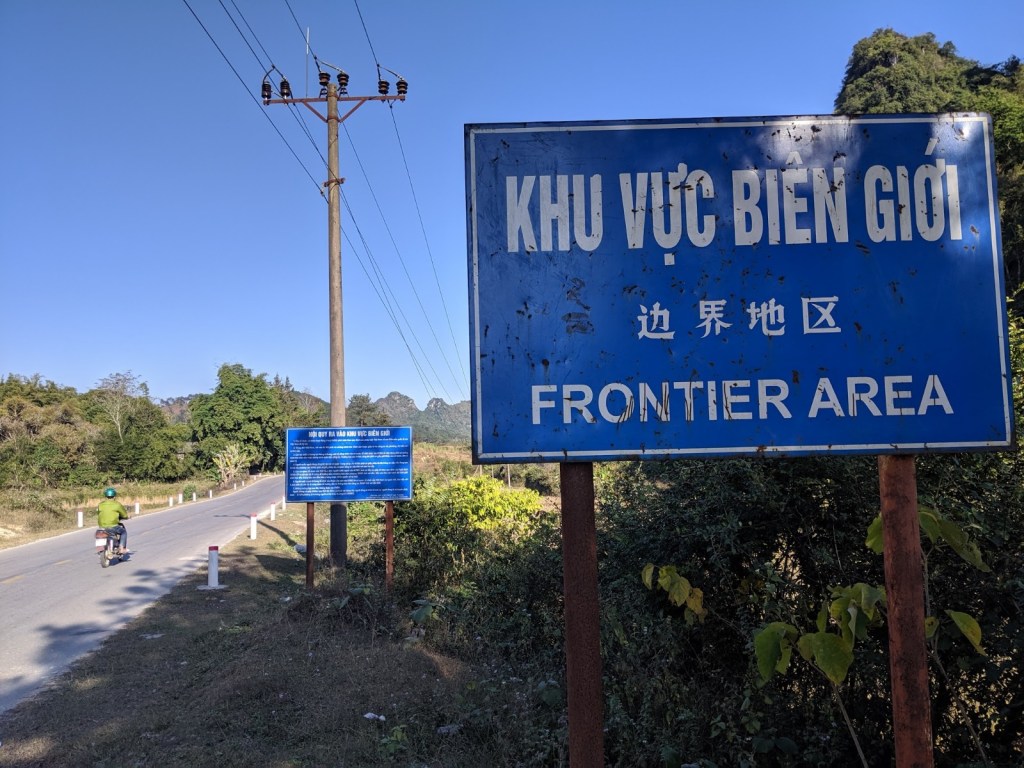
So popular are these that the homestay I called on at Ban Gioc Waterfall (run by a Dai minority family) was totally full! Luckily they made an exception and squeezed a matress into the corner of the main room.
All the other guests were local and I got the impression that people knew each other. Perhaps it was some kind of party or wedding. The family were hard at work, so I kept a low profile and almost missed dinner.

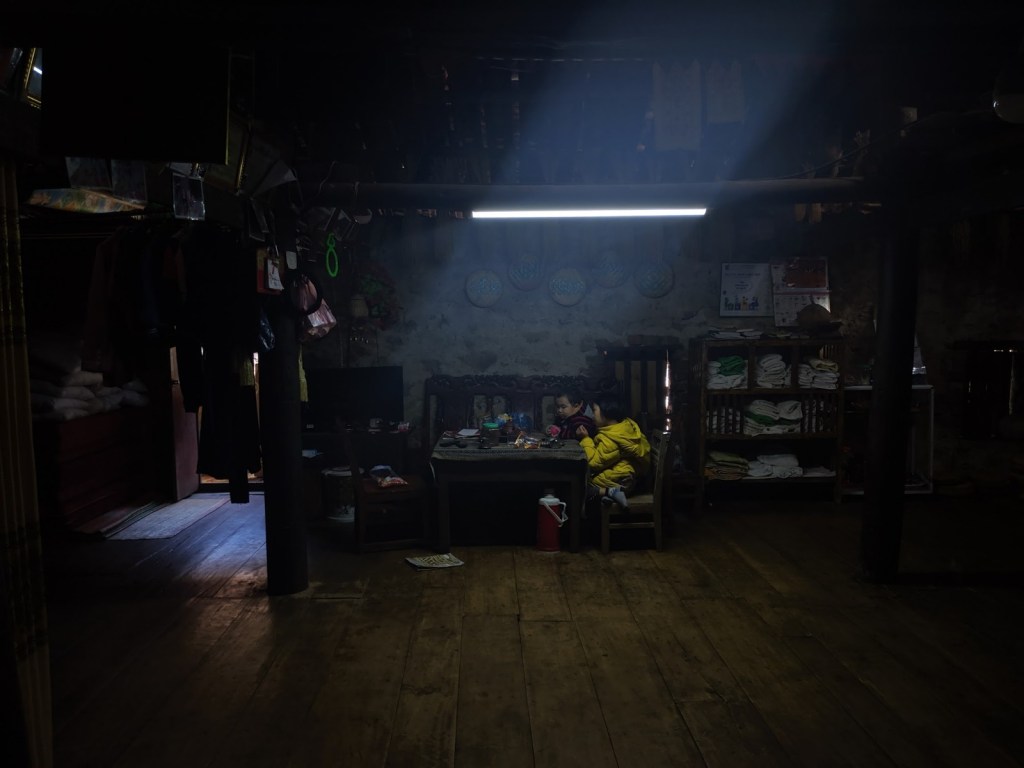

There was no wedding it turned out – just a typical Saturday, busy with weekenders up from Hanoi. Rather than cater individually, the homestays in the village work together, each preparing part of a giant never ending buffet, served in a huge outdoor seating area built by the community for the purpose. A couple of guys I’d shared tea with hailed me over and from there I was looked after all night.
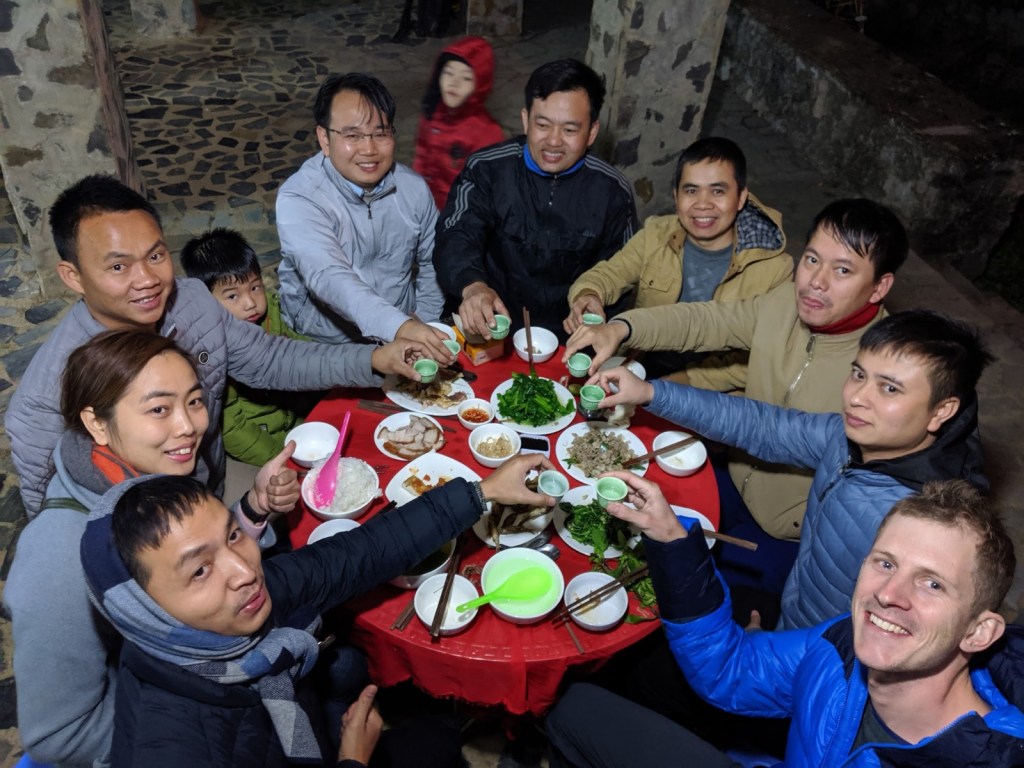
Everyone wanted to drink with the foreigner! This involved standing up and chanting HAI, BAI, ZHO! (1, 2, 3) a lot before clinking of glasses and hearty slaps on the back. Luckily some people became worried for me and insisted I drink shots of water, rather than rice wine. The night raced on in blur of handshakes, selfies, toasts and football chants (with Vietnam competing in the SE Asia games on a small TV in the corner).


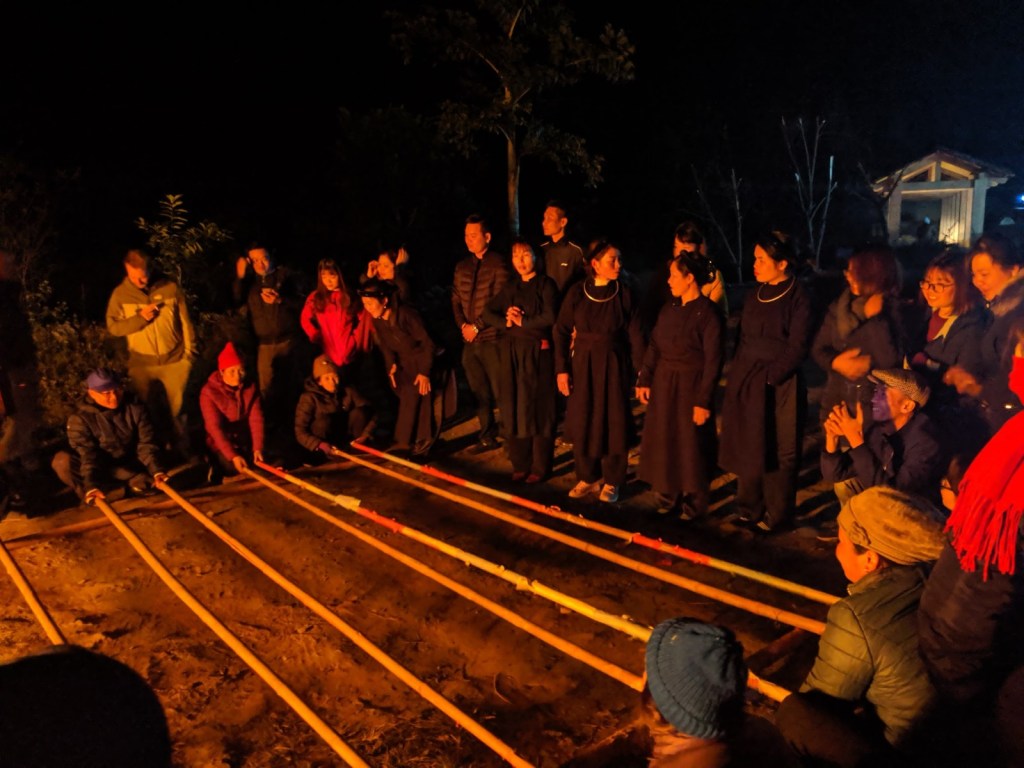
This was all before a giant bonfire was lit for us to dance around – and was followed by a fun local game which involved skipping through bamboo. The women of the family changed into Dai traditional dress and played songs in the Dai language on a beautiful set of medieval looking stringed instruments. Things wound down some time after midnight by which point I was glad of my new down jacket (the final bit of cold weather gear bought for China) as the temperature dropped to zero.


After breakfast the next morning I rode a couple of km’s to the waterfalls with a shy girl from Saigon who was worried as she didn’t know the way. I thought she was being modest (there’s only one road), but she somehow managed to get lost whilst following me by motorbike! I pedalled back to find her and we spent the rest of the morning taking photos and carrying our coats as things soon warmed up.
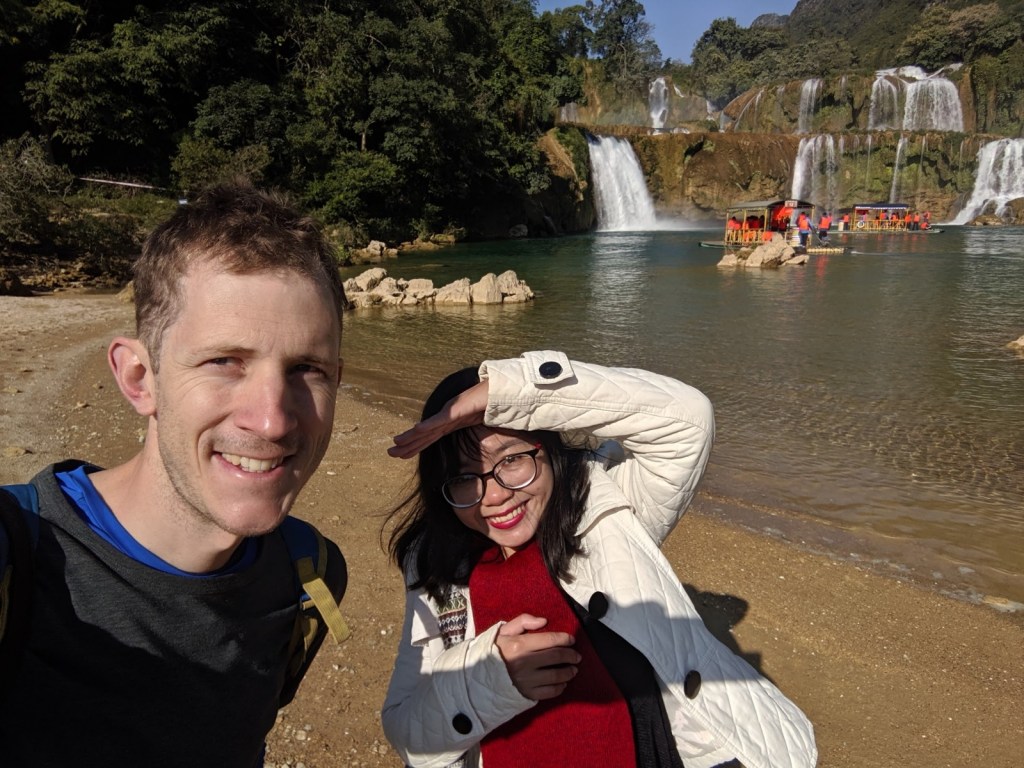
The falls are right on the border and a real spectacle, whichever side you see them from. It’s illegal to cross, but Chinese tourists usually take a raft trip out to the middle of the river. Here they are met by opportunistic souvenir sellers from the Vietnamese side, who paddle over to meet them, selling their wares without either party fully leaving the country. A triumph of international relations!


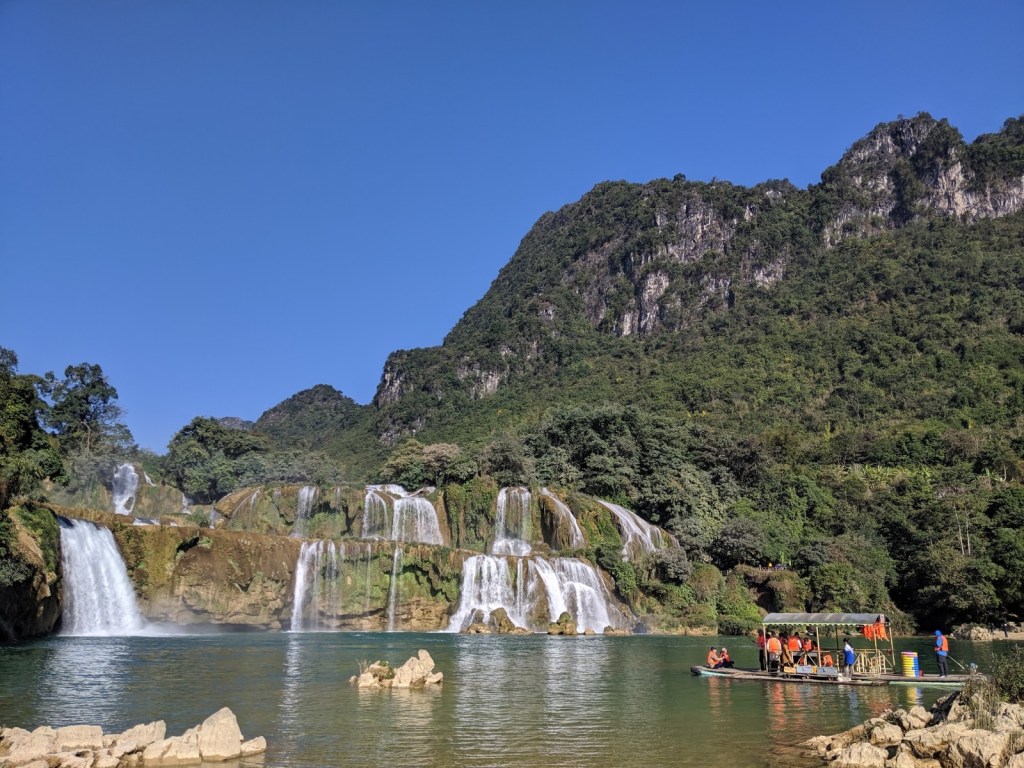
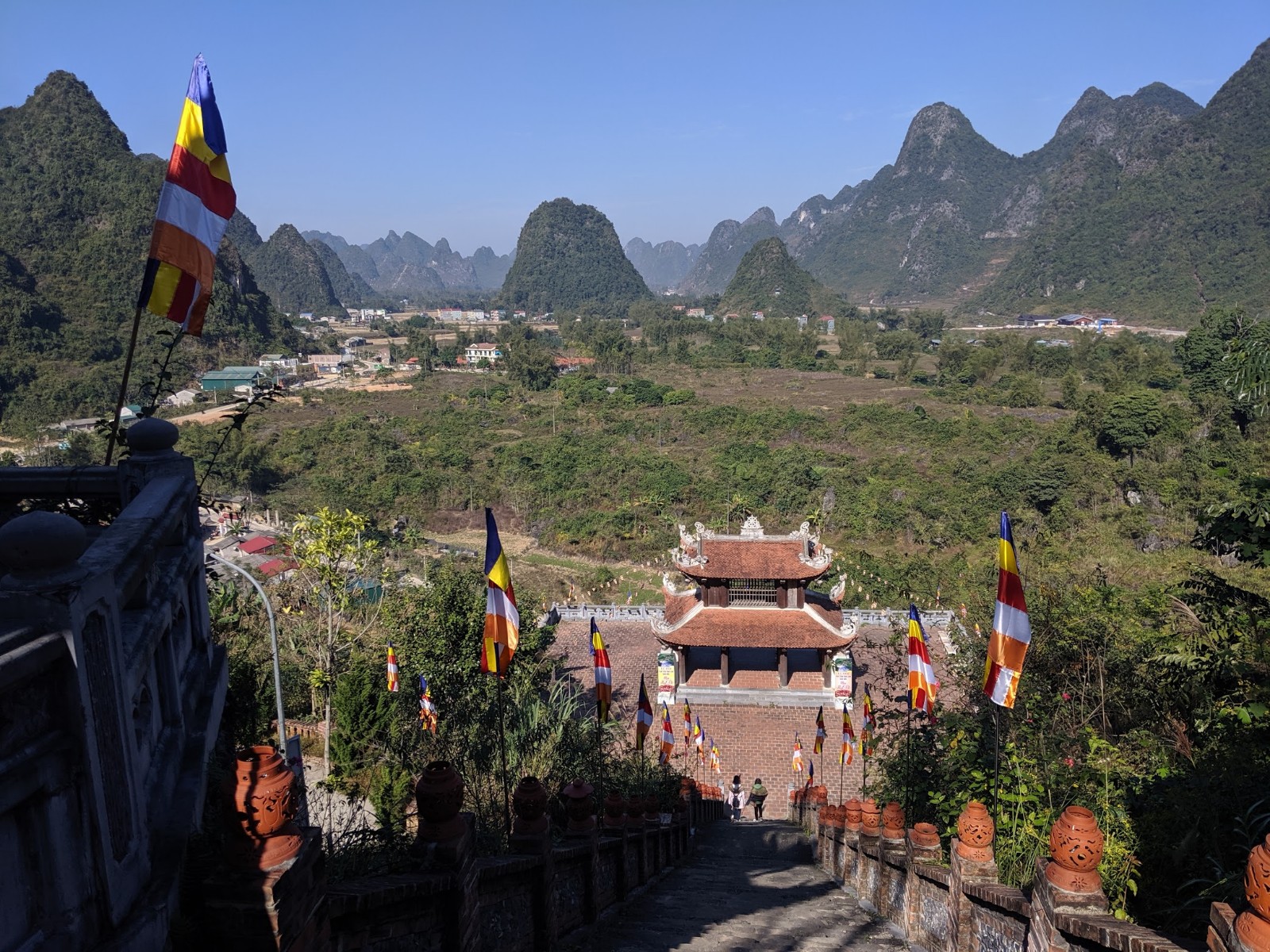
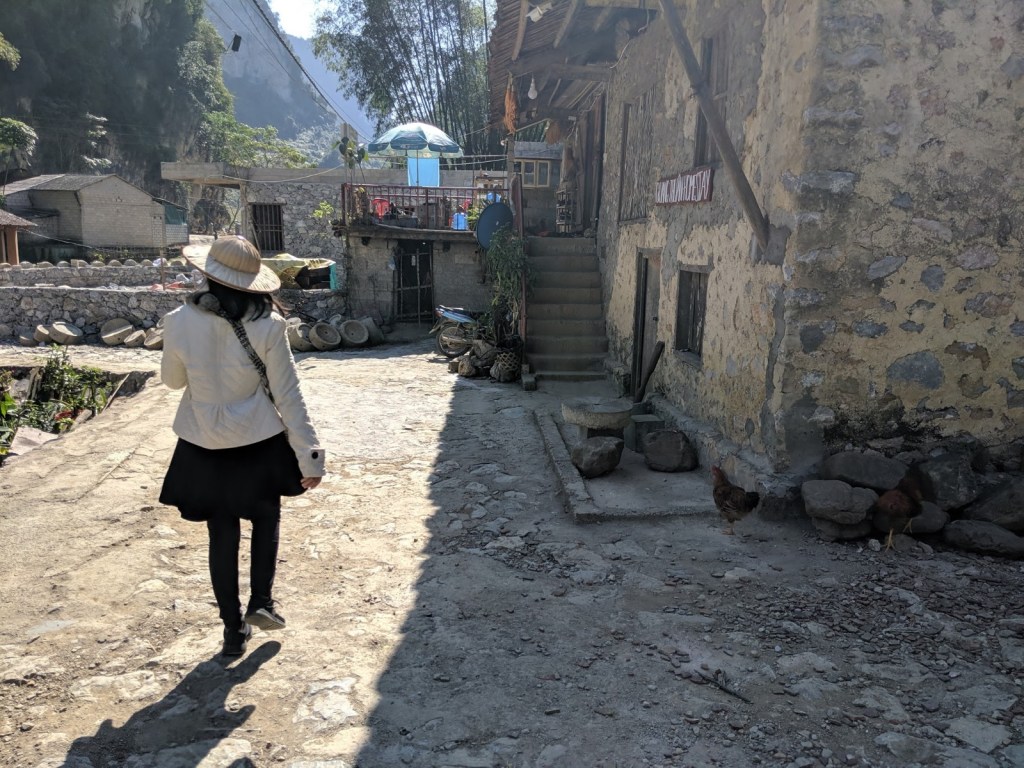
Having reached the end of the road (quite literally), I said bye to my new friend from Saigon, turned around and pedalled the 40km or so back to the previous town.
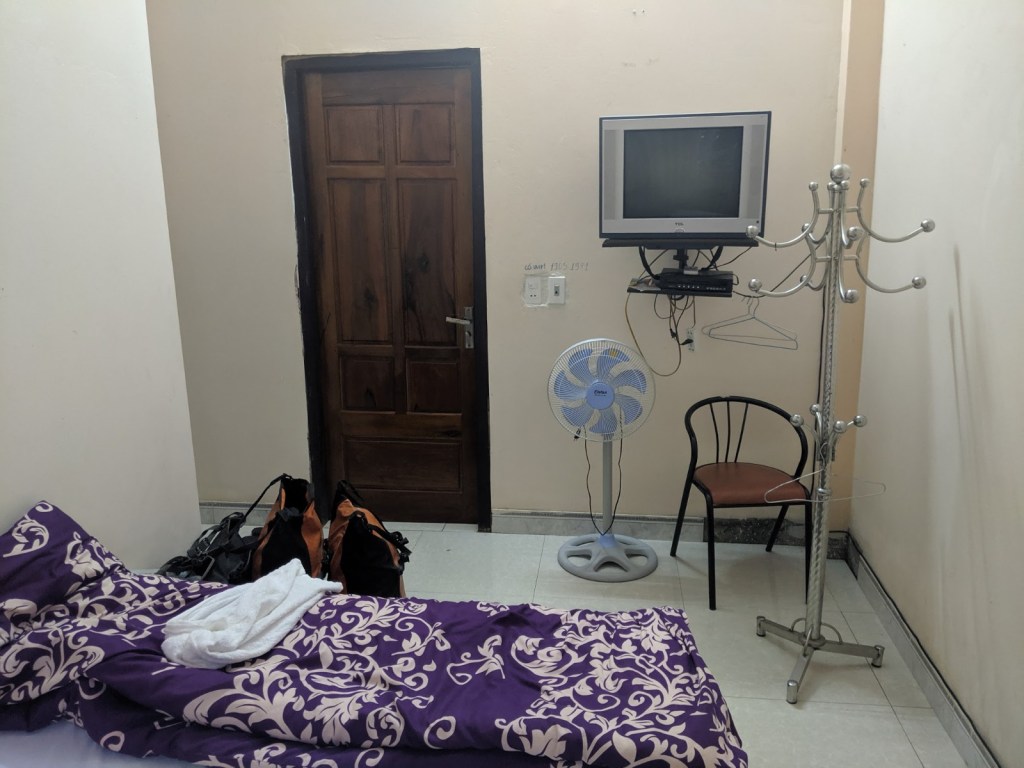
I stayed in this extravagantly decorated motel room.

Then split off at the weird middle-of-nowhere meat junction below.

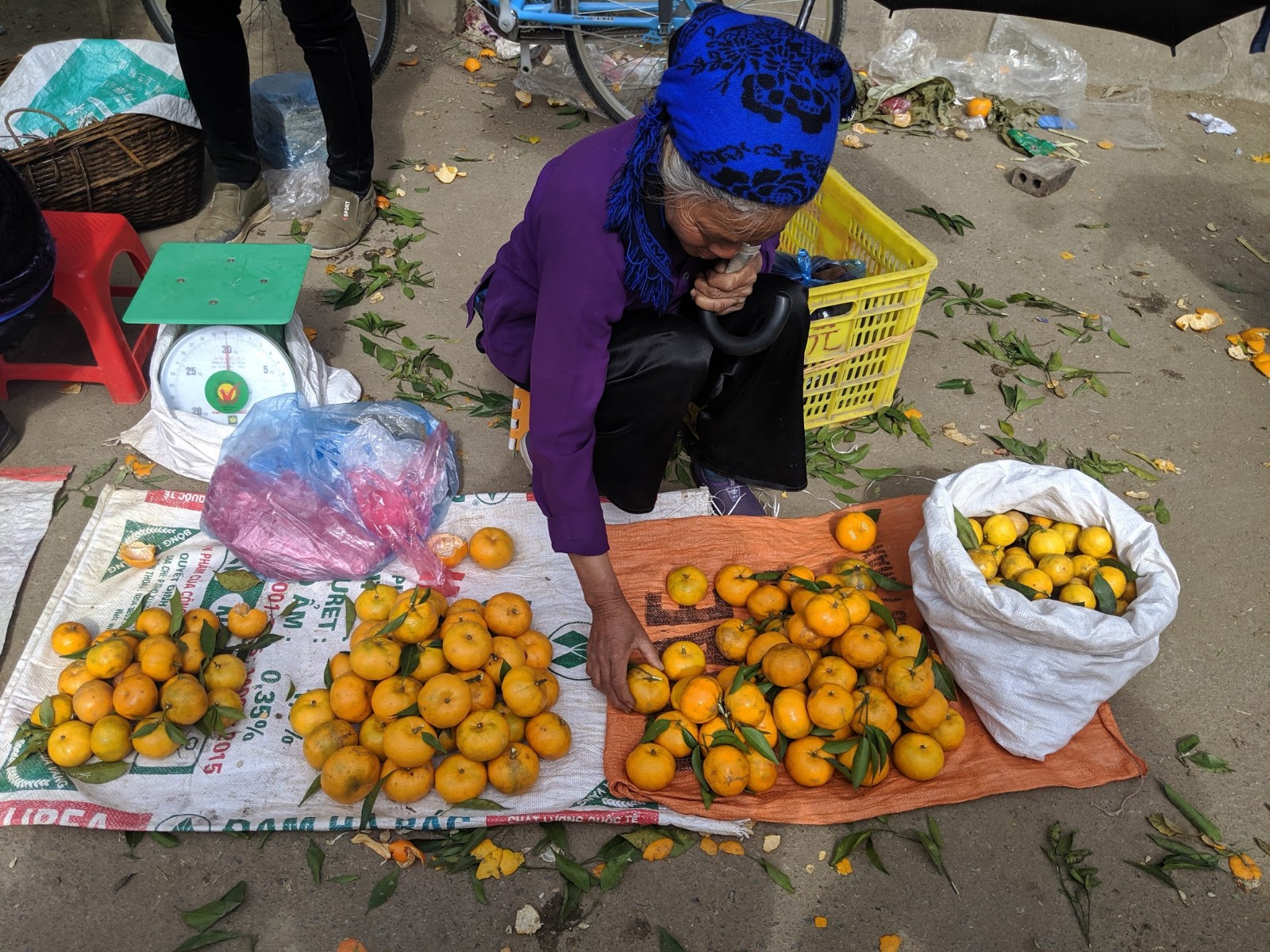
This took me to my first real border town at Tra Linh. Despite being trucks and trade only, it still had a real border town feel. I sat with a syrup thick coffee next to some polo clad businessman at the local hotel to take it all in: wedding karaoke in the main street, police on white Harley Davidsons, a travelling salesman selling feather dusters and an endless parade of orange sellers.

From here I struck out on some rough scenic roads for the next few days, not really knowing what was in store.
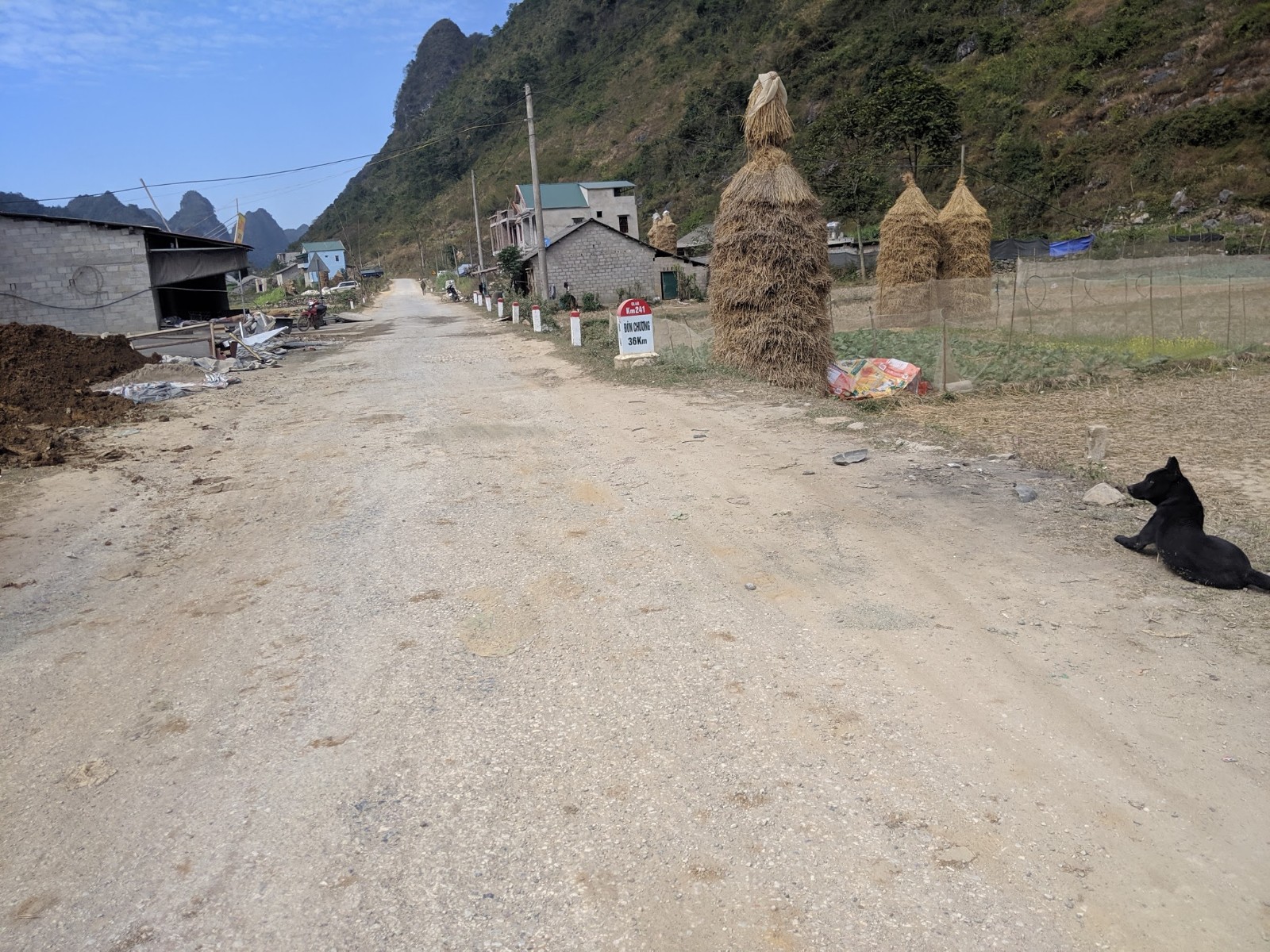
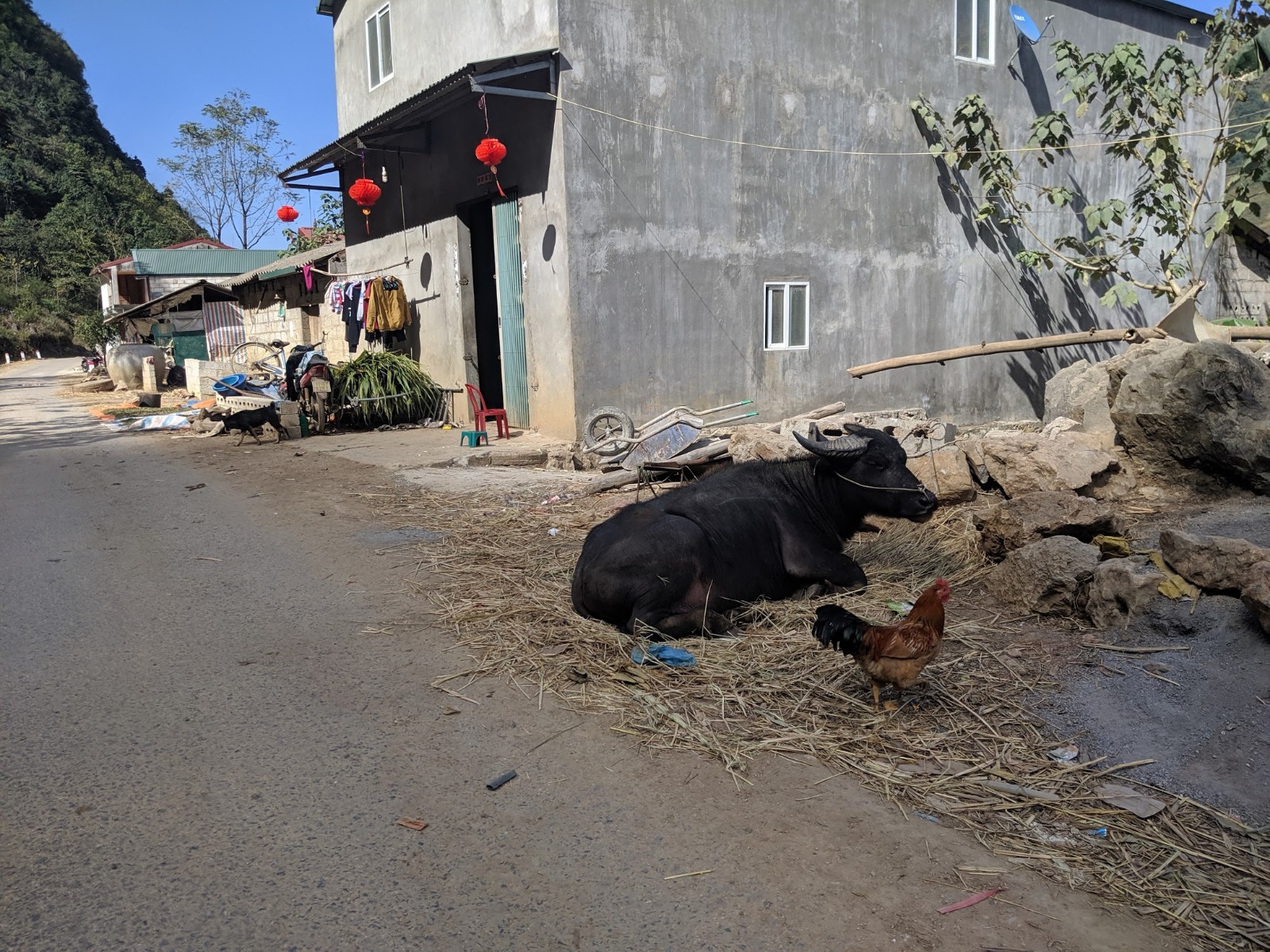
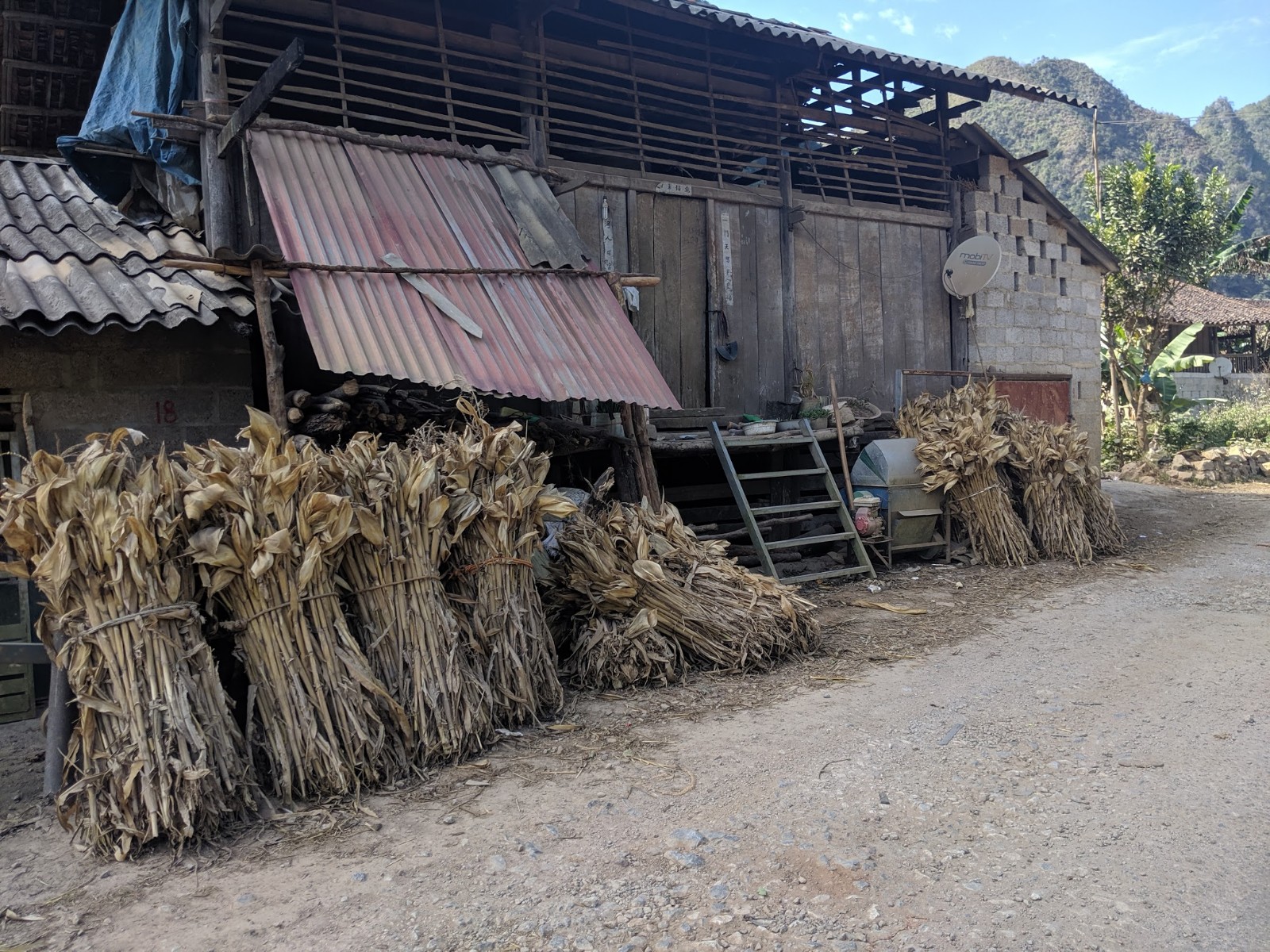
Medieval haystacks dotted the roadside, chickens squawked in the yard and limestone karsts continued to tower above.
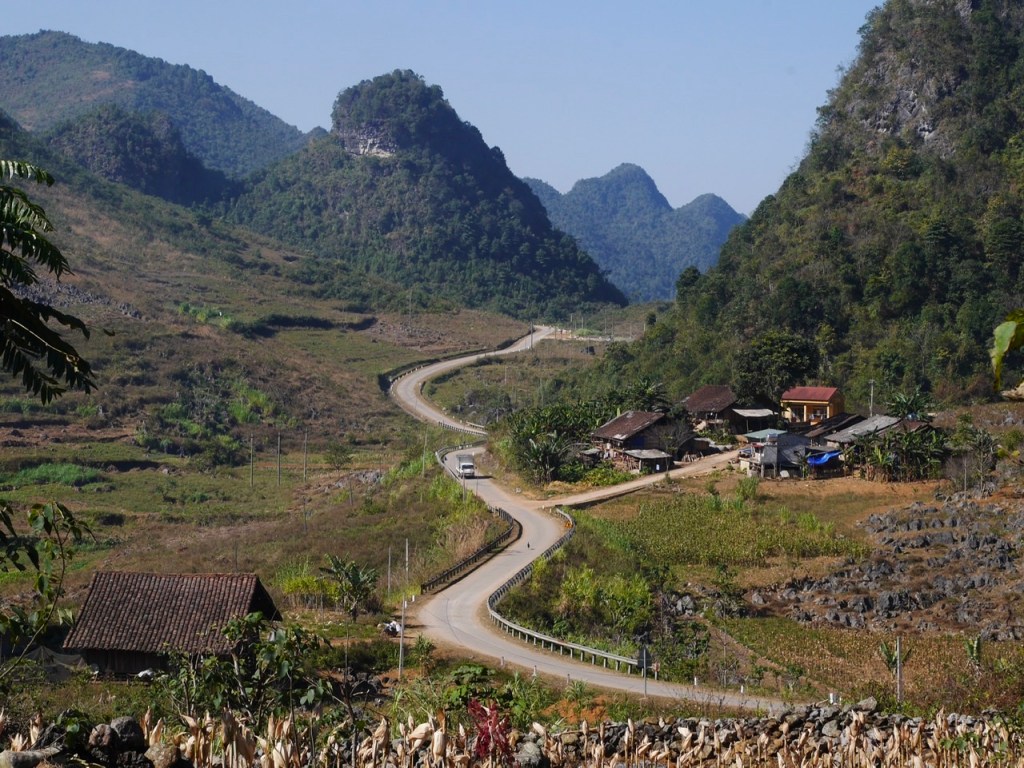
I was aiming for Pac Bo Cave – the mountain hideout of Ho Chi Minh and his base for some months when he returned from exile in China in the 1940s to organise resistance against the Japanese. He chose a very good hiding place. The roads and hills that surround Pac Bo are pretty well impenetrable, especially on a touring bike!


Though far flung, today the cave is a site of national pilgrimage. It marks kilometre zero of the HCM road I’d been following earlier in my trip, so I suppose it was a pilgrimage for me too. I spent the night at the only accommodation, a Ngha Nhi (motel) ran by an authoritarian grandma who made up for her shouting with an overly generous homemade dinner piled high with rice, eggs and greens.
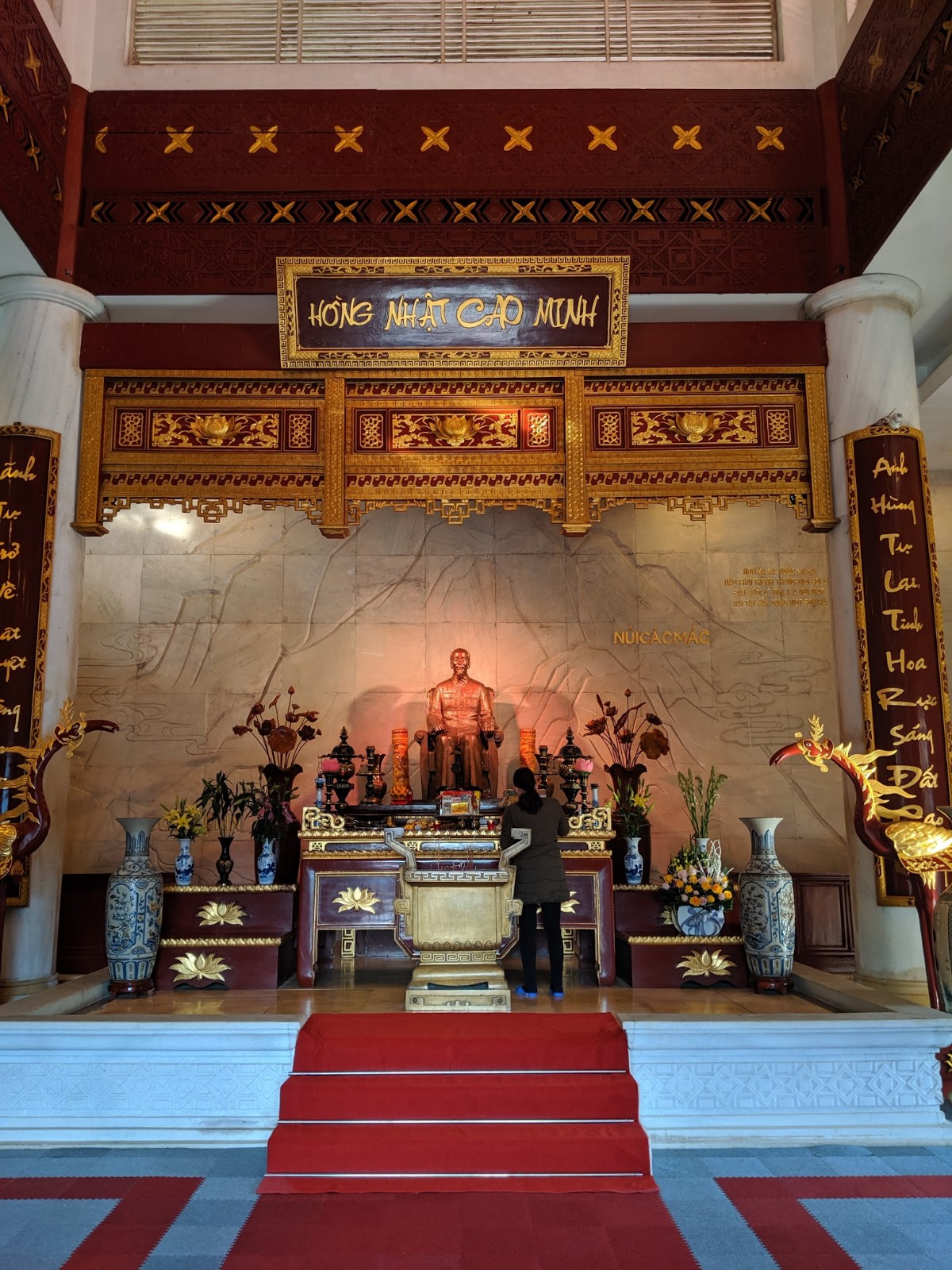
I mentioned in my last post that HCM didn’t want to be embalmed. I’d wager he didn’t want a temple built after him either! He looks a little uncomfortable up there in lights.
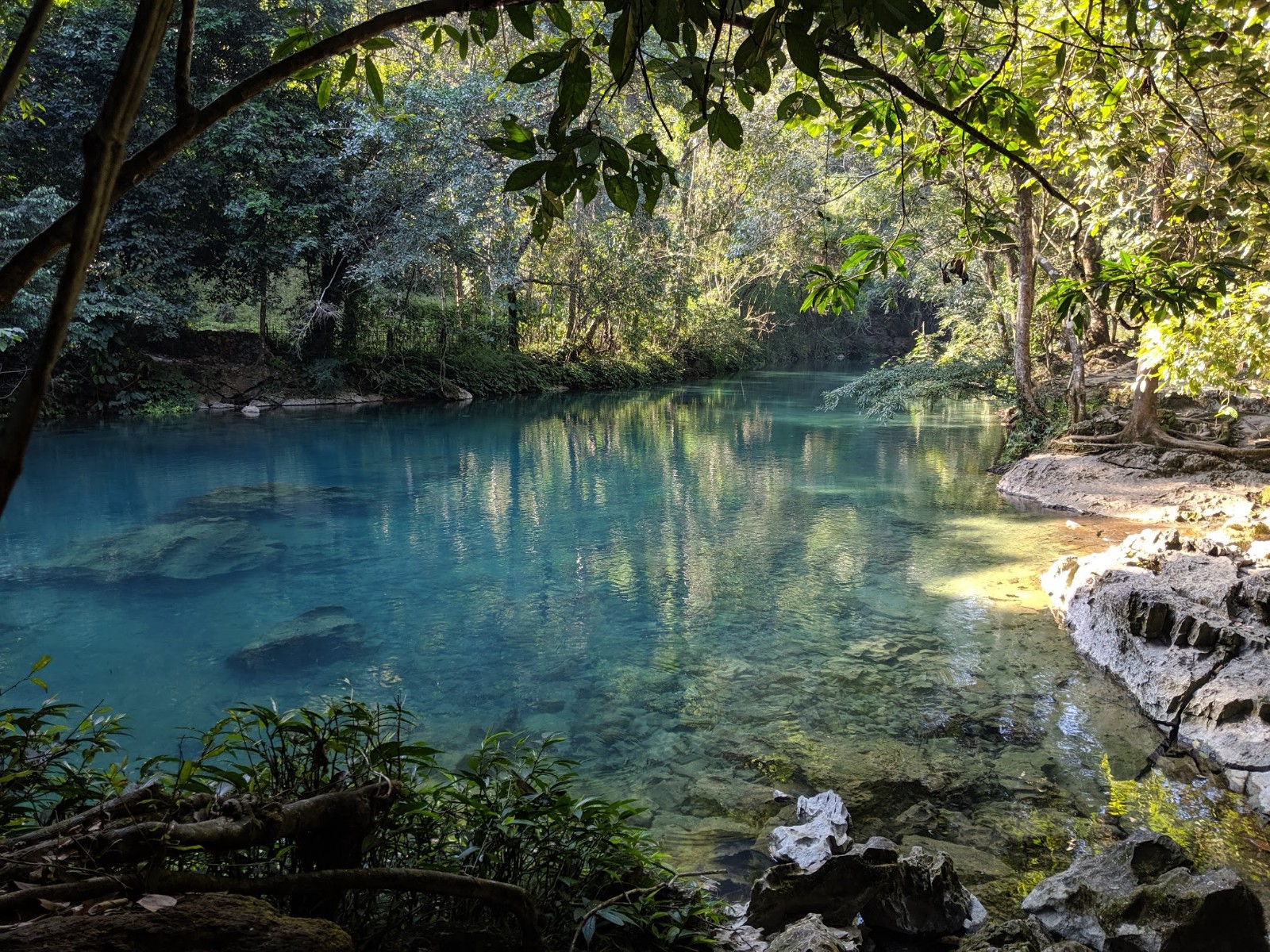
Thankfully, the rest of the Pac Bo complex is refreshingly low key and tranquil. According to legend (and to the info boards) Ho named the hill in front of the cave after Karl Marx and the stream after Lenin. It was around 1km or so’s walk to the cave itself and you are free to wander around (there was nobody there). Apparently the kettle was his and the wooden boards his bed. Though the site is set up for the 21st century, with a visitor centre and temple, the hills around remind you where you are and what it might have been like for the young revolutionary.


Things went from bad to worse in terms of roads after Pac Bo and I ended up spending the night in a spare room above a shop as I really wasn’t making much progress on the gravelly ascents.

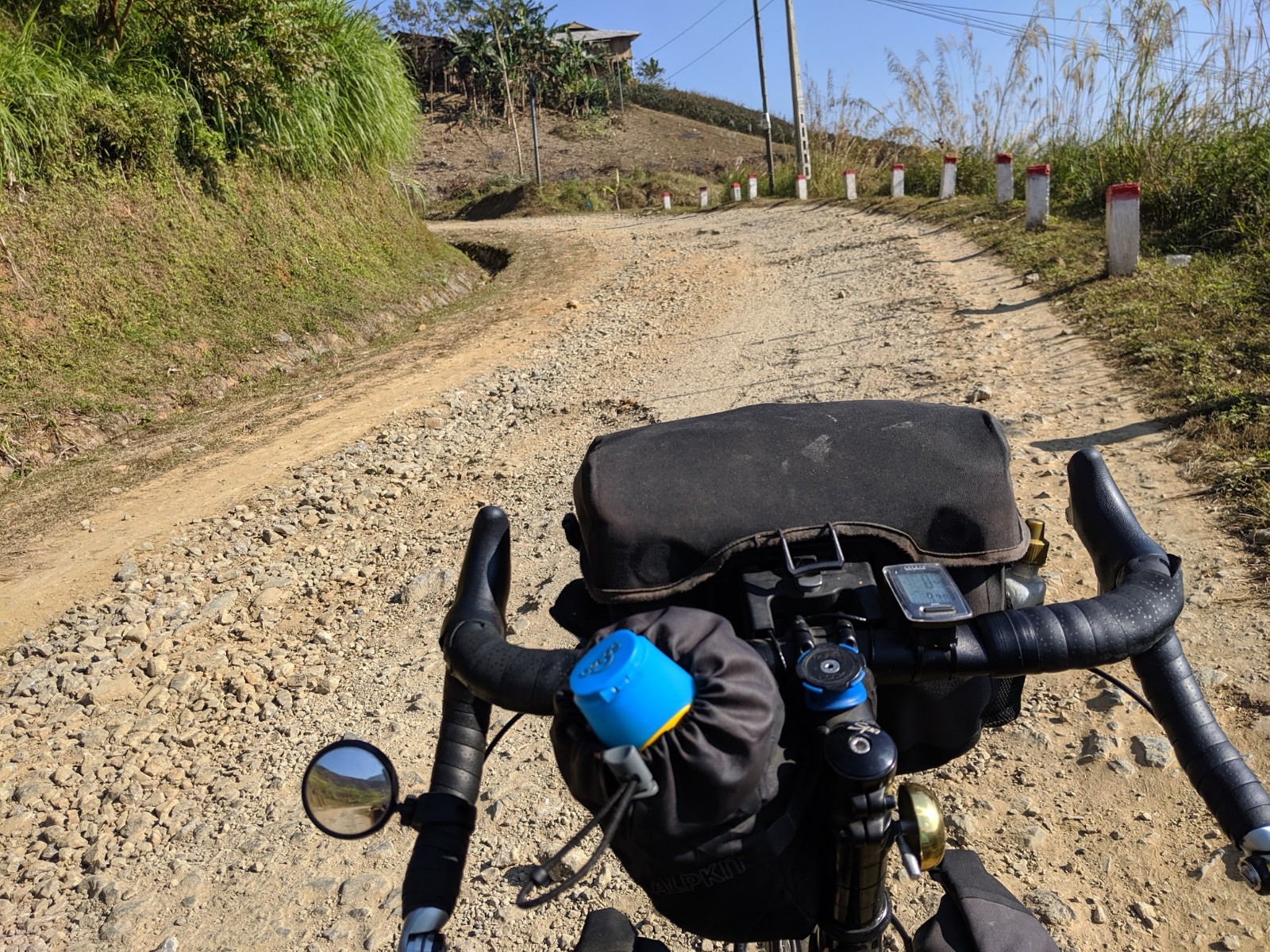
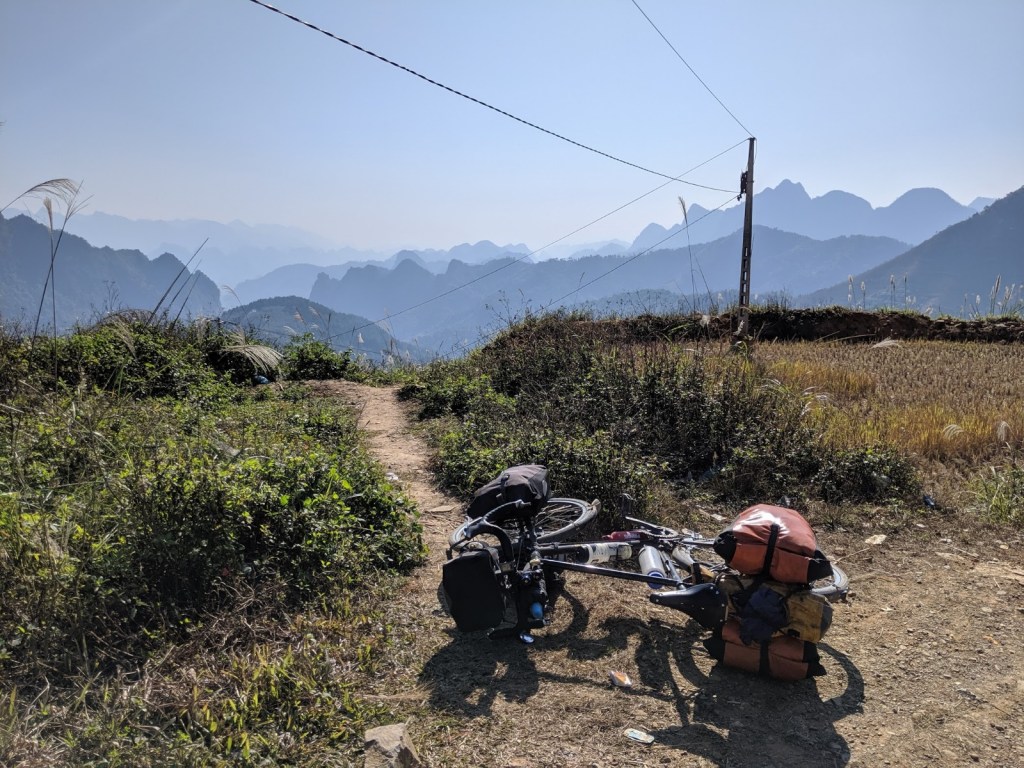


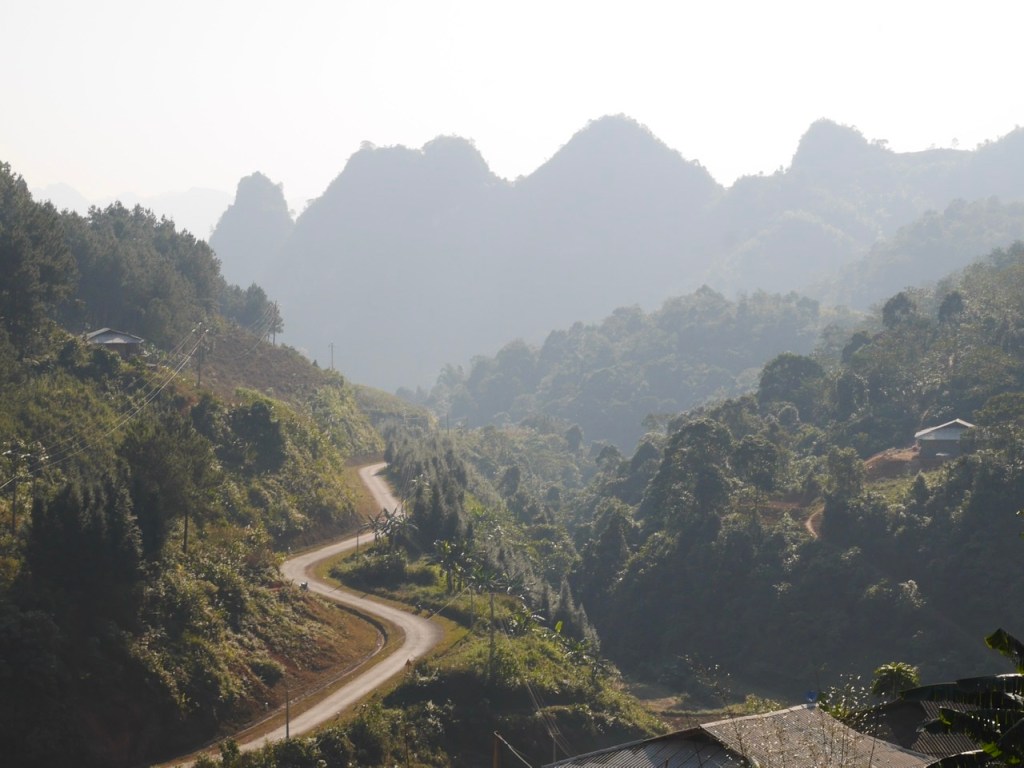
It was always funny seeing schools out on these rough stretches – they are the same as the ones in the city! Incongruous against the largely wooden local buildings and completely ambivalent to the mountain backdrop. A good statement of intent, if nothing else.

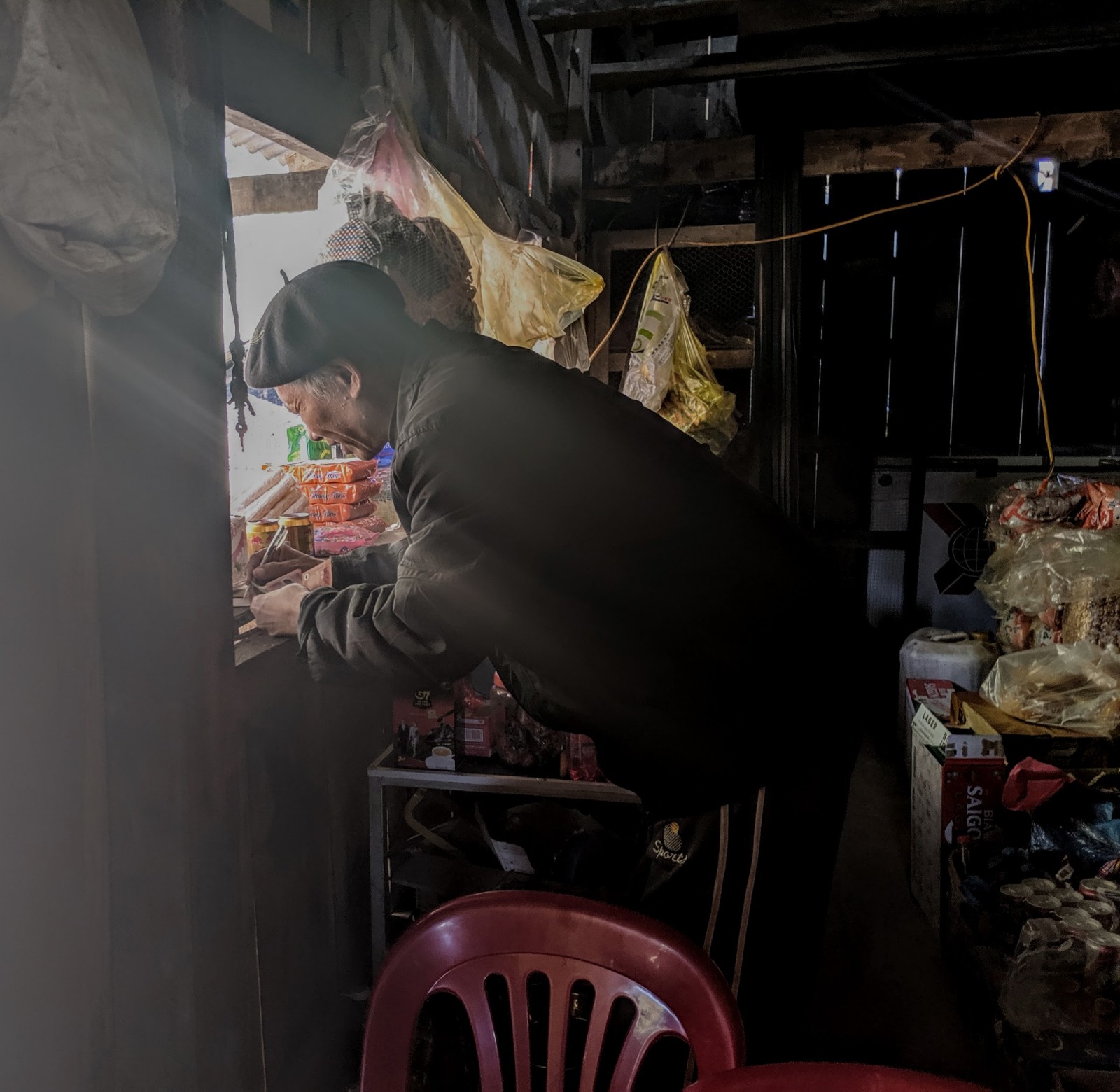
After my night in the shop, I topped out the next day and descended into a flat plain where I had some instant noodles at a small kiosk prepared by a man with a beret and a Thermos. I knew there was a crazy set of hairpins coming up and asked where I might get a good view. His wife sent me on a one hour death trip up a treacherous goat path, but the panorama put my achievements into perspective.
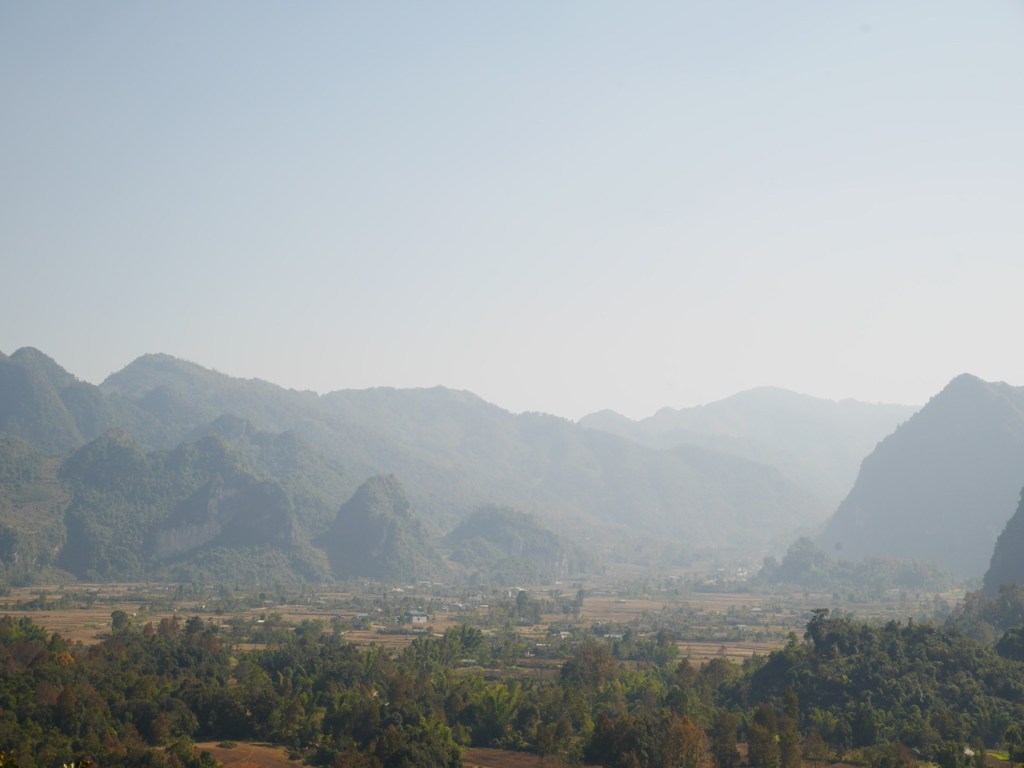

The big hills in the background are where I’d started the day. The plain (around sunglasses height) is where I’d descended to. While the staircase of hairpins lay ahead.
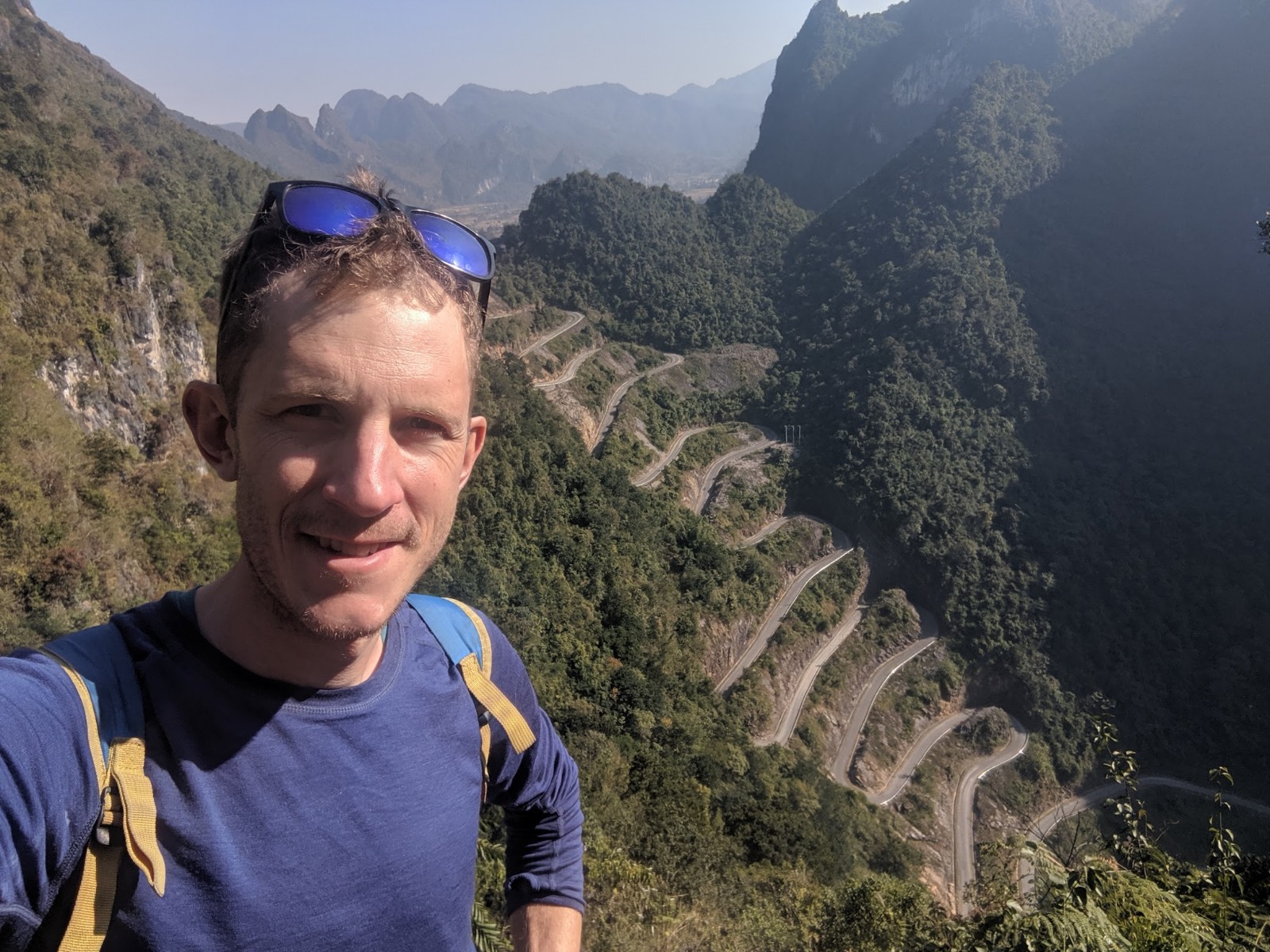
I’d been seven days on the road since Hanoi and at times just a stone’s throw from China.
It would be a week before I’d arrive – but I was happy with the long way round!
 Rolling Project