Covid-19 Update: I am now back in the UK – earlier than planned but very grateful for the freedom of the last few months. Now catching up with the blog!
It was funny to be on a plane again after four months on the bike. It wasn’t the original plan. I was supposed to meet my Dad in Hanoi – a short break from a work trip he was taking to Myanmar in November. In the end though, his visa didn’t allow him to leave and come back, so I decided to stash the bike and visit him instead.

Yangon – Arrival
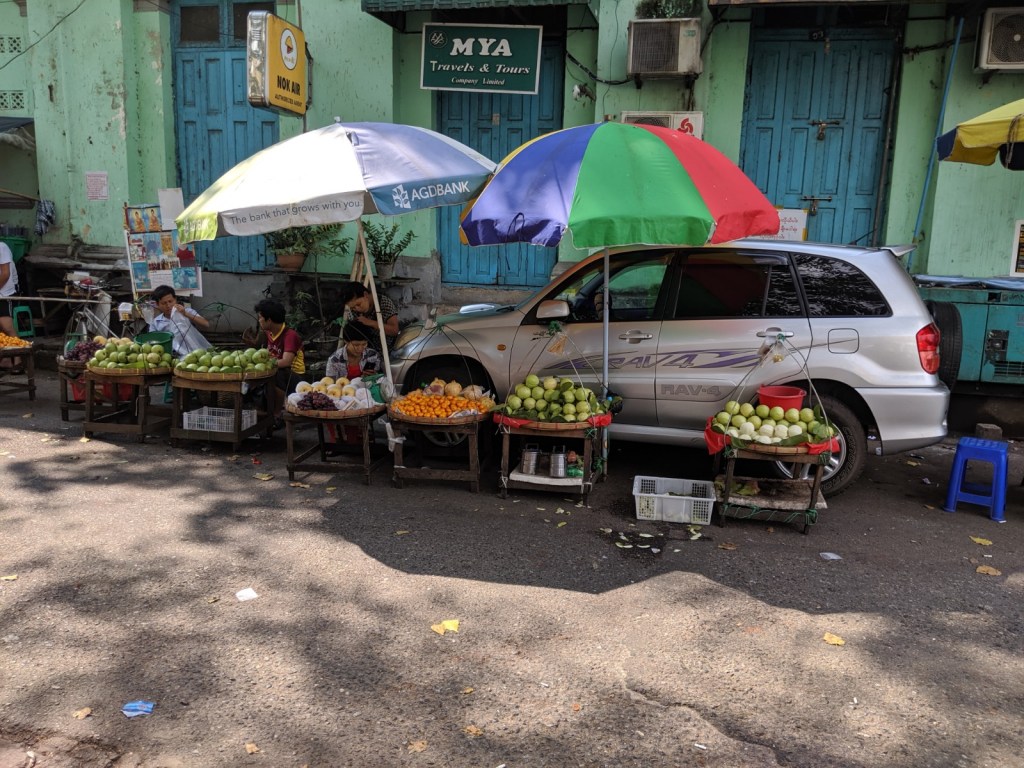
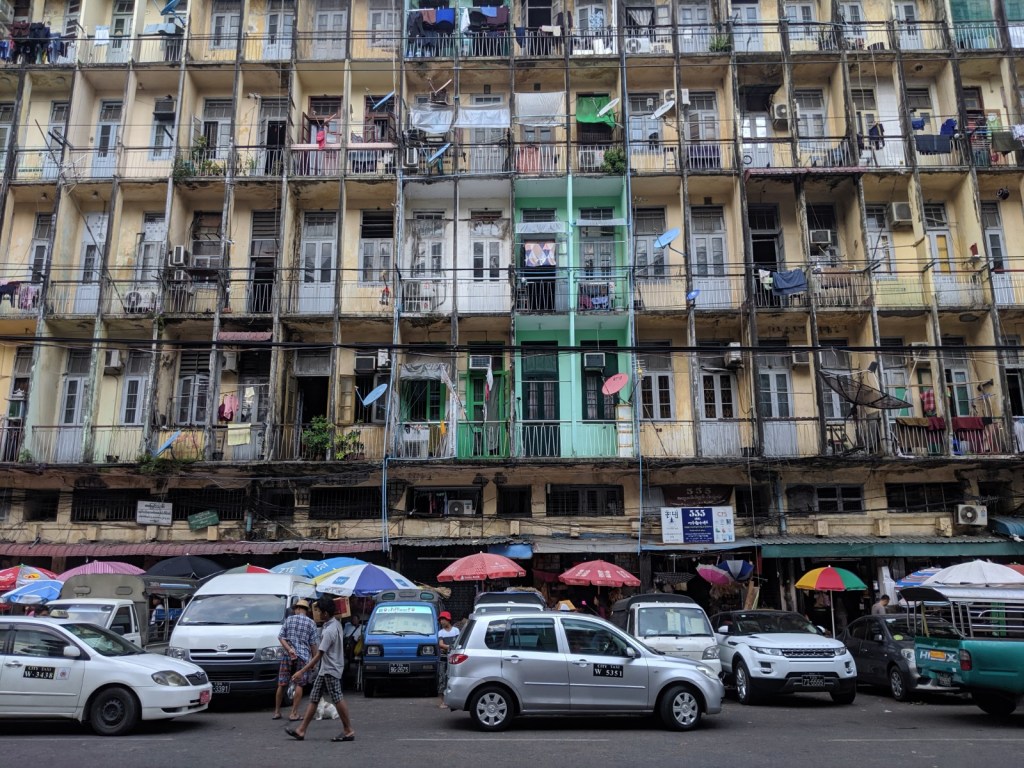
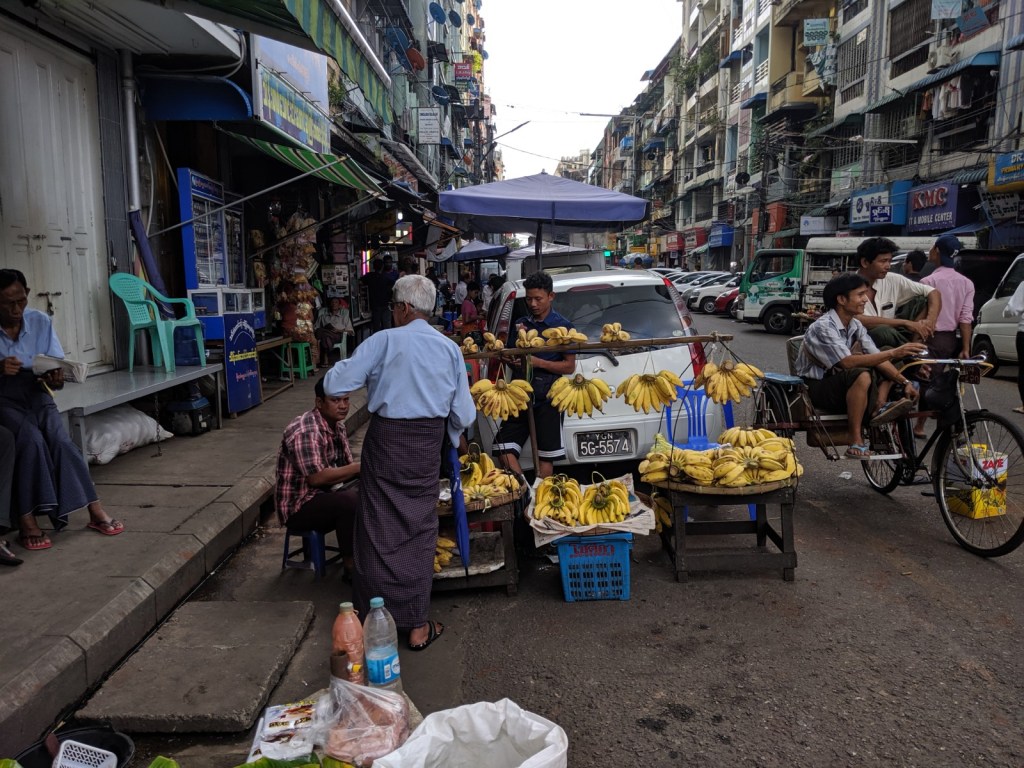
Faded colonial buildings stand guard over snoozing trishaw drivers, banana sellers read the newspaper and tea shop boys bellow orders to a thousand tiny kitchens. The tropical air is consuming the city, everything is crumbling, but there is a defiant Havana-like atmosphere to the former capital. It’s relaxed, but a full of energy.
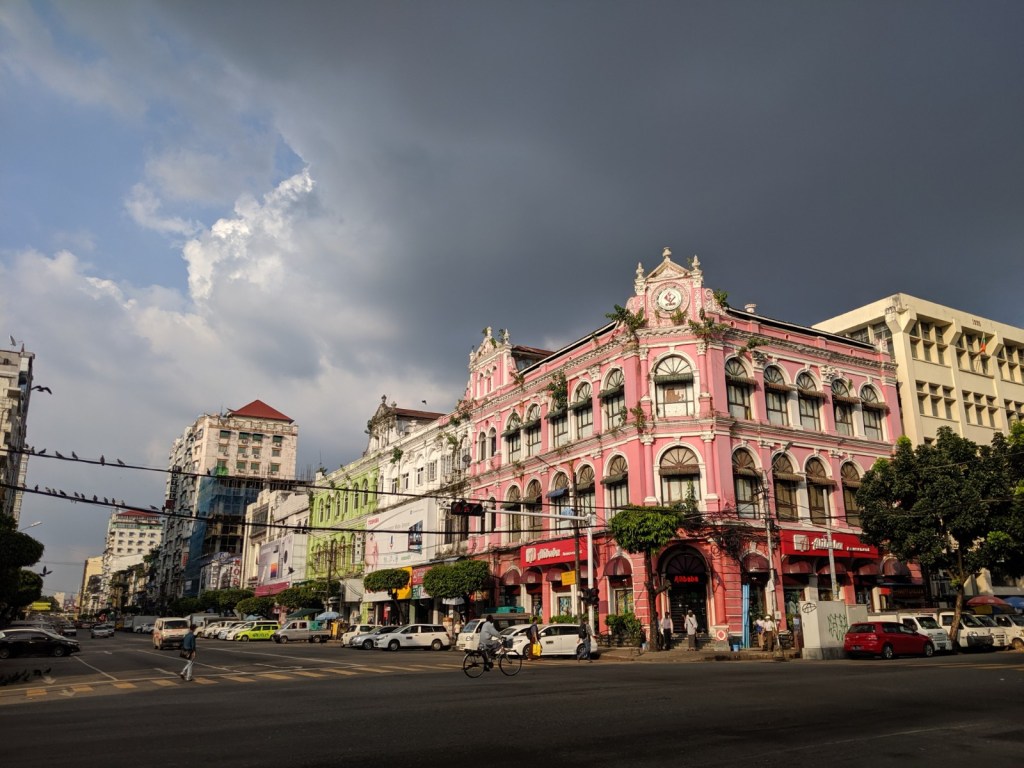
We walk around, through time as much as space, it feels, trying to take it all in, going mad for laphet thoke (pickled tea leaf salad), big bowls of Shan noodles and mohinga. Dad is interested in the High Court – built in 1905. Trees are sprouting from the brickwork, but it appears to be in use still as we peer in, perhaps little changed over the years.



The city is so laid back that we actually have to ask around for a guide at the Shwedagon Pagoda, a vast and gleaming temple complex, and national icon. We are introduced to a gentle but enthusiastic character who tells us stories under the shelter of a big sports umbrella, the sun now bouncing off the gold and marble at all angles. Donating gold (and diamonds) is said to bring merit in the next life, but maybe a little questionable in a country so poor. There are 22,000 bars worth in the main stupa alone – more than than the entire national reserve!
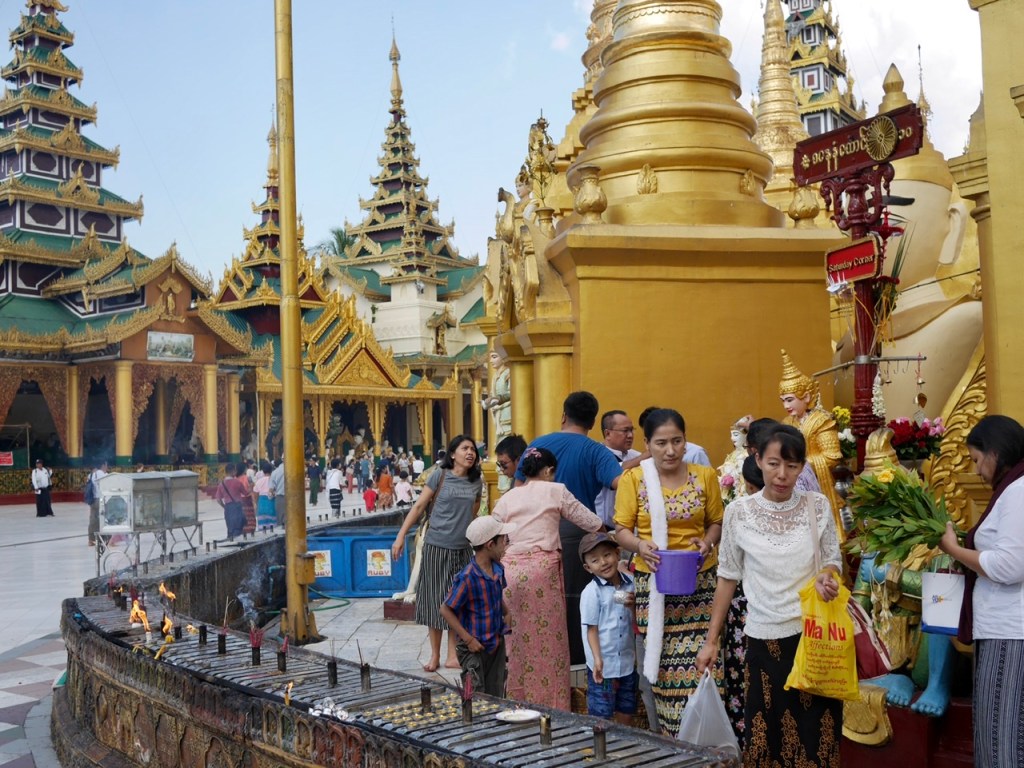
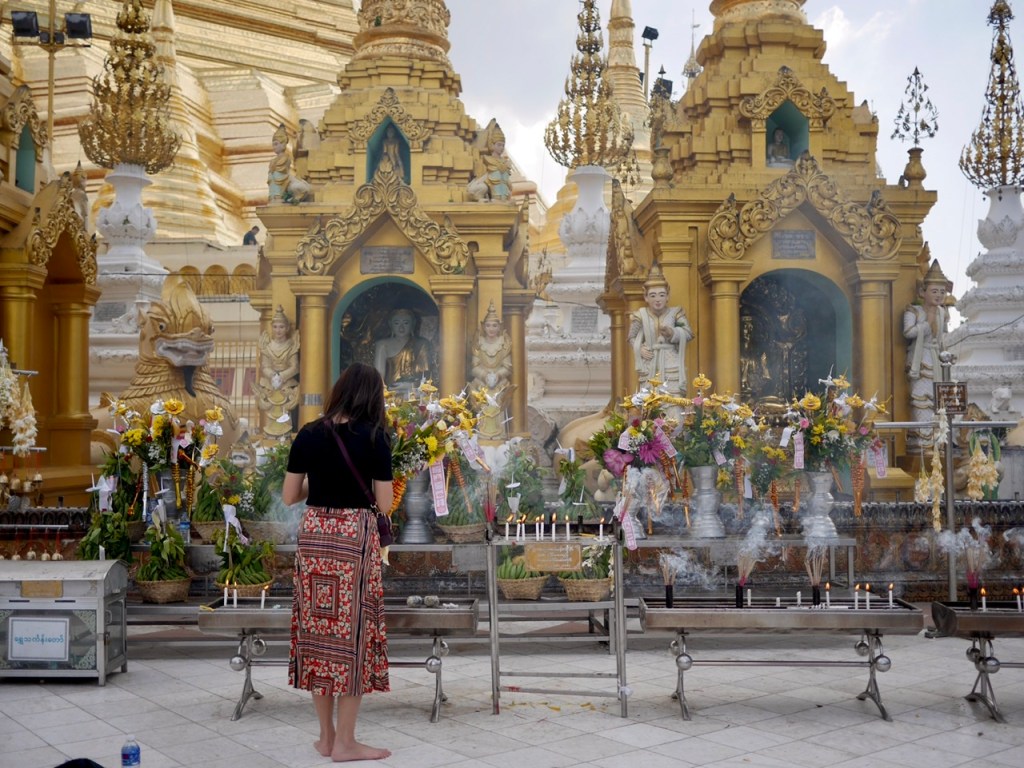

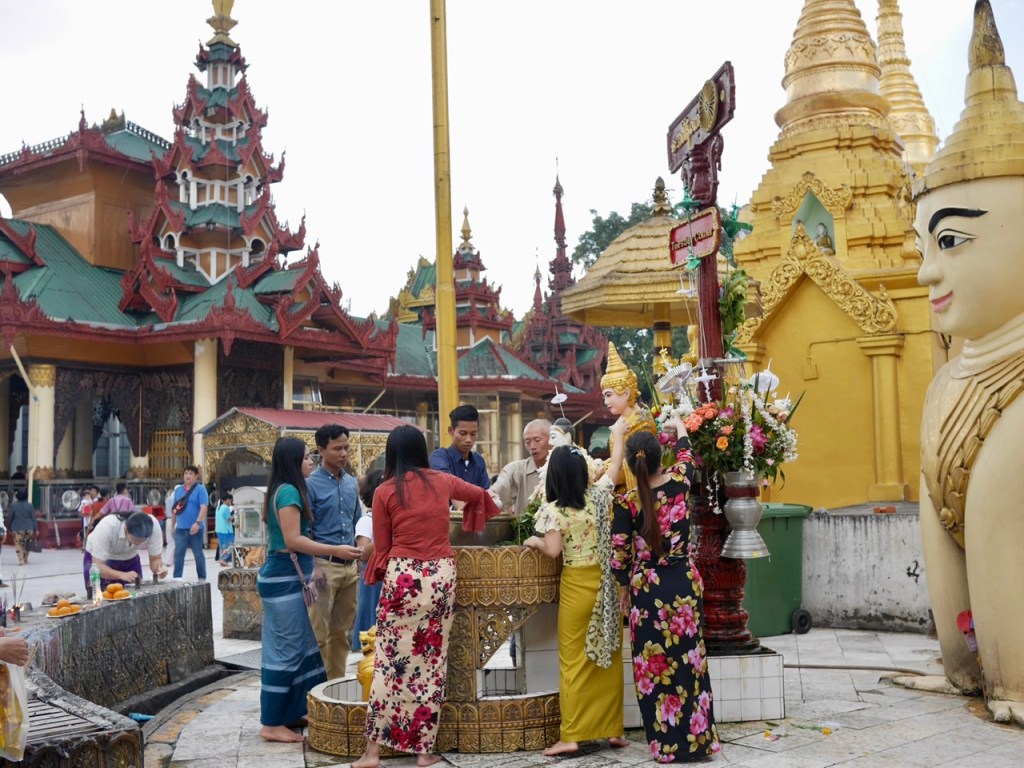
Dad has work to do but we meet for dinner later on 19th St. in Chinatown. Lovely people, great food and… crickets! If you are feeling adventurous!


Train to Bagan
We also organise a train to Bagan, the ancient Burmese capital. The train came with a few health warnings. Apparently the carriages don’t match the gauge of the tracks, resulting in a huge amount of bumps and sway. Dad asked the locals in his office. All swore it was a terrible idea. “It’s more like riding a horse, than a train!’ – said one colleague, who complained of having a bad back ‘for weeks’ after a particularly rough journey.
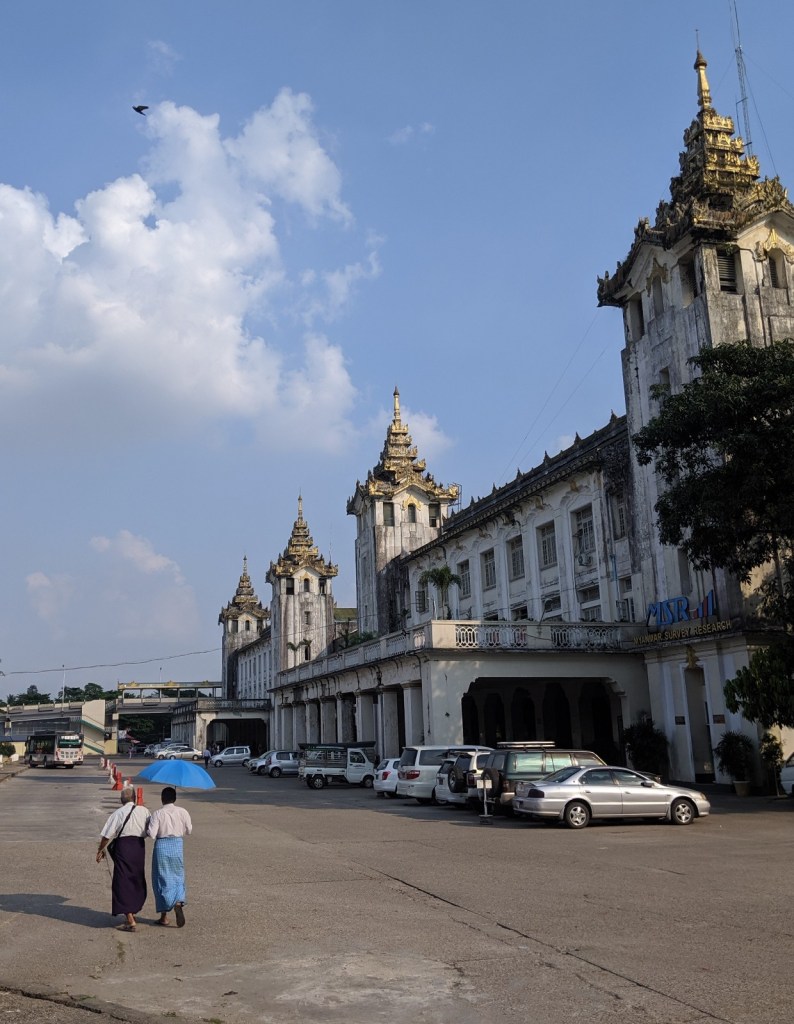
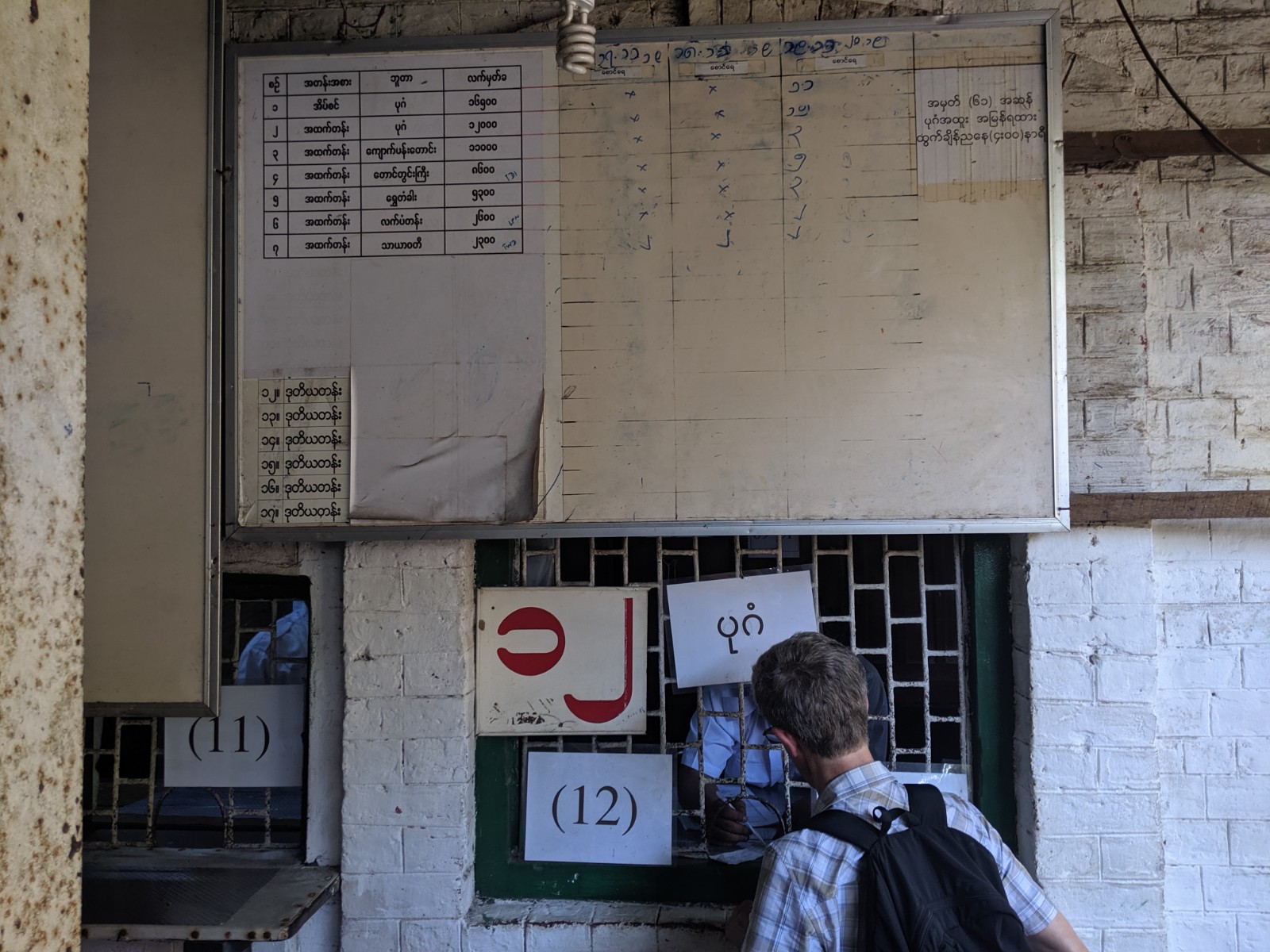
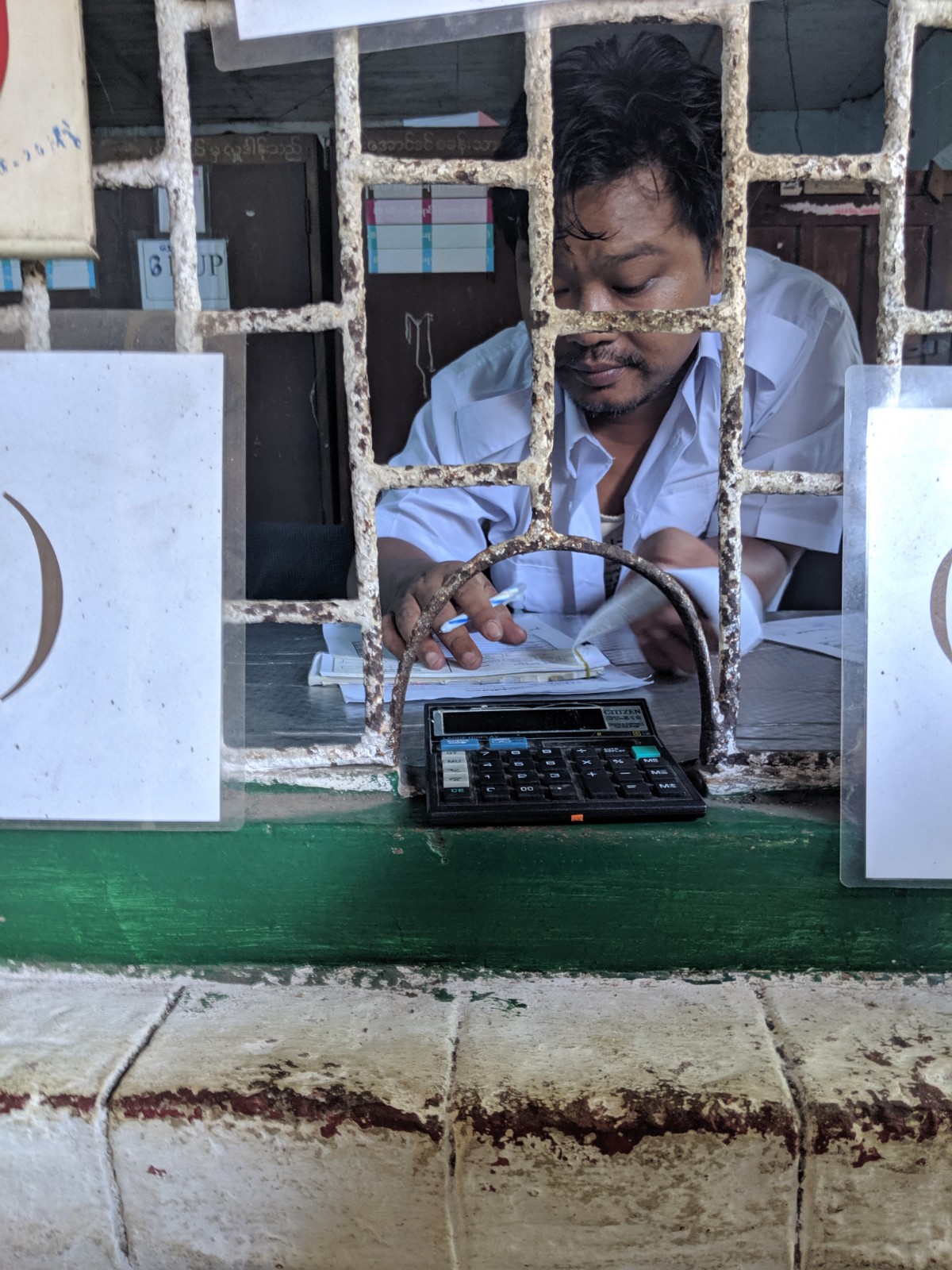
We were sold! For us the antiquated element was part of the attraction. We booked two tickets – not available in the train station, of course, but in a separate building where they are written out by hand. Some small print indicated that ours included ‘life insurance’. Reassuring!
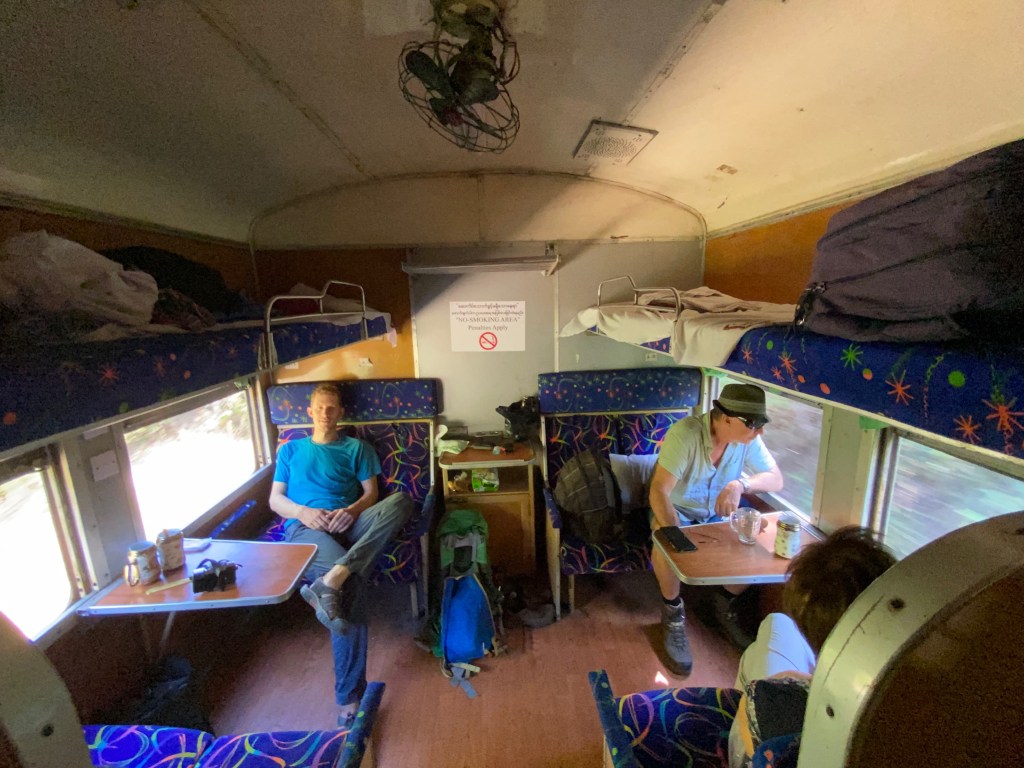
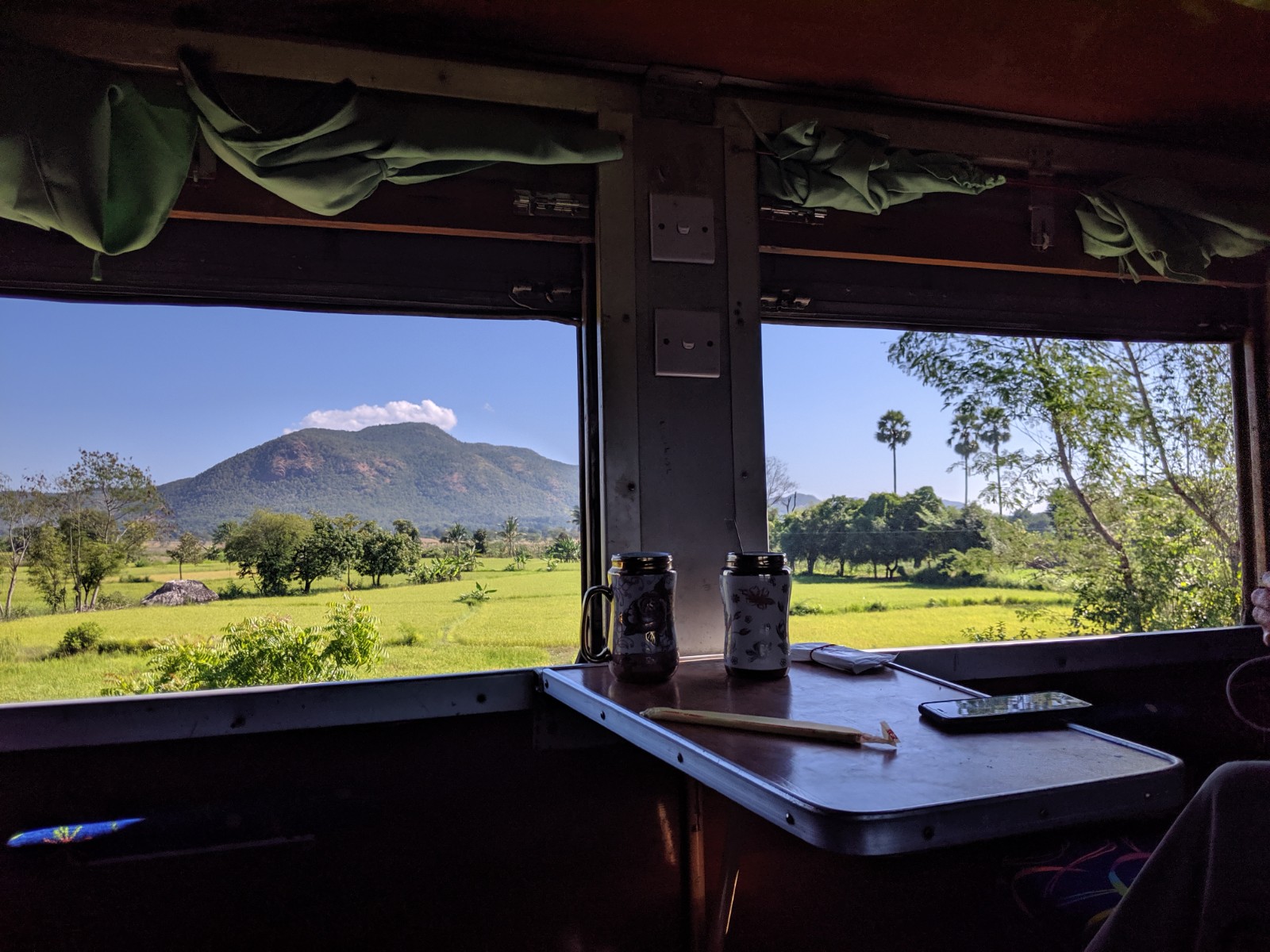
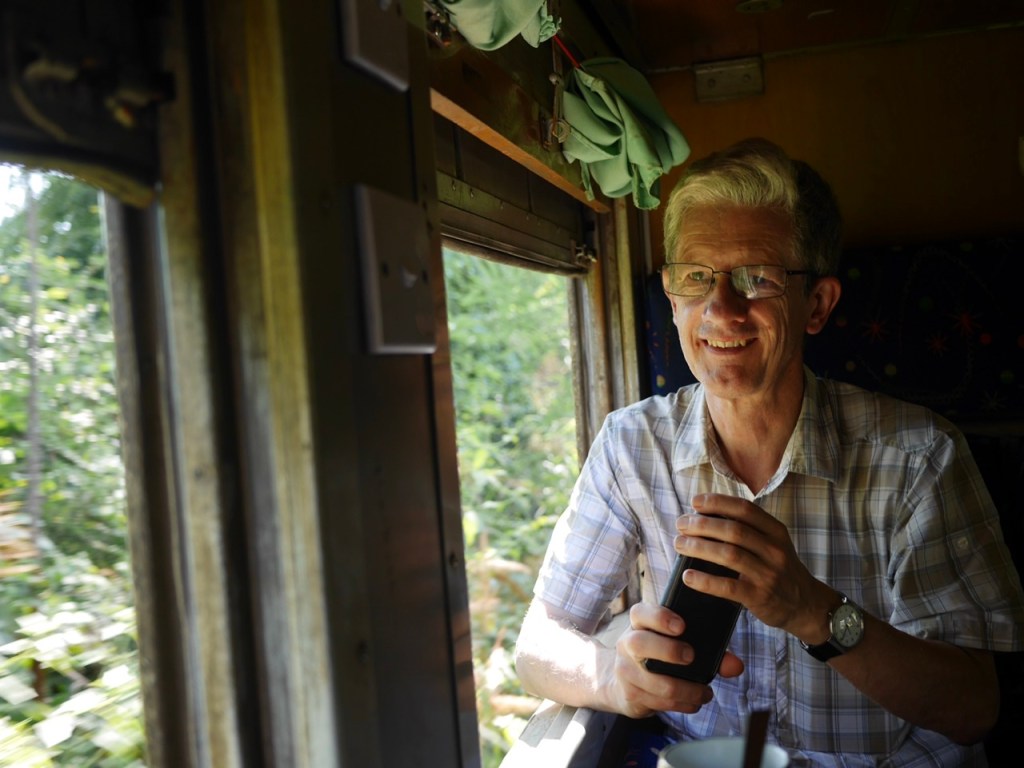
We were lucky to get a seat in ‘special sleeper’ class – which gave a ridiculous amount of space. Our compartment was sealed off from the rest of the train with a big bed each and food handed through the window at intervals.
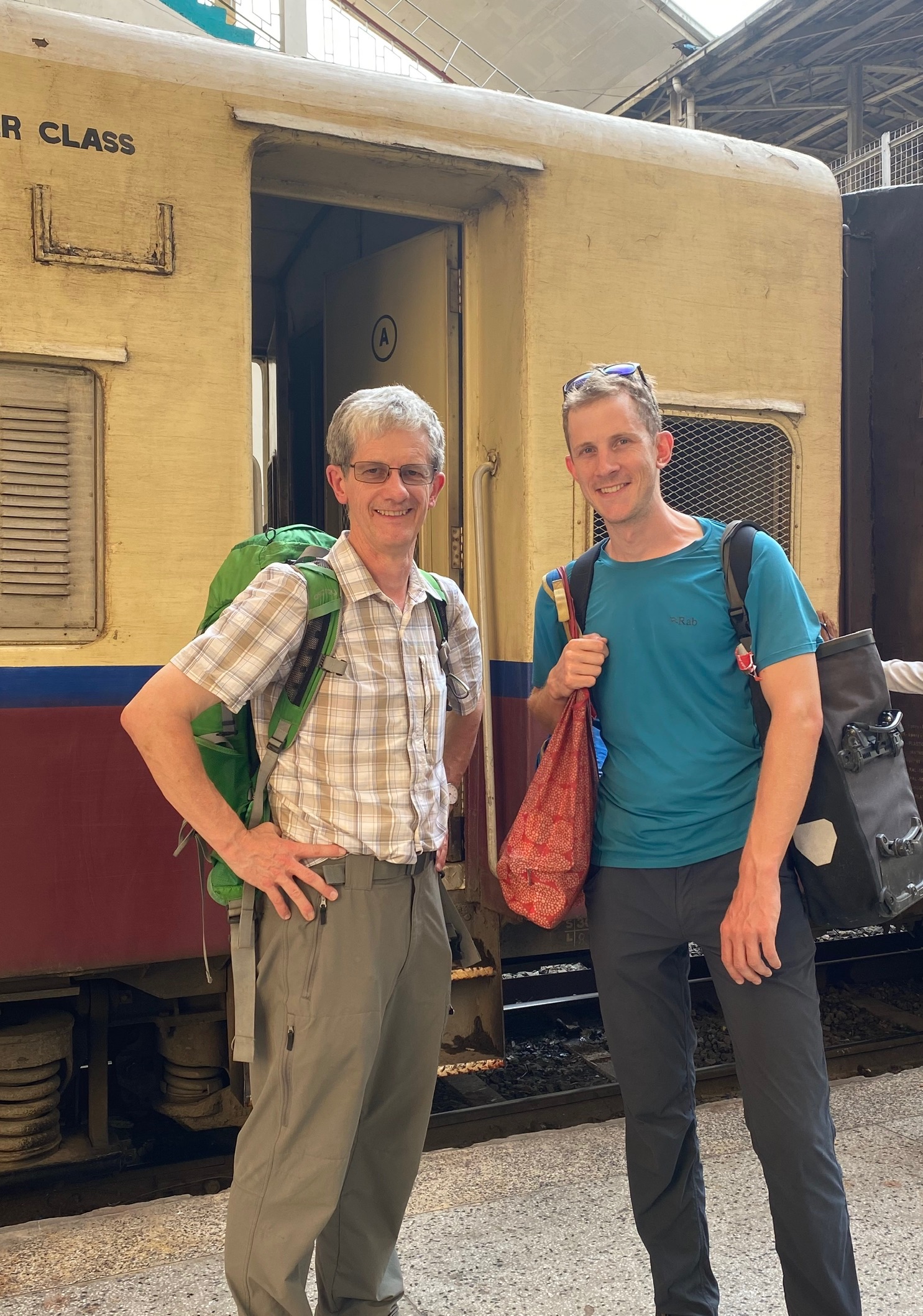
Before boarding we bumped into our friendly guide from the Shwedagon Pagoda who insisted on taking us right to our carriage and introducing us to the train guards to make sure we’d be looked after. Like everyone we met – a lovely guy!

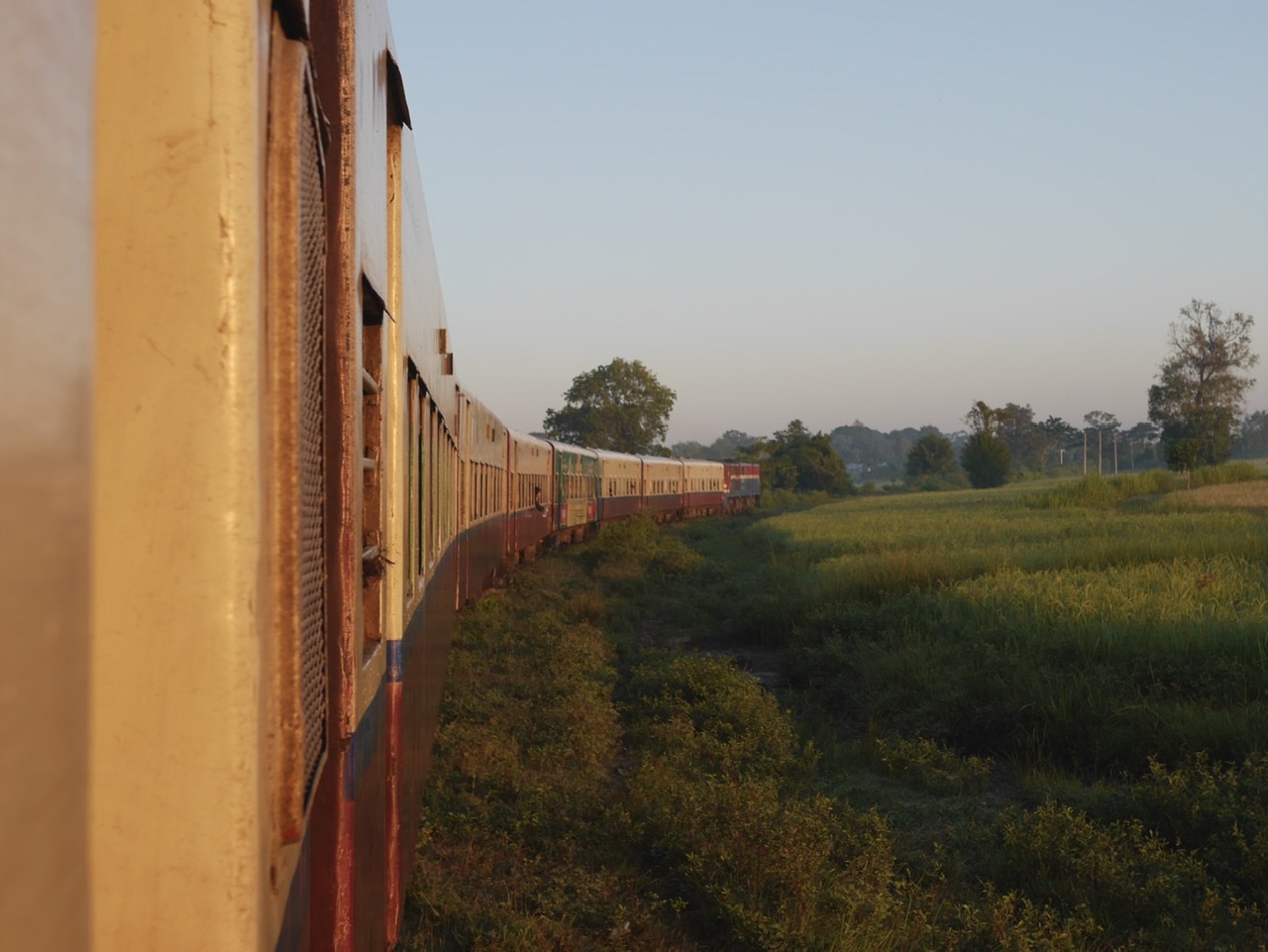
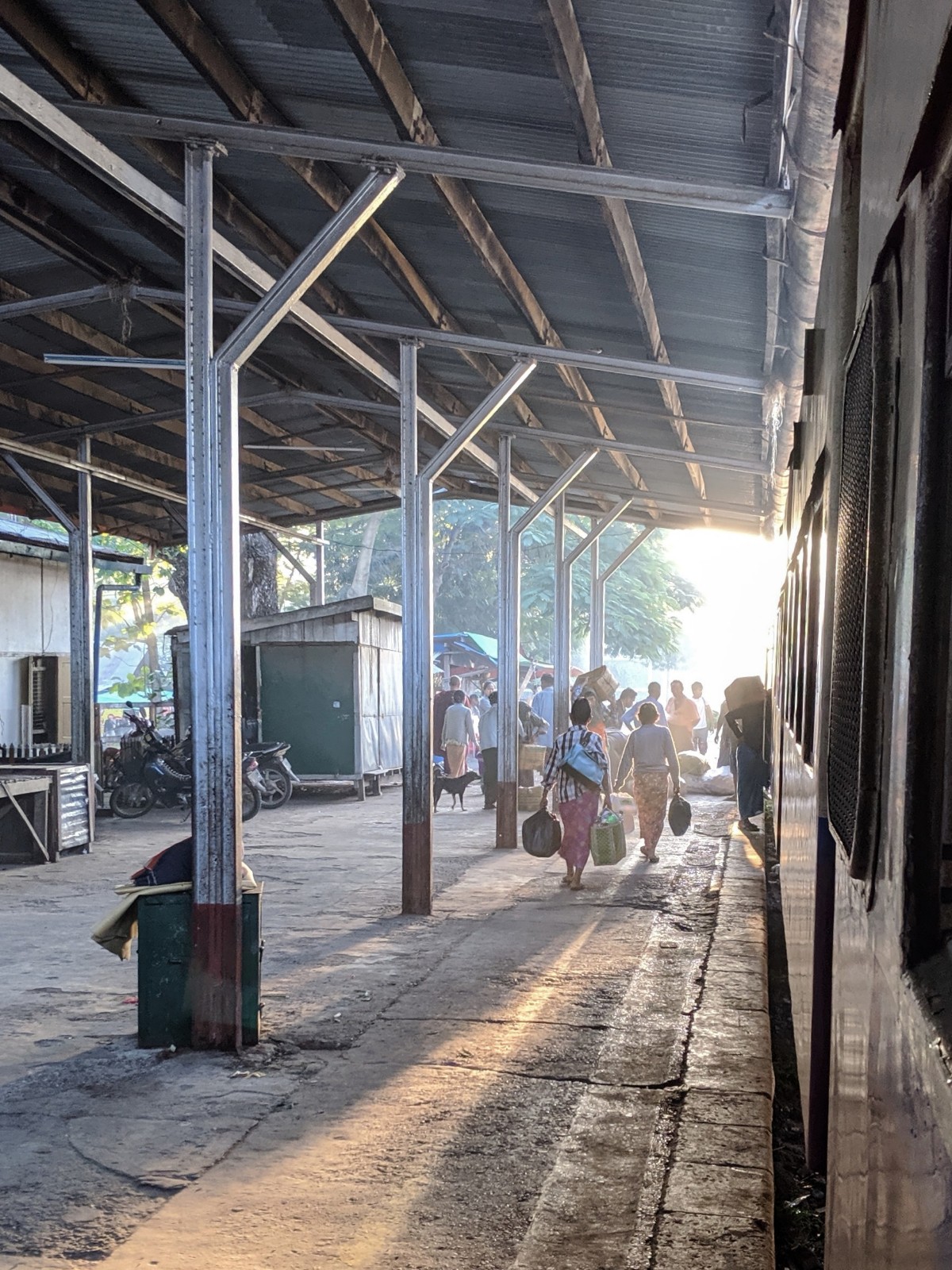
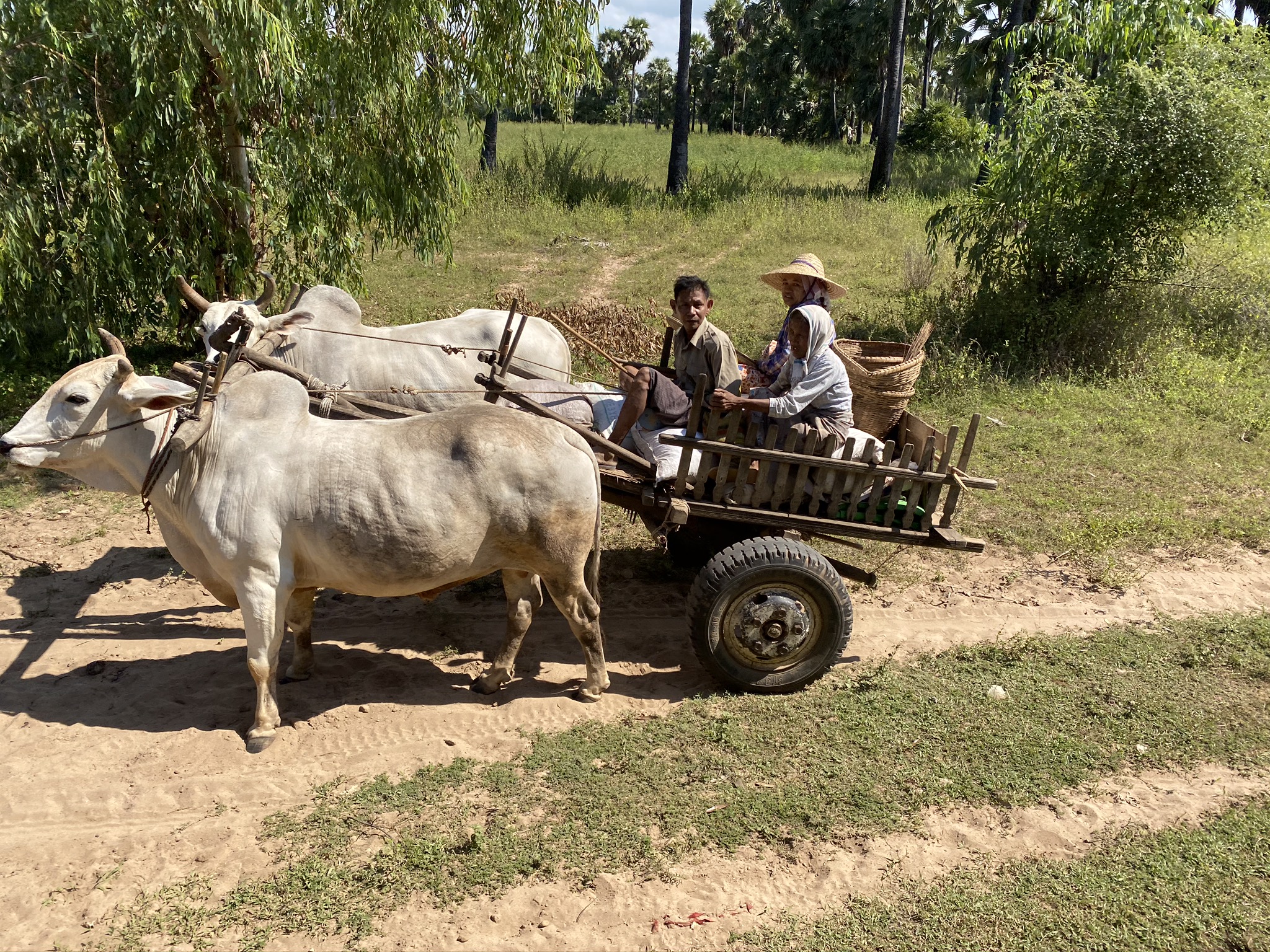
The journey itself was immense, 17 hours through the heart of the country. As the sun rose in the morning we passed bullock carts on their way to the fields and children lining up to wave hello, whilst a constant stream of hawkers plied their wares from small wayside stations.
Was it bumpy?
Unbelievably so! At one point I looked across to the lady on the next bunk. She was trying to sleep but at certain points was being flung fully in the air. Still, we managed a few hours. Somehow.

Bagan
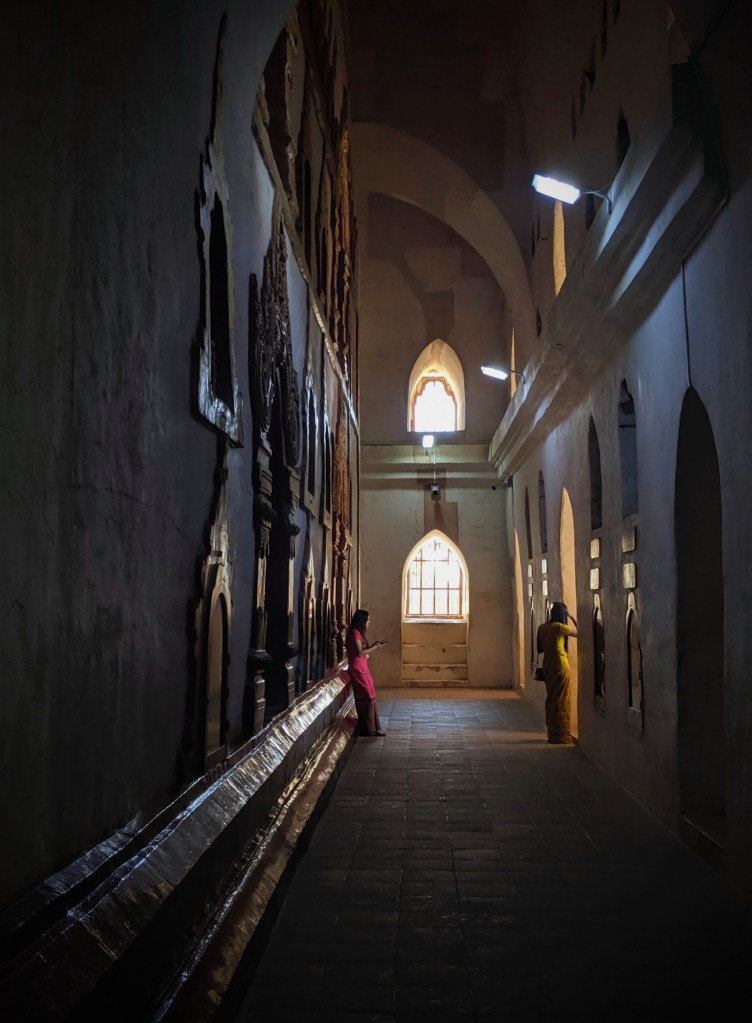
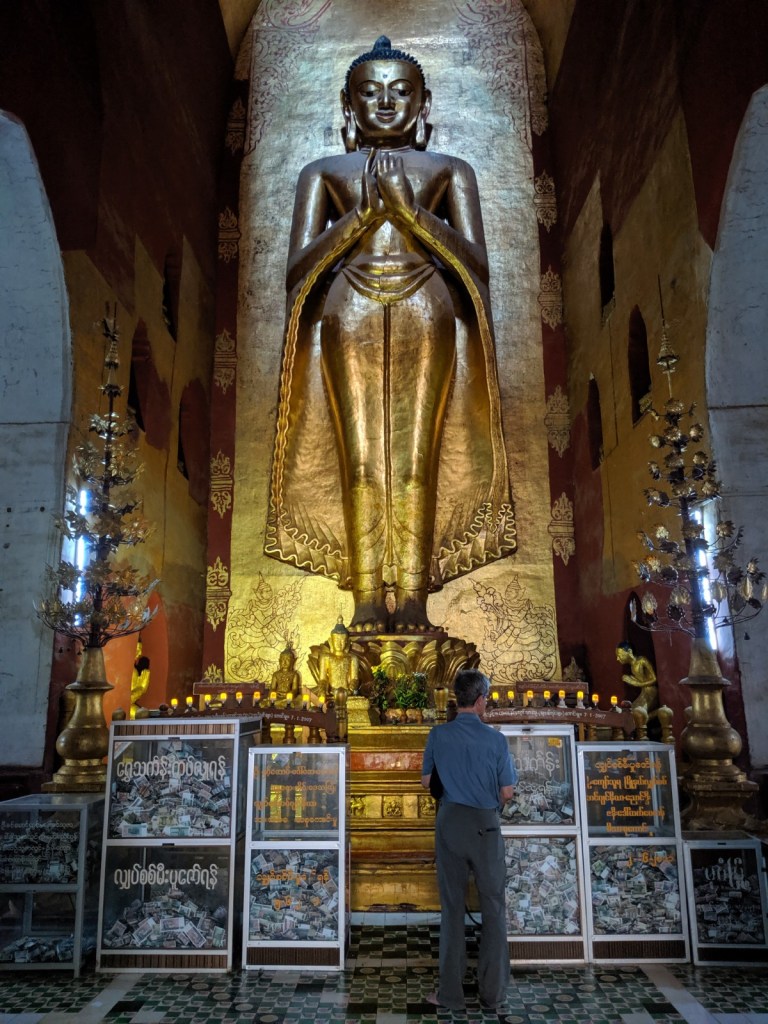
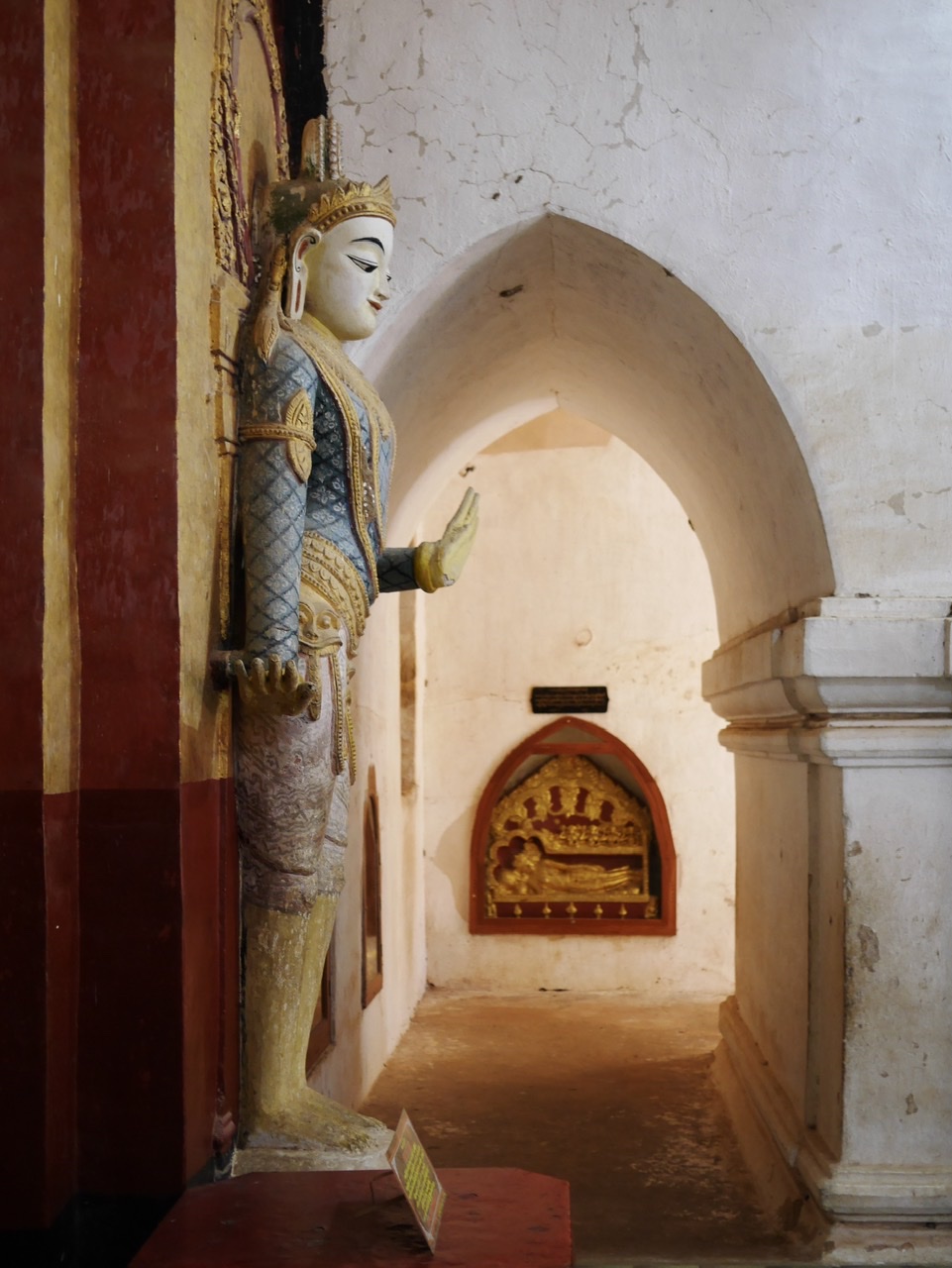
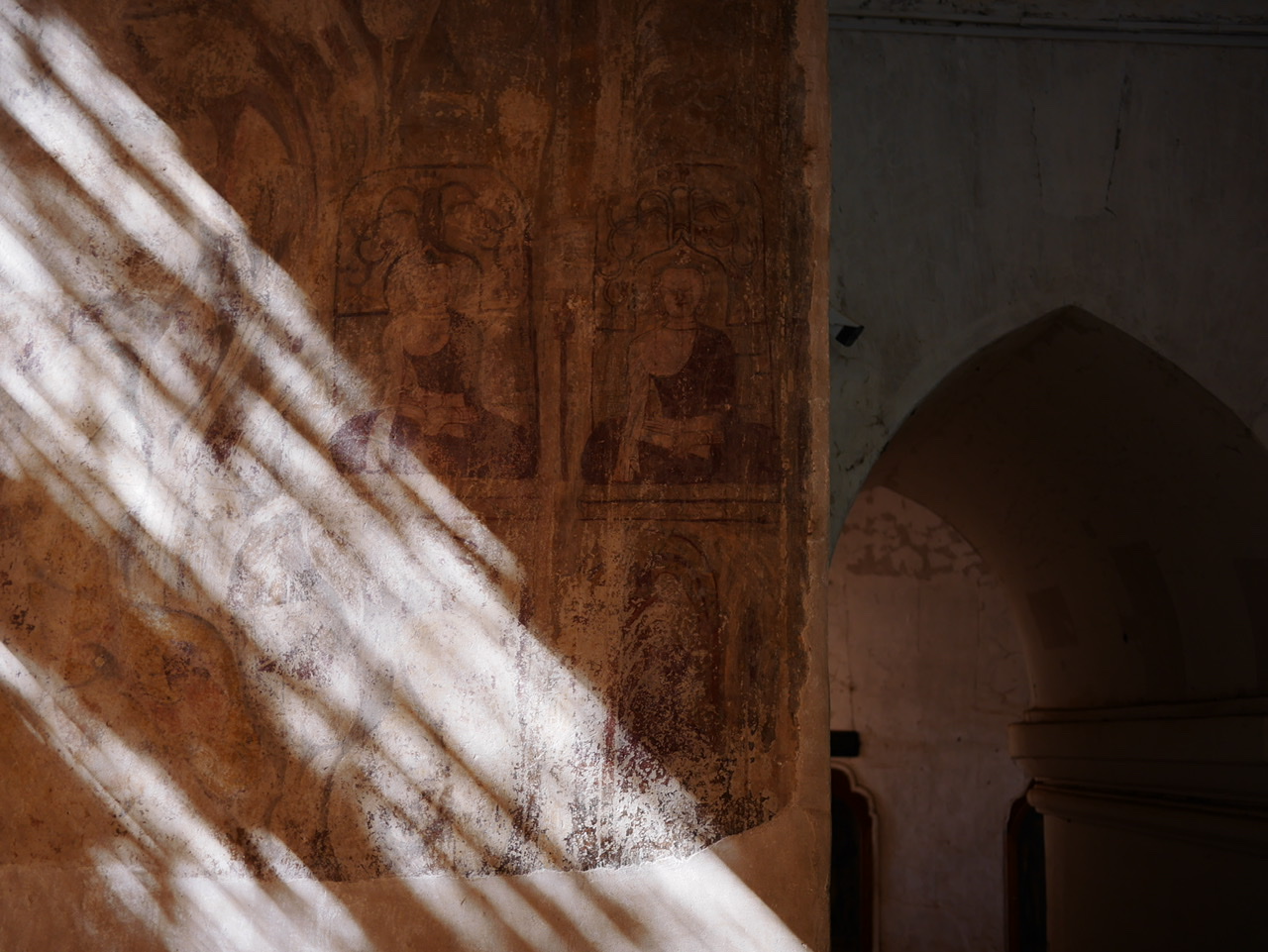
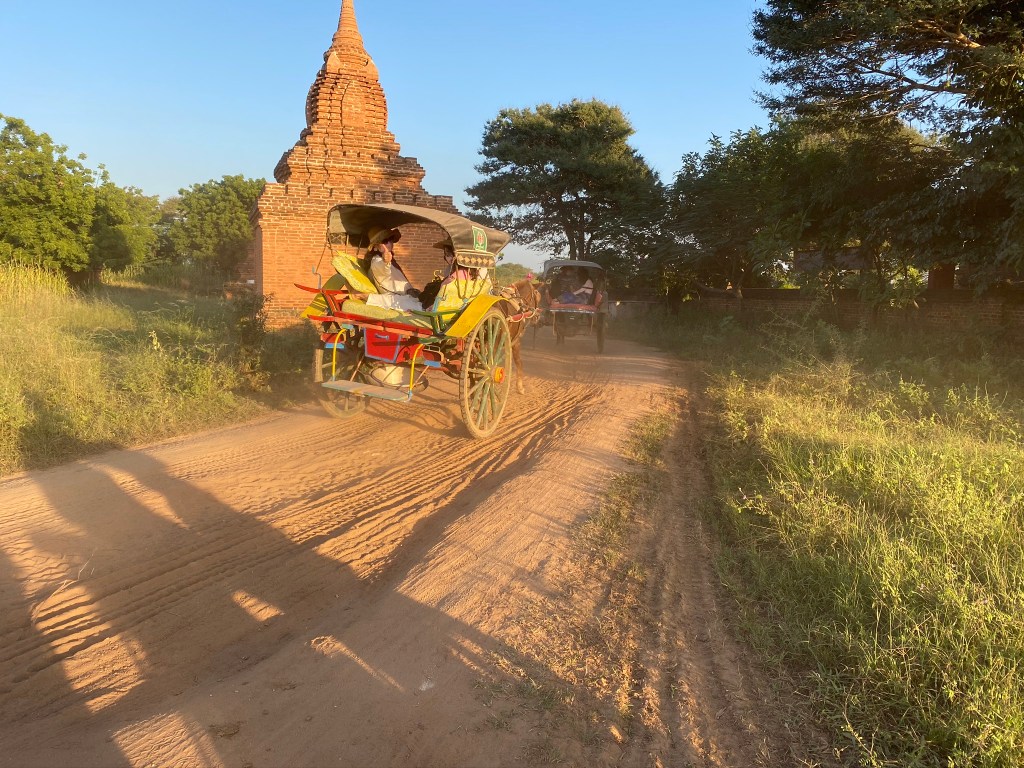
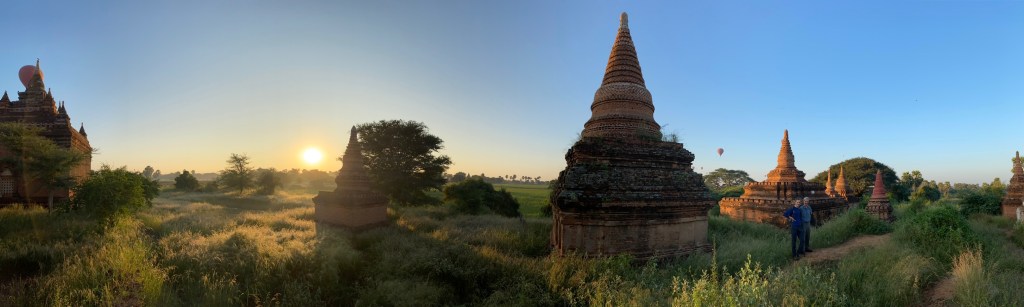
We didn’t know what to expect from Bagan. The ancient capital is probably the most visited place in the country. Like everywhere else though, it turned out to be amazingly relaxed and welcoming and not overly commercialised. Partly, I guess, as it’s just so big, with almost 4,000 temples and pagodas to see.
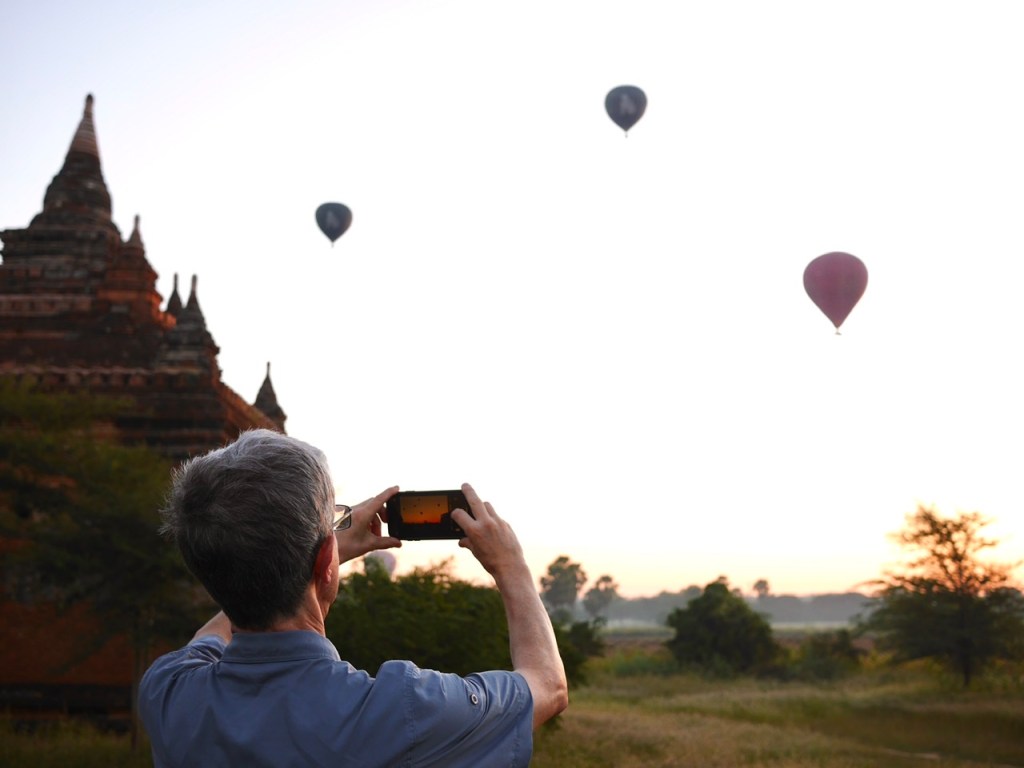
With our e-scooters it was easy enough to make our way around the dirt tracks and find some quiet spots for sunset and sunrise, where we watched the daily flight of balloons float their slow way over the ruins.


Hiking – Kalaw to Inle Lake
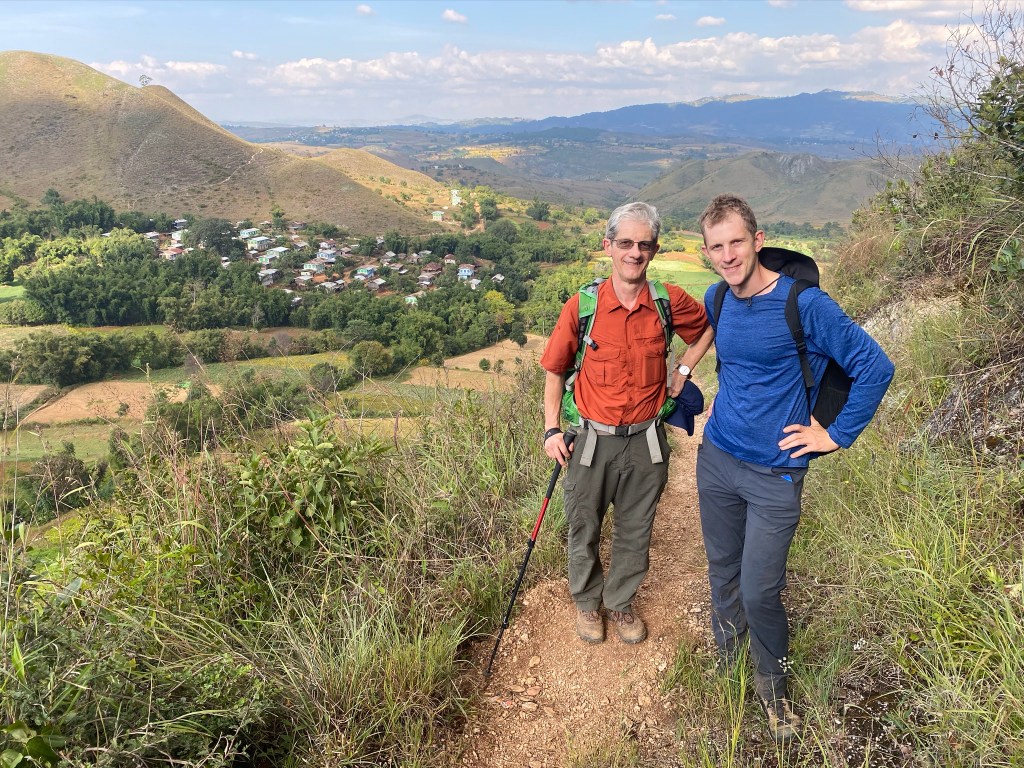
The most memorable part of the trip was a three day hike from the old hill station of Kalaw down to Inle Lake.
I pass through small, rural places all the time by bike, but I’m always limited by communication. So I was really happy we were doing the hike with a guide – a young guy called Ye Lay. It was a great luxury!
What’s more, Ye Lay was just a stand out human, super knowledgeable, at ease with local elders as much as foreign hikers, and fun to be with. Aside from the walk, our chats with him gave us a good glimpse of ‘normal’ life behind the official veneer of a new country, still coming out from the cold.
We began up in the pines around Kalaw which soon gave way to rice fields and grazing land for buffalo. We were most blown away though by the market gardens. Tomatoes, cabbages, chillies, pumpkins, melons all in great abundance, everything totally unmechanised. Superficially it was an idyllic scene: wooden ploughs, straw hats in the sun and water carried on shoulder poles. Behind the smiles though lie hours of unrelenting and repetitive hard manual labour and exposure, which must take their toll. Ye Lay told us that until recently the villagers had to carry their produce 10 miles over the hills by night to reach the weekly market in Kalaw. A hard life.
At the same time, there was much in these villages to be envied. People worked together, there was collective responsibility and everyone lived entirely off-grid, with solar power and their own produce/animals, nothing going to waste.
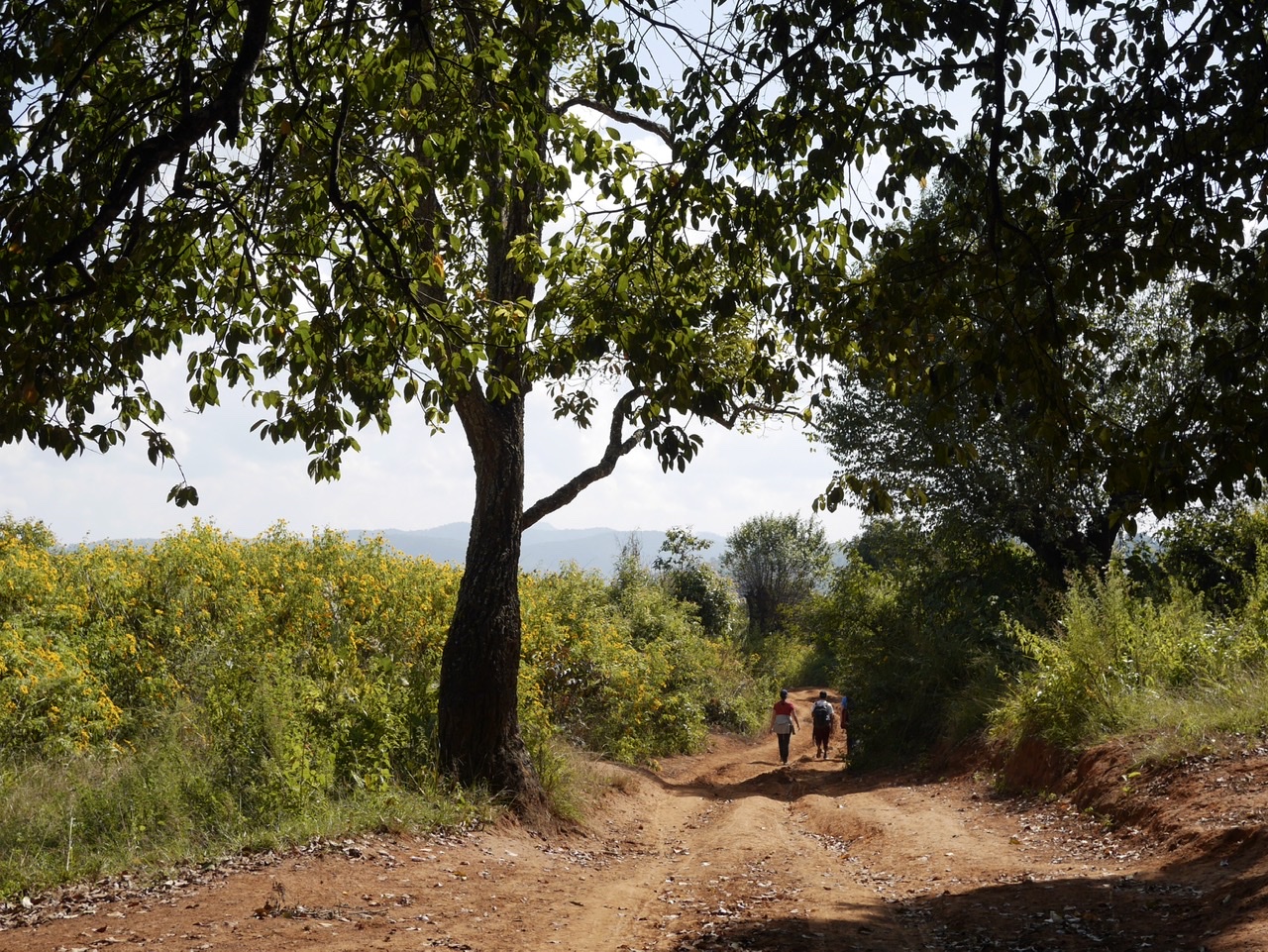


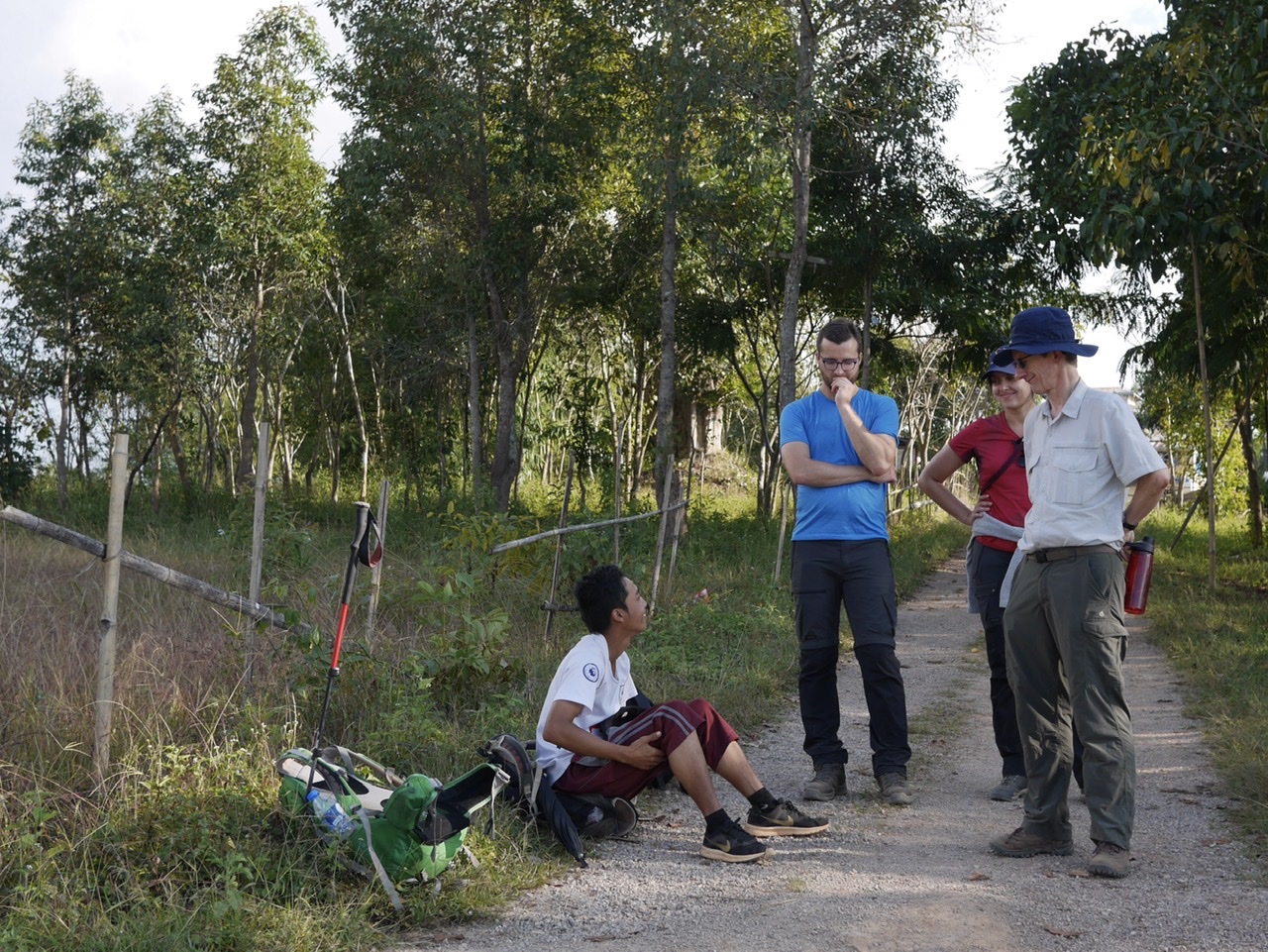


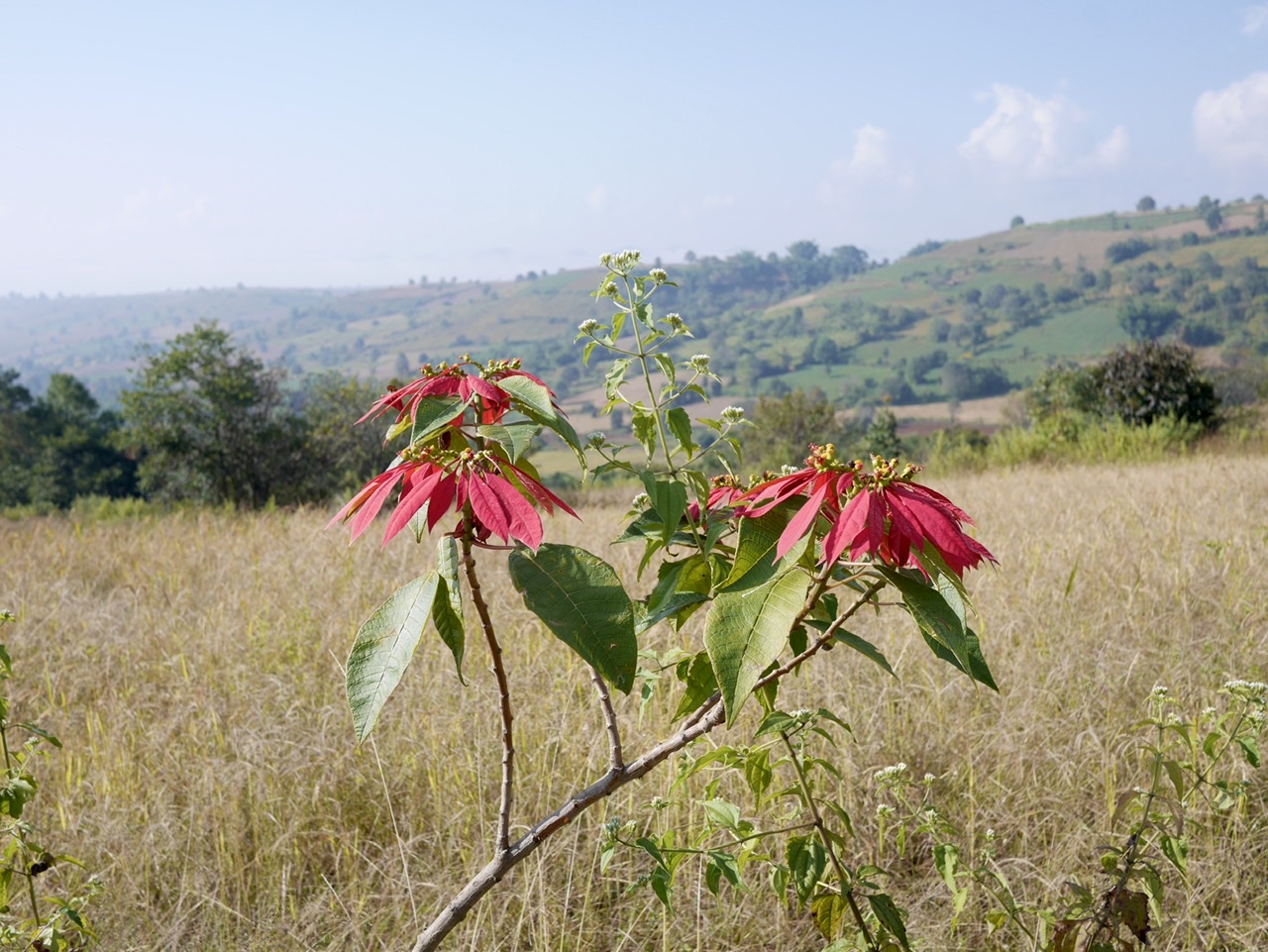
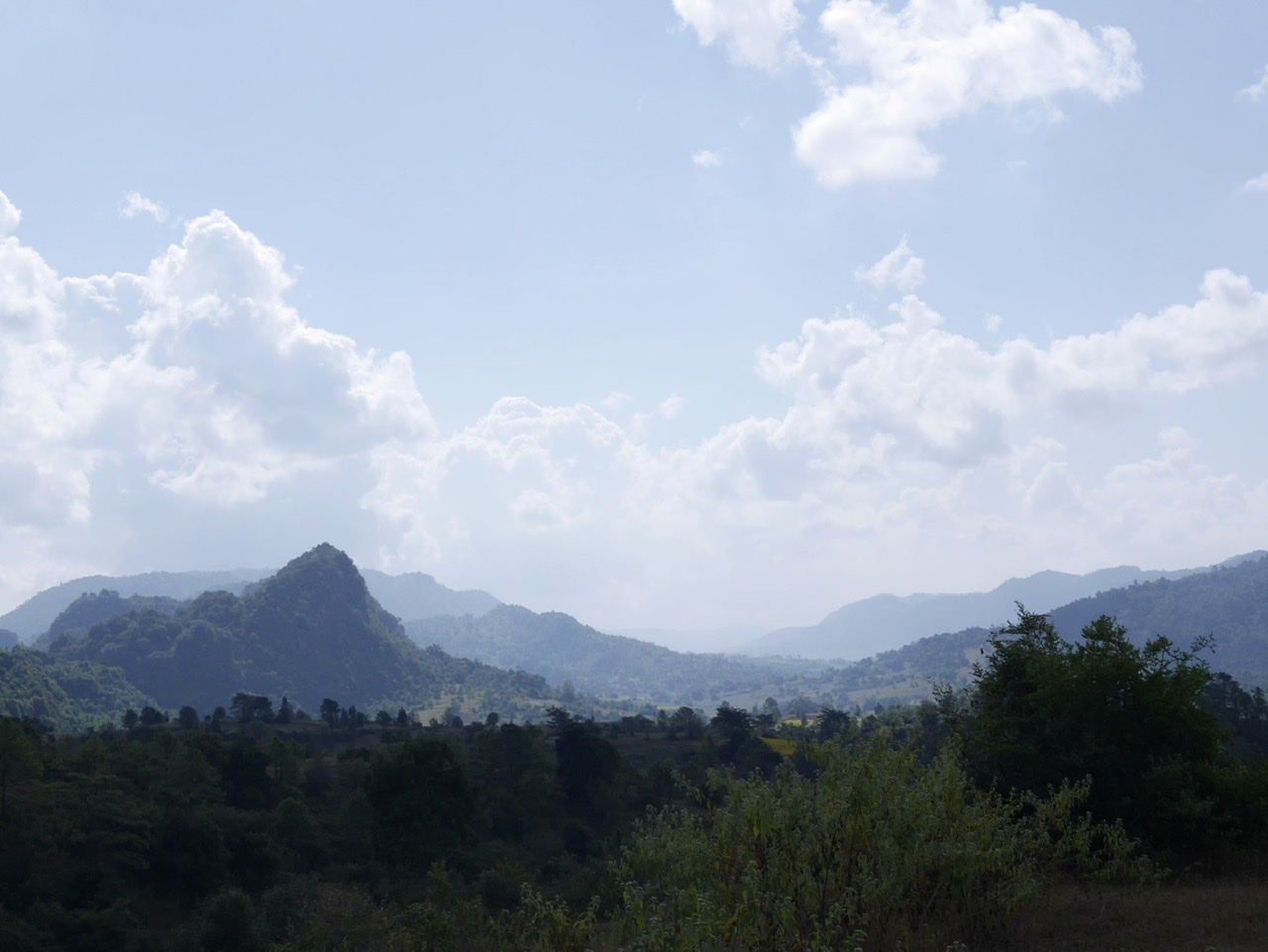
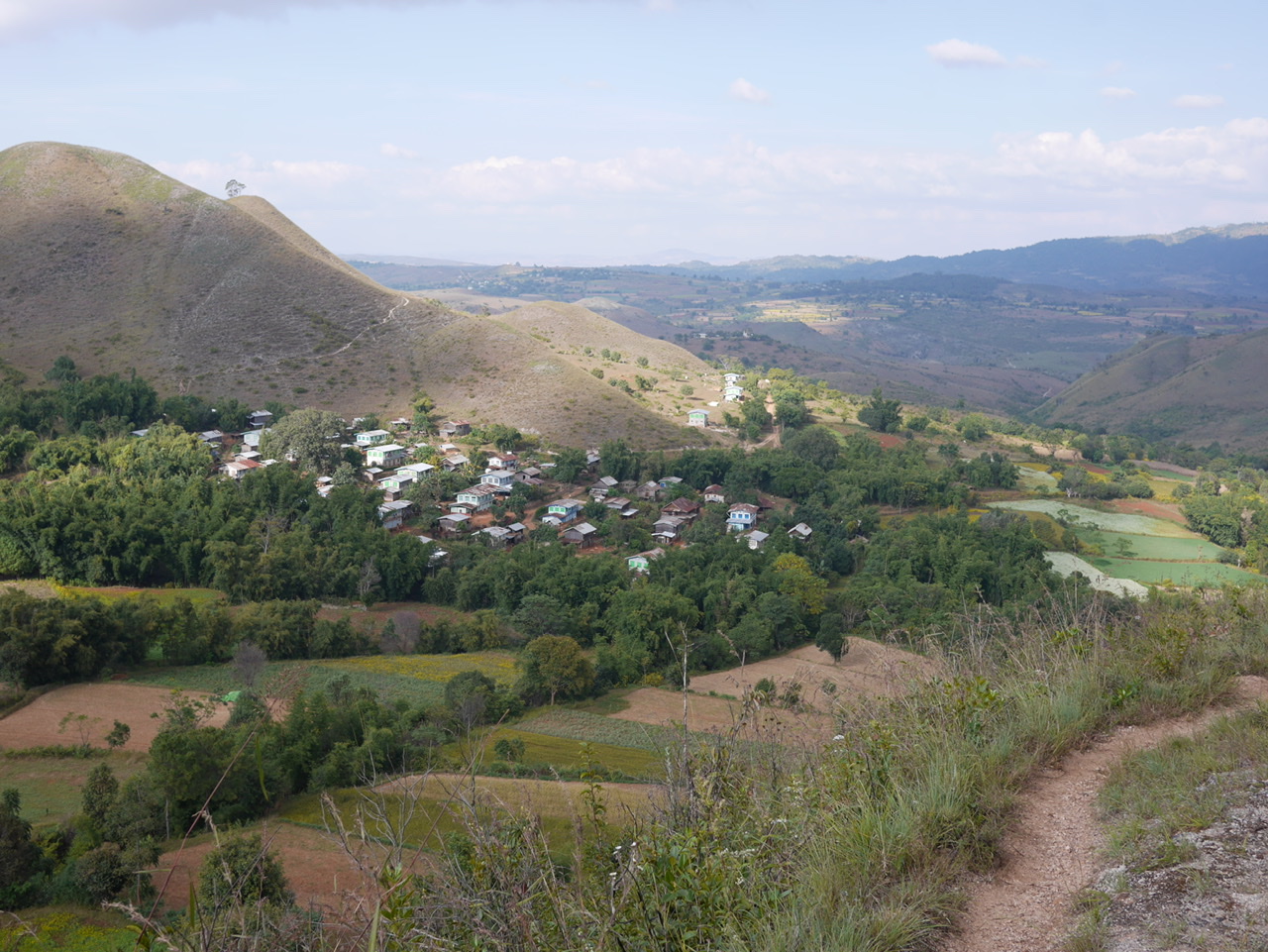
The close-knit spirit of these hill tribe villages was our making and undoing over the next couple of days…
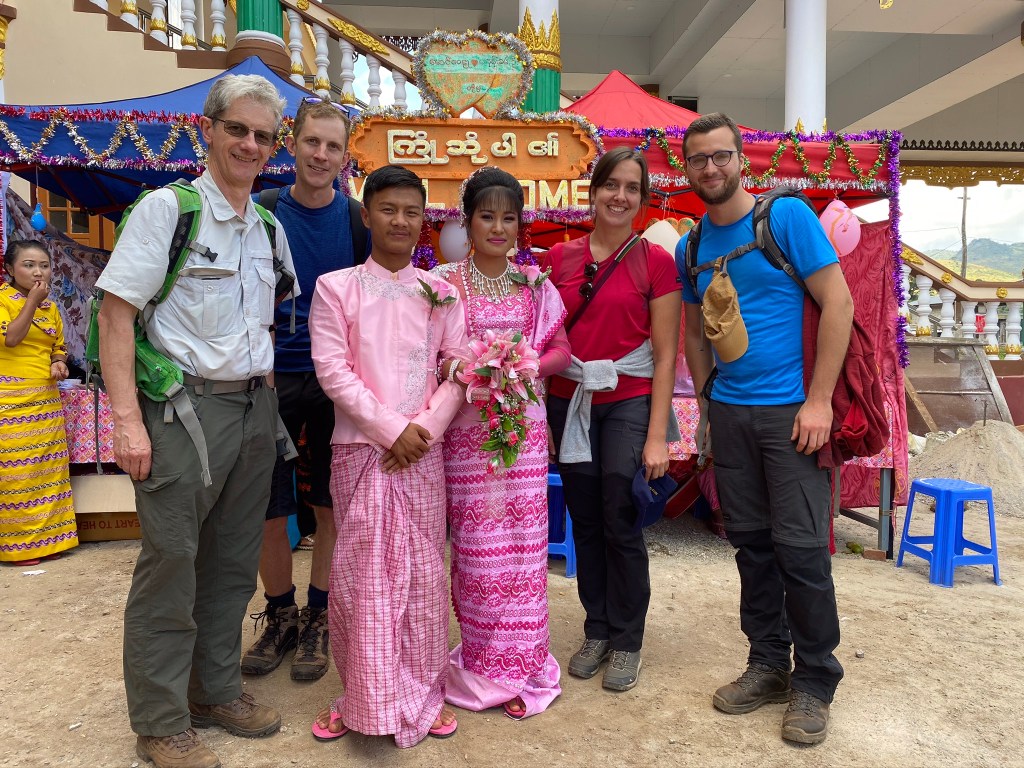
First, the making: an invitation to a wedding as we walked past a monastery one afternoon. We were thrilled to be asked, but I was also quite uneasy about intruding. Ye Lay dismissed this right away – the culture here is very different, he explained, weddings are public occasions, all are welcome. He estimated that around 3,000 people would show up over the course of the day! Indeed we were eagerly received with tea, snacks and an elaborate buffet put out, whilst people came over to welcome us.
The happy couple were outside, working their way through an epic photo call. It was well organised. The gazebos behind are in fact desks you are ushered to after the photo, where guests leave a donation, sign a book and wish them well. Lovely experience!

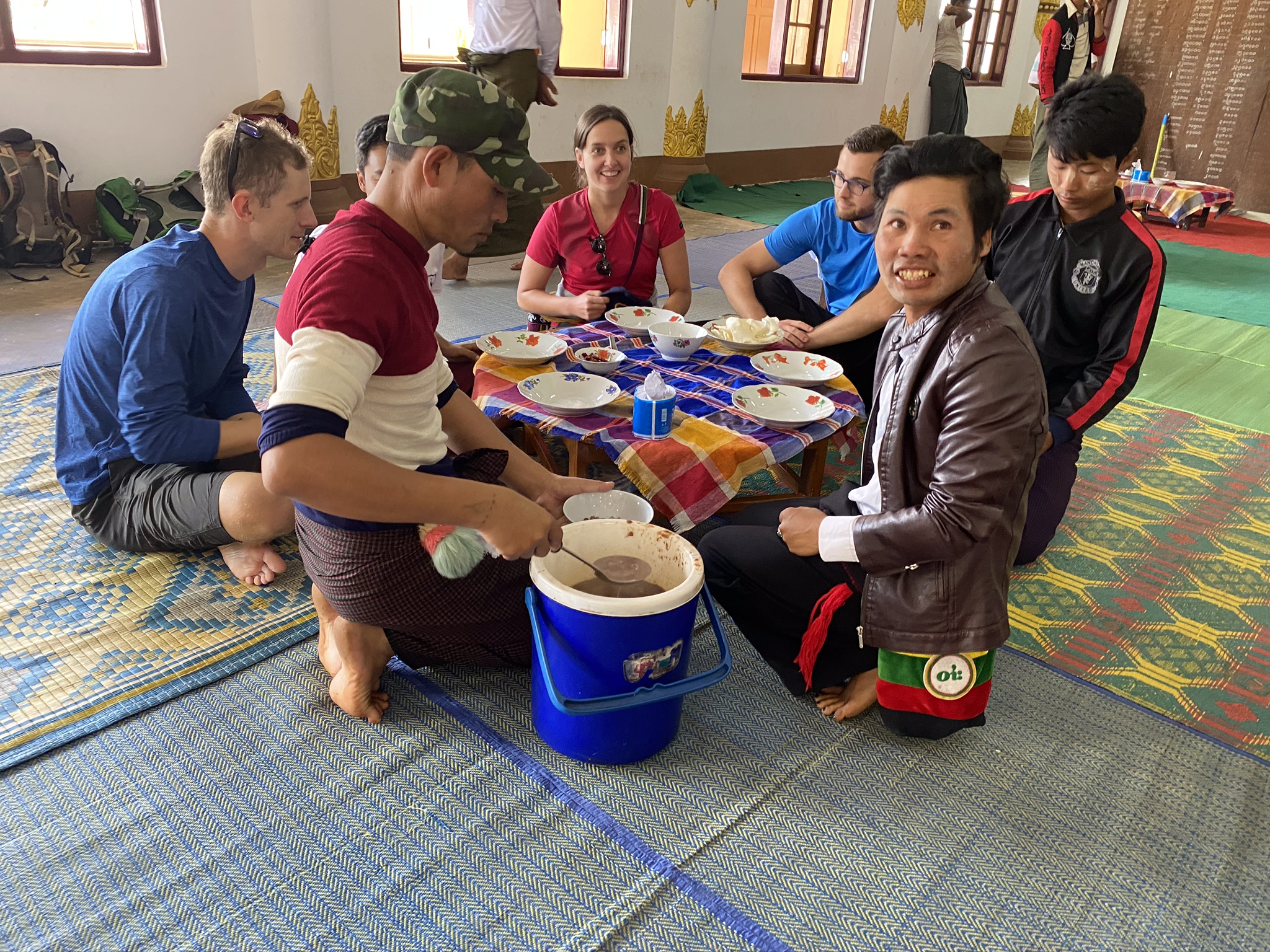

It turned out we were in the thick of the wedding season. An inauspicious period of the Buddhist calendar having just passed, there was a rush on!
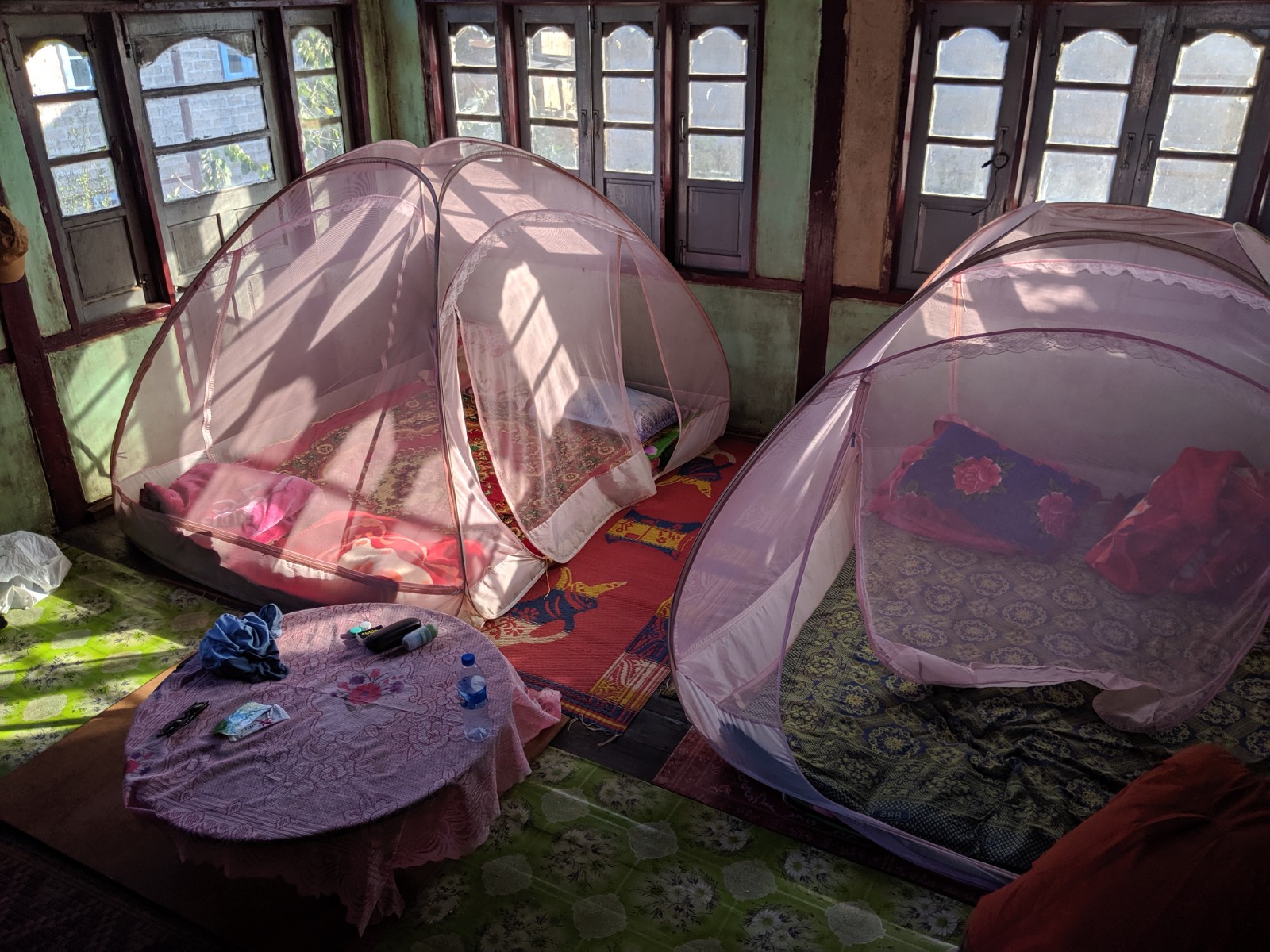
We were just tucking ourselves in, in fact, when the music cranked up for wedding number two. Through the paper thin bamboo walls, we (and the rest of the village) were treated to a kind of all night rave. It wasn’t a party – this was the cooking and prep for the party which Ye Lay explained might involve hundreds of people who’d be up the entire night. The music did stop at points. During these pauses we heard the killing of a pig – unbelievably loud and drawn out, followed by the megaphone blessings of various monks, conducted at full volume, to wish the couple well before dawn broke. Things finally wrapped up around 6:00am.
We certainly felt part of village life.

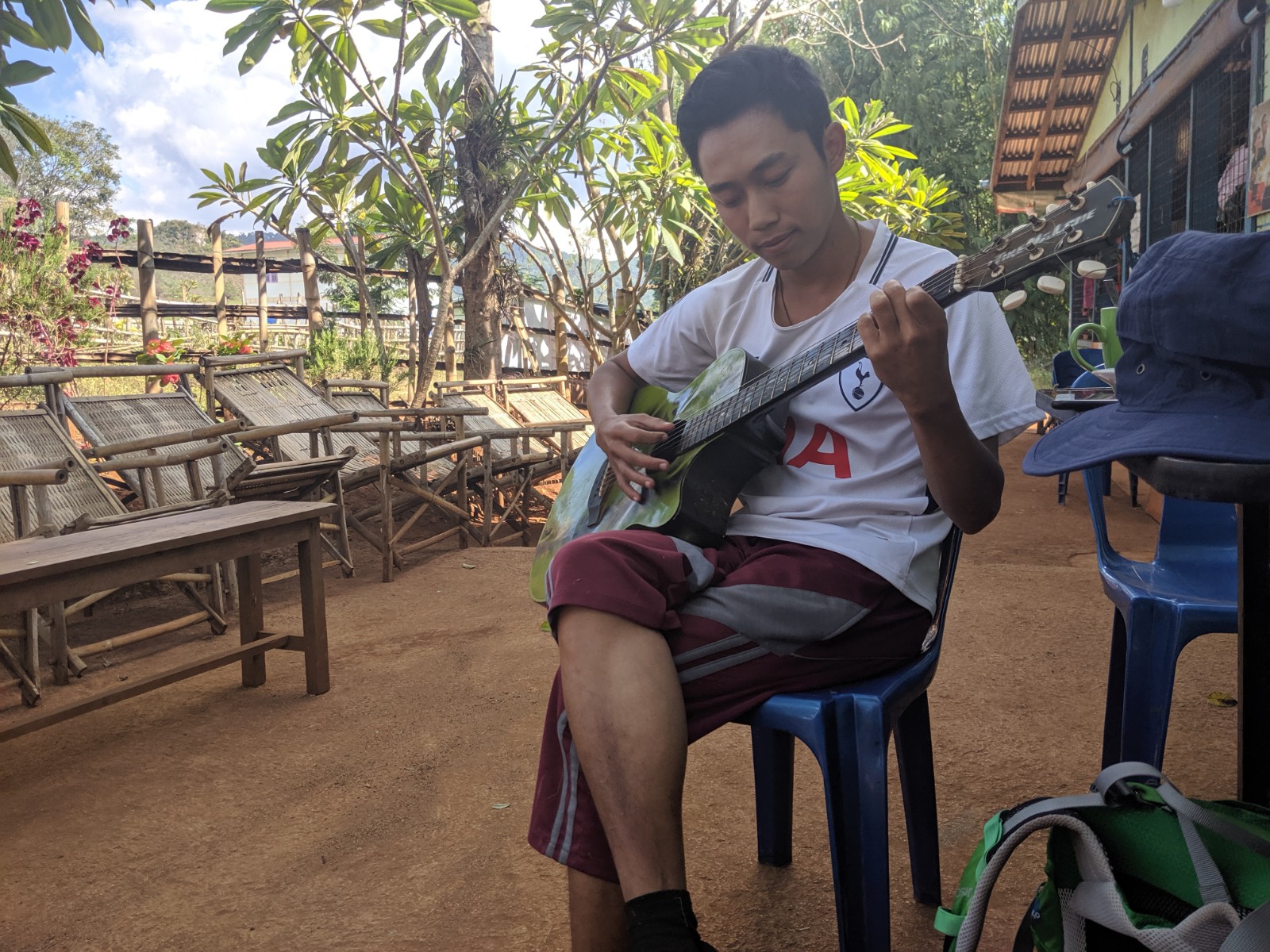
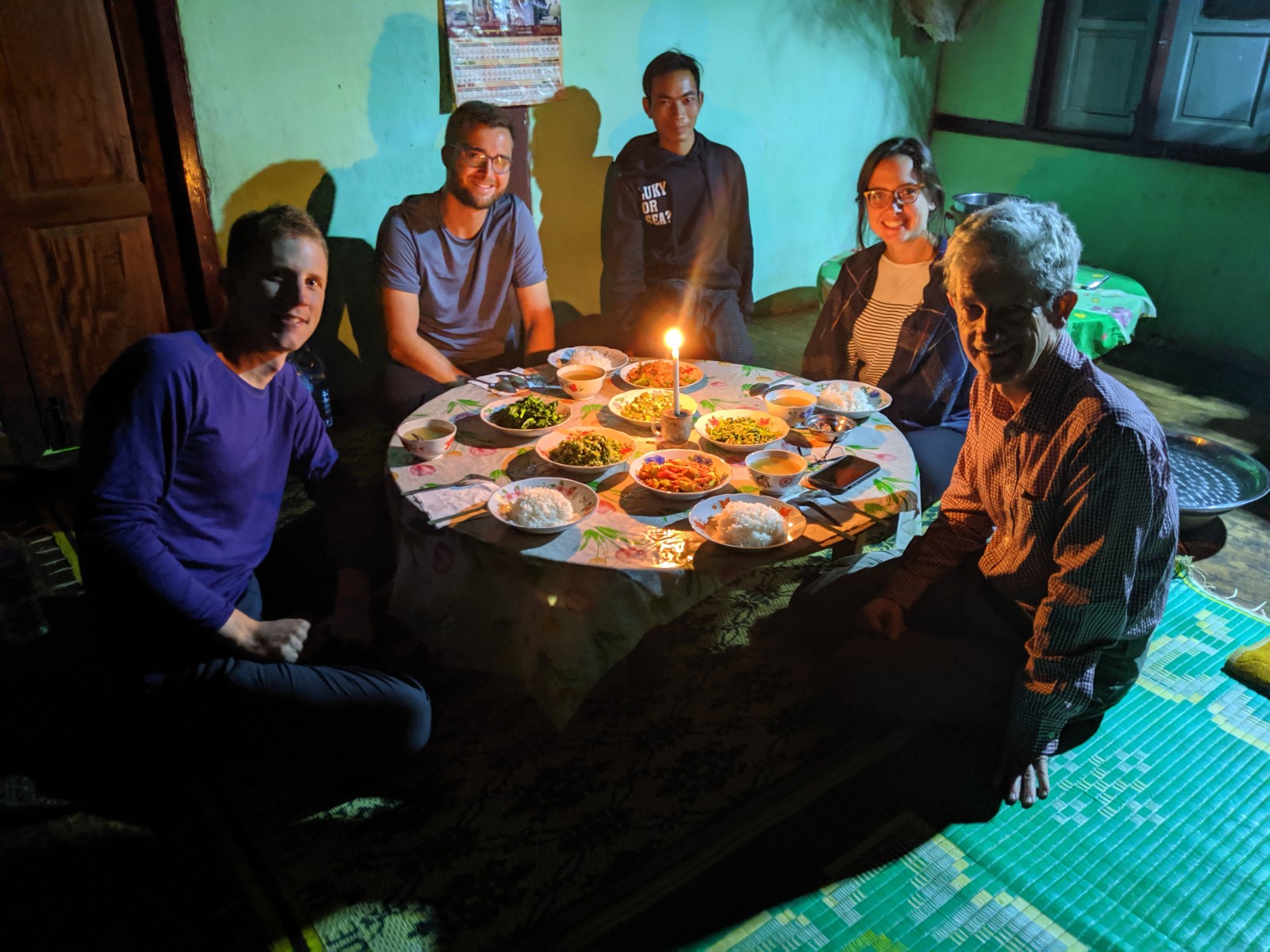

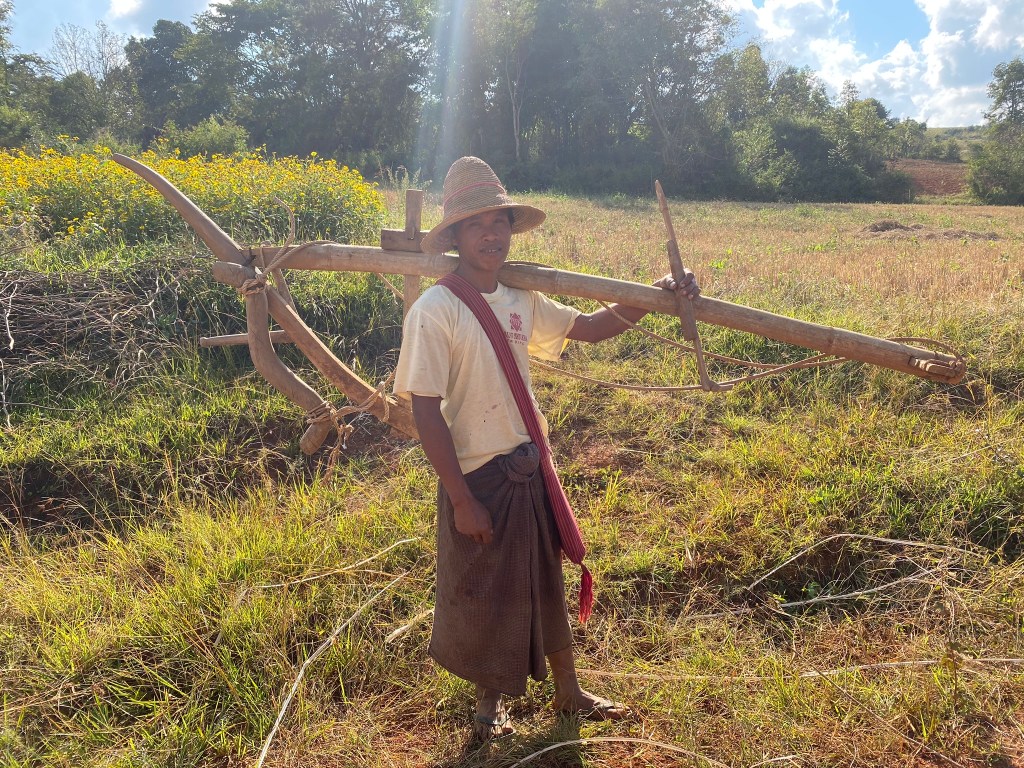
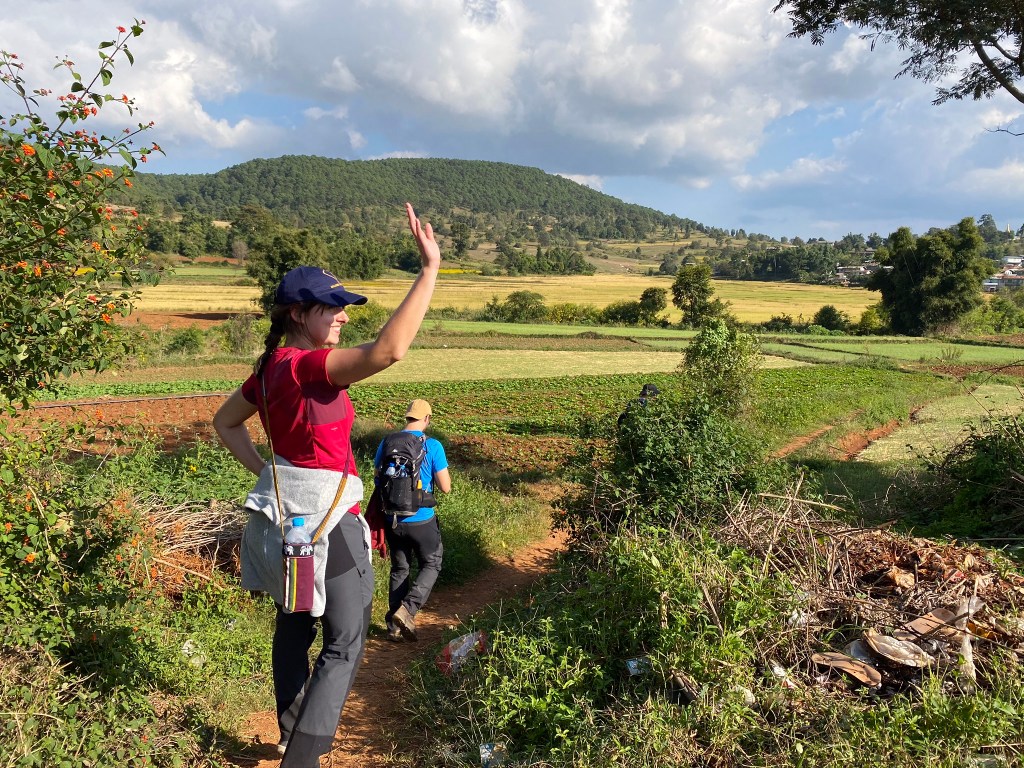
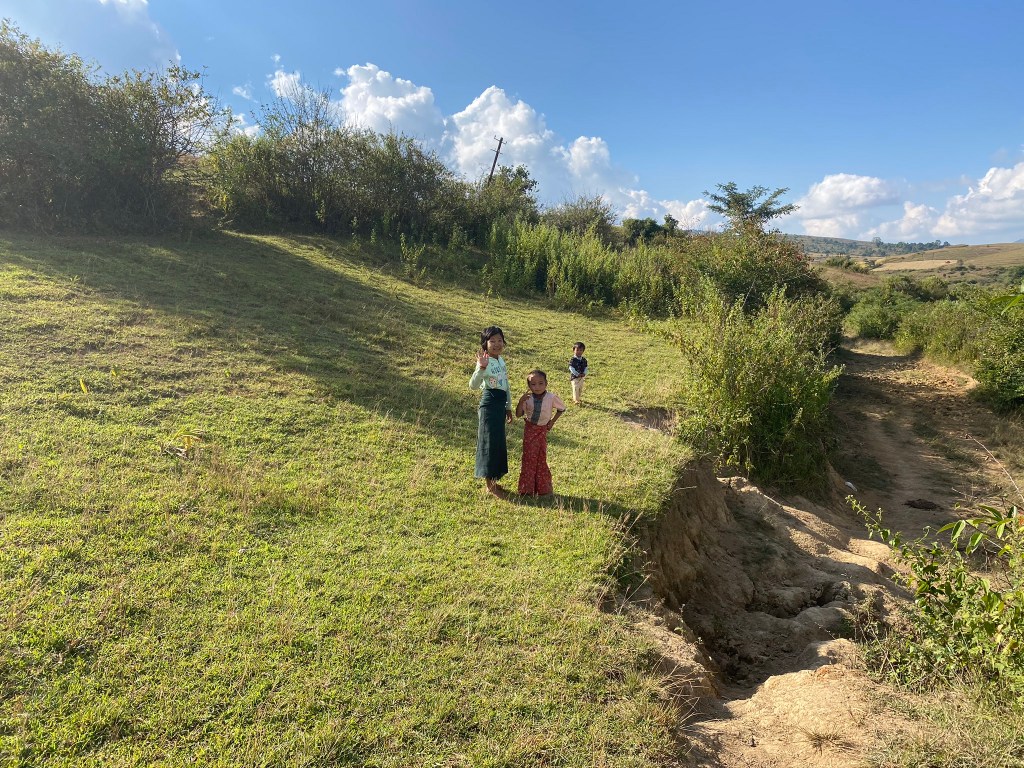
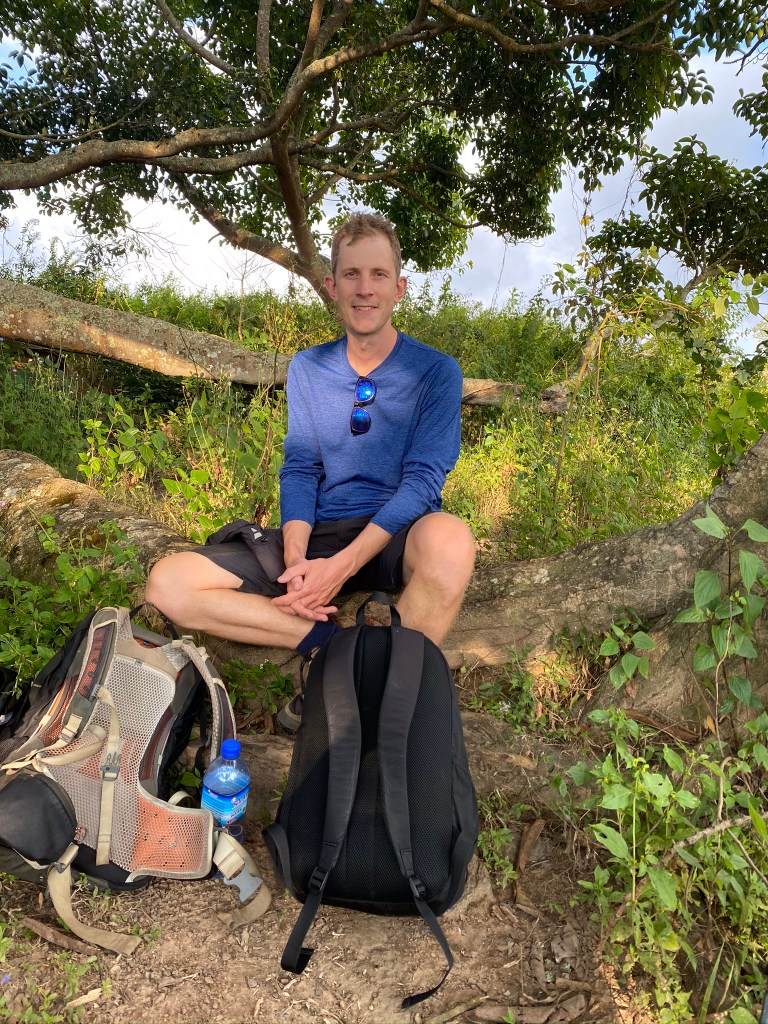

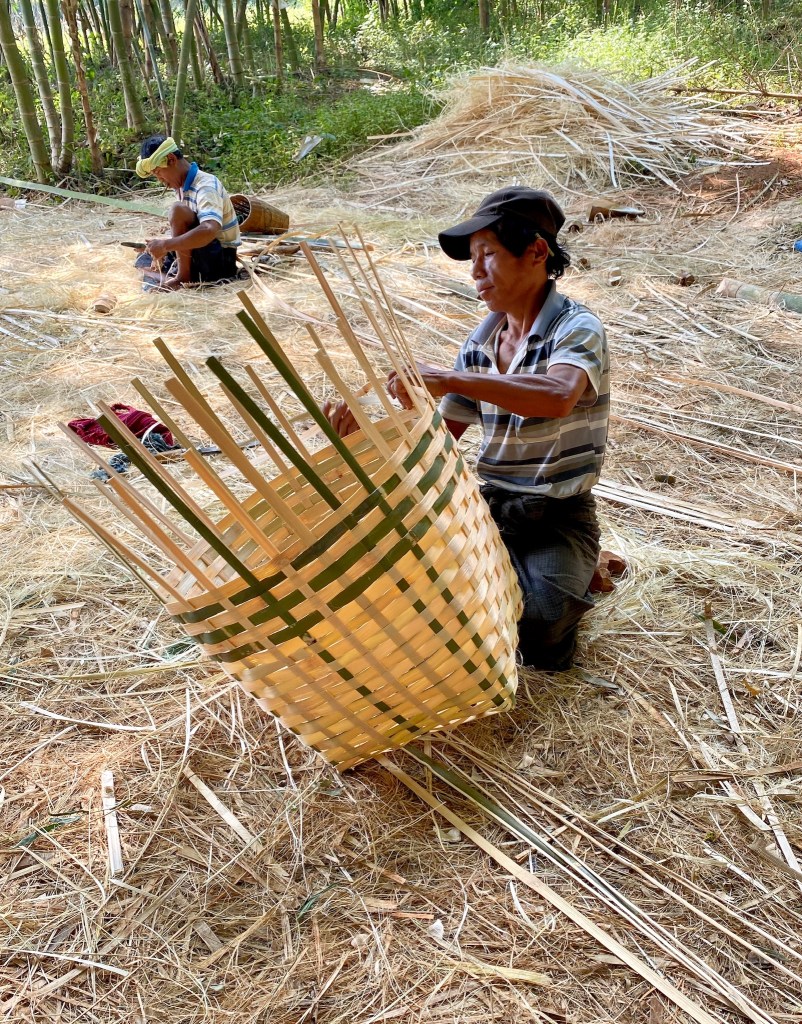
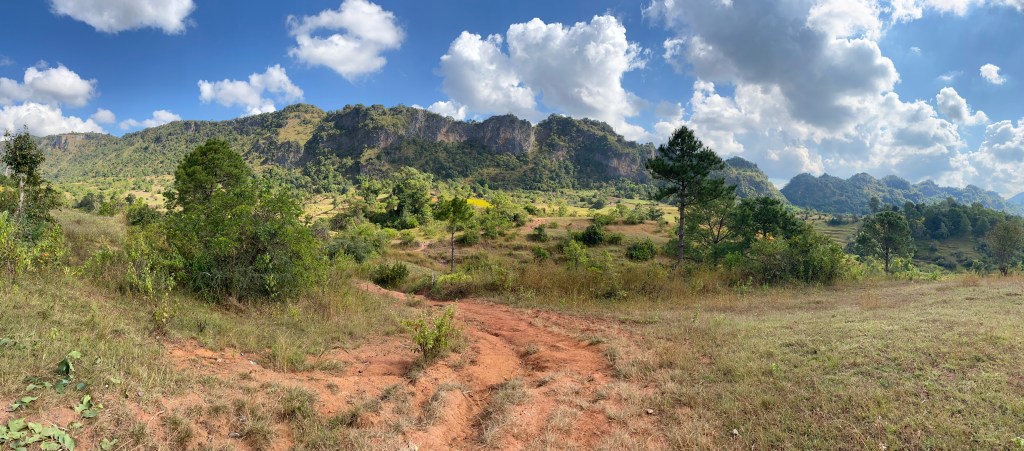
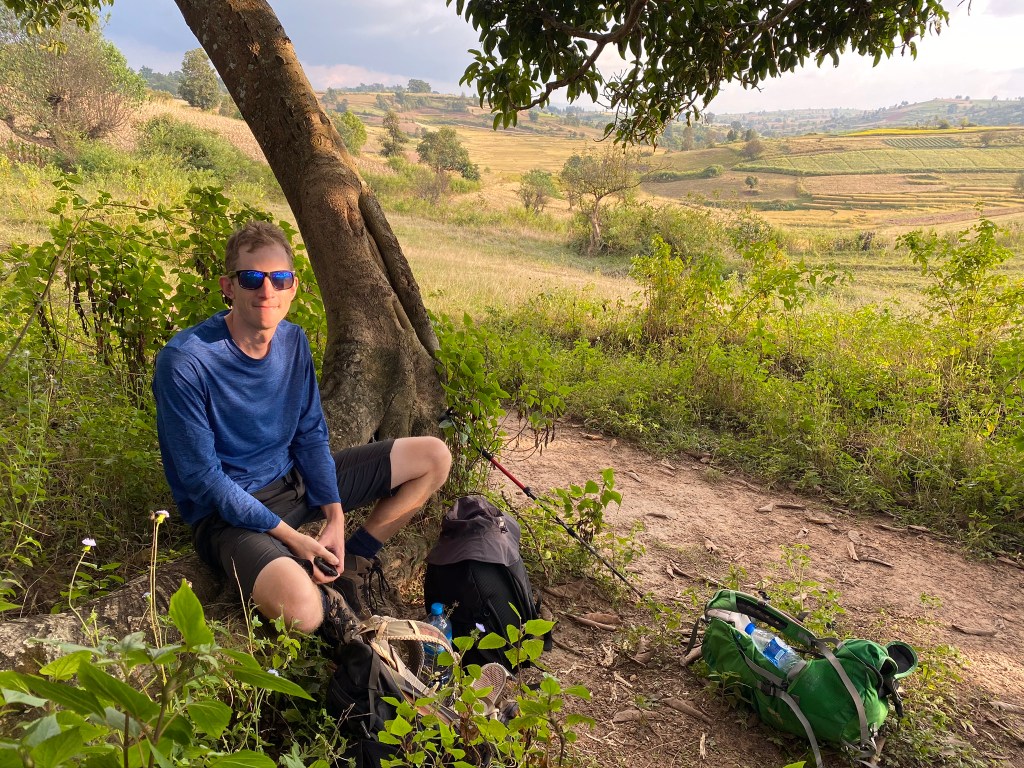

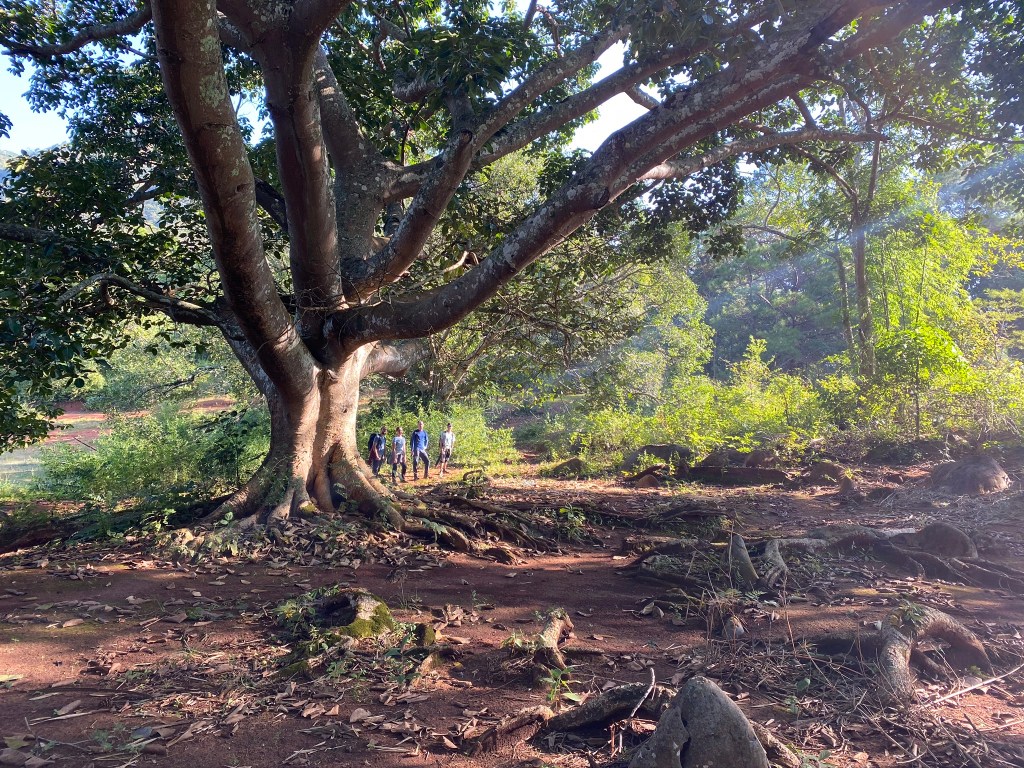

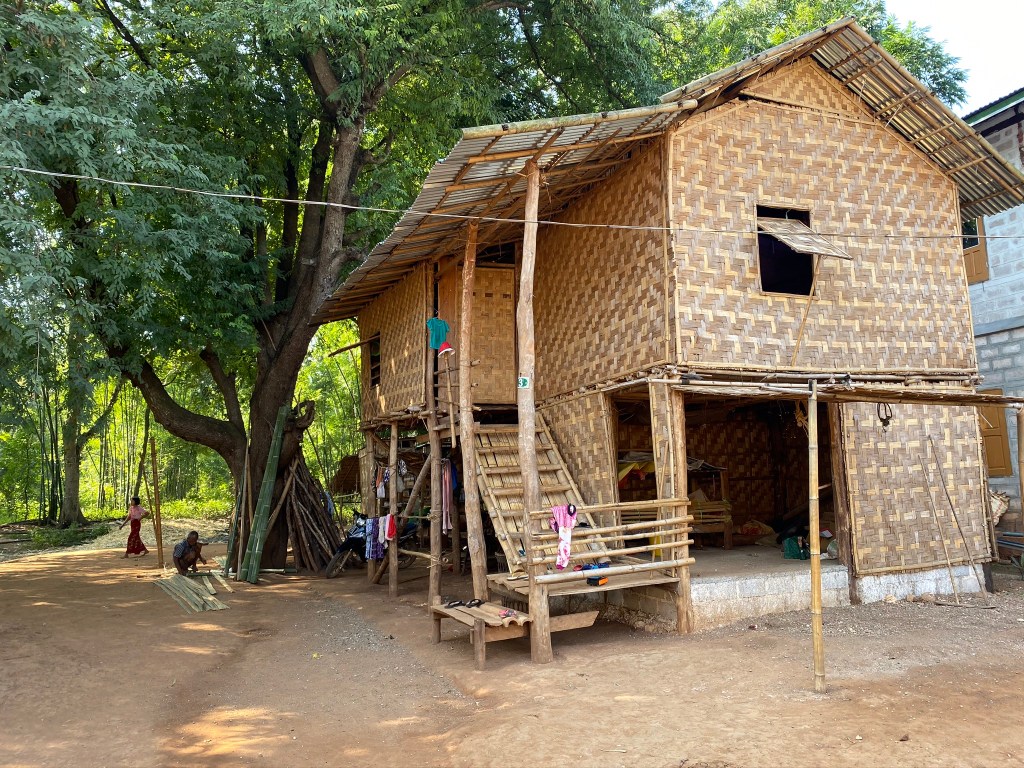
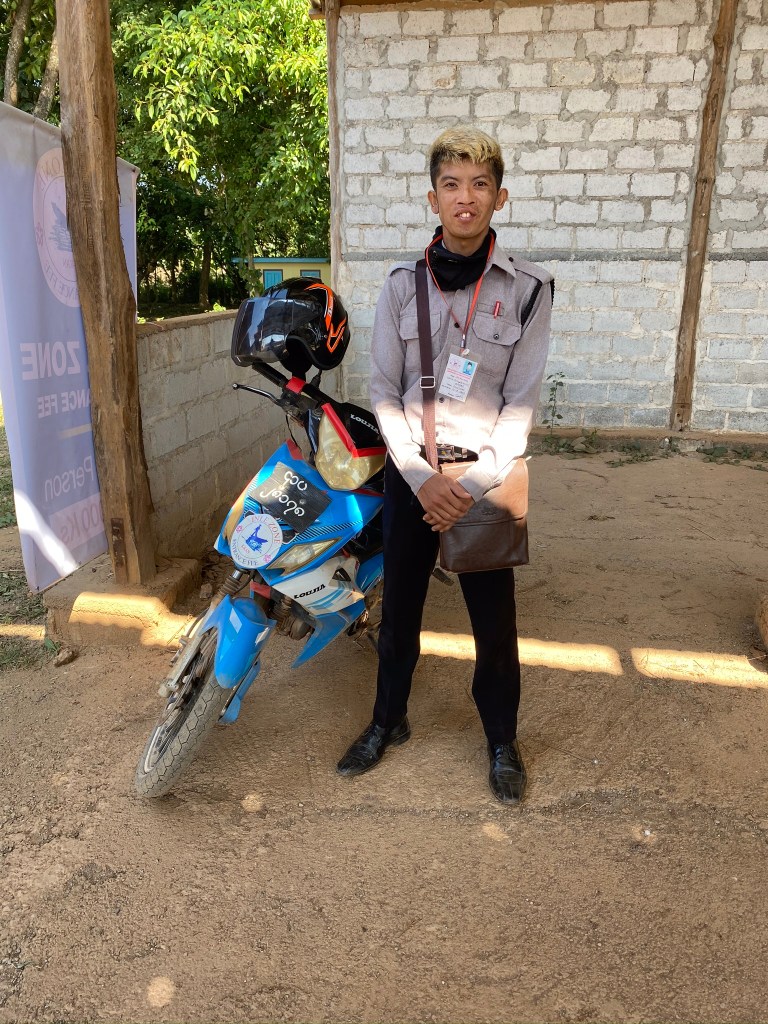
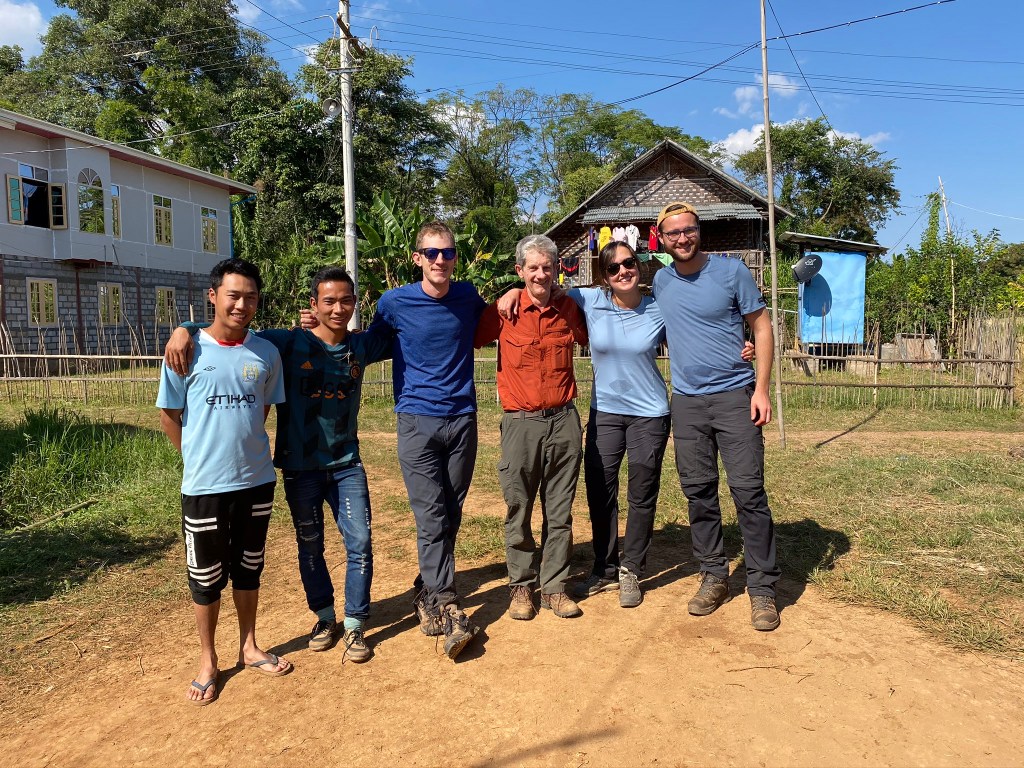

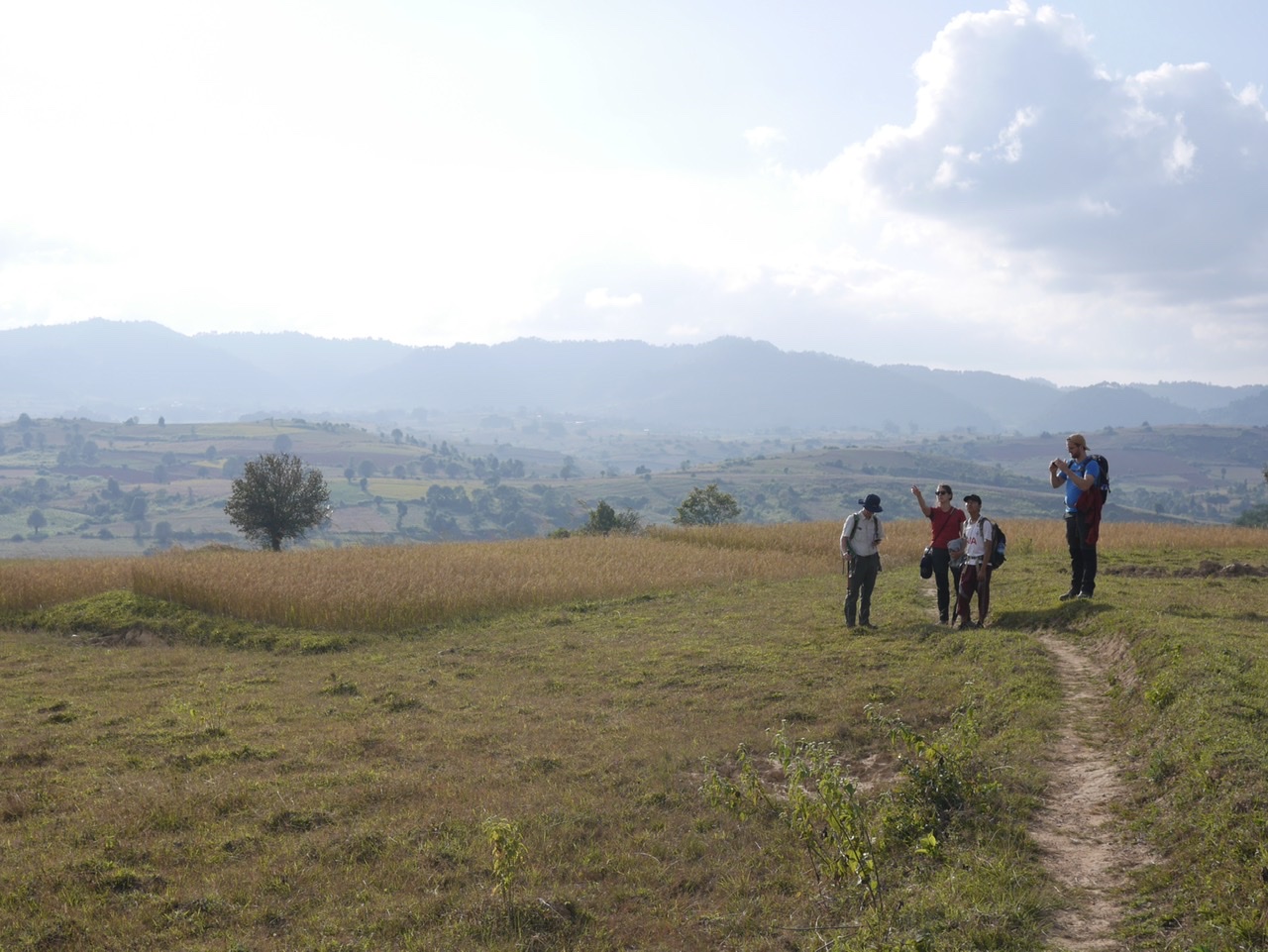
Ye Lay walks the route often in the dry season so was pretty friendly with people along the way, (even though he grew up in Yangon). When we stopped for a break at small monastery, he challenged the novice monks to a game of football.
This was a lot of fun! Monasteries like this provide a social service as much as a religious one – looking after boys whose families can’t afford to care for them and ensuring they get food and an education. For some – sadly – their families actually live in the same village, their brothers and sisters at home and them at the monastery as a kind of boarding school. They have various jobs to do as well as their education there and are up very early to collect alms, which the small village provides on a kind of rota system.
In terms of football – they were absolute maniacs, playing barefoot or in flip-flops on sharp loose gravel – seemingly unimpeded by their robes! It felt like the kind of Nike ad that appears around world cup time. They ran us ragged!

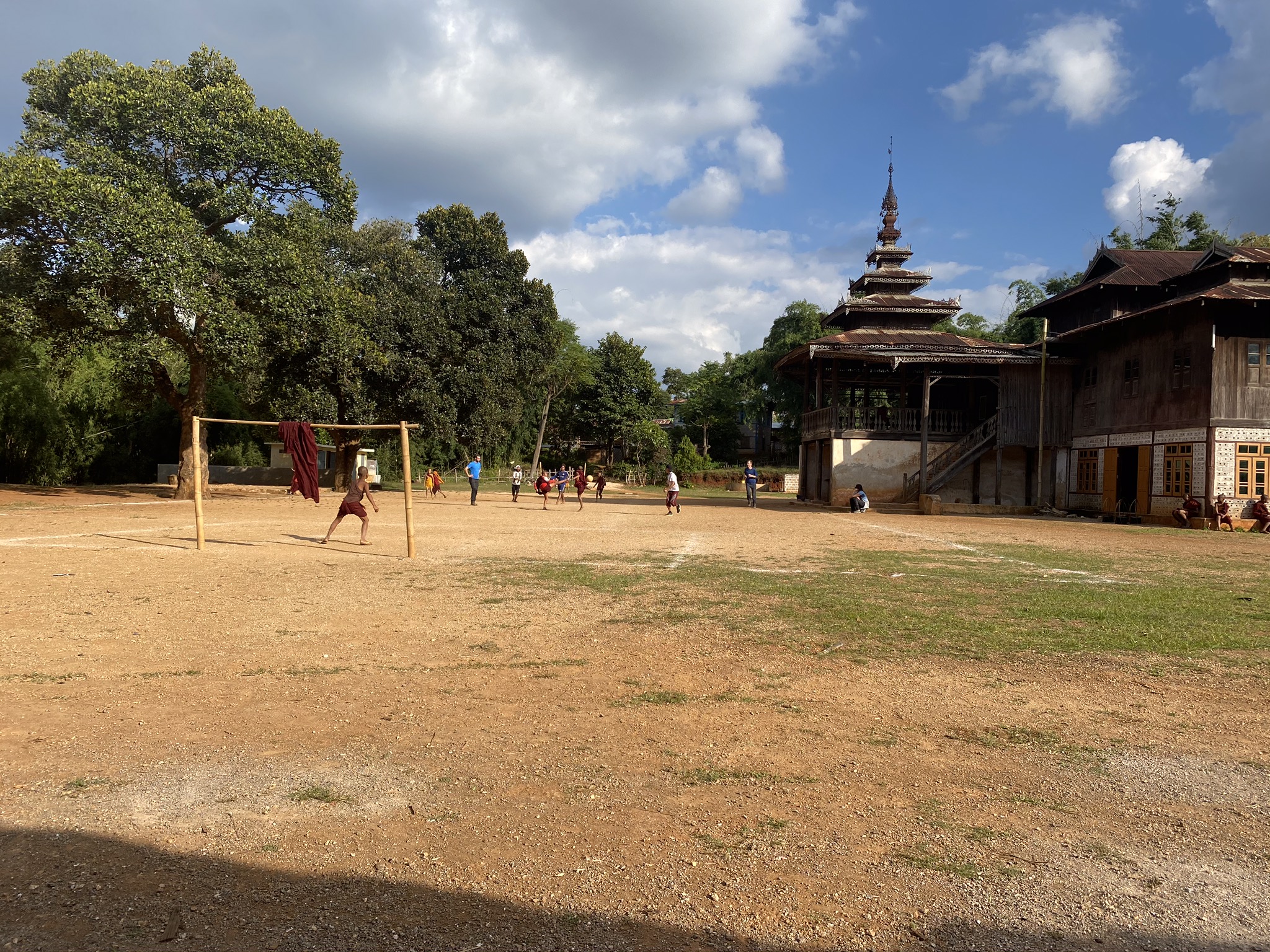
These are some of the quarters inside. We left a donation and received a blessing from the seniors.


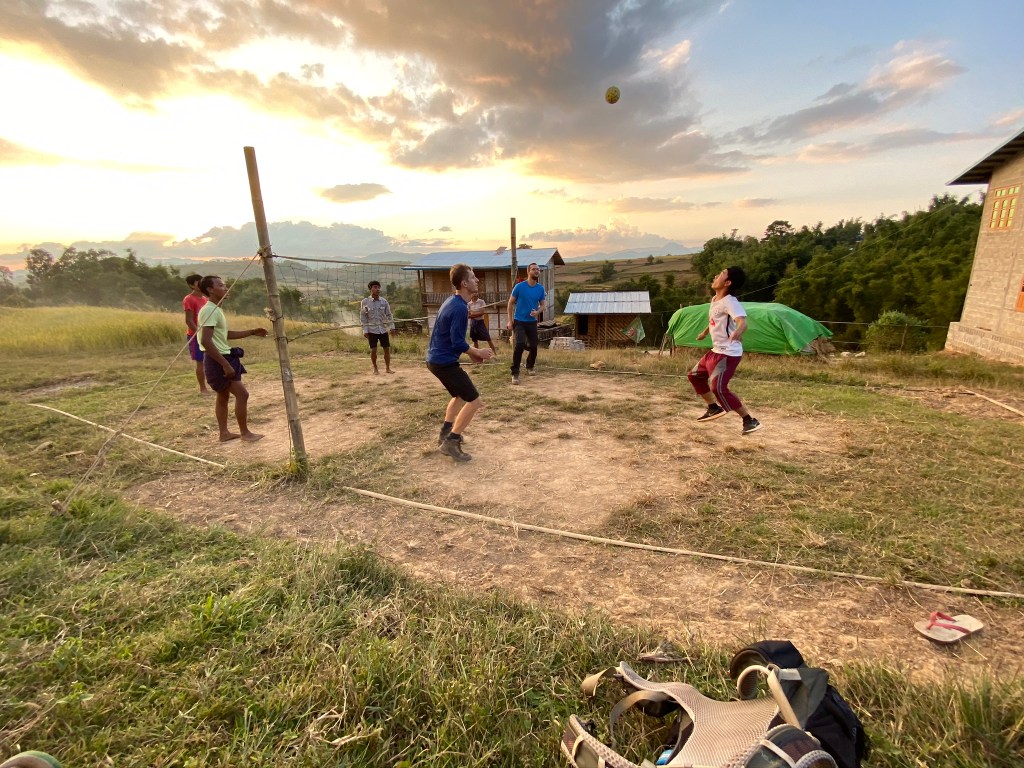
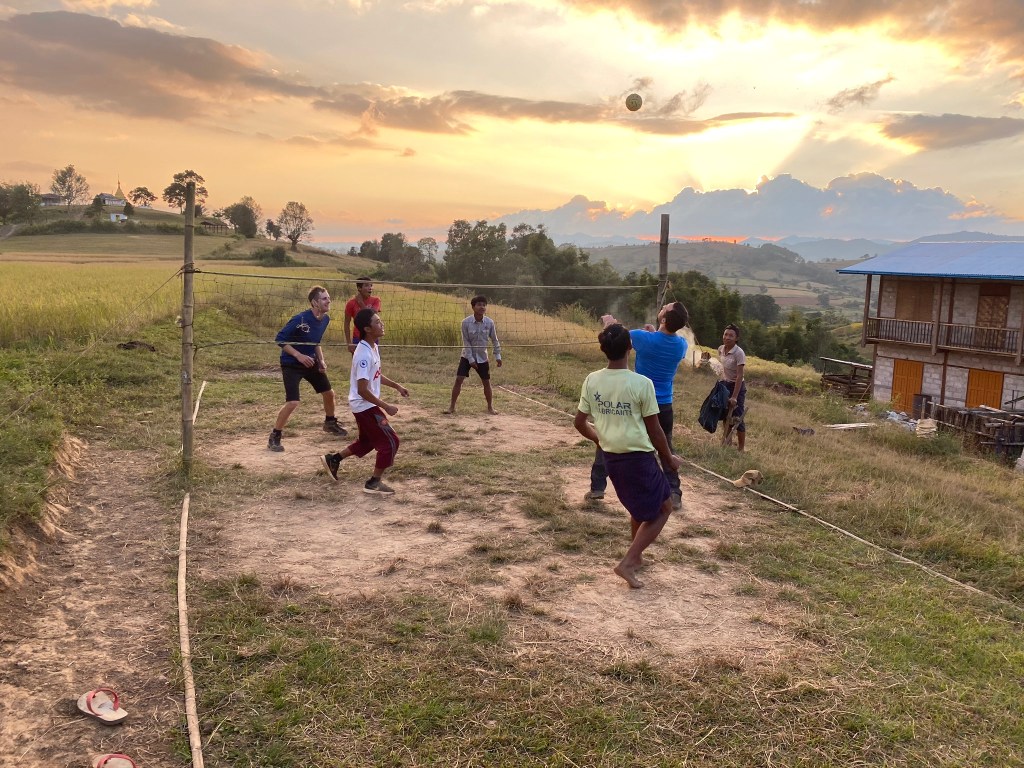
Though football is popular, the nation’s real passion is cane ball or chinlone, a kind of impossibly hard form of volleyball, played with your feet. We saw it being played everywhere, from the airport car park through to monasteries, schools and no-road villages like the one below.
As the day was drawing to a close, we joined a small crowd to watch. Ye Lay said it was a whole village activity with everyone gathering round each night after work. The guys were superhuman, playing in rolled up longyis and somehow performing ‘spike’ shots with their feet. Immense respect!
They let us join in briefly – a big honour turned humiliation as the hikers vs locals arrangement was pretty unevenly matched! We mixed up the teams and eventually got a few rallies going. I will have to keep practicing!
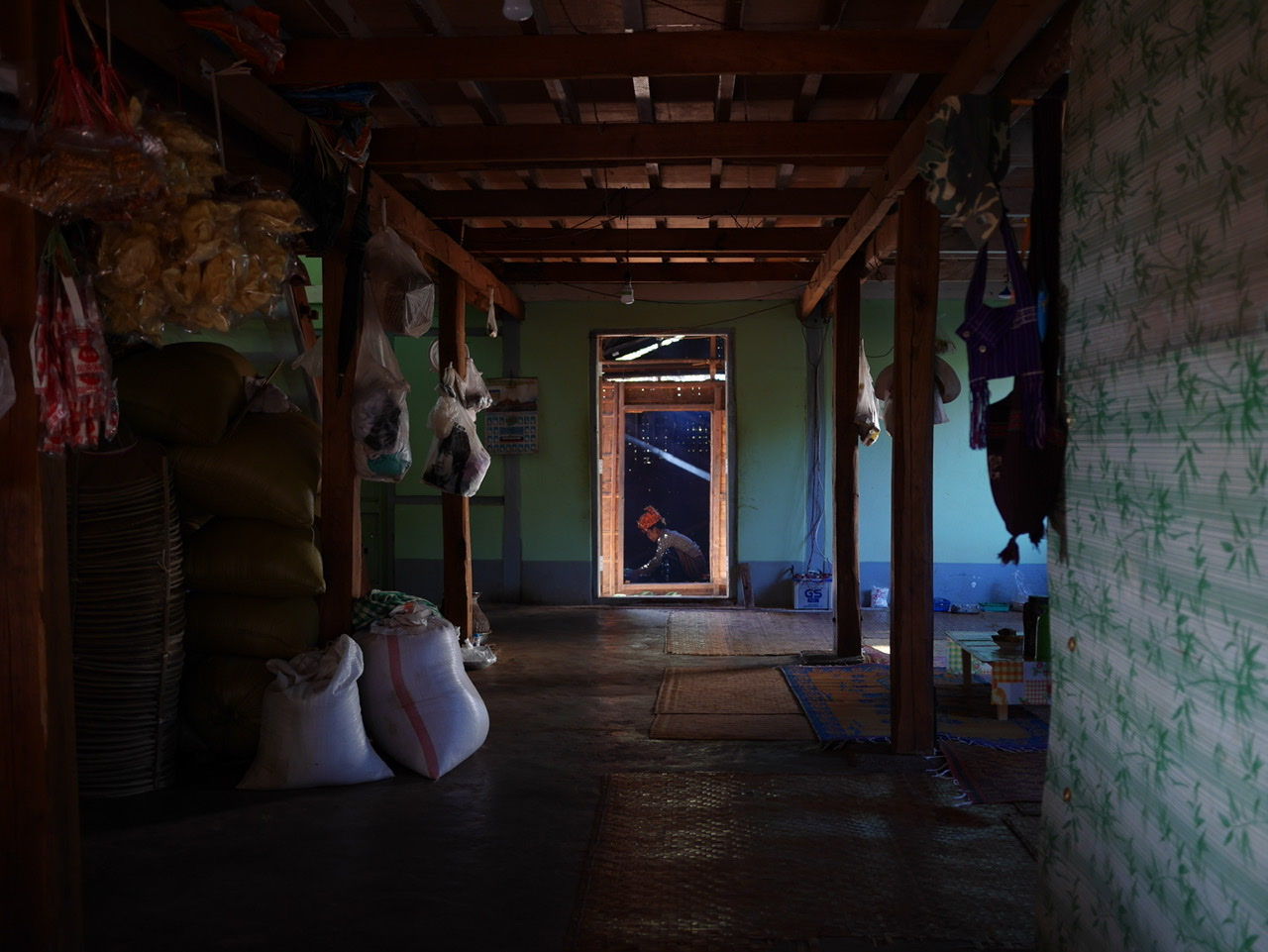
We finished our walk the next afternoon, descending down to Inle Lake in time for one last excursion before we split.
Inle Lake
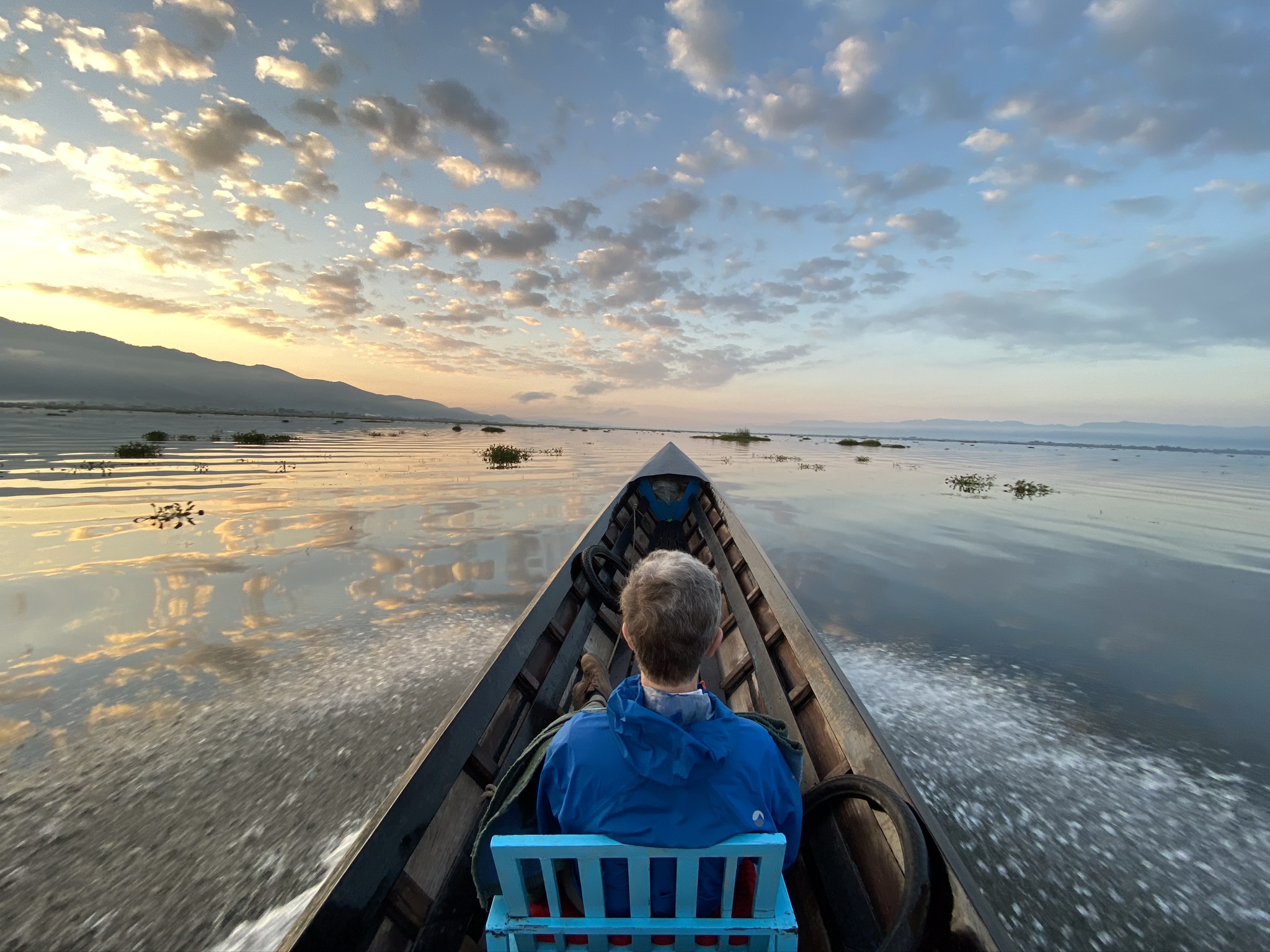
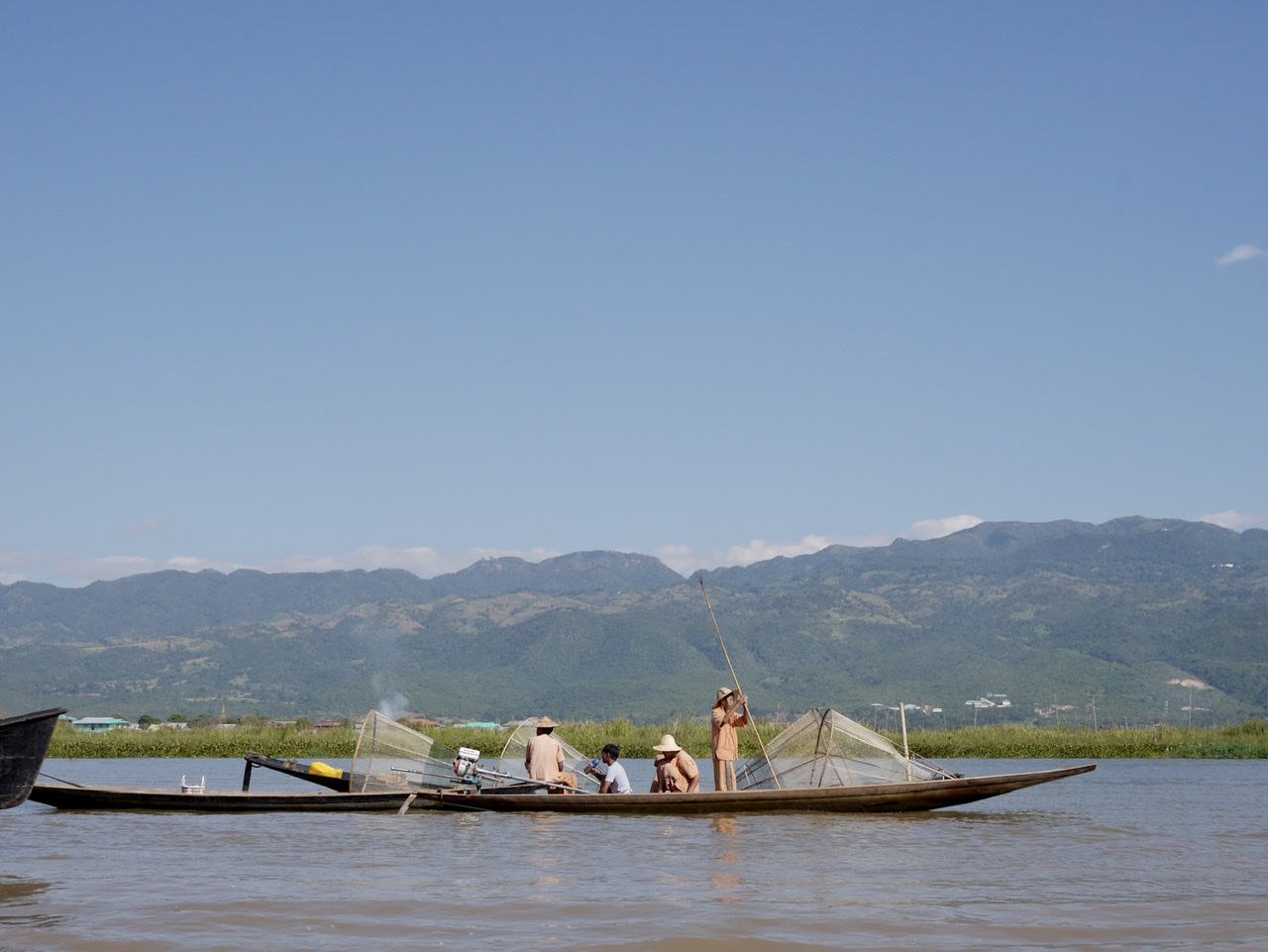
As well as Ye Lay, we’d been hiking with a super nice Belgian couple, Thomas and Alice. We agreed to hire a boat together on our last day and head to a lesser visited section of the lake three hours south. It was cold as we set off and we hunched up under blankets until the sun crept up from behind the mountains.
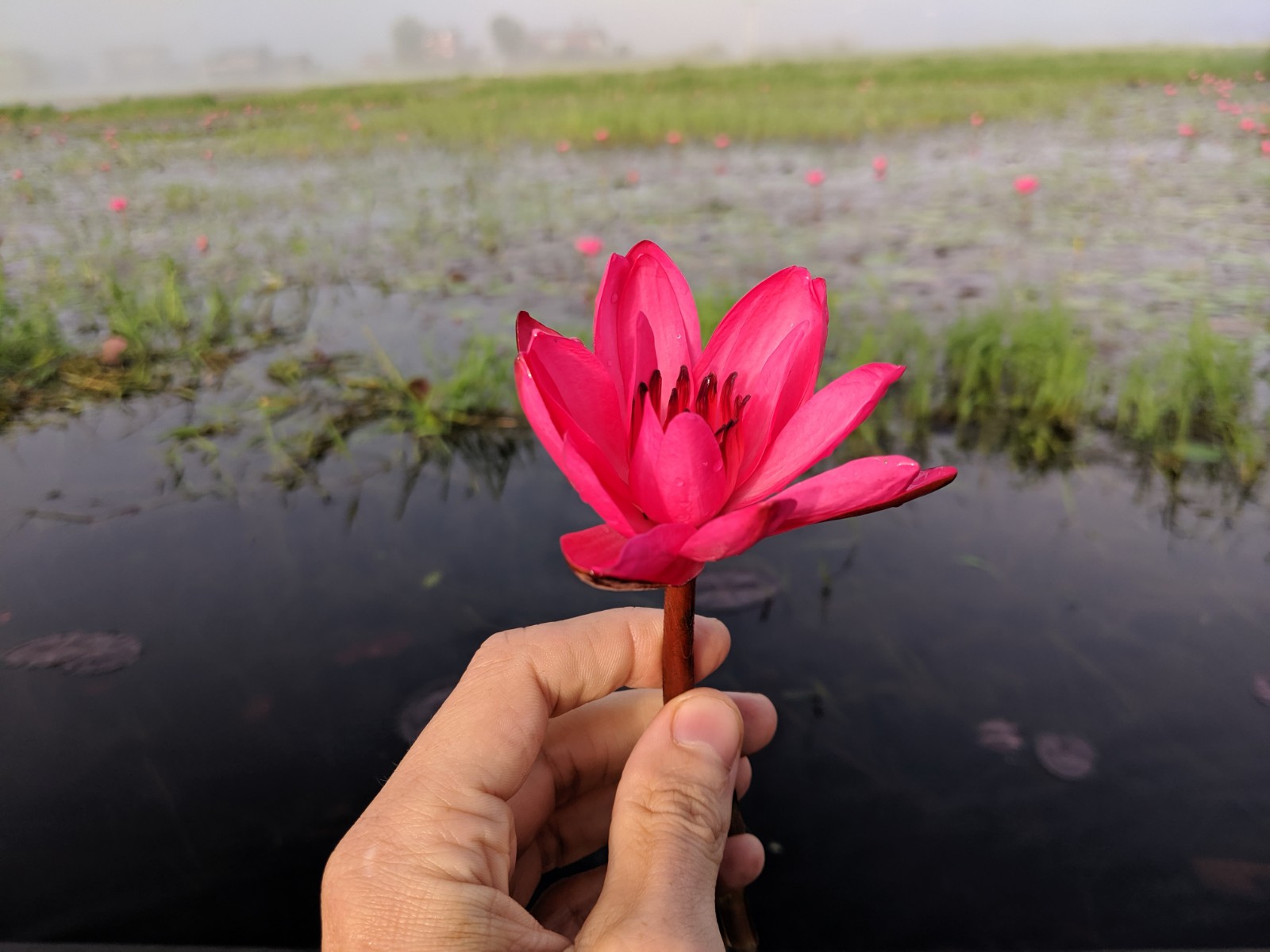
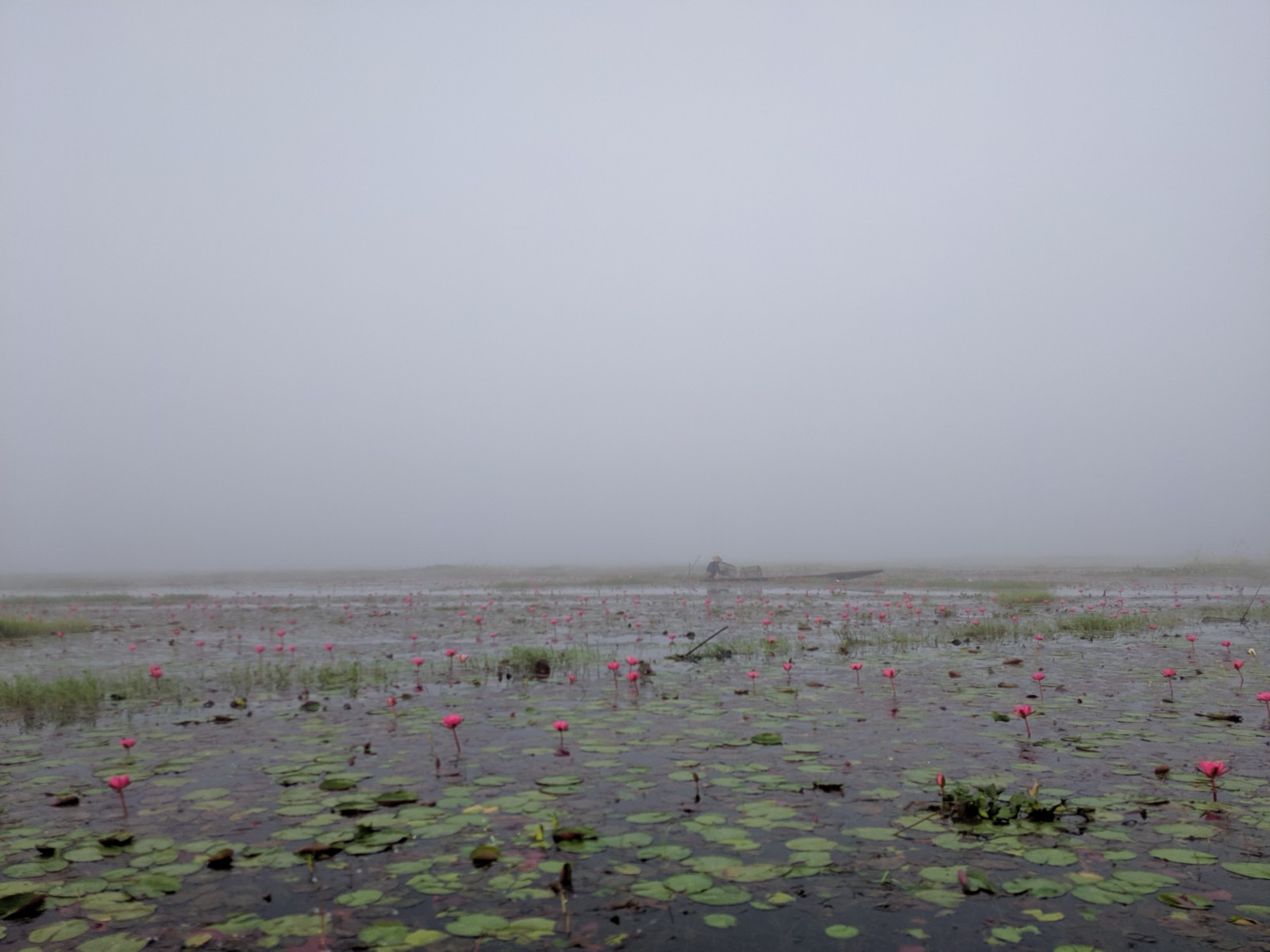
We disappeared in and out of the mist, passing houses on stilts, floating tea shops, island temples and fields of bright pink lotus flowers.
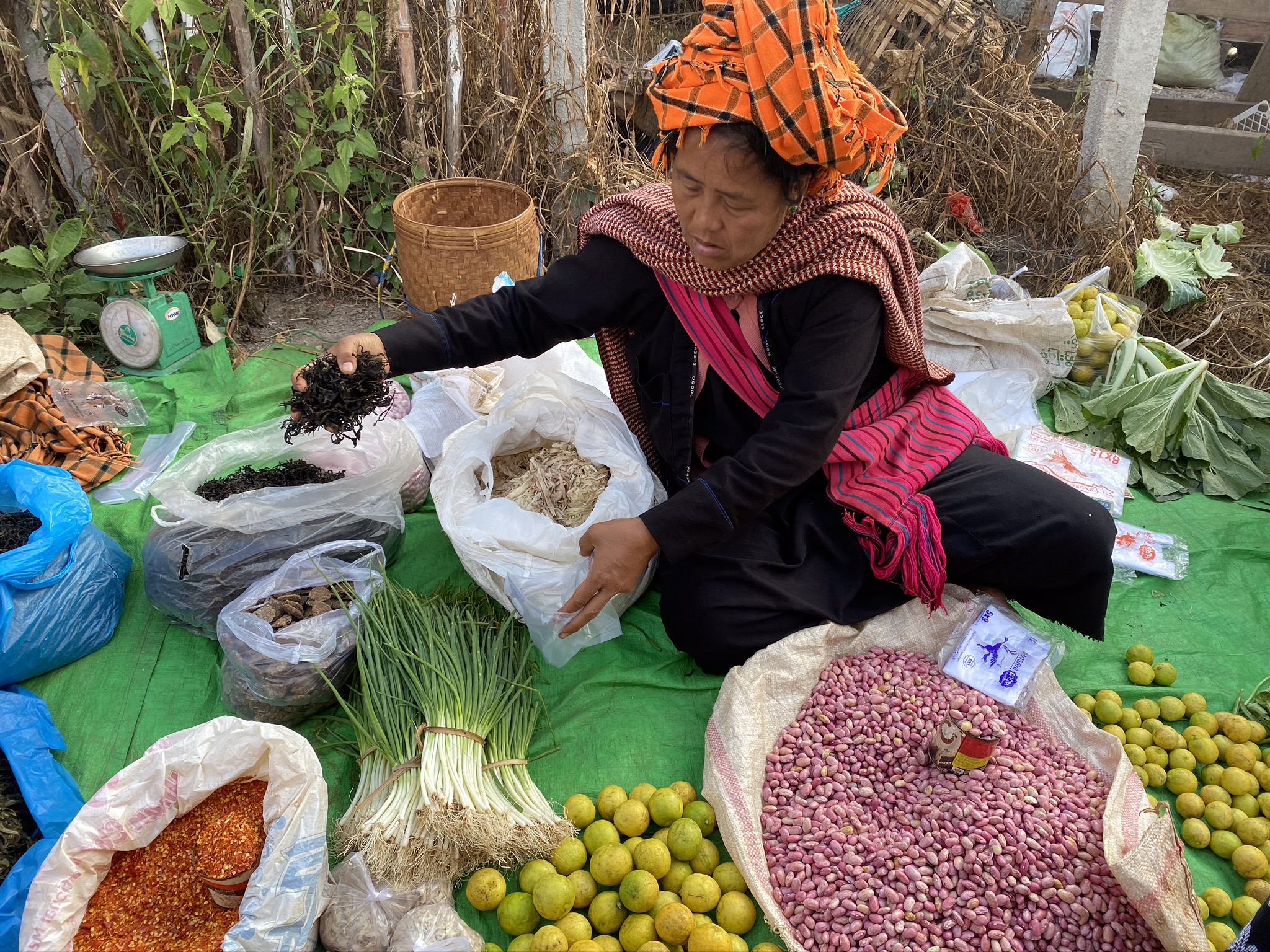
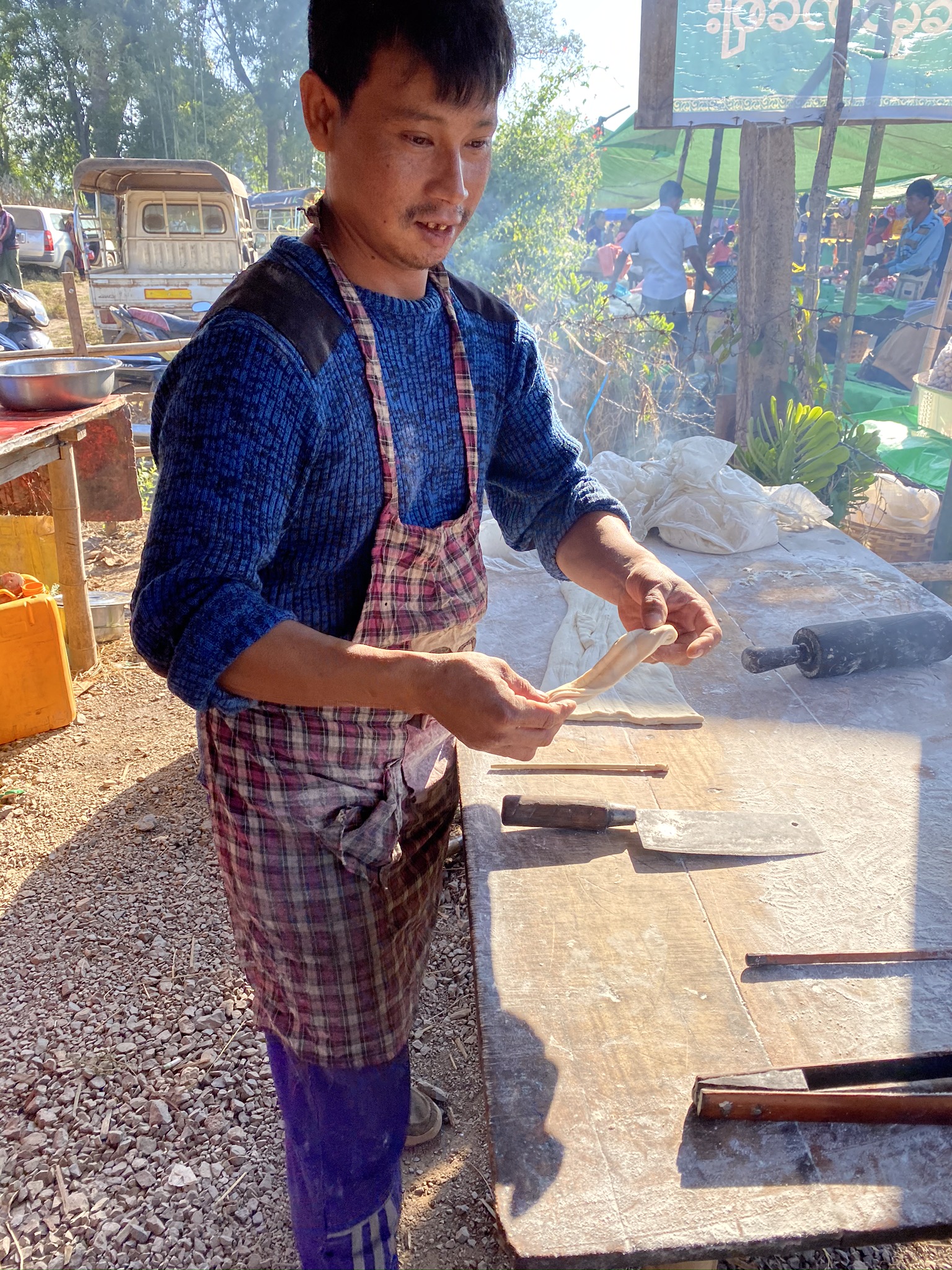
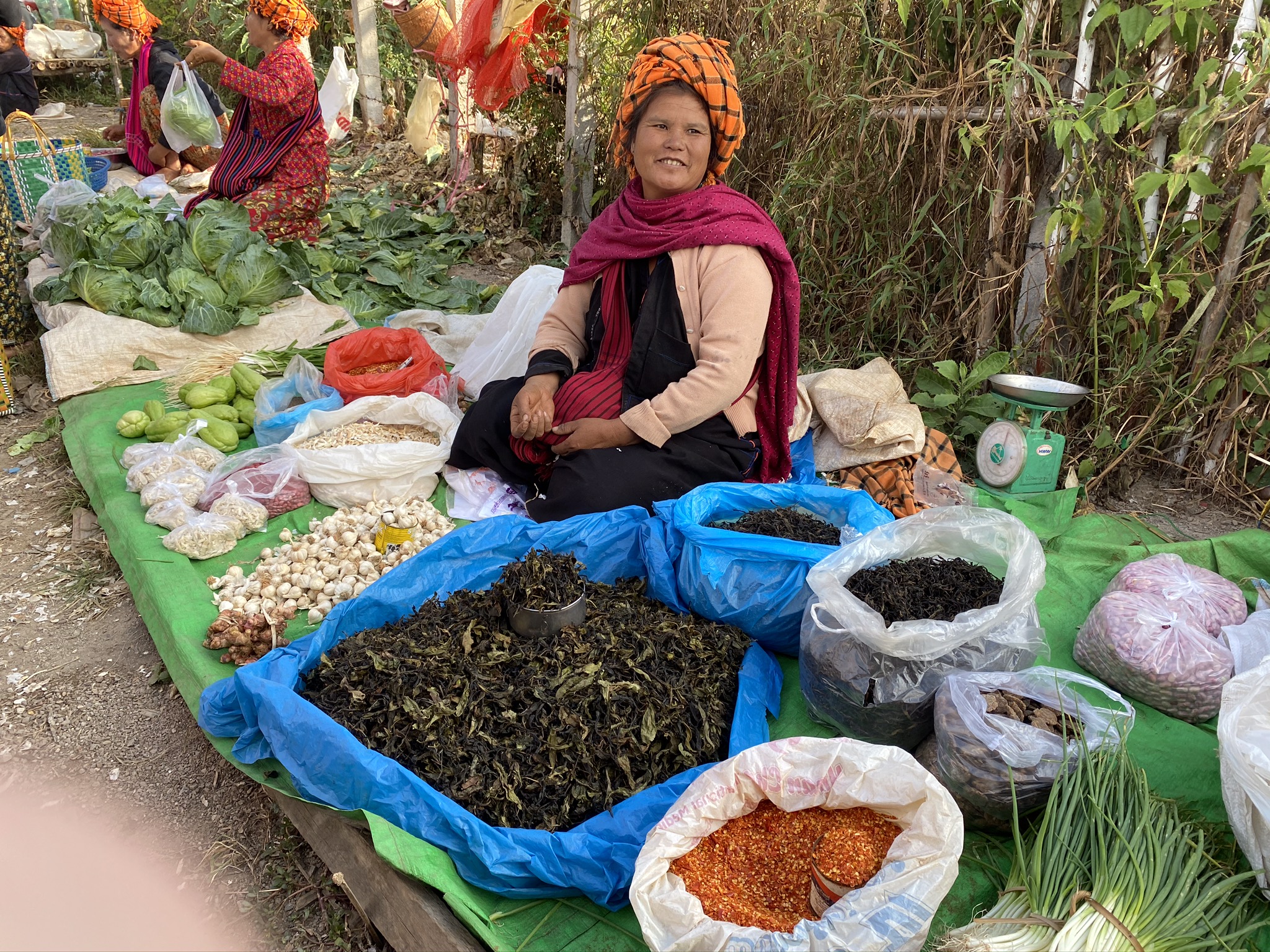
We stopped off for breakfast at a beautiful market, just off the lake’s shore, buying what we could to take back; chillies and tea, whilst making the most of sampling what we couldn’t. Alice (our Belgian friend) is tasting some ants!



Just as abruptly as I’d arrived it was time to go back. Dad had to return to his project work in the new capital Nypyidaw (he had a rest day first!)

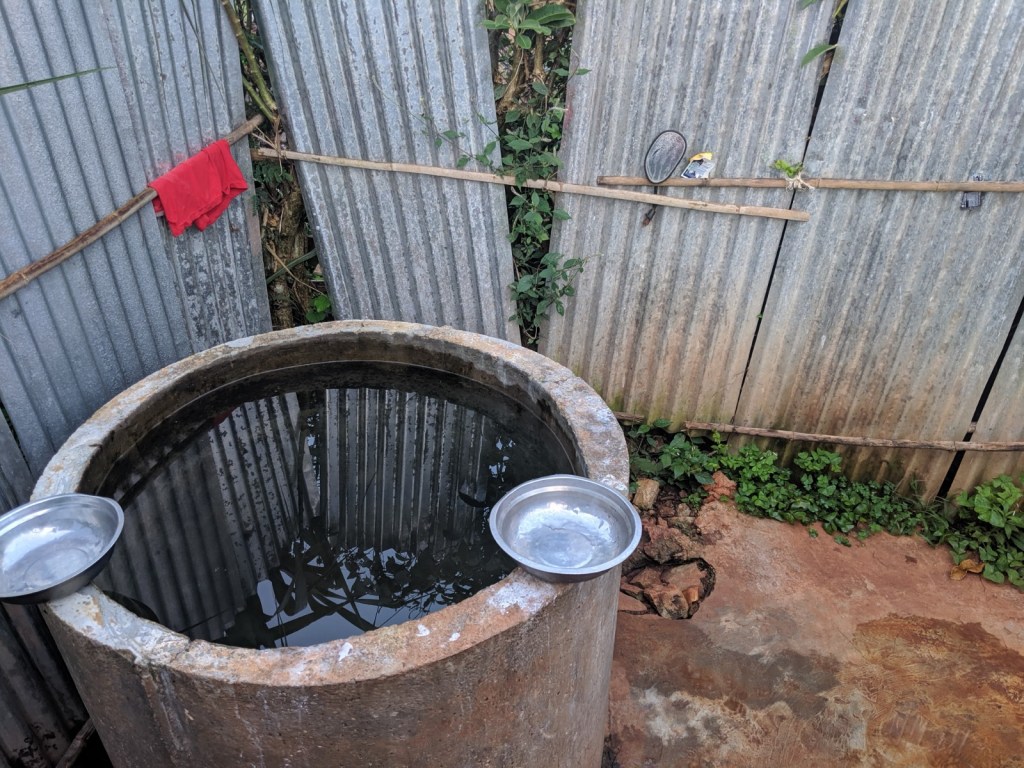
And I needed to retrieve my bike in Hanoi. It was a great trip and a shame my Mum couldn’t join too. Though I’m not sure what she would have made of the shower facilities…
Thanks Myanmar! And thanks Dad!
Now back to the bike…
 Rolling Project